

Buda Lorina[1]: Does Banking Union Resolve One of the Impossible Trinities of the Eurozone? (Publico, 2017/1., 134-149. o.)
Absztrakt - Megoldás a Bankunió az eurózóna szerkezeti problémájára?
Jelen tanulmány alapját egy közgazdasági lehetetlenségi tétel adja, mely szerint a Gazdasági és Monetáris Unió jelenlegi formájában fenntarthatatlan. Továbbá bemutatja azon intézményi változásokat, melyeket a gazdasági és pénzügyi válság óta hajtottak végre. Konklúzióképpen megemlíti, hogy ezen intézkedések nem elegendők a felvázolt lehetetlenségi tétel feloldására. A bankunió teljes befejezésével ezen lehetetlenségi tétel megszűnne, és egy szerkezeti probléma megoldódna az eurózónán belül.
Kulcsszavak: bankunió, Gazdasági és Monetáris Unió, pénzügyi válság, ellentmondásos hármas, európai intézmények
Abstract
This study is based on an inconsistent trinity of the Eurozone, which proves that the Economic and Monetary Union in its current form is not sustainable, and the financial and economic crisis management measures do not dissolve the problems clearly, although completing the Banking Union would be a solution.
Keywords: Banking Union, EMU, financial crisis, inconsistent trinity, institutions
- 134/135 -
1. Introduction
The global financial and economic crisis has been analysed in many ways so far. The aim of this paper is to present the institutional aspects of the European Union crisis. Europe is currently facing a triple crisis: banking crisis, sovereign debt crisis and political crisis. Since the beginning of its existence the euro has not been in a crisis which would have required a rethinking of the rules. However, the outbreak of the 2008 crisis made the rethinking of the operational framework necessary.
A well-functioning financial market was important for the EU way earlier than the outbreak of the crisis. It is enough to think about the Financial Services Action Plan[1] or the Financial Services Policy 2005-2010,[2] but the real milestone was achieved in an unexpected situation.
This paper presents the problems of the financial sector since the outbreak of the financial crisis and the measures which have been taken so far to resolve the main problem of this sector. It also presents the inconsistent trinities of the EMU, which could be solved by the Banking Union.
The theoretical frame is based on the impossible trinity[3] developed by Jean Pisani-Ferry and the presentation of all the institutional regulations which have been taken since the outbreak of the crisis. The study analyses the problem only from the aspect of this inconsistent trinity, but of course the problems of the Eurozone are more complex.
2. Measures and Impossibilities
Although the EU currently has to solve many crises, the first one was undoubtedly the financial one. After the outbreak of the crisis in 2008 many large financial institutions collapsed and because there were no common, EU-wide tools, rescuing them was the duty of national governments. This induced government debt grew generating austerity measures that caused a political crisis EU-wide. The crisis highlighted the structural problem of the EU and the Eurozone as well, and clearly showed why the vicious circle between banks and governments is a huge problem in the Eurozone.
One of the regulatory problems can be described with the impossible trinity[4] of Jean Pisani-Ferry.[5] In the next part of the paper this problem is presented.
- 135/136 -
The first important tenet is bank-sovereign interdependence, which has two sides. On the one hand domestic banks hold on their balance sheets a considerable share of the debt issued by their domestic government. On the other hand member states are individually responsible for rescuing their national banking system. Rescuing bank sectors has a huge fiscal impact and can easily spill over to sovereigns. It is enough to think about Ireland in 2007, where the government debt was 25% of the country's GDP, which grew to 108%[6] by 2011, and the majority of the debt resulted from the state bank rescue packages.[7] This strong interdependence has emerged as one of the most problematic factors of the Eurozone.
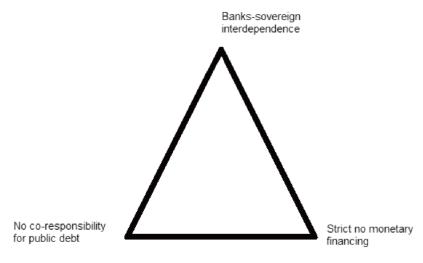
Figure 1 Impossible Trinity of Jean Pisani-Ferry
(Source: Jean Pisani-Ferry)
In the beginning it was thought that banking weaknesses could be blamed on the U.S. sub-prime mortgage market, but later on leaders of the EU realized that it is more complicated. Eurozone banks have been highly affected by the crisis. In Europe the crisis had two sides. Firstly, bank weaknesses generated government debt rise, and secondly government balance sheets undermined banks' soundness,[8] just like how it occurred in Greece.
No co-responsibility is equal to the no-bailout clause, which is the Article 125 of Treaty on the Functioning of the European Union. "The Union shall not be liable for or assume the
- 136/137 -
commitments of central governments, regional, local or other public authorities, other bodies governed by public law, or public undertakings of any Member State, without prejudice to mutual financial guarantees for the joint execution of a specific project. A Member State shall not be liable for or assume the commitments of central governments, regional, local or other public authorities, other bodies governed by public law, or public undertakings of another Member State, without prejudice to mutual financial guarantees for the joint execution of a specific project" (Treaty on the Functioning of the European Union, Art 125)
The importance of the no-bailout clause is the compliance with the strict fiscal rules. Without this rule, moral hazard would be a huge risk across the member states, since they would not be forced to comply with the fiscal rules, and it could undermine the foundations of the monetary union. However, this clause and the Stability and Growth Pact are forcing the members to comply with the fiscal rules. Thus, we can hardly talk about a fully sovereign fiscal policy. This proves that fiscal sovereignty and no-bailout clause exclude one another, provided that member states have an independent monetary policy.
Easing the problem of the no-bailout clause EFSF and later ESM were established. European Financial Stability Facility (EFSF) was created as a temporary crisis resolving mechanism by the euro area member states in June 2010. The EFSF has provided financial assistance to Ireland, Portugal and Greece. The assistance was financed by the EFSF through the issuance of bonds and other debt instruments on capital markets.[9] A permanent rescue mechanism, the European Stability Mechanism (ESM) started its operation on 8 October 2012. The ESM is currently the sole mechanism for responding to new requests for financial assistance by euro area member states. The ESM raises funds by issuing money market instruments as well as medium and long-term debt with maturities of up to 30 years.[10]
These two measures are clearly ignoring the no-bailout clause. This means that since 2010 member states can count on assistance in case of financial hardship. However, these two institutions can be considered as a European Monetary Fund, which is an inescapable step in a way of a deeper integration.
Monetary financing is prohibited in the EU (Art. 123 of the EU Treaty). "Overdraft facilities or any other type of credit facility with the European Central Bank or with the central banks of the member states (hereinafter referred to as 'national central banks') in favour of Union institutions, bodies, offices or agencies, central governments, regional, local or other public authorities, other bodies governed by public law, or public undertakings of member states shall be prohibited, as shall the purchase directly from them by the European Central Bank or national central banks of debt instruments" (Treaty on the Functioning of the European Union, Art 123). Although the easing has been manifested, ECB can buy government bonds in the secondary market, but it is still not the real solution. Therefore, in the euro area neither governments, nor central banks can intervene if a member state has a financial problem.
- 137/138 -
The vicious circle is clearly presented. In case of a financial problem the ECB cannot help the states or the banking sector. Thus these two sectors are dependent on each other, which led the government of Ireland and government securities owning banks in Greece[11] to a huge financial fiasco. The case of Spain is also worth mentioning where the amount of government bonds in the banks tripled from 2008 to 2013.[12]
Expanding the power of ECB in the form of endowing the role of lender of last resort could resolve the problem. Most of the member states (especially Germany) are refraining from issuing Eurobonds, because it would mean too much responsibility. Establishment of the EFSF, which is clearly inconsistent with the no-bailout clause, was a step forward to solve the problem. The creation of a Europe-wide banking association would resolve the lack of a common regulatory and the lack of a common bail-in mechanism in case of trouble.
The report[13] of the de Larosière group identified serious shortcomings in the existing system of financial supervision in Europe. The purpose of the enhanced cooperation measures is to improve the long-term financial stability of the EU as a whole. Consistent application and enforcement of the same technical rules ensures the in-time identification of systemic risks and a more efficient joint action in tackling emergency situations and disagreements among supervisors. Experiences so far show that regulation gaps caused by the fragmentation of the system on a national basis have greatly contributed to the unfolding of the financial crisis. Therefore, it is essential to fill in these gaps to avoid the future occurrence of similar situations.
Following the outbreak of the financial crisis in 2008, the institutions of the EU initiated a deep process of regulatory reform to strengthen the existing system of monitoring and supervision.
At the very end of 2010 the European Systemic Risk Board was established.[14] ESRB contributes to the prevention or mitigation of systemic risks to financial stability in the Union that arise from developments within the financial system. It also contributes to the smooth functioning of the internal market and thereby ensures a sustainable contribution of the financial sector to economic growth. The ESRB is part of the European System of Financial Supervision (ESFS), the purpose of which is to ensure the supervision of the Union's financial system. It is a supervision of individual financial institutions ("micro-prudential supervision"), consisting of a network of national financial supervisors working in tandem with new European Supervisory Authorities, created by the transformation of existing Committees for the banking securities, insurance and occupational pensions sectors: European Banking Authority (EBA), European Insurance and Occupational Pensions (EIOPA),
- 138/139 -
European Securities and Markets Authority (ESMA). The key task[15] of these new authorities is to resolve cases of disagreement between national supervisors, where legislation requires them to co-operate or to agree; developing proposals for technical standards, respecting better regulation principles; contributing to ensuring consistent application of technical Community rules (including through peer reviews) and coordinate in emergency situations.
More than 5 years have passed since the outbreak of the financial crisis. Many institutional changes and reforms have been undertaken since then, but in 2014 a real milestone was achieved to resolve the above mentioned problem. One of these initiatives is the Banking Union, which is supposed to be a solution for the shocks of the banking sector.
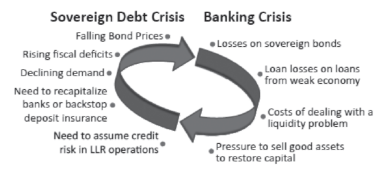
Figure 2 Toxic Interactions between Banks & Their Sovereigns
(Source: Herring [2013],12.)
In many member states, banking groups with their headquarters established in other member states hold a significant market share, and credit institutions have geographically diversified their business. The present crisis has shown quite well that the integrity of the internal market may be threatened by the fragmentation of the financial sector. The integration of banking markets in the Union was brought close to collapse. But financial stability, including a healthy banking sector, and restoring lending to the economy, maintaining and deepening the internal market for banking services is essential for sustaining the economic recovery. Financial markets in Europe are European and global, not only national. Therefore, their supervision must also be European and global as well.
Supervision of cross-border banks is carried out by national supervisors. Under EU law the home supervisor and the host supervisors of other member states where the bank establishes branches or subsidiaries or provides cross-border services have to coordinate their action.
- 139/140 -
Therefore, in June 2012, as part of a long term vision for economic and fiscal integration, the Commission[16] called for a banking union to restore confidence in banks and the euro. Countries of the euro area would create a single supervisory mechanism for banks. Such an integrated supervision is necessary to make sure that all euro-countries can have full confidence in the quality and impartiality of banking supervision.
Banking Union has three (plus one) major elements:
0. single rulebook for the European financial market;
1. single Supervisory Mechanism (SSM);
2. single Resolution Mechanism (SRM), ideally supported by a Single Resolution Fund (SRF) and a fiscal backstop;
3. deposit Guarantee Schemes (DGS).
The single rulebook for financial services is the base of the banking union. EBA has the competence to develop it and monitor its implementation. The banking union was launched by creating the single rulebook and the single supervisory mechanism.
The first block of the Banking Union is SSM, which was created[17] in 2013 led by the ECB. Legal work was finalised in November 2013 and the supervisor became fully operational in late 2014. The establishment of the SSM in autumn 2014 was an important milestone towards banking union.
One of the advantages of the SSM is that it will draw on a broader and better basis of information across the eurozone making it possible to reveal undesirable developments more quickly.
Euro area countries participate automatically in the single supervisory, but it is also potentially open to other member states willing to be integrated in the system (through close cooperation between their competent authorities and the ECB). European Central Bank will directly supervise banks with assets of more than EUR 30 billion, or which constitute at least 20% of their home country's GDP, or which have requested or received direct public financial assistance from the ESM (130 banks under the direct supervision of the ECB and now under review have about €25,000 billion of assets and only about €1,000 billion of capital (about 4% of assets).[18]
- 140/141 -
On 15 October 2013,[19] the EU Council adopted a regulation on the single supervisory mechanism which creates a uniform single supervisory mechanism, which is the primary pillar of the banking union. Under the regulation, non-participating member states should conclude a memorandum of understanding describing in general terms how they will cooperate with one another in the performance of their supervisory tasks under EU law in relation to the financial institutions. Some member states will be absent from the single supervision, and parent companies from member states participating in the mechanism may have subsidiaries in those countries. Therefore, it is strictly necessary that those countries also agree about a framework for cooperation in the case of a crisis.
With the creation of the SSM, many supervisory tasks in the euro area member states will be carried out by the ECB for all member states concerned. "As the euro area's central bank with extensive expertise in macroeconomic and financial stability issues, the ECB is well placed to carry out clearly defined supervisory tasks with a focus on protecting the stability of the financial system of the Union."[20] Nevertheless, in many member states central banks are already responsible for banking supervision. The SSM, after all, is designed in such a manner that the quality and expertise of national supervisors will continue to be the decisive factor.
ECB in practice:[21]
- authorises and withdraws the authorisation of all credit institutions in the euro area;
- assesses acquisition and disposal of holdings in banks;
- ensures compliance with all prudential requirements laid down in EU banking rules and sets, where necessary, higher prudential requirements for banks, for example for macro-prudential reasons to protect financial stability under the conditions provided by EU law;
- carries out supervisory stress tests to support the supervisory review, and carries out supervision on a consolidated basis - such stress tests are supervisory tools also used by national authorities to assess the stability of individual banks; they will not replace the stress tests carried out by the EBA with a view to assessing the soundness of the banking sector in the Single Market as a whole;
- imposes capital buffers and exercises other macro-prudential powers;
- carries out supplementary supervision over credit institutions in a financial conglomerate;
- applies requirements for credit institutions to have in place robust governance arrangements, processes and mechanisms and effective internal capital adequacy assessment processes
- 141/142 -
- carries out supervisory tasks in relation to early intervention when risks to the viability of a bank exist, in coordination with the relevant resolution authorities;
- carries out, in coordination with the Commission, assessments for possible public recapitalisations;
- coordinates a common position of representatives from competent authorities of the participating member states in the Board of Supervisors and the Management Board of the EBA, for topics relating to the abovementioned tasks.
The central bank will have two units - the new bank supervisor and its financial stability directorate. It is very important to provide clarity on who is going to do what, draw a clear line between the monetary and supervisory functions. This "conflict" of aims can threaten the internal independence of the ECB. The ECB shall be accountable for its tasks to the European Parliament (EP) and to the Council / the Eurogroup.
The central bank needs to work out how it is going to stop bubbles. The new supervisory role (macroprudential power) will allow it to tell national authorities what to do (e.g.: increase the capital ratio of a bank).
Before the European Central Bank took over banking supervision in November 2014 it conducted[22] a comprehensive assessment of the largest banks of the eurozone. If any of the participating banks failed the assessment they could be wound down, and merging them in order to save them was not a solution.
The single supervisor should be matched by a single resolution authority to restructure or shut troubled banks and a single resolution fund to deal with any resulting costs.
The Single Resolution Mechanism (SRM) will ensure that - notwithstanding stronger supervision - if a bank subjected to the SSM faces serious difficulties, its resolution can be managed efficiently. In case of cross-border failures, it will be much more efficient than a network of national resolution authorities and will avoid risks of contagion.
The bail-in mechanism will stabilise a failing institution so that it can continue to provide essential services, without the need for bail-out by public funds. With this measure the future public finances and banking problems can be prevented from spreading to each other, causing a worse economic situation.[23] It can break the link between indebted states and the banks that buy their debt. Recapitalisation through the write-down of liabilities and/or their conversion to equity will allow the institution to continue as a going concern, avoiding disruption to the financial system that would be caused by stopping or interrupting its critical services.
- 142/143 -
The regulation of SRM based on article 114 of the Treaty on the Functioning of the European Union. The resolution and restructuring of a bank supervised directly by the ECB requires common instruments and procedures.
A complication is that cross-border banks operate not only in eurozone countries, but in other EU countries. Thus, this second stage involves a two-step process:[24] first, harmonising the rules on resolution and deposit guarantees across the 28 members of the EU, then merging the systems of 18 countries of the eurozone (and any others that want to join[25]).
The single resolution fund would be financed by bank levies raised at national level. It would initially consist of national compartments that would be gradually merged over 10 years until it hits a €55bn target funding level by 2026. During this period, mutualisation between national compartments would progressively increase. In the interim, eurozone countries would contribute cash into national pots that would remain segregated within the broader European fund. During the transition period ESM could be a credible fiscal backstop. It is already recognised by the market and trusted by ECB and member states.[26]
The SRM entered into force on 1 January 2015. Bail-in and resolution functions apply from 1 January 2016.[27]
The SRM regulation will not be applied until the intergovernmental agreement enters into force. This agreement would enter into force once ratified by member states participating in the SSM/SRM that represent 80% of contributions to the single resolution fund.[28] In connection with some elements of the fund, member states decided in December that those will be regulated outside the EU law. EP members strictly reject intergovernmental agreement and the postponed ten years transition period. (In some aspect[29] at this stage of negotiations, the design for the SRM is unsatisfactory because its decision-making process is too complex and because the resolution fund lacks a common fiscal backstop.)
As Véron says[30] "The coordination of the bank restructuring process will be a key aspect, including the possibility of setting up a European joint asset management vehicle, or "bad bank," even if financial risks remain allocated to individual member states".
- 143/144 -
According to the fellows of Bruegel Institution[31] two crucial questions still remain. Firstly, the backstop to the Single Resolution Fund is not yet settled. The fund will be able to borrow against future bank levies, but will not be able to rely on the eurozone bailout fund to raise credit. "A resolution mechanism still absolutely needs some form of public backstop to be fully credible and ensure that confidence is preserved" Secondly, the scope of the SRM must also be made more unequivocal. It is not clear whether the Board would have a say in the resolution of cross-border banks. "A proper Banking Union should have no segmentation between central and national level in the management of resolution function."[32]
The other key point is still the same: which country will pay? While member states think about banking union as a step towards sharing bank risks with each other and advancing towards a common cost of borrowing across the eurozone, Germany places greater emphasis on imposing losses on the creditors of banks. However, long-term benefits might be higher for Germany than for countries with weak public finances, because those countries would gain the most from delegating bank resolution to an independent EU Agency where the cost of public funds are the lowest, and also the countries with the closest links between the banking sector and the political class.[33] The main aim was the Banking Union to break the 'doom loop'.[34] Although several measures have been taken so far, the 'doom loop' still exists. The key components according to Véron[35] are the followings: bail-in criterion cannot be left at national authorities and credible and explicit commitment must be made by the ECB after the handover. The bail-in may help reducing public cost, but the parameters should not depend on nationality.
A banking union should include a more centralised management of banking crisis. It is not envisaged to equip the banking union with a single supranational deposit guarantee scheme at this stage. The proposal on DGS now agreed will ensure that every Member State has a deposit guarantee fund which is correctly funded. A well-financed Europe-wide deposit insurance system would stop savers from panicking.
In 2010 the Commission adopted a legislative proposal for DGS (Official Journal of the European Communities (1994).[36] This scheme supposed to prevent depositors from making panic withdrawals from their bank, thereby preventing severe economic consequences. After more than three years of stop-start negotiations in December 2013[37] the European
- 144/145 -
Parliament and member states agreed on the new rules of the DGS.[38] The Directive will strengthen the existing system of national DGS. The changes are harmonized with the recommendations of IMF.[39] It was another important step towards completing the single rule book on crisis management for credit institutions in the EU.
According to Véron[40] further steps are still needed to reach a well-functioning banking union. However, the current framework of the Banking Union is based on intergovernmental treaties. Treaty changes are inevitable steps and require ordinary revision[41] procedure. Only the ordinary revision procedure is able prove a 'steady-state' banking union. "This is because of the need for resolution, insolvency and fiscal policy to be subject to adequate judicial review and political scrutiny."[42] But before Treaty changes the key point is the handover of direct supervision by ECB, which was launched in 2014.
A sustainable banking union requires European fiscal capacity, European insolvency regime for banks and a European Resolution Authority which cannot be reached within the current legal framework.
We can conclude that the measures taken so far are not sufficient to resolve the impossible trinity developed by Jean Pisani-Ferry. However, the financial crisis highlighted the need for better regulation and supervision of the financial sector. Banking union was initiated to resolve a pressing problem. It intends to manage one of the most important sources of the crisis in the EU: the financial sector. However, this sector is extremely international: neither supervision nor resolution is possible within national borders. Therefore, it was necessary to develop the concept of the triple part union.
Measures taken so far do not solve only one part of the triangle, but ease all three of them at the same time. This vastly complicates and slows down the system. If they want to get a functioning Eurozone, it would be easier to solve only one pressing problem. But because it did not happen, finishing one process would be urgent. It is also interesting that two points of the trilemma is secured in the treaty (no-bailout, no monetary financing) and only one emerged from practice (vicious circle between banks and sovereigns). Theoretically solving one of the problems caused by the treaty and not the bad practice would be easier, but in practice it is inconceivable. On the one hand, it would mean a treaty change (which is not an easy session as we already know) and on the other hand it would imply a moral hazard in the future.
- 145/146 -
The crisis in Europe was financial before it became fiscal, and has remained a financial crisis until now. Therefore, Banking Union was the most outstanding institutional response to the crisis. If the leaders of the EU are able to continue moving on this the path, Europe will soon have a normally and safely functioning financial market. But to reach this, finalizing the Banking Union is inevitable.
3. Conclusion
Although the crisis is over, suffering from it for almost nine years made it very clear that the EU's crisis management goes far beyond a "simple financial crisis" and it is shaping the future of the EU actively. Crisis management measures taken up to now have set up institutional reforms that were necessary to avoid the breakdown of the Union. However, these actions put the integration to a new path, which is far from complete, thus we have to count on more measures after the end of the economic crisis.
According to the impossible trinity developed by Jean Pisani-Ferry the EMU in its current form is not sustainable. Many measures have been taken so far, but the most important was the establishment of the Banking Union. A totally complete banking union would be able to solve one of the impossible trinities of the EMU, and from this aspect the Economic and Monetary Union would be functional. But to achieve this the completion of the union is inevitable.
A single market for financial services has been under construction since 1973. Many changes have been made since then, but after the crisis the tempo has changed and a real milestone has been reached: the banking union. Completing this institution is one of the most important goals in order to achieve a well-functioning financial market.
Economy and politics walk hand in hand in the process of European integration. Current trends outline a much deeper integration, the image of a limited political union where the coordination will be closer; the toolkit of the economic governance will be developed, but will not receive real federalism for it would be a real quantum leap according to the EU's progress.
Fiscal federalism raises the question of political integration as well, which has been reported in the Werner Plan. According to the smooth functioning of the monetary union more and more decision-making powers will be delegated to the Community level, essentially forming a political union, which would mean the peak of the integration. Thus, further institutional changes and innovations would be needed, and the resistance of nation-states can be expected due to the decrease in their sovereignty.
In which direction will the EU turn? Will intergovernmental agreements dominate, which will form a hybrid system, or a two-tier Eurozone is clearly the way out of the heterogeneous economic environment and different political commitment?
These are the questions looking for answers to no avail as long as the leaders of the EU and its citizens do not define a new common goal. While there is no goal to be achieved new institutions and stricter control are nothing more than blind shooting.
- 146/147 -
References
1. Bosch, Xavier Vanden: Is the EMU ready for future shocks? An overview of available 'backstops'. In: Banking Union and Beyond, 2015. Source: www.bruegel.org/publications/publication-detail/publication/808-banking-union-and-beyond-discussion-papers-for-brussels-think-tank-dialogue/ (Accessed: 15-09-2015)
2. Council of the European Union: Council agrees general approach on Single Resolution Mechanism, 2013. Source: www.consilium.europa.eu/uedocs/cms_data/docs/pressdata/en/ecofin/140190.pdf (Accessed: 15-03-2015)
3. EFSF Framework Agreement, 2010: www.efsf.europa.eu/attachments/20111019_efsf_framework_agreement_en.pdf (Accessed: 09-09-2015)
4. ESM treaty, 2012: www.esm.europa.eu/about/legal-documents/ESM%20Treaty.htm (Accessed: 09-09-2015)
5. European Commission: Implementing the framework for financial markets, 1999. Source: https://ec.europa.eu/internal_market/finances/docs/actionplan/index/action_en.pdf (Accessed: 09-09-2015)
6. European Commission: White paper. Financial Services policy 2005-2010, 2005. Source: https://ec.europa.eu/internal_market/finances/docs/white_paper/white_paper_en.pdf
7. European Commission: Commission adopts legislative proposals to strengthen financial supervision in Europe, Press Release, 2009. Source: https://europa.eu/rapid/press-release_IP-09-1347_en.htm (Accessed: 15-08-2015)
8. European Commission: Building blocks for deeper integration, 2012a. Source: https://ec.europa.eu/commission_2010-2014/president/pdf/integration/index.html (Accessed: 1508-2015)
9. European Commission: Commission proposes new ECB powers for banking supervision as part of banking union, Press Relaese, 2012b. Source: europa.eu/rapid/press-release_IP-12-953_en.htm?locale=en (Accessed: 15-08-2015)
10. European Commission: Commissioner Barnier welcomes agreement between the European Parliament and Member States on Deposit Guarantee Schemes, 2013. Source: https://europa.eu/rapid/press-release_MEMO-13-1176_en.htm (Accessed: 15-08-2015)
11. European Council: Main results of euro summit, 2011. Source: www.consilium.europa.eu/uedocs/cms_Data/docs/pressdata/en/ec/125645.pdf (Accessed: 15-08-2015)
12. European Parliament: Report on the proposal for a Council regulation conferring specific tasks on European Central Bank concerning policies relating to the prudential supervision of credit institutions, 2012. Source: www.europarl.europa.eu/sides/getDoc.do?type=REPORT&reference=A7-2012-0392&language=EN (Accessed: 15-08-2015)
13. Eurostat: government debt. Source: https://ec.europa.eu/eurostat/tgm/table.do?tab=table&init=1&language=en&pcode=tsdde410&plugin=1 (Accessed: 15-08-2015)
14. Gros, Daniel: The Asset Quality Review and Capital Needs: Why re-capitalise banks with public money? CEPS Policy Brief, 2013a, No. 311. Source: www.ceps.eu/book/asset-quality-review-and-capital-needs-why-re-capitalise-banks-public-money (Accessed: 15-08-2015)
- 147/148 -
15. Gros, Daniel: The SRM and the dream to resolve banks without public money. CEPS Commentary, 2013b. Source: www.ceps.eu/book/srm-and-dream-resolve-banks-without-public-money (Accessed: 15-07-2015)
16. Herring, Richard J.: The Danger of Building a Banking Union on a One-Legged Stool. In: Political, Fiscal and Banking Union in the Eurozone? 2013, 9-28. Source: www.ceps.eu/book/political-fiscal-and-banking-union-eurozone (Accessed: 15-08-2015).
17. IMF: European Union: Publication of Financial Sector Assessment Program Documentation-Technical Note on Deposit Insurance, 2013. Source: www.imf.org/external/pubs/ft/scr/2013/cr1366.pdf (Accessed: 15-08-2015)
18. De Larosiere, Jacques: The high-level group on financial supervision in the EU. Source: www.esrb.europa.eu/shared/pdf/de_larosiere_report_en.pdf?a45689535c09be368ecd5df123f3ad8d (Accessed: 15-08-2015)
19. Marján, Attila: Bankunió és fiskális paktum - célok, kilátások, kétségek, MKI-tanulmányok, 2013/21. Source: https://kki.gov.hu/download/f/89/b0000/Tanulmanyok_2013_21_Bankuni%C3%B3_%C3%A9s_fisk%C3%A1lis_pakt_.pdf (Accessed: 22-03-2015)
20. Marty, Olivier: Banking Union and Fiscal Capacity: the Case for the ESM as a Fiscal Backstop. In: Banking Union and Beyond, 2014, 13-15. Source: www.bruegel.org/publications/publication-detail/publication/808-banking-union-and-beyond-discussion-papers-for-brussels-think-tank-dialogue/ (Accessed: 15-08-2015)
21. Merler, Silvia - Wolff, B. Guntram: The European Parliament improves banking union, 2014. Source: www.bruegel.org/nc/blog/detail/article/1282-the-european-parliament-improves-banking-union/?utm_source=Bruegel+Update&utm_campaign=9f752b88d6-Bruegel+Update_Week_12_2014&utm_medium=email&utm_term=0_cb17b0383e-9f752b88d6-276083913 (Accessed: 22-08-2015)
22. Merler, Silvia - Wolff, B. Guntram: 2014 Financial Odyssey, 2014. Source: www.bruegel.org/nc/blog/detail/article/1226-2014-financial-odyssey/ (Accessed: 15-07-2015)
23. Official Journal of the European Union: Regulation on European Union macro-prudential oversight of the financial system and establishing a European Systemic Risk Board, 2010. Source: www.esrb.europa.eu/shared/pdf/ESRB-en.pdf?7c9b39c22cd6b32e6c7391e604279a0e (Accessed: 15-07-2015)
24. Official Journal of the European Union: Council Regulation No: 1024/2013, 2013. Source: https://eur-lex.europa.eu/LexUriServ/LexUriServ.do?uri=OJ:L:2013:287:0063:0089:EN:PDF (Accessed: 15-07-2015)
25. Official Journal of the European Communities (1994): Directive 94/19/EC. Source: https://eur-lex.europa.eu/LexUriServ/LexUriServ.do?uri=CELEX:31994L0019:EN:NOT (Accessed: 15-07-2015)
26. Pisani-Ferry, Jean: The euro crisis and the new impossible trinity, Bruegel Policy Contribution, 2012/1. Source: https://bruegel.org/2012/01/the-euro-crisis-and-the-new-impossible-trinity-2/ (Accessed: 15-07-2015)
27. Reuters: Factbox: The road ahead for Europe's new banking watchdog, 2014a. Source: https://linkis.com/buff.ly/aljSK (Accessed: 15-07-2015)
- 148/149 -
28. Reuters: European states seek backing for banking union reform, 2014b. Source: https://www.reuters.com/article/2014/03/11/us-eu-banks-idUSBREA2A10A20140311 (Accessed: 15-09-2015)
29. The Economist: Banking on a new union, 2013. Source: www.economist.com/news/europe/21591634-promises-and-pitfalls-euro-zones-next-big-idea-banking-new-union (Accessed: 15-09-2015)
30. Treaty on the Functioning of the European Union: Article 125, 2012. Source: https://eur-lex.europa.eu/legal-content/EN/TXT/?uri=celex:12012E/TXT (Accessed: 30-09-2015)
31. Véron, Nicolas: Europe's radical banking union, Bruegel Institute, 2015. Source: https://bruegel.org/2015/05/europes-radical-banking-union/ (Accessed: 30-09-2015)
32. Véron, Nicolas: Tectonic shifts. In: Finance & Development, March 2014, 17-19. Source: www.imf.org/external/pubs/ft/fandd/2014/03/pdf/veron.pdf (Accessed: 2203-2015)
33. Véron, Nicolas: A realistic bridge towards European banking union, 2013. Source: www.bruegel.org/publications/publication-detail/publication/783-a-realistic-bridge-towards-european-banking-union/ (Accessed: 22-03-2015)
Lorina Buda (lorina.buda@gmail.com) full-time PhD student at the Doctoral School of Public Administration Sciences of the National University of Public Service. She started her PhD studies in 2013 after finishing her studies in international economy and management at the Faculty of Economics of the Budapest Corvinus University. From 2012 on, her teaching activity is ongoing. Her main area of research is economic and institutional aspects of the European Union's crisis management. ■
NOTES
[1] European Commission: Implementing the framework for financial markets, 1999. https://ec.europa.eu/internal_market/finances/docs/actionplan/index/actionen.pdf (Accessed: 09-09-2015)
[2] European Commission: White paper. Financial Services policy 2005-2010, 2005. https://ec.europa.eu/internal_market/inances/docs/white_paper/white_paper_en.pdf
[3] There are more inconsistent trinities regarding to the EMU. This paper analyses only one of them.
[4] Impossible trinity, which states that it is impossible to have all three of the following at the same time.
[5] Pisani-Ferry, Jean: The euro crisis and the new impossible trinity, Bruegel Policy Contribution, 2012/1.
[6] Eurostat: government debt. https://ec.europa.eu/eurostat/tgm/table.do?tab=table&init=1&language=en&pcode=tsd-de410&plugin=l (Accessed: 15-08-2015)
[7] The government guaranteed in 100% every bank bonds.
[8] Euro zone banks hold about 1.75 trillion euros of government debt, equivalent to 5.7% of their assets and the highest relative exposure since 2006, Reuters, 2014: "European states seek backing for banking union reform" Source: www.reuters.com/article/2014/03/11/us-eu-banks-idUSBREA2A10A20140311 (Accessed: 1509-2015)
[9] EFSF Framework Agreement, 2010. www.efsf.europa.eu/attachments/20111019_efsf_framework_agreement_en.pdf (Accessed: 09-09-2015)
[10] ESM Treaty, 2012. www.esm.europa.eu
[11] European Council: Main results of euro summit, 2011. Source: www.consilium.europa.eu/uedocs/cms_Data/docs/pressdata/en/ec/125645.pdf (Accessed: 15-08-2015)
[12] Attila Marján: Bankunió és fiskális paktum-célok, kilátások, kétségek. In: MKI-tanulmányok, 2013/21. Source: https://kki.gov.hu/download/f/89/b0000/Tanulmanyok_2013_21_Bankuni%C3%B3_%C3%A9s_fisk%C3-%A1lis_pakt_.pdf (Accessed: 22-03-2015)
[13] Larosiere report, 2009. Source: https://ec.europa.eu/internal_market/finances/docs/de_larosiere_report_en.pdf
[14] Official Journal of the European Union, Council Regulation No. 1024/2013, 2013. Source: https://eur-lex.europa.eu/LexUriServ/LexUriServ.do?uri=OJ:L:2013:287:0063:0089:EN:PDF (Accessed: 15-07-2015)
[15] European Commission: Commission adopts legislative proposals to strengthen financial supervision in Europe, Press Release, 2009. Source: europa.eu/rapid/press-release_IP-09-1347_en.htm (Accessed: 15-082015)
[16] European Commission: Building blocks for deeper integration, 2012a. Source: https://ec.europa.eu/commission_2010-2014/president/pdf/integration/index.html (Accessed: 15-08-2015)
[17] European Commission: Commission proposes new ECB powers for banking supervision as part of banking union, 2012b. Source: https://europa.eu/rapid/press-release_IP-12-953_en.htm?locale=en (Accessed: 15-08-2015)
[18] Merler, Silvia - Wolff, Guntram B.: 2014 Financial Odyssey, 2014. Source: www.bruegel.org/nc/blog/detail/article/1226-2014-financial-odyssey/ (Accessed: 15-07-2015) and Gros, Daniel: The Asset Quality Review and Capital Needs: Why re-capitalise banks with public money? CEPS Policy Brief. No. 311., 2013a. Source: www.ceps.eu/book/asset-quality-review-and-capital-needs-why-re-capitalise-banks-public-money (Accessed:15-08-2015)
[19] Official Journal of the EU: Council Regulation No. 1024/2013, 2013. Source: eur-https://lex.europa.eu/LexUriServ/LexUriServ.do?uri=OJ:L:2013:287:0063:0089:EN:PDF (Accessed: 15-07-2015)
[20] European Parliament: Report on the proposal for a Council regulation conferring specific tasks on European Central Bank concerning policies relating to the prudential supervision of credit institutions, 2012. Source: www.europarl.europa.eu/sides/getDoc.do?type=REPORT&reference=A7-2012-0392&language=EN (Accessed: 15-08-2015)
[21] Official Journal of the EU: Council Regulation No: 1024/2013, 2013. Source: https://eur-lex.europa.eu/LexUriServ/LexUriServ.do?uri=OJ:L:2013:287:0063:0089:EN:PDF (Accessed: 15-07-2015)
[22] Reuters Factbox: The road ahead for Europe's new banking watchdog, 2014a. Source: https://linkis.com/buff.ly/aljSK (Accessed: 15-07-2015)
[23] Marján, Attila: Bankunió és fiskális paktum - célok, kilátások, kétségek, MKI-tanulmányok, 2013/21. Source: https://kki.gov.hu/download/f/89/b0000/Tanulmanyok_2013_21_Bankuni%C3%B3_%C3%A9s_fisk%C3%A1lis_pakt_.pdf (Accessed: 22-03-2015)
[24] The Economist: Banking on a new union, 2013. Source: www.economist.com/news/europe/21591634-promises-and-pitfalls-euro-zones-next-big-idea-banking-new-union (Accessed: 15-09-2015)
[25] Member states outside the euro zone which join the SSM will also join the SRM.
[26] Marty, Olivier: Banking Union and Fiscal Capacity: the Case for the ESM as a Fiscal Backstop. In: Banking Union and Beyond, 2014. Source: www.bruegel.org/publications/publication-detail/publication/808-banking-union-and-beyond-discussion-papers-for-brussels-think-tank-dialogue/ (Accessed: 15-08-2015)
[27] Council of the European Union: Council agrees general approach on Single Resolution Mechanism, 2013. Source: www.consilium.europa.eu/uedocs/cms_data/docs/pressdata/en/ecofin/140190.pdf (Accessed: 15-03-2015)
[28] Accessed: Ibid.
[29] Bosch, Xavier Vanden: Is the EMU ready for future shocks? An overview of available 'backstops. In: Banking Union and Beyond, 2015. Source: www.bruegel.org/publications/publication-detail/publication/808-banking-union-and-beyond-discussion-papers-for-brussels-think-tank-dialogue/ (Accessed: 15-09-2015)
[30] Véron, Nicolas: Tectonic shifts. In: Finance & Development, March 2014, 17-19, 19.
[31] Merler, Silvia - Wolff, Guntram B.: The European Parliament improves banking union, 2014. Source: https://bruegel.org/2014/03/the-european-parliament-improves-banking-union/ (Accessed: 22-08-2015)
[32] Uo.
[33] Gros, Daniel: The SRM and the dream to resolve banks without public money, 2013. Source: www.ceps.eu/book/srm-and-dream-resolve-banks-without-public-money (Accessed: 15-07-2015)
[34] Which is a vicious circle between banks and sovereigns.
[35] Véron, Nicolas: A realistic bridge towards European banking union, 2013. Source: www.bruegel.org/publications/publication-detail/publication/783-a-realistic-bridge-towards-european-banking-union/ (Accessed: 22-03-2015)
[36] Directive 94/19/EC.: Directive 94/19/EC on deposit guarantee schemes. Source: https://eur-lex.europa.eu/LexUriServ/LexUriServ.do?uri=CELEX:31994L0019:EN:HTML (Accessed: 15-08-2015)
[37] European Commission (2013): Commissioner Barnier welcomes agreement between the European Parliament and Member States on Deposit Guarantee Schemes. Source: https://europa.eu/rapid/press-release_MEMO-13-1176_en.htm (Accessed: 15-08-2015)
[38] EP and the Commission have to confirm the agreement.
[39] IMF: European Union: Publication of Financial Sector Assessment Program Documentation-Technical Note on Deposit Insurance, 2013. Source: www.imf.org/external/pubs/ft/scr/2013/cr1366.pdf (Accessed: 15-08-2015)
[40] Véron, Nicolas: A realistic bridge towards European banking union, 2013. Source: www.bruegel.org/publications/publication-detail/publication/783-a-realistic-bridge-towards-european-banking-union/ (Accessed: 2203-2015)
[41] Which requires intergovernmental conference or a Convention.
[42] Véron, Nicolas: A realistic bridge towards European banking union, 2013, 6. Source: www.bruegel.org/publications/publication-detail/publication/783-a-realistic-bridge-towards-european-banking-union/ (Accessed: 22-03-2015)
Lábjegyzetek:
[1] The author is PhD student, National University of Public Service, lorina.buda@gmail.com.