

A. N. M. Zakir Hossain[1]: The Role of ICT in Refugee Governance in Bangladesh[1] (Publico, 2024/2., 43-69. o.)
https://doi.org/10.32575/ppb.2024.2.3
Abstract
The study discusses the evolving role of information and communication technology (ICT) in refugee crisis management, transitioning from a humanitarian to an enabling model. The focus is on how ICT contributes to education, self-reliance, skill development and entrepreneurship among refugees, marking a shift in the paradigm of how refugee crises are addressed. The study, centred in Bangladesh, explores the intricate connection between ICT and the governance of refugee landscapes. It delves into questions about how ICT ensures safety and dignity for refugees in camps during transitory settlement, as well as considering its impact on future refugee management and resettlement. The research, conducted through content analysis and based on secondary data, reveals that ICT interventions offer comprehensive benefits. They create a platform involving various stakeholders, emphasising a trade-off in Rohingya refugee governance, providinggeo-localised support, aiding in adverse situations, and identifying harmonised ideas for coordinated actions. The article aims to present a concise snapshot of ICT's current role, its potential, ongoing strategies, and possibilities for achieving easier, cheaper and better outcomes for refugees.
Keywords: ICT, Rohingya, refugee, governance, Bangladesh
- 43/44 -
Introduction
"In the world we live in today, internet connectivity and smartphones can become a lifeline for refugees."
Filippo Grandi
The number of refugees has increased significantly because of violence and armed conflicts in several parts of the world. The refugee explosion all over the world has become increasingly challenging for several reasons. The resulting refugee crisis has become a global problem, and the resettlement of these refugees has become a central topic among academics, leaders and politicians.[2]
The world is witnessing the highest number of refugees and displaced people in global history. According to a recent report of the United Nations High Commissioner for Refugees (UNHCR), there are 79.5 million forcibly displaced people worldwide. 26 million of them are refugees, 45.7 million are internally displaced people, and 4.2 million are asylum seekers, as a result of persecution, conflict, violence, or human rights violations as of the end of 2019. Only 25.9 million of these refugees are under the UNHCR's mandate, whereas 80% of the refugees are hosted by their neighbouring country of origin, and over half of them are under the age of 18.[3] As of 2018, more than two-thirds of the world's refugees come from just five countries: Syria, Afghanistan, South Sudan, Myanmar, and Somalia. According to the UNHCR (2018), Turkey hosts the largest number of refugees, with 3.7 million, Pakistan has 1.4 million, Uganda 1.2 million, and Germany 1.06 million while the fourth largest number of refugees by country of origin persisted steadily at 1.1 million coming from Myanmar, with Bangladesh continuing to host a large population of 906,600 refugees at the end of 2018 almost entirely from Myanmar. It is pertinent that they are protected and treated humanely where they take refuge.
Rohingya refugees faced an uncertain future as a result of a multitude of human rights violations in the past and continuing vulnerabilities that ultimately made them stateless and plunged them into an identity crisis. Refugees who are in camps are not allowed "legal protections enshrined in international, regional, and domestic laws"[4] as they are waiting to relocate. At the same time, international and regional humanitarian organisations and NGOs are intervening in ICT-based services in refugee camps all over the world:[5] The present study focuses on the nexus between ICT and refugee management which has shaped the refugee settlement landscape in Bangladesh. The study will attempt to demonstrate how ICT is embedded in the governance nexus and connected with the refugee tragedy. There is a widespread consensus that there is a lack of policy in the countries that make up
- 44/45 -
the resettlement of Rohingya refugees. The study will investigate how ICT enables refugees to live safely in camps during their transitory settlement and what this indicates about the future of refugee resettlement. This study attempts to describe how information and communication technology (ICT) is assisting the refugees in their distressing trip to safety from their homeland to the host country, their transitory settlement at the camps, and post-inclusion in the host country.
Research method
To investigate the role of ICT in addressing the present crisis of Rohingya refugees in Bangladesh, the study followed a content analysis method to extract the intuitions of the study and attain the research objectives. The term "content analysis" denotes a 'technique for making inferences by objectively and systematically identifying specified characteristics of messages'.[6] In doing so, this method tries to organise, classify and compare relevant documents to draw a theoretically based and valid inference from them,[7] and attempt to reduce the qualitative data and interpretation to define the fundamental uniformity and significance through qualitative research of a substantial number of studies.[8] This qualitative method also involves combining rational inquiries, approaches, emphases, and limitations that may affect the refugee people in the qualitative research on the refugee crisis.[9] Due to the extreme vulnerability of this group, critical issues pose hazards to them living a healthy life. Many services are required for refugees to enjoy basic livelihoods and the initial provision of these was not adequate. As a result, researchers and practitioners have done plentiful studies on these problems to provide an overview of the crisis to depict a more authentic picture of it not only from global perspectives but also in the local and regional context.[10] The present study tries to incorporate all the available data that studies have collected related to these issues in connection with ICT intervention in crisis management concerning the Rohingya refugee crisis, primarily as a humanitarian emergency. Finally, the study offers an insight into Rohingya refugee crisis management through ICT interventions during the critical period of their refugeehood in Bangladesh and attempts to set future agendas for refugee crisis management. It concludes that for successful ICT intervention in refugee crises, one approach can ensure smoother management of refugees, organising the provision of services for refugees in their camps and helping the management of food and cash transfers while managing health facilities and education provision. This will in turn build up a useful store of information
- 45/46 -
on the lives of the refugees themselves to bring about more accountable and transparent refugee services and better crisis management in refugee camps.
How the Myanmar government excluded the Rohingya
The Rohingya community was denied various rights and opportunities by the government of Myanmar in Rakhine State. These people were subject to forced labour and faced eviction while being denied citizenship and losing their freedom of movement amid confiscations of their land. It was a complete desecration of their human rights. In Myanmar, ethnic diversity is common, and about 140 ethnic groups resided in the regions where the Rohingya were not acknowledged by the government as an ethnic group. Before 1962, however, they were recognised as a minority group and had the right to vote.[11] Before they fled to Bangladesh, the official estimate of the number of Rohingya in Rakhine State was 2.6 million. It is widely believed, however, that more than one million additional Rohingya resided there.[12] Measures taken against the Rohingya people by the government of Myanmar included:
- continuous harassment of Rohingya people in Rakhine by military, separatist groups and Buddhist extremists[13]
- denial of citizenship and voting rights after the 1962 military coup
- in December 1977, "Operation Nagamin" officially excluded Rohingya from Myanmar[14]
- all ethnic groups except the Rohingya were included in the national census that resulted in the "first major wave" of Rohingya fleeing into Bangladesh in 1978[15]
- the Citizenship Act of 1982 was an unfair law which effectively made the Rohingya stateless[16]
- during the issuance of Citizen Scrutiny Cards (CSC) by the central government of Myanmar in 1989,[17] where three (pink, blue, and green) types of cards were issued, the Rohingya were not given any cards[18]
- a state-backed chain of attacks and wave of racial conflict in 1991 drove two hundred fifty-thousand Rohingya to flee to Bangladesh with limited availability of education and health facilities[19]
- 46/47 -
ICT, refugee status, and livelihoods
Information and communication technology (ICT) is one of the major driving forces of the current world economy, society, and governance. This is equally true for human mobility; services, identification, and status depend on ICT to provide citizens with rights and opportunities all over the world. The present world has witnessed an ocean of displaced people since World War II. Refugees are more and more connected and accessible to people from the outside, and are receiving more and more IT services from the refugee agencies. ICT is helping in several ways in refugee management all over the world. Formal human mobility depends on individuals' nationality and status, which determines their economic viability and the choices and the acceptability of the host country. However, this does not work for the people who are forced to flee from their place of origin where they were born, grew up, and lived. These people frequently lose their formal identity that helped them prove their national identity in order to move formally and legally.
Refugee status is not a simple matter and is not given to a person without any formal procedures. When a person wishes to obtain the status, it requires a formal appeal or application, and then the host authority investigates the issue and the contemporary situation to determine whether to provide him or her with refugee status. During this process, the host country or authorised body can use ICT from the initial investigation to the stage of making a formal decision about the subject's refugee status.
ICT-enabled biometrics help in the procedure for defining the status of a person as he or she requires and demands. When any person has been given refugee status or not before/after the process, a simple biometric registration helps the hosting authority to securely and smoothly carry out the procedures. This biometric registration makes it easy to use and manage the data of a respective person for further utilisation. The process of bio-metric registration is a simple way to collect the necessary information about a person through a computer and biometric data collection device, making it easy to provide him with a service-based registration number based on these data which will allow him to be granted the required benefits. In most cases, the service is food, basic medical care, and some household products that are needed daily for the refugee's livelihoods in the camps. The refugee data are fragmented, and there are two different ways that information flows and is captured: a) refugees themselves create data sets, and b) sack the data. Refugees themselves create a database by using different social media, i.e. Facebook, Whatsapp, Twitter, phone calls, Instagram, Snapchat, etc. They thus create their own media data. The reason we need to do all this lies in the beautiful marriage between control and IT.
Displaced persons are often given a mobile phone and a SIM (subscriber identification module) card that grants them access to the internet to access the information that is required for their livelihoods in the camp and also for health services through SMS or phone calls. Also, the receiving state potentially has some control over connectivity, which people are connected, funding cards, etc. In Jordan the authorities dealing with refugees initiated eye scanning instead of issuing cards, which facilitated managing every sphere of the refugees' movements, including service provision. The World Food Program (WFP)
- 47/48 -
and Jordan shared this biometric data with the World Health Organization (WHO). These data also help to improve the accountability of the organisations that are deployed in refugee camps for programmes. The digital refugee is a jointly constructed persona; each refugee has their own story that they are putting into cyberspace. Not all, but many such individuals control the narratives of this part of the story, which is not always and not greatly under their control. However, the implications and threats to the security of the data and refugees include: how will the data be managed, where does the data "go", what are the rights on the cloud, and who takes ownership of that data? At the same time, it is worth noting that refugee policies vary significantly from country to country.
Rohingya: when and how do they come to Bangladesh as refugees?
The refugees have become helpless victims in a situation which is not of their own making. It is important that they are protected and treated humanely in the countries where they take refuge. As armed conflict has caused a massive flow of refugees, the issue of refugees, in turn, may lead to tensions and conflicts between states. The issue of refugees has become a sensitive subject for states because states that cause refugee problems are perceived as those that are intolerant of racial, religious, or linguistic minorities. For instance, Bangladesh received a large number of Rohingya Muslim refugees during crisis periods, and when the ethnic cleansing started in Rakhine last year, the figure amounted to a total of 918,936. In recent times, one can hardly find a government that has been so dreadful, so brutal, and so barbarous in its refutation of fundamental human rights as that of Myanmar, to a people that trace their origin to the land for nearly a millennium.
The Rohingya Muslims are the victims of this campaign, living in Arakan state, and have become the forgotten people of our time.[20] About 40% of the Rakhine population is made up of Muslims who fled to Bangladesh from Myanmar when the ethnic cleansing started decades ago.[21] This is considered "a semi-organized social movement with clear political goals".[22] However, the Rohingya people have been in the realm of statelessness for over six generations.[23]
The political landscape in Myanmar was established during the British colonial period. It is necessary to know why the alienation of the Rohingya started.[24] The trust of the authorities towards a rebellious minority was low and vice versa, due to the role of the British in the colonial period, as they used different minority groups against the ethnic Burmans. Every state has a historical background of its own and this has had an influence
- 48/49 -
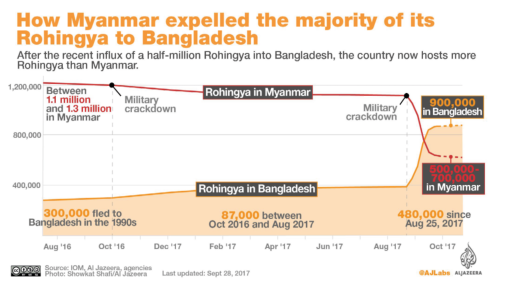
Figure 1: Rohingya refugees from Myanmar to Bangladesh
Source: Armstrong 2018
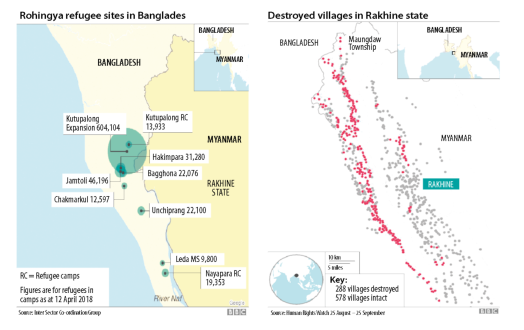
Figure 2: Destroyed villages in Rakhine and refugee sites in Bangladesh
Source: BBC 2020
- 49/50 -
on colonising nations, which combines both a general ideology and particular policies to form general and economic ideology.[25] The counter-modernisation movement resulted in religious and linguistic groups rebelling and demanding a return to fundamentalism.[26] In contrast, secularisation is a process, a transition from a prescriptive to a principled society, but it does not mean that religion disappears.
The oppression of the Rohingya people was brutal and turned into genocide, and this brutality amounts to a vulgar violation of their human rights[27] in Myanmar. The way in which Myanmar governments have estranged Rohingya through nationalistic and religious policies forms the essential background to this study, which aims to uncover the role of ICT in the governance of refugees.
Refugee and ICT - global depiction
The world has witnessed the displacement of an enormous number of people since World War II, in excess of any earlier period in history. There are approximately 250 million migrants all over the world of whom 60 million are refugees. Several reports that have been published by the various global research and human rights organisations have emphasised the way that the "refugee crisis" is perceived only as the problem of Middle Eastern and European countries, which are facing enormous challenges due to the refugee influx. However, a large number of refugees are hosted by many developing countries around the world. The refugee crisis is well known due to the scale of the human tragedy, and there is a high level of public awareness of it with massive media coverage. Overall, more than 168 million people across the world need humanitarian assistance and protection - and more funding than ever before.[28] According to a report published by the Financial Tracking System, about 135.3 million people needed humanitarian support in 2009, while the fund required USD 9 billion for assistance but received only USD 7 billion. In the year 2018, the fund required USD 25.2 billion and received only USD 14.6 billion,[29] and this gap is continuously widening and creating risk and anxiety for the leaders of the world in the coming years.
Global and local actors, including GOs, NGOs, and other humanitarian organisations, are working together as a team to respond to the issue of refugees and support them in various ways. Information and communication technology is playing a significant role in this digital era of technology during the journey of these people from citizens to refugees. A smart mobile phone is an integral piece of kit for millions of refugees as they move from
- 50/51 -
one place to another. ICT can assist refugees attain social inclusion and help empower them "to fully participate in society and control their own destinies".[30]
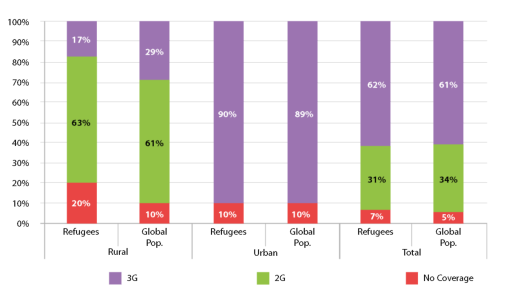
Figure 3: Refugees vs. global population: mobile network coverage
Source: UNHCR 2016
The global spread of mobile telephone ownership has changed the landscape of technology and development in many ways. It is widely observed that the mobile telephone is an indispensable technology in the 21[st] century, and this is equally the case in refugee camps where people have to settle down and where communities have developed the infrastructure needed for things like LAN lines, computer laboratory, mobile phones, etc. In 2016, the United Nations High Commissioner for Refugees (UNHCR) highlighted how internet and mobile telephone connectivity can improve refugee well-being and transform humanitarian action. They reported that 93% of refugees have access to some level of digital and mobile devices.
In this regard, Filippo Grandi, the United Nations High Commissioner for Refugees, stated that
"Most importantly, connectivity can help broaden the opportunities for refugees to improve their own lives and pursue a vision of a future that would otherwise be denied to them [...] Refugees deem connectivity to be a critical survival tool in their daily lives and are willing to make large sacrifices to get and stay connected."[31]
- 51/52 -
The report published by UNHCR in 2016 revealed that mobile phone and internet access are vital for displaced persons, not only for connecting them with loved ones, but also for ensuring their safety and security, and essentials such as food, shelter, and water. The study also found that access to mobile phones depends on affordability, with refugees in urban areas tending to have parallel access to mobile devices like other urban people. However, for those who are in rural regions, the scenario is very different. In these contexts, only one person in five has a mobile and one in six has 3G access, which is a considerably lower proportion than for the population at large. These findings originated at a moment when the world was witnessing an enormous number of people being driven from their homes by war and persecution, more than at any time in world history. At the end of 2018, 70.8 million people were globally displaced, of whom 2-9 million were refugees. Confronted by this persistent need, the results of the study suggested further investments in three key areas, which composed the basis of a new UNHCR Global Strategy for Connectivity for Refugees. These comprise: a) increasing the accessibility of mobile networks; b) improving affordability; and c) providing access to training, digital content, and services.[32]
People in rural settings also have access to internet connectivity to some degree, although the costs and barriers are surprisingly high. UNHCR found that a significant portion (two-thirds) of the financial resources available to many refugees are being spent on calls and other means of staying connected. Recognising this fact helps in determining the situation and needs of many of these communities. This is also relevant to education and security and may initiate a conversation about the changing fabric of these communities in society that persists throughout the migratory journeys and involves cultural norms and practices that are emerging within the new technological landscape. However, refugees still face several challenges, such as technological skills, access and use.[33]
Refugee and ICT - Bangladesh depiction
Refugee and food security: the role of ICT
The refugee influx in 2017 generated a perilous situation for both the refugees and the government of Bangladesh. Bangladesh is facing several challenges to its efforts to uplift the economy from a developing to a middle-income level with steady economic growth. With the development of a multi-dimensional aspect, it is necessary to make progress in many areas to ensure the well-being of the citizens of Bangladesh. Although Bangladesh is now self-sufficient in food production, problems with the equal distribution of income and food persist. The refugees who fled from Myanmar also faced hazardous and unsafe conditions even in Bangladesh at that time due to shortages of food, shelter, and security. Refugees are
- 52/53 -
Table 1: Different family sizes and received items
| Family size and persons | Number of baskets* Receive |
| Small size (1-3) persons | One basket |
| Medium size (4-7) persons | Two baskets |
| Large size (8-11) persons | Three baskets |
| Very large size (11+ persons) | Four baskets |
* One basket = rice 30 kg, pluses 9 kg, fortified vegetable oil 3 l
known to be vulnerable and exclusively dependent on humanitarian assistance.[34] The influx of refugees reduced the scope of income generation for unskilled labourers in a highly competitive labour market, leading them to seek external aid for their main income.
The World Food Program (WFP) and the Food and Agriculture Organization (FAO) are leading the efforts, along with about 30 other national and international organisations, to ensure food security for the refugees. More than 880,000 people are directly connected to the general food service that is provided in 34 refugee camps. However, the unregistered refugees are among the most vulnerable, who typically came before the influx.[35] The food service is provided by in-kind or e-vouchers and complimentary food items. At the end of March 2019, about 65% of refugees use the e-voucher service. In-kind foods are life-saving, although to ensure more diversified diets, an e-voucher was programmed to be implemented by December 2019, while the refugees also need fuel, health care, light and electricity and access to safe drinking water, which are also crucial.[36] The following baskets of in-kind food items are distributed twice per month from 19 scattered points of distribution through 32 camps (Table 1).
The WFP is, with the cooperation of a range of food security partners, trying to enhance the dietary diversity for the most vulnerable people, such as children up to 5, the elderly, disabled people, pregnant women, people with chronic illnesses, and lactating mothers, who are receiving in-kind blanket food assistance complemented by vouchers for fresh food items, e.g. fish, eggs, vegetables, and spices. The WFP has planned, through a bio-metric debit card, to transition all the refugees from in-kind food assistance to e-vouchers. A refugee can use the debit card (SCOPE) to purchase a range of food items from private shops contracted by WFP, while the debit cards are credited monthly.
There were initially 10 e-voucher outlets, which was increased to 21 at the end of 2019, and 24 shops with one shop serving 5,000 to 20,000 households in seven camps. To ensure the diversity of food and nutritional security, the refugees have been offered twenty food items, among which twelve compulsory items are sold at a fixed price, set before negotiation, along with eight flexible items which traders choose to sell.
- 53/54 -
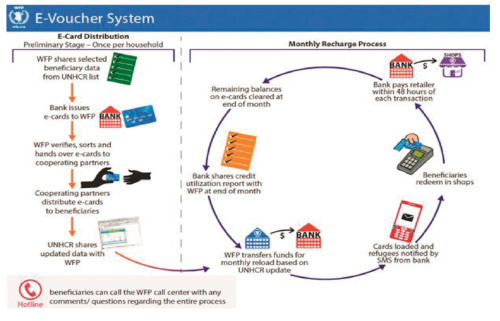
Figure 4: E-voucher system
Source: Luce 2015
Technology in gender and development
Considerations of gender have been fairly prominent in the discourse around the development of ICTs in refugee camps. the crucial role of mobile phones and how they are changing the landscape of technology and development has long been recognised, and the notion of mobile phones as "technological leapfrogging" in the 21st century is quite a popular and commonly voiced opinion. ICT also contributes to greater refugee empowerment through mobile-based technology, especially social media,[37] among other purposes to help the governing process in the refugee camps. In a typical example, a senior woman of a family was given the SCOPE card issued by the WFP, but the control and use of the card were implemented by the male person, and the entire decision was made by the male. This illustrates how women are still struggling to be empowered within the household decision-making process.[38]
The Rohingya Emergency Vulnerability Assessment-2 (REVA-2) reveals the precarious circumstances currently surrounding these refugees: the absence of resources and
- 54/55 -
inadequate income-generating opportunities only degrade their situation further. Overall, food-related coping has improved during 2018 and is found to be more predominant among newly arrived refugees as compared to registered refugees.[39] "Offline constraints and incentives still appear to frame the nature of online interaction much more than generally acknowledged, and it is, therefore, important to see and understand the realities of marginalization in which internet use is embedded and the complex tapestry of a socio-economic crisis that frames it."[40]
Migration integration governance and justice in refugee camps
The Government of Bangladesh (GoB) is always respectful of international human rights laws and treaties. It has also showed its generosity in every aspect of national and international human rights issues. Bangladesh historically was not familiar with the refugee issue. Although it had started to receive Rohingya after its independence, this migration pattern assumed dramatic proportions only in 2017 when the persecution and ethnic cleansing of Rohingya people by the Myanmar government started in Rakhine state. The latest instance of aggression was termed "ethnic cleansing",[41] and this triggered the massive Rohingya refugee influx into Bangladesh. Many of them were biometrically registered and given identity cards by the Immigration and Passport Department of Bangladesh,[42] which also provided shelter, relief, and medical services.[43] Although, with the cooperation of local and global agencies, the government was able to respond to the crisis, it is evident that contemporary life-saving funding is not sustainable and sufficient for programming and humanitarian actions. It is crucial to initiate a more development-oriented approach in order to build national resilience and sustain the degree and value of service delivered.[44]
The influx of Rohingya refugees into Bangladesh was the largest human displacement of the 21[st] century in the region. Bangladesh has had tremendous success in its immediate scale-up and partnership with other humanitarian organisations and communities to deliver support and a shield for saving the lives of the refugees.[45] Refugees are governed, including their habitation and movement, by the Foreigners Act of 1946 (Article 3) because Bangladesh is neither a signatory of the 1951 Refugee Convention nor the 1967 Protocol concerning the Status of Refugees and does not have a refugee law. The Foreigners Act empowered the government to retain the migrants in a prescribed place and put movement restrictions on them until they obtain permission to travel, with a valid reason. Refugees
- 55/56 -
are allowed to go outside of the camp to doctors and courts with prior approval by camp administrators (CICs). Bangladesh has signed various global human rights treaties that indirectly support the Rohingya refugees in humanitarian aspects. However, these are limited in that they are not enforceable in a local court by domestic law for their misconduct, which raises questions about the issue of local security.[46]
ICT and refugee family unification: protection and assistance
The Ministry of Home Affairs of the Government of Bangladesh (GoB) conducted a biometric registration of the refugees who had been in the country and were undocumented before the incursion as well as the new arrivals who came in 2017. The process ended in June 2018, and 1.2 million registered refugees have been given individual MOHA cards. The primary challenge was to find the missing link between the individual and his or her family members which was crucial for assistance at the household level.
UNHCR has started to complement MOHA's registration, in association with the Refugee, Relief, & Repatriation Commissioner (RRRC), for support and shielding purposes and to tie every individual to a family. In March 2018, 876,000 persons and/or 203,407 households had been assessed and connected to a family and were given a Family Card with a Family Counting Number (FCN) when their housings were geotagged.[47]
However, these cards (MOHA and FCN) were later replaced by a Smart Card with a household ID number when MoHA and UNHCR began a combined registration process in June 2018 at five registration sites, where the previous registration had taken place, for updating biodata and biometrics for the next three years, including an iris scan, to amalgamate and modify some of the adequacies of the earlier registration. Already, 43% of the refugees had been registered under this scheme by the end of June 2019, which amounts to
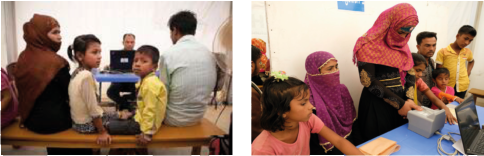
Figure 5: The EU and UNHCR support refugee registration in Bangladesh
Source: Reardon 2019; St-Denis 2019
- 56/57 -
374,000 persons and 82,000 refugee households. Once officially registered, refugees receive a smart card with a household identification to replace both the MOHA and FCN cards. As of 30 June 2019, about 43% of the refugee population had been officially registered, the equivalent of about 374,0 0 0 individual refugees and 82,000 refugee households.[48] It is also evident that the use of social media like WhatsApp and/or Facebook Messenger, in a new society mostly used by refugees, is efficient, cost-effective, and a favourite means of communication due to easy access to communicate with their family members and relatives including those back home.[49]
Refugee, terrorism and homeland security governance of Bangladesh
The concept of terrorism indicates that the terrorist has a clear goal for every attack that they carry out. It is also widely agreed that terrorists believe in the need for violence to coerce the society to make changes because they are not satisfied with the current institutional structure of the existing one. At the same time, they typically claim that they do not have many choices. Techfugees is an umbrella organisation that works on refugee-related issues, founded by Mike Butcher in September 2015. It has created a novel media landscape and become a central site for those working in networking and information exchange on the site. The organisation focuses on ICT that is conducive to receiving and supporting refugees who have fled their homeland and who are living in a camp in the host country. ICT refers to digital devices and systems that are accessible to everyone. The main technology used by refugees for information and communication technology is the internet because it is cheap and easy to access. ICT is crucial for externally displaced persons during their distressing journey from their home to the host country. It also enables them to maintain contact with their relatives and stabilise their insecure and uncertain situation to a degree.[50]
The most serious issue is that the refugees are not permitted to have any job according to the law of the land of the host country while at the same time they have been given free food and many basic items that may not even be available to many members of the host community. In this process, their consumption habits were changed without any income-generating behaviours, although it is a humanitarian issue, after all. In this way, the lifestyle that refugees are enjoying will be strengthened because they do not want to lose it and they will try to maintain it by any means possible. The threat to the host country posed by a funding crisis can create an unstable situation where several measures need to be taken for integration, resettlement, and repatriation. However, ICT-based identification is a strong mechanism to trace and track any individual who represents a threat to the host community and country, as well as to refugees.
- 57/58 -
ICT for sensitisation or understanding education and languages
Information and communication technology (ICT) for development is a new avenue and creates a new eco-system that combines ICT and development theory to expedite the speed, intensity, and diversity of this arena that is unprecedented. ICT plays a decisive role in educating refugees and providing access to various resources for learning languages. Education in (local) languages is a key to communicating with local groups, officials, and other people during the journey of a refugee. It also helps them to lead their daily lives in a host country. Education through ICT can also facilitate their participation in further educational programs that help them in their daily lives as asylum seekers or to resettle elsewhere. Addressing the challenges of accessibility to education and other basic services, the intervention of ICT has benefitted refugees in various parts of the world.[51] However, while it is valuable to provide electronic educational materials, it is inadequate without inclusive teaching support to achieve the ultimate goals of the refuge.[52]
ICT in education for Rohingya refugee
The number of refugee children has increased as conflicts interrupt societies on a global scale. Providing education for refugees and displaced people is becoming more challenging over time as the numbers of affected people are increasing. As such, host countries need to arrange adequate facilities to provide appropriate education to refugee children when they receive them.[53] The joint efforts of the government of Bangladesh and UN agencies and NGOs have saved many lives in refugee camps. However, this is not sufficient to ensure that refugees live with dignity and are self-reliant. Education has been identified as a key lever to involve children and young people in social and political life, while social equity and cohesion are political priorities at the local and global levels. ICT holds 'great promise' to respond to unmet education needs within refugee settings.[54] However, ICT implementation in education also requires skilled and trained teaching staff, while the absence of both can create barriers to effective education for the refugee community. ICT can support the learning process, but it is not a comprehensive solution to refugee children's educational needs, and none of the technological interventions are likely to be effective in obtaining the full benefit of ICT utilisation for education in refugee camps that are solely dependent on trained and dedicated teachers. The teacher is pivotal for learning, particularly in refugee education.
Two aspects of ICT intervention for refugee education were focused on globally by the recent review, which recommended: a) strengthening teacher training through cooperation
- 58/59 -
with ICT programmers and local authorities; and b) enabling teachers to track students in various ways to manage and monitor their learning, while allowing them to get in touch with their peers and colleagues via SMS or social networks to support shared knowledge and to provide psychological support during trauma and post-traumatic stress.[55]
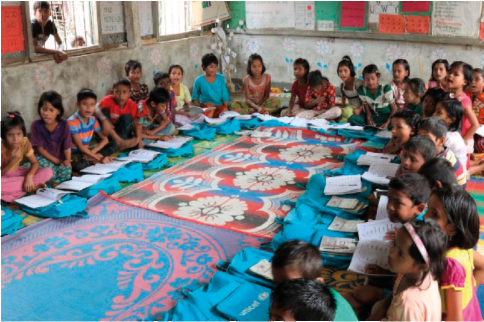
Figure 6: Rohingya refugee children study at an informal education centre at Kutupalong refugee camp run by Caritas Bangladesh (Photo: Stephan Uttom/UCA News/2017)
Source: Rozario 2020
Education, skill-building, and livelihoods are inseparable for effective and durable resolutions and reintegration of refugees. The governments of the host countries and the international aid agencies are struggling to ensure a safe environment for learning and quality education for refugees. While many may be overly depending on ICT to offer at least part of the solution, ICT can indeed offer, even among impoverished refugees, a platform that educators can leverage to reach marginalised children and youth through the use of smartphones and other mobile devices.
UNICEF, along with other humanitarian organisations, was providing informal education in 2019 to Rohingya refugee children from 4 to 14 years old. More than 300,000 refugee children and adolescents were studying in 3,200 learning centres of which over 70% were
- 59/60 -
supported by UNICEF. Although it was considered a development 'over the status quo ante', the education quality was very poor due to a lack of lesson plans, textbooks, and adequate training for the teachers. ICT plays a crucial role in managing these educational centres and continuing to provide education services in the world's largest refugee camp.[56]
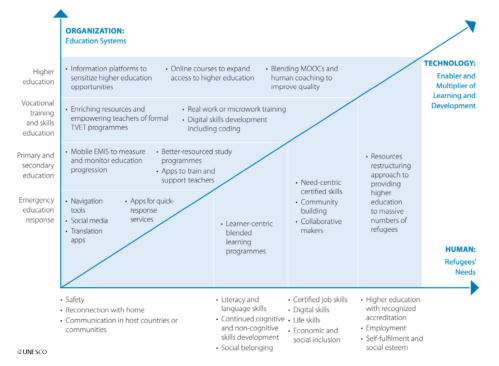
Figure 7: A human-organisation-technology model to map the values of mobile learning for refugees
Source: UNESCO 2018
Educating Rohingya refugee children with a structured curriculum, effective teaching, and consistent evaluation in the Rohingya refugee camps is hindered due to the lack of qualified and trained teachers. While the use of ICT can help overcome these difficulties, several challenges remain before it can help those in vulnerable and disadvantaged situations. There is a growing need for technological intervention in refugee education that countries around the world are trying to address. The outbreak of the Covid-19 pandemic prompted the governments of host countries to use technology for refugee education, and Bangladesh is also making efforts in this area.
- 60/61 -
ICT and public health of Rohingya refugee
Refugees are vulnerable to public health crises. They are experiencing stressful situations nowadays due to the double burden placed on the health sector after the outbreak of Covid-19. There is no doubt that increasing life expectancy, coupled with "the economic and societal costs of managing chronic diseases", has put healthcare systems in many countries under stress.[57] Public health concerns for refugees are becoming more challenging and result in more vulnerabilities. However, this is addressed several times for equity in public health, especially during conflict and pandemics.[58] Although public health facilities are provided in refugee camps, many camps can only offer limited support for refugees' health-related issues, which are inadequate in quality, numbers, and expertise. Moreover, some of them are not well equipped logistically for emergency support.[59]
Homeless refugees are at "heightened risk of disease exposure and transmission due to their reliance on precarious water, sanitation, and hygiene facilities" and refugee children[60] are the most vulnerable[61] and susceptible to different infectious diseases today, as almost 50% of those affected are children. Serious health issues are common in refugee children, along with mental trauma. Cardiac and respiratory diseases and acute asthma along with other serious health complications are also common. Malnutrition is a frequent problem due to food insecurity and the lack of a proper diet for both children and adults.[62] Moreover, refugees have an extensive knowledge gap in maternal and reproductive health due to poor infant feeding care practices and low diet diversity. There is a meagre "water supply, poor hygiene and sanitation facilities, and low vaccination rates that pose a greater risk for disease outbreaks and malnutrition in refugee camps than in mass populations" which is a great concern for public health.[63]
Employment and skill development
The Rohingya refugees are restricted in their camps and not allowed to be integrated into the host community workforce. That is why it is a great problem for them to grasp the opportunities to find work due to legal constraints along with cultural and language barriers. However, the youth are allowed to join skill development programs to work inside the camps and to utilise their skills after repatriation, integration, or migration to a third country. The use of ICT has intensified and its value in economic and public services is
- 61/62 -
recognised with unprecedented magnitude, while it has a profound impact on job-seeking, self-reliance, and social inclusion for refugees. It is evident that refugees are using mobile phones to access digital services and opportunities for employment and entrepreneurship. A digitalised economy requires digital skills and other cognitive and non-cognitive skills along with innovativeness, problem-solving, and collaboration skills, which demands a well-structured education system that is absent for Rohingya refugees. Hundreds of thousands of adolescents living in the world's largest refugee camp urgently need learning opportunities.
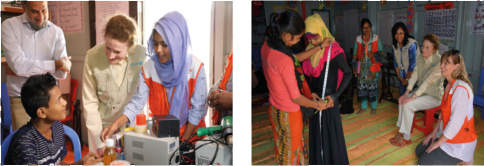
Figure 8: Skills training to Rohingya adolescents (Photo: Shabir Hussain & Karen Homer, World Vision International)
Source: Homer 2019
However, only four percent of the children in these camps have access to some form of education, life skills, or vocational training.[64] Although children and their parents have top priority for education and skill development training, there is a massive gap in access for children and adolescents. To bridge this vast gap and provide skill development training, World Vision initiated life-skill and pre-vocational training for adolescents.
ICT for consolidation system and the work of NGOs
Refugee camps are places where situations can change at any moment for several reasons. ICT can be helpful in a place where situations are changing rapidly and can meet the needs of the targeted people and effectively shape the governance landscape. NGOs are using different types of softwares that help them organise their work more effectively and promote accountability in service delivery. They use many devices, e.g. mobile and tablets, to conduct their assessment surveys, evaluate and process the responses and share them with other humanitarian local and international organisations that can be helpful for
- 62/63 -
refugees and which allows them to arrange and deliver the services. It is also helpful for the bodies that are working in that area to respond to the needs and demands of the refugees. WhatsApp, IMO, Viber, and/or Facebook Messenger are also useful tools for the volunteers and workers to track each other during the process of introducing any new service or product delivery in the refugee camps.
Refugee crisis and security tension across the region
The refugee crisis has become a security concern both for the refugees and for Bangladesh as a whole. The 21[st] century has witnessed several global crises, including refugee crises and the Covid-19 pandemic, that have led to stricter migration policies and restricted human movement all over the world. As a result, refugee migration for long-term settlement has become a lengthy and restrictive process, causing numerous crises for both the refugees and the host countries. In addition, this irregular type of migration intensifies the risks of human trafficking and poses a threat to the security of the host country, which critical security theory defines as a danger to society and replicates in the government policies of the country.[65] The security of the state has always received the highest priority in any case, especially considering the social factors that need to be analysed when terrorism and other security crises are perceived as threats. The Rohingya crisis in Myanmar has a long history that has been maintained by a separatist militant group called the Arakan Rohingya Salvation Army (ARSA) in Rakhine who fled as refugees in Bangladesh during military action and promoted terrorism while enflaming tension inside Bangladesh.[66] The recent influx of Rohingya was the highest ever in Bangladesh compared to other neighbouring countries, which raised more security concerns. Hefazat-e-Islam (a radical Islamist group) of Bangladesh declared Jihad against the Myanmar government with the aim of an independent Rakhine and indirectly forced the government of Bangladesh to welcome Rohingya when the state undermined its security,[67] which may cause security tensions in the near future as a vast group of Rohingya have been confined in camps for years with minimal facilities. The extremist group in Myanmar is regarded as "threatening to deepen sectarian tensions across the region [...] as Muslim communities grow increasingly angry over the treatment of Muslim Rohingya by Buddhist Rakhine".[68] In addition, it is alleged that ARSA has good connections with and receives funds from different militant organisations and Jihadist groups in this region. However, the government of India has already been informed about the threat to security in this region due to the Rohingya refugees.[69] The Taliban has given moral support to the ARSA since the beginning, and
- 63/64 -
India has faced several other cases of Islamic radicalism, so it could be an emerging security threat to this region if it is not addressed and managed properly to reach a permanent and peaceful settlement in the coming days.
Conclusion
The governments of developing countries continue to face several social, economic, and political challenges during their transition. The economy and society of Bangladesh has been running smoothly for the last decade, with steady economic growth putting it on the way to becoming a middle-income country, although it continues to face several crises. Rohingya refugees have appeared as perhaps its most serious crisis, while Bangladesh itself is one of the most densely populated countries in the world. In light of the worldwide and local refugee crises, we examined the significance of information and communication technology (ICT) in managing and overseeing refugees, given that the majority of refugees are being accommodated by developing nations. Research on the governance of refugees can help to develop effective ways to manage and resolve the crisis that the refugees and host countries are facing. The efforts to enhance the governance of refugees can also be complemented by researchers investigating the different contexts and perspectives of the crisis to identify the factors affecting the interplay between technology and refugees and to suggest a solution to the existing social problems. ICT-based service management has equipped regional and global humanitarian organisations to become effective and efficient in their service delivery with enhanced transparency and accountability. At the same time, there are many types of challenges when implementing ICT in this field, in areas including education, training, outreach, trust, and data protection. However, working with an existing structure, increasing access to technology, following the principles of responsible data practice, and fostering collaboration between the different stakeholders and groups can overcome the crisis and help complement the effective governance of refugees in a country that has no such previous experience.
References
Abujarour, Safa'a - Krasnova, Hanna (2017): Understanding the Role of ICTs in Promoting Social Inclusion: The Case of Syrian Refugees in Germany. In Proceedings of the European Conference on Information Systems, Guimarães, Portugal.
Abujarour, Safa'a - Krasnova, Hanna (2018): E-Learning as a Means of Social Inclusion: The Case of Syrian Refugees in Germany. In Proceedings of the Americas Conference on Information Systems, New Orleans.
Al-Mahmood, Syed Zain (2012): Burma's Rohingya Refugees Find Little Respite in Bangladesh. The Guardian, 29 June 2012. Online: www.theguardian.com/global-devel-opment/2012/jun/29/burma-rohingya-refugees-bangladesh
- 64/65 -
Andrade, Antonio D. - Doolin, Bill (2016): Information and Communication Technology and the Social Inclusion of Refugees. MIS Quarterly, 40(2), 405-416. Online: https://doi.org/10.25300/MISQ/2016/40.2.06
Armstrong, Martin (2018): Who are Rohingya Refugees in Bangladesh? Statista, 15 November 2018. Online: www.statista.com/chart/16109/who-are-the-rohingya-refu-gees-in-bangladesh/
BBC (2020): Myanmar Rohingya: What You Need to Know About the Crisis. BBC News, 23 January 2020. Online: www.bbc.com/news/world-asia-41566561
Berry, Mike - Garcia-Blanco, Inaki - Moore, Kerry (2016): Press Coverage of the Refugee and Migrant Crisis in the EU: A Content Analysis of five European Countries. Geneva: United Nations High Commissioner for Refugees. Online: www.unhcr.org/media/press-coverage-refugee-and-migrant-crisis-eu-content-analysis-five-europe-an-countries
Cohen, Louis - Manion, Lawrence - Morrison, Keith (2002): Research Methods in Education. London: Routledge. Online: https://doi.org/10.4324/9780203224342
Coutts, Evan (2005): The Rohingya Refugee Situation in Bangladesh. American International School/Dhaka Senior Project 2005. Online: www.rnapress.com/data/itemfiles/9bcc51b07210277172cfaca50dd60ff6.pdf
Dahya, N. (2016): Education in Crisis and Conflict: How Can Technology Make a Difference - A Landscape Review. GIZ.
Ganguly, Sumit - Miliate, Brandon (2015): Refugees and Neighbors: Rohingya in Bangladesh. The Diplomat, 14 October 2015. Online: https://thediplomat.com/2015/10/refugees-and-neighbors-rohingya-in-bangladesh/
Gianfreda, Stella (2018): Politicization of the Refugee Crisis?: A Content Analysis of Parliamentary Debates in Italy, the UK, and the EU. Italian Political Science Review/Rivista Italiana di Scienza Politica, 48(1), 85-108. Online: https://doi.org/10.1017/ipo.2017.20
Goma Epidemiology Group (1995): Public Health Impact of Rwandan Refugee Crisis: What Happened in Goma, Zaire, in July, 1994? The Lancet, 345, 339-344. Online: https://doi.org/10.1016/S0140-6736(95)90338-0
Hamilton, Richard - Moore, Dennis (2003): Educational Interventions for Refugee Children: Theoretical Perspectives and Implementing Best Practice. Routledge.
Holsti, O. R. (1969): Content Analysis for the Social Sciences and Humanities. Reading, MA: Addison-Wesley.
Holzer, Elizabeth (2013): What Happens to Law in a Refugee Camp? Law & Society Review, 47(4), 837-872. Online: https://doi.org/10.1111/lasr.12041
Homer, Karen (2019): Skills Training to Equip 8,400 Rohingya Adolescents with Hope for a Better Future. World Vision, 26 February 2019. Online: www.wvi.org/myanmar-%E2%80%93-bangladesh-refugee-crisis/article/skills-training-equip-8400-rohingya-adolescents-hope
Hossain, A. N. M. (2020a): Rohingya Refugee and Resettlement Nexus in Bangladesh: Why it Become a Research Agenda? Journal of Social and Political Sciences, 3(3), 868- 874. Online: https://doi.org/10.31014/aior.1991.03.03.219
- 65/66 -
Hossain, A. N. M. (2020b): Unfolding the Role of Non-State Actors in Rohingya Refugee Crisis at Bangladesh. Koąická Bezpečnostná Revue, 10(2), 17-33. Online: https://kbr.vsbm.sk/2020/n2/hossain.pdf
Hossain, A. N. M. Z. (2021a): Sustainable development and livelihoods of Rohingya refugees in Bangladesh: The effects of COVID-19. International Journal of Sustainable Development and Planning, 16(6), 1141-1152. Online: https://doi.org/10.18280/ijsdp.160615
Hossain, A. N. M. Z. (2021b): The Future of Refugee and Displaced People: A Post Covid-19 Perspective. Asian Social Science, 17(1), 21-33. Online: https://doi.org/10.5539/ass.v17n1p21
Human Rights Watch (2000): Burmese Refugees in Bangladesh: Still No Durable Solution. 1 May 2000. Online: www.hrw.org/report/2000/05/01/burmese-refugees-bangladesh/still-no-durable-solution
Human Rights Watch (2019): Are We Not Human?: Denial of Education for Rohingya Refugee Children in Bangladesh. Online: www.hrw.org/sites/default/files/report_pdf/bangladesh1219_web_1.pdf
Islam, Nurul (2006): Facts about the Rohingya Muslims of Arakan. Arakan Rohingya National Organisation. Online: www.rohingya.org/facts-about-the-rohingya-muslims-of-arakan
Iwilade, Akin (2015): New Spaces, New Interactions? Young People's Online Social Networks and Gender Relations in Africa. Gender, Technology and Development, 19(1), 70-90. Online: https://doi.org/10.1177/0971852414561613
Japan Times (2017): Security Concerns Build in South Asia as Rohingya Crisis Worsens. The Japan Times, 15 September 2017. Online: www.japantimes.co.jp/news/2017/09/15/asia-pacific/securityconcerns-build-south-asia-rohingya-crisis-worsens/#.WfBueJj2aP8
Joehnk, Tom F. (2017): How the Rohingya Crisis is Changing Bangladesh, The New York Times, 6 October 2017. Online: www.nytimes.com/2017/10/06/opinion/rohingya-bangladesh-myanmar.html
Johnson, Harry G. (1967): The Ideology of Economic Policy in New States. In Johnson, Harry G. (ed.): Economic Nationalism in Old and New States. Chicago: University of Chicago Press, 124-141. Online: https://doi.org/10.4324/9781003195665-8
Khatun, Fahmida - Kamruzzaman, Md (2018): Fiscal Implications of Rohingya Crisis for Bangladesh. Center for Policy Dialogue (CPD).
Knuters, Simon (2018): Political Buddhism and the Exclusion of Rohingya in Myanmar. Master's Thesis in Human Rights, Uppsala University, Norway.
Leider, Jacques (2018): Rohingya: The History of a Muslim Identity in Myanmar. In Oxford Research Encyclopedia of Asian History. Online: https://doi.org/10.1093/acrefore/9780190277727.013.115
Lewa, Chris (2009): North Arakan: An Open Prison for the Rohingya in Burma. Forced Migration Review, (32), 11-13.
- 66/67 -
Lewis, Kent - Thacker, Simon (2016): ICT and the Education of Refugees: A Stocktaking of Innovative Approaches in the MENA Region. SABER-ICT Technical Paper Series No. 17. Washington, DC: World Bank. Online: https://doi.org/10.1596/26522
Luce, Edgar (2015): Evolution for WFP's Food Assistance Program for Syrian Refugees in Jordan. ENN Online, 24 March 2015. Online: www.ennonline.net/fex/48/evolution
Mason, Ben - Buchmann, Dennis (2016): ICT4 Refugee. Berlin: GIZ.
Milton, Abul H. - Rahman, Mijanur - Hussain, Sumaira - Jindal, Charulata - Choudhury, Sushmita - Akter, Shahnaz - Ferdousi, Shahana - Mouly, Tafzila A. - Hall, John - Efird, Jimmy T. (2017): Trapped in Statelessness: Rohingya Refugees in Bangladesh. International Journal of Environmental Research and Public Health, 14(8). Online: https://doi.org/10.3390/ijerph14080942
Mitra, D. (2017): Public Anger Brews in Bangladesh over India's Stance on Rohingya Crisis. The Wire, 10 September 2017. Online: https://thewire.in/176013/bangaldesh-rohingya-crisis-myanmarindia/
Nadig, Aninia (2002): Human Smuggling, National Security, and Refugee Protection. Journal of Refugee Studies, 15(1), 1-25. Online: https://doi.org/10.1093/jrs/15.1.1
Needs and Population Monitoring (NPM) (2018): Government of Bangladesh, Round 13, November 2018. Online: https://data.humdata.org/dataset/iom-bangladesh-needs-and-population-monitoring-npm-round-13-site-assessment
Oberg, Charles (2019): The Arc of Migration and the Impact on Children's Health and Well-Being Forward to the Special Issue-Children on the Move. Children, 6(9). Online: https://doi.org/10.3390/children6090100
Oh, Su-Ann (2017): Surveillance and Control: The Encampment and Biometric Identification of Rohingya Refugees in Bangladesh. ISEAS Perspective 93. Singapore: ISEAS-Yusof Ishak Institute.
OHCHR (2017): Darker and More Dangerous: High Commissioner Updates the Human Rights Council on Human Rights Issues in 40 Countries. Geneva: Office of the United Nations High Commissioner for Human Rights (OHCHR). Online: www.ohchr.org/EN/NewsEvents/Pages/DisplayNews.aspx?NewsID=22041
Panhuis, Janette (2018): Neglected Populations, Neglected Diseases. European Heart Journal, 39(14), 1124-1127. Online: https://doi.org/10.1093/eurheartj/ehy139
Patton, Michael Q. (2014): Qualitative Research & Evaluation Methods: Integrating Theory and Practice. SAGE.
Prodip, Mahbub A. (2017): Health and Educational Status of Rohingya Refugee Children in Bangladesh. Journal of Population and Social Studies, 25(2), 135-146. Online: https://doi.org/10.25133/JPSSv25n2.005
Rahman, Utpala (2010): The Rohingya Refugee: A Security Dilemma for Bangladesh. Journal of Immigrant & Refugee Studies, 8(2), 233-239. Online: https://doi.org/10.1080/15562941003792135
Reardon, Chistopher (2019): Angelina Jolie Urges End to the Injustices that Have Driven Nearly a Million Rohingyas into Exile in Bangladesh. UNHCR, 7 February 2019.
- 67/68 -
Rozario, Rock R. (2020): Bangladesh Permits Education for Rohingya Children. UCA News, 2 January 2020. Online: www.ucanews.com/news/bangladesh-permits-education-for-rohingya-children/87099#
Siddiqui, Habib (2005): Rohingya: The Forgotten People. Islamicity, 22 August 2005. Online: www.islamicity.org/2698/rohingya-the-forgotten-people/?AspxAutoDetectCookieSupport=1
Smith, Martin (1996): The Muslim "Rohingyas" of Burma. Burma Centrum Nederland. Online: www.burmalibrary.org/sites/burmalibrary.org/files/obl/docs24/Martin_Smith-1995-12-11-The_Muslim_%27Rohingyas%27_of_Burma.pdf
South, Ashley (2003): Mon Nationalism and Civil War in Burma: The Golden Sheldrake. New York: Routledge.
St-Denis, Alex (2019): Registration Gives Many Rohingya Refugees Identification for the First Time, UNHCR, 17 May 2019. Online: https://reliefweb.int/report/bangladesh/registration-gives-many-rohingya-refugees-identification-first-time
Stone, Philip J. - Dunphy, Dexter C. - Smith, Marshall S. - Ogilvie, Daniel (1966): The General Inquirer: A Computer Approach to Content Analysis. Cambridge, MIT Press.
Toole, M. J. - Waldman, R. J. (1997): The Public Health Aspects of Complex Emergencies and Refugee Situations. Annual Review of Public Health, 18(1), 283-312. Online: https://doi.org/10.1146/annurev.publhealth.18.L283
Truelove, Shaun - Abrahim, Orit - Altare, Chiara - Lauer, Stephen A. - Grantz, Kyra H. - Azman, Andrew S. - Spiegel, Paul (2020): The Potential Impact of COVID-19 in Refugee Camps in Bangladesh and Beyond: A Modeling Study. PLoS Medicine, 17(6), e1003144. Online: https://doi.org/10.1371/journal.pmed.1003144
Uddin, Nasir ed. (2012): To Host or to Hurt: Counter-Narratives on Rohingya Refugee Issue in Bangladesh. Bangladesh: Institute of Culture et Development Research.
Ullah, Akm A. (2011): Rohingya Refugees to Bangladesh: Historical Exclusions and Contemporary Marginalization. Journal of Immigrant & Refugee Studies, 9(2), 139-161. Online: https://doi.org/10.1080/15562948.2011.567149
UNESCO (2018): A Lifeline to Learning: Leveraging Technology to Support Education for Refugees. The Global Education 2030 Agenda. Online: https://doi.org/10.54675/ULTW4494
UNHCR (2016): Connecting Refugees. How Internet and Mobile Connectivity can Improve Refugee Well-Being and Transform Humanitarian Action. Online: https://reliefweb.int/report/world/connecting-refugees-how-internet-and-mobile-connectivity-can-im-prove-refugee-well-being
UNHCR (2019): UNHCR-WFP Joint Assessment Mission (JAM) Report. Online: https://data.unhcr.org/en/documents/details/72273
UNHCR (2020): Figures at a Glance. Online: www.unhcr.org/figures-at-a-glance.html
- 68/69 -
United Nations (2019): A Record Number of People Will Need Help Worldwide during 2020: UN Humanitarian Overview. 4 December 2019. Online: https://news.un.org/en/story/2019/12/1052731
Van Klinken, Gerry - Aung, Su M. T. (2017): The Contentious Politics of Anti-Muslim Scapegoating in Myanmar. Journal of Contemporary Asia, 47(3), 353-375. Online: https://doi.org/10.1080/00472336.2017.1293133
Vernon-Bido, Daniele - Frydenlund, Erika - Padilla, Jose J - Earnest, David C. (2017): Durable Solutions and Potential Protraction: The Syrian Refugee Case. In Proceedings of the 50[th] Annual Simulation Symposium, 1-9. Online: https://doi.org/10.22360/springsim.2017.anss.034
Warschauer, M. (2003): Technology and Social Inclusion: Rethinking the Digital Divide. Cambridge, MA: MIT Press. Online: https://doi.org/10.7551/mitpress/6699.001.0001
Weber, Robert P. (1990): Basic Content Analysis (Vol. 49). Newbury Park, CA: SAGE. Online: https://doi.org/10.4135/9781412983488
WFP (2018): Rohingya Emergency Vulnerability Assessment-2 (REVA-2), Cox's Bazar, Bangladesh.
Williamson, Kirsty - Given, Lisa - Scifleet, Paul (2013): Qualitative Data Analysis. In Williamson, Kirsty - Johanson, Graeme (eds.): Research Methods: Information, Systems, and Contexts. Prahran: Tilde University Press, 417-439.
World Bank (2016): ICT and the Education of Refugees: A Stocktaking of Innovative Approaches in the MENA Region: Lessons of Experience and Guiding Principles. New York: World Bank. Online: https://openknowledge.worldbank.org/bitstream/handle/10986/25172/Lessons0of0exp0d0guiding%200principles.pdf?sequence=1&isAllowed=y
World Economic Forum (2020): The Global Risks Report 2020. Online: https://es.weforum.org/reports/the-global-risks-report-2020
A. N. M. Zakir Hossain is a PhD student in the Doctoral School of Public Administration Sciences Faculty of Public Governance and International Studies of the Ludovika University of Public Service, and Faculty of Political Science in the Department of Agricultural Economics at the Bangladesh Agricultural University. His research combines interests in public policy, refugee and minority studies, gender studies, citizenship education, human rights, agricultural policy, local governance, security, and crisis management in Bangladesh including South and Southeast Asia and Central European countries. ■
NOTES
[1] This paper is a revised and updated version of a conference paper published in the conference proceedings of Central and Eastern European eDem and eGov Days, 2020 titled 'How is ICT Shaping the Refugee Governance Landscape in Transitional Bangladesh'.
[2] Hossain 2020b.
[3] See: www.unhcr.org/figures-at-a-glance.html
[4] Holzer 2013.
[5] Mason-Buchmann 2016.
[6] Holsti 1969.
[7] Cohen et al. 2002; Weber 1990; Stone et al. 1966.
[8] Patton 2014.
[9] Williamson et al. 2013.
[10] Gianfreda 2018; Berry et al. 2016.
[11] Islam 2006; Prodip 2017.
[12] Ullah 2011.
[13] Ganguly-Miliate 2020.
[14] Human Rights Watch 2000; Smith 1996: 10.
[15] Coutts 2005.
[16] South 2003.
[17] Lewa 2009: 11.
[18] Uddin 2012.
[19] Al-Mahmood 2019.
[20] Siddiqui 2005; Leider 2018.
[21] Hossain 2020a.
[22] Van Klinken - Aung 2017.
[23] Milton et. al. 2017.
[24] Knuters 2018.
[25] Johnson 1967.
[26] Holzer 2013.
[27] Knuters 2018.
[28] United Nations 2019.
[29] See: https://reliefweb.int/report/world/global-humanitarian-overview-2018-enaresfrzh
[30] Warschauer 2003.
[31] UNHCR 2016.
[32] UNHCR 2016.
[33] Mason-Buchmann 2016.
[34] WFP 2018.
[35] WFP 2018.
[36] Needs and Population Monitoring (NPM) 2018.
[37] Andrade-Doolin 2016.
[38] UNHCR 2019.
[39] WFP 2018.
[40] Iwilade 2015.
[41] OHCHR 2017.
[42] Oh 2017.
[43] Khatun-Kamruzzaman 2018.
[44] Mason-Buchmann 2016.
[45] UNHCR 2019.
[46] Khatun-Kamruzzaman 2018.
[47] UNHCR 2019.
[48] UNHCR 2019.
[49] Abujarour-Krasnoya 2017; Vernon et al. 2016.
[50] Mason-Buchmann 2016.
[51] Abujarour-Krasnova 2017.
[52] Dahya 2016.
[53] Hamilton-Moore 2003.
[54] World Bank 2016.
[55] Lewis-Thacker 2016.
[56] Human Rights Watch 2019.
[57] World Economic Forum 2020.
[58] Hossain 2021a.
[59] Hossain 2021b.
[60] Panhuis 2018.
[61] Oberg 2019.
[62] Toole-Waldman 1997; Goma Epidemiology Group 1995.
[63] UNHCR 2019; Trueloye et al. 2020.
[64] Homer 2019.
[65] Nadig 2002.
[66] Rahman 2010.
[67] Joehnk 2017.
[68] Japan Times 2017.
[69] Mitra 2017.
Lábjegyzetek:
[1] The author is PhD student, Ludovika University of Public Service, Doctoral School of Public Administration Sciences and Department of Agricultural Economics, Bangladesh Agricultural University, anmzakirhossain@bau.edu.bd