

Feyza Ünal[1]: Confidentiality Disadvantages of the Med-Arb Method (Studia, 2025/4., 184-212. o.)
Absztrakt - A Med-Arb módszer titoktartási hátrányai
A mai gyorsan fejlődő világban, amelyet a technológiai fejlődés és az új üzleti modellek, valamint kapcsolatok megjelenése jellemez, a jogviták száma és jellege jelentősen megnövekedett. A hagyományos bírósági rendszer nehezen kezeli ezeket a vitákat, mivel korlátozott bírói kapacitással, archívum-infrastruktúrával és hosszadalmas ügyintézési idővel rendelkezik. Az igazságszolgáltatás tehermentesítése és a felek közötti jogviták gyors és igazságos lezárásának biztosítása érdekében alternatív vitarendezési módszereket fejlesztettek ki. E megoldási mechanizmusok között a közvetítés (mediáció) és a választottbíráskodás (arbitrázs) már széles körben ismert és elismert eljárások. Ugyanakkor a Med-Arb módszer egy viszonylag új és kevésbé ismert vitarendezési forma.
A Med-Arb módszer egy innovatív hibrid mechanizmus, amely ötvözi a közvetítés és a választottbíráskodás elemeit, és arra törekszik, hogy mindkét eljárás előnyeit kihasználja. E megközelítésben a vitarendezési folyamat először közvetítéssel kezdődik, amely során a felek egy semleges közvetítő irányításával tárgyalásokat folytatnak. Amennyiben a felek közötti megegyezés nem születik meg, a folyamat választottbíráskodási szakaszba lép, amelynek során egy kötelező érvényű döntést hoznak. A Med-Arb egyik fő különbsége a hagyományos közvetítéssel és választottbíráskodással szemben az, hogy ugyanaz a személy tölti be a közvetítő és a választottbíró szerepét, ezzel növelve az eljárás gyorsaságát és gazdaságosságát. Ez az eljárási sajátosság azonban titoktartási problémákat vet fel, mivel a közvetítés során feltárt titkos információk befolyásolhatják a választottbíró döntéshozatali folyamatát az azt követő választottbíráskodási szakaszban. Mivel nehéz elválasztani a közvetítés során szerzett információkat a választottbíráskodástól, kérdések merülnek fel az eljárás tisztességességét és pártatlanságát illetően.
E titoktartási dilemma kezelésére a jogtudományban különböző Med-Arb modelleket dolgoztak ki. Ezek a modellek arra törekednek, hogy minimalizálják a titoktartás kockázatait, miközben megőrzik a Med-Arb módszer hatékonyságát és rugalmasságát. Jelen tanulmány célja, hogy átfogó áttekintést nyújtson a Med-Arb módszerről, majd részletes elemzést végezzen
- 184/185 -
a titoktartással kapcsolatos kihívásokról és az e probléma kezelésére javasolt alternatív modellekről, amelyek célja az eljárás integritásának megőrzése.
Kulcsszavak: alternatív vitarendezés, hibrid vitarendezés, Med-Arb, Med-Arb hátrányai, Med-Arb modellek, pártatlanság, titoktartás
Abstract - Confidentiality Disadvantages of the Med-Arb Method
In today's rapidly evolving world, characterized by technological advancements and the emergence of new business models and relationships, the nature and volume of disputes have increased significantly. The traditional judicial system struggles to effectively manage these disputes due to limitations in judicial capacity, archival infrastructure, and the prolonged duration required for case resolution. To alleviate this burden on the classical judicial system while ensuring timely and equitable dispute resolution, alternative methods have been developed. Among these methods, mediation and arbitration have gained widespread recognition as prominent alternatives to litigation. However, Med-Arb remains a relatively novel and lesser-known approach to dispute resolution.
The Med-Arb method is an innovative hybrid mechanism that integrates mediation and arbitration, aiming to harness the advantages of both. In this approach, the dispute resolution process commences with mediation, allowing parties to engage in negotiations under the guidance of a neutral facilitator. If the parties fail to reach a resolution through mediation, the process seamlessly transitions into arbitration, where a binding decision is rendered. The distinguishing feature of Med-Arb, compared to conventional mediation and arbitration, lies in the fact that the same individual often serves as both mediator and arbitrator to enhance procedural efficiency and cost-effectiveness. However, this structural characteristic gives rise to a confidentiality issue, as sensitive information disclosed during mediation may inadvertently influence the arbitrator's decision-making process in the subsequent arbitration phase. Given the inherent challenge of separating the knowledge acquired in mediation from arbitration proceedings, concerns regarding procedural fairness and impartiality emerge. To address this confidentiality dilemma, various Med-Arb models have been proposed within legal scholarship. These models seek to mitigate confidentiality risks while preserving the efficiency and flexibility that Med-Arb offers as a dispute resolution method. This study aims to provide a comprehensive overview of the Med-Arb method, followed by an in-depth examination of the confidentiality challenges it presents and the alternative models proposed to safeguard confidentiality while maintaining the integrity of the process.
Keywords: alternative dispute resolution, confidentiality, disadvantages of Med-Arb, hybrid dispute resolution, impartiality, Med-Arb, Med-Arb models
- 185/186 -
1. The Med-Arb Method and Its Process
In many countries, traditional court systems have become increasingly overburdened due to the increasing number of disputes, archive burden, population growth and constraints in the judicial infrastructure. As a result, the time required to obtain a court judgement has increased significantly, leading to what is often described as 'delayed justice'. As Orhan Gazi famously said, 'Justice delayed is justice denied'. This challenge has been one of the main reasons for the development of Alternative Dispute Resolution (ADR) mechanisms.
ADR methods aim both to ease the workload of courts and to ensure that individuals have access to justice without delay, and these objectives are the reason why Med-Arb is so important today. The most widely recognized ADR mechanisms include mediation and arbitration. Mediation is a voluntary process that encourages the parties to reach a mutually acceptable solution, while arbitration is a legally binding procedure in which the parties submit their dispute to one or more arbitrators, particularly favored in commercial disputes. Each method has significant strengths but also significant limits. The search for a more balanced, efficient and flexible mechanism has therefore led to the birth of Med-Arb.
In this study, we will examine what Med-Arb is, what it has in common with mediation and arbitration, and what differences it has. In addition, we will also examine that Med-Arb is divided into several methods and what they are, and we will also take into account the confidentiality concerns of Med-Arb.
Med-Arb is a hybrid process that combines the advantages of mediation and arbitration. While this study does not aim to provide a comprehensive analysis of mediation or arbitration separately, as Med-Arb contains key elements of both, both mechanisms will be discussed to the extent necessary. The feature that distinguishes Med-Arb from traditional mediation and arbitration is that in most cases the same neutral can serve first as mediator and, if necessary, later as arbitrator; this feature is designed to increase procedural efficiency and cost-effectiveness.
The term Med-Arb is derived from the combination of "mediation" and "arbitration". This method has emerged as a response to the increasing number of court cases, aiming to provide a faster and more cost-effective solution within the Alternative Dispute Resolution (ADR) system. In recent years, it has been widely adopted. In essence, the Med-Arb method seeks to integrate the mediation and arbitration processes. It is particularly favoured in long-term business relationships or in cases where maintaining trust between the parties is crucial.[2]
The Med-Arb process consists of two main stages:
- 186/187 -
1.1. Mediation Stage
The mediation stage is a negotiation process designed to help the parties understand each other better, clarify mutual expectations, and establish a basis for settlement. In the Med-Arb method, the mediation phase is conducted similarly to a standard mediation process. The disputing parties initially attempt to resolve their conflict amicably through a mediator. The mediator, acting as a neutral and independent third party, facilitates the process by providing an objective perspective and assisting the parties in developing possible solutions.
During mediation, the dispute is thoroughly examined, and negotiations are conducted with due regard for the rights and interests of both parties. The mediator plays a crucial role in strengthening communication, fostering a constructive dialogue based on mutual understanding, and preventing the escalation of the dispute. A well-structured mediation process contributes to the peaceful resolution of conflicts.
The mediator evaluates the positions of the parties, identifies common interests, and proposes the most suitable solutions. The demands, expectations, and perspectives of both parties are carefully analysed. If the parties reach an agreement through negotiations during the mediation stage, the agreement is documented in writing and finalized with mutual consent. In this case, there is no need to proceed to the next stage of the Med-Arb process.
Studies suggest that despite methodological challenges, mediation generally leads to successful outcomes.[3] Furthermore, in cases where an arbitration clause is present, mediation has been found to be even more effective.[4] This demonstrates that the Med-Arb method can be a more effective approach in facilitating early settlements between parties.
1.2. Arbitration Stage
If the parties fail to reach an agreement during the mediation stage and the dispute remains unresolved, the process moves to the next stage. At this point, arbitration or court proceedings may be initiated to resolve the conflict. Within the framework of the Med-Arb method, if no settlement is achieved in mediation, the dispute proceeds to arbitration, where a binding decision is made.
- 187/188 -
As is well known, mediation is a flexible and peaceful process that offers parties the opportunity to voluntarily resolve their disputes. However, mediation does not produce legally binding decisions. If the parties reach an agreement at this stage, they can achieve a faster, more cost-effective, and mutually satisfactory resolution. However, if the disagreement persists, the dispute resolution process transitions to a more definitive and binding phase. In arbitration, the arbitrator or court examines the evidence presented by the parties, considers the developments from the mediation stage, and renders a legally binding decision.
At this stage, the arbitrator - who is either chosen by the parties or appointed by a neutral authority - takes over the process and delivers a final decision regarding the dispute. Compared to traditional litigation, arbitration is generally considered a faster, more cost-effective, and flexible dispute resolution mechanism. Another advantage of arbitration is its private and confidential nature. In particular, the "One-Trial Finality" principle prevents parties from reinitiating arbitration or resorting to conventional courts on the same subject matter.[5]
Thus, parties are not required to disclose their disputes to the public. Although international arbitration law does not contain extensive provisions on confidentiality, some international arbitration regulations - such as those in Malaysia - include detailed provisions on confidentiality.[6]
Once the arbitration process begins, the arbitrator evaluates the evidence presented by the parties, the negotiations conducted in previous stages, and the legal framework governing the dispute. The arbitral decision is final and binding, meaning that the parties must comply with the ruling and implement the stipulated provisions.
One of the most significant features of an arbitral award is its recognition and enforceability by courts. If one party refuses to comply with the arbitration ruling, the other party may seek judicial enforcement to ensure that the decision is upheld by the courts.
Additionally, arbitration can be conducted with a high degree of flexibility based on pre-established rules agreed upon by the parties. Through an arbitration agreement, the parties can determine key aspects of the process, such as the powers of the arbitrator, the applicable law, the language of arbitration, and procedural rules. This flexibility makes arbitration a more controlled and predictable alternative to court proceedings.
- 188/189 -
1.3. Flexibility and Advantages of the Med-Arb Method
One of the most significant advantages of the Med-Arb method is that it successfully integrates the flexible and collaborative nature of mediation with the finality and binding authority of arbitration.[7] This hybrid approach allows parties to first engage in negotiations and attempt to resolve their disputes amicably through mediation. If this stage does not result in a mutually acceptable settlement, the dispute automatically transitions into arbitration, ensuring that a legally binding and enforceable decision is rendered.
Another notable feature of the Med-Arb method is that both mediation and arbitration are dispute resolution methods that focus on party autonomy.[8] Depending on the preferences of the parties and the legal framework in which the process is conducted, the roles of mediator and arbitrator may be assigned to the same individual or to separate individuals. Arbitrators do not inherently have the right to mediate, but they can obtain it if granted by the parties.[9]
This requires the express consent of the parties. This procedural structure not only enhances the efficiency and continuity of the process but also minimizes unnecessary delays that could arise from appointing a new arbitrator after an unsuccessful mediation phase. By maintaining procedural consistency, the Med-Arb method ensures that disputes are resolved in a timely and cost-effective manner.
1.4. Areas of Application for the Med-Arb Method
The Med-Arb method is particularly suitable for disputes that arise within long-term commercial relationships, cross-border disputes, cases requiring a swift resolution, and situations where confidentiality is a priority.[10] In long-term business partnerships and commercial contracts, disputes that emerge between the parties have the potential to damage professional relationships and disrupt business continuity. By incorporating mediation as the initial step, the Med-Arb method provides amicable and constructive solutions, enabling parties to preserve mutual trust and prevent commercial conflicts from escalating into adversarial legal battles.
In international dispute resolution, Med-Arb serves as a valuable mechanism for bridging legal and cultural differences that may otherwise complicate
- 189/190 -
negotiations. Given the diverse regulatory frameworks and procedural variations in different jurisdictions, the Med-Arb method offers an adaptable dispute resolution framework that allows for greater procedural flexibility and cultural sensitivity, ensuring a smoother resolution process in cross-border disputes.
Furthermore, the Med-Arb method provides a significant advantage in cases where time is of the essence. Unlike traditional litigation, which often involves lengthy and costly judicial proceedings, the structured yet expedited nature of Med-Arb allows parties to reach a resolution far more quickly. This time efficiency is particularly crucial in disputes where delays could lead to substantial financial losses or operational disruptions.
Additionally, confidentiality is a key factor that makes Med-Arb an attractive alternative to court litigation. Unlike judicial proceedings, which are typically publicly accessible, Med-Arb allows for a high level of discretion, ensuring that sensitive commercial data, trade secrets, and strategic business information remain protected from public disclosure. This feature is particularly advantageous for corporations and businesses engaged in high-stakes disputes where preserving confidentiality is essential.
The increasing preference for the Med-Arb method can largely be attributed to its ability to offer parties both procedural flexibility and legal certainty. During the mediation phase, the parties are given the opportunity to reach a mutually agreeable resolution through negotiations. However, if mediation fails, the arbitration phase ensures that a definitive and enforceable decision is rendered, thereby providing legal finality. This dual-structured approach enables parties to resolve disputes in an efficient, cost-effective, and confidential manner, avoiding the prolonged and expensive nature of traditional litigation while still benefiting from a legally binding outcome.
1.5. The Legal Nature of the Med-Arb Method: Diverging Perspectives and Legal Foundations
As a hybrid dispute resolution mechanism that integrates both mediation and arbitration, the legal classification of the Med-Arb method has been a subject of debate among scholars and practitioners. The primary point of contention revolves around which legal framework should govern the process and which set of regulations should be applied throughout its implementation.
- 190/191 -
1.5.1. Evaluating the Med-Arb Method Within the Arbitration Framework
According to one perspective, the Med-Arb method should be assessed within the legal framework of arbitration, as it ultimately results in an arbitral award. Consequently, the rules governing arbitration should apply to the Med-Arb process, ensuring that its binding and legally enforceable nature remains intact.
Supporters of this approach assert that requiring the parties to engage in mediation before initiating arbitration proceedings does not affect the validity of the arbitration agreement. The mediation phase is merely a procedural step aimed at offering the parties an opportunity to reach an amicable settlement before resorting to arbitration. From this perspective, Med-Arb is fundamentally an arbitration-centered dispute resolution mechanism, where mediation serves as a preliminary stage before the arbitration process is formally initiated.[11]
1.5.2. Assessing the Med-Arb Method Within the Mediation Framework
Conversely, an alternative perspective argues that the Med-Arb process should be primarily governed by the principles of mediation, rather than those of arbitration. Advocates of this view emphasize that the Med-Arb mechanism is designed with mediation as its core foundation, prioritizing negotiation and voluntary resolution before transitioning into arbitration.[12]
According to this approach, if a mutually agreeable resolution cannot be achieved, only then does arbitration become necessary to impose a final and enforceable ruling. This perspective asserts that Med-Arb should be regarded as a specialized subcategory of mediation, rather than a distinct arbitration process, since the emphasis remains on facilitating negotiation and preserving party autonomy before resorting to a binding decision.
1.5.3. Med-Arb as an Independent Dispute Resolution Process
A third and more balanced perspective suggests that Med-Arb should not be classified exclusively as either arbitration or mediation, but rather as a standalone dispute resolution mechanism with its own distinct legal identity. Scholars and practitioners who advocate for this view contend that Med-Arb incorporates essential elements from both arbitration and mediation, forming a unique hybrid structure that does not fully align with either of its constituent methods.[13]
- 191/192 -
1.6. Advantages of the Med-Arb Method
The Med-Arb method has gained increasing popularity as a cost-effective, efficient, and flexible dispute resolution mechanism. One of its most significant advantages is that it eliminates unnecessary delays by integrating both mediation and arbitration within a single framework. In cases where mediation does not result in a resolution, the dispute immediately transitions into arbitration without requiring a separate arbitration process to be initiated. This seamless progression not only accelerates the dispute resolution timeline but also provides parties with a substantial time-saving advantage compared to traditional court proceedings.
Beyond its time efficiency, the Med-Arb method is also highly cost-effective. Since the same neutral may serve as both mediator and arbitrator, parties are not required to engage separate professionals for each stage of the process. This dual-role approach significantly reduces administrative and legal expenses, making it an ideal solution for parties seeking to avoid the substantial costs associated with prolonged litigation. Also, repeating the parties' statements, messages, and sharing of evidence is prevented, which helps save money.[14] In conclusion, the ability to streamline both financial and procedural burdens is particularly beneficial for businesses and individuals who require a swift and economical resolution to their disputes.
Additionally, Med-Arb offers a unique balance between flexibility and finality. When mediation is successful, parties can reach an amicable settlement without proceeding to arbitration. However, if mediation fails, the arbitration phase ensures that a binding and enforceable decision is rendered. This dual-structured approach provides parties with greater control over the process while simultaneously ensuring that the dispute is conclusively resolved within a defined legal framework.
Another key advantage of the Med-Arb method is its confidentiality. Unlike litigation, which is conducted in public courts, Med-Arb proceedings take place in a private setting, ensuring that the details of the dispute remain confidential. This aspect is particularly valuable in commercial disputes, where protecting trade secrets, corporate strategies, and sensitive business information is of utmost importance.
Taken together, these advantages make the Med-Arb method an attractive alternative for parties seeking to resolve disputes in a manner that is efficient, cost-effective, confidential, and procedurally controlled. By combining the strengths
- 192/193 -
of both mediation and arbitration, Med-Arb presents a structured yet adaptable dispute resolution model that aligns with the diverse needs of modern legal and business environments.
1.7. Challenges of the Med-Arb Method and Confidentiality Concerns
Although the Med-Arb method effectively combines the benefits of both mediation and arbitration, it also presents certain challenges arising from its hybrid nature, particularly regarding confidentiality. One of the fundamental principles of mediation is that it provides parties with a secure and confidential environment in which they can freely engage in discussions and explore potential resolutions. However, when the same individual serves as both mediator and arbitrator in the Med-Arb process, there is an inherent risk that the principle of confidentiality may be compromised.
During mediation, parties openly discuss their disputes, exchange views, and submit various documents in an effort to reach an agreement. In order for mediation to function effectively, several key principles must be upheld. Confidentiality is paramount, ensuring that all statements made and documents presented during mediation are protected and cannot be used outside the process. Additionally, mediation is a voluntary procedure, meaning that parties have the right to withdraw at any time. Furthermore, the mediator must remain impartial and independent, refraining from favouring either party and ensuring that the process is conducted solely in accordance with the parties' mutual consent. These principles are essential for creating a reliable and constructive negotiation environment that fosters cooperation and trust.
However, in the Med-Arb process, the potential use of information obtained during mediation in the subsequent arbitration phase may prevent parties from being completely open during negotiations.[15] A significant concern is that sensitive information disclosed during mediation could later be considered by the arbitrator, potentially influencing the final decision. This risk may discourage parties from fully disclosing critical details, ultimately reducing the effectiveness of mediation and lowering the chances of reaching an amicable settlement.
Another situation is that if the mediator and the arbitrator are the same person, this person may exercise power over the parties. The parties may be forced, under pressure, to choose a mediation outcome that they do not actually want.[16]
- 193/194 -
Additionally, confidentiality in arbitration is not always absolute. Courts may, in certain instances, require the disclosure of arbitration-related information, particularly in cases involving judicial review, enforcement, or annulment of an arbitral award. Similarly, in mediation, exceptions to confidentiality may arise under specific circumstances, such as in cases where a crime is revealed, requiring legal authorities to be informed. These exceptions challenge the fundamental principle of confidentiality in Med-Arb and raise concerns about the extent to which information shared in mediation can remain protected.
Given these concerns, it is crucial for parties engaging in the Med-Arb process to establish clear agreements at the outset regarding confidentiality and information-sharing protocols. By defining specific confidentiality safeguards and ensuring that both the mediation and arbitration phases uphold fair and impartial proceedings, parties can preserve the integrity of the mediation stage while simultaneously ensuring that the arbitration phase remains objective and legally sound. Properly structured confidentiality agreements can help mitigate the risks associated with Med-Arb, ensuring that parties feel comfortable engaging in good-faith negotiations without fear that their disclosures may later be used against them.
2. The Primary Challenge in the Med-Arb Method: The Dual Role of Mediator and Arbitrator
One of the most contentious aspects of the Med-Arb method is the issue of a single individual serving as both the mediator and the arbitrator. This dual role raises significant concerns regarding impartiality and confidentiality, leading to two primary risks:
2.1. Use of Information Disclosed in Mediation During Arbitration
During the mediation phase, parties freely disclose information under the assumption that the process is confidential. However, if the same individual transitions from being the mediator to acting as the arbitrator, serious concerns arise regarding the use of information obtained during mediation in rendering an arbitral decision.
Should the arbitrator rely on confidential mediation discussions when making a ruling, the integrity of the arbitration process may be called into question, potentially leading to challenges or annulment of the arbitral award. This scenario
- 194/195 -
erodes trust in the arbitration phase, as parties may feel that their confidential disclosures during mediation have been unfairly used against them.
2.2. Reluctance to Share Information During Mediation
When parties agree to the Med-Arb process, they acknowledge that the individual serving as a mediator will later assume the role of an arbitrator. This awareness may lead to concerns that any information disclosed during mediation could subsequently be used against them in the arbitration stage. Consequently, parties may be inclined to withhold certain information or documents throughout the Med-Arb proceedings due to fears of potential adverse consequences. This reluctance to share information can significantly undermine the effectiveness of the mediation process, hinder efforts to resolve disputes through negotiation, and obstruct the smooth administration of the proceedings by preventing an open exchange of information and evidence.
In the context of long-term commercial agreements, the significance of mutual trust is paramount. Such agreements not only rely on long-term commitments but also necessitate a foundation of trust between the parties. When a dispute arises, any inclination to withhold information or documents can erode this trust, ultimately weakening the relationship between the parties. If the parties suspect that participation in the Med-Arb process might later compromise their legal position, mediation may be reduced to a mere procedural formality rather than a genuine attempt at dispute resolution. Furthermore, allegations of procedural irregularities, including claims that the arbitrator did not conduct hearings or accept additional evidence, may also arise.[17]
As a proposed solution, certain legal systems have imposed restrictions on the practice of allowing the same individual to serve as both mediator and arbitrator, citing concerns regarding impartiality. As an alternative approach, parties are encouraged to appoint distinct individuals for each role to ensure neutrality and maintain confidentiality throughout the process. The following sections of this study will explore various models of the Med-Arb process that incorporate such modifications.
- 195/196 -
2.3. Proposed Solutions to Address Confidentiality and Impartiality Issues in Med-Arb
To safeguard the fundamental principles of confidentiality and impartiality in the Med-Arb process, several procedural safeguards have been suggested. One of the most debated issues in this context is whether information obtained during mediation should be considered during arbitration. This is similar to a judge handling a settlement conference for their own case. Studies show that many judges in this situation do not fully understand or prioritize confidentiality.[18]
The simplest way to reduce this concern is to designate the mediator and the arbitrator as different people. By clearly separating the two roles, the risk of mediation-phase disclosures influencing arbitration decisions is eliminated, allowing parties to negotiate freely and openly during mediation.
However, in some cases, parties may prefer a single neutral to serve in both roles for the sake of efficiency and cost-effectiveness. If this approach is taken, it is essential to secure the parties' explicit and informed consent at the beginning of the process. In fact, in this option, mediators often legalize the process by pressuring for compromise and using a mediation retainer agreement that includes the mediator's legal values of the dispute and disclaimers of liability.[19]
Ensuring that both parties fully understand and voluntarily agree to this arrangement helps to reinforce trust and procedural integrity. Furthermore, to prevent the misuse of confidential mediation information, parties should establish clear limitations regarding which types of information will remain exclusive to the mediation phase.
By defining boundaries through a formal agreement, parties can ensure procedural transparency while maintaining the legitimacy and enforceability of the arbitration phase. Additionally, it is critical to explicitly require the arbitrator to base their decision solely on the evidence and legal arguments presented during the arbitration proceedings, excluding any information obtained during mediation. Failure to do so could result in an ethical and legal breach, leading to challenges against the arbitral award on the grounds of bias and procedural irregularities.
In another view put forward as a solution, it was advocated that the parties should not have private meetings with the mediator during the mediation process.[20] However, it is also clear that this situation will completely eliminate the feature of mediation that is based on negotiation and resolution of the problem.[21]
- 196/197 -
In conclusion, while the Med-Arb method provides a balanced approach by combining the flexibility of mediation with the finality of arbitration, it also introduces inherent risks regarding confidentiality and impartiality. The practice of allowing the same individual to serve as both mediator and arbitrator may undermine the integrity of the process, discouraging parties from fully engaging in mediation discussions. Therefore, before implementing Med-Arb, parties should proactively assess potential risks and incorporate protective measures to ensure confidentiality, impartiality, and procedural fairness. By appointing separate neutrals for mediation and arbitration, setting clear confidentiality protocols, and ensuring party awareness, stakeholders can fully leverage the advantages of the Med-Arb method while minimizing its potential drawbacks.
3. Alternative Models to Address Confidentiality Concerns in the Med-Arb Method
3.1. The Same Neutral Med-Arb Model
The most common form of the Med-Arb method is the "same neutral" model, often referred to as the "fundamental model". In this approach, the same individual serves as both the mediator and the arbitrator, offering significant advantages in terms of time and cost efficiency. Studies suggest that this model effectively minimizes procedural delays and financial burdens.[22] However, despite these benefits, the same neutral model is not necessarily the best Med-Arb approach, as it presents several critical challenges.
The most significant issue with this model is the dual role of the mediator and arbitrator, which raises concerns about impartiality. Additionally, confidentiality is a major concern. For instance, Article 12 of the UNCITRAL Mediation Rules explicitly states: "Unless otherwise agreed by the parties, the mediator shall not act as an arbitrator in any dispute that was the subject of mediation, or in any dispute arising from the same or related contract or legal relationship".
Similarly, Turkish law - one of the earliest jurisdictions to regulate Med-Arb -addresses this issue explicitly. According to Article 4/6 of the Turkish Mediation Ethics Rules, "However, if the parties explicitly and in writing request it, the mediator may act as an arbitrator in the arbitration proceedings". This requirement ensures that confidentiality rights and claims are preserved only if explicit, written consent is obtained. Additionally, Article 5 of the Istanbul Arbitration Centre's Med-Arb
- 197/198 -
Rules states: "A mediator who has served in a mediation or mediation-arbitration process may not act as an arbitrator in the same dispute without the express and written consent of the parties."
To protect the fairness of the process and prevent confidentiality breaches, several procedural safeguards have been proposed. One key measure is the use of Strengthening Confidentiality Agreements. These agreements should clearly define whether documents and statements presented during mediation may be used in arbitration, how private discussions between the mediator and the parties will be managed, the penalties for confidentiality breaches and their enforcement, and a commitment that the arbitrator will base their decision solely on evidence presented during arbitration.[23]
By implementing these safeguards, parties can ensure a more transparent and fair process, reducing the risk of confidentiality violations and maintaining the integrity of the Med-Arb method.
One proposed solution is obtaining explicit consent from the parties. However, another approach is to limit private meetings between the mediator and the parties. One of the main confidentiality concerns in Med-Arb is that, unlike an arbitrator, a mediator can hold private discussions with the parties. During these meetings, the mediator may receive sensitive information that will not be discussed during arbitration. Some legal experts argue that private meetings should be prohibited to prevent confidentiality issues. However, banning private meetings would eliminate a key feature of mediation. Mediation is effective because the mediator can hold separate discussions with each party. Without this aspect, mediation would be no different from arbitration, and the negotiation process would lose its effectiveness.
Another solution is to restrict the transfer of information from mediation to arbitration.[24] This means that not all information shared during mediation should be made available to the arbitrator. During mediation, parties often disclose documents and information they may not want to be used in arbitration. If the same person serves as both the mediator and the arbitrator, there is a risk that this information could unintentionally influence the arbitration decision, potentially violating the principle of impartiality.
To prevent such conflicts, some experts suggest implementing a strict rule requiring the arbitrator to base their decision solely on the evidence presented during arbitration. This would help ensure neutrality and maintain a fair decision-making process in Med-Arb.
- 198/199 -
3.2. The Different Neutral Med-Arb Model (Med-Arb Diff)
Due to the challenges associated with the Same Neutral Med-Arb Model, a new variation known as the Different Neutral Med-Arb Model (Med-Arb Diff) was developed. Unlike the traditional model, Med-Arb Diff eliminates the rule requiring the same individual to serve as both the mediator and arbitrator. Instead, two separate professionals handle each phase of the dispute resolution process, ensuring a more balanced and impartial approach.
Med-Arb Diff allows arbitration to be conducted by a third party who was not involved in the mediation phase. This model aims to eliminate concerns regarding confidentiality and impartiality. Because the mediator and arbitrator are different individuals, the risk of confidential information from mediation influencing the arbitration decision is significantly reduced. This separation enhances trust in the process, enabling parties to negotiate openly and without fear that their statements will later be used against them. Furthermore, since the mediator meets privately with each party, they gain deep insight into the dispute, which could compromise their neutrality if they were also the arbitrator.
From a trust perspective, Med-Arb Diff is generally considered more reliable than the Same Neutral model. The exclusion of the mediator from the arbitration phase ensures greater transparency in the mediation process.
While using different individuals for mediation and arbitration offers significant advantages, it also presents challenges. One primary disadvantage is the potential for longer proceedings and increased costs. Parties must select and engage with two separate neutrals, which can make the dispute resolution process more time-consuming and administratively complex compared to traditional Med-Arb.[25]
Additionally, involving two separate third parties introduces procedural burdens and can delay the final resolution of the dispute. Since the arbitrator was not involved in the mediation phase, parties may need to repeat explanations and reintroduce evidence, prolonging the arbitration process.[26]
Another key disadvantage of Med-Arb Diff is that the arbitrator lacks prior exposure to the case. In the Same Neutral model, the transition from mediation to arbitration is seamless, as the same person handles both stages. However, in Med-Arb Diff, the arbitrator must gather all necessary information from scratch, requiring parties to restate facts, present evidence again, and reiterate
- 199/200 -
their arguments from mediation. This additional step can extend the arbitration phase and reduce one of the primary benefits of Med-Arb-efficiency.[27]
While Med-Arb Diff strengthens confidentiality protections and enhances the neutrality of arbitration, its longer time frame and higher costs may make it less attractive for parties seeking a quick and cost-effective resolution. Therefore, parties should carefully weigh these factors before opting for this model.
3.2.1. Proposed Solutions: Balancing the Mediator-Arbitrator Relationship
To address the time and information gaps associated with the Med-Arb Diff model, several practical solutions have been proposed. One such approach is to require the mediator to prepare a formal report summarizing the key aspects of the case at the conclusion of mediation. This report, which would be submitted to the arbitrator, would allow the arbitration phase to proceed more efficiently without requiring the arbitrator to start from the ground up. However, it is crucial to ensure that the arbitrator only considers mutually agreed-upon elements from the mediation phase. The inclusion of confidential or sensitive information could undermine party trust and violate the principle of impartiality. As such, the scope and content of the report must be carefully delineated, focusing solely on procedural efficiencies rather than influencing the arbitrator's decision-making.
Another proposed solution is to allow the arbitrator to observe non-confidential portions of the mediation process. By participating in public discussions while remaining excluded from private or sensitive deliberations, the arbitrator can develop a better understanding of the case without compromising impartiality. This approach enables the arbitrator to grasp the fundamental positions of both parties, streamlining the arbitration phase while ensuring procedural fairness. However, it is essential to establish clear boundaries to prevent any breach of confidentiality.
By carefully balancing these elements, the Med-Arb Diff model can retain its impartiality and confidentiality advantages while minimizing inefficiencies. Implementing structured communication between the mediator and arbitrator, ensuring that only non-sensitive information is transferred, and allowing limited arbitrator participation in mediation can enhance the efficiency of this model without jeopardizing fairness.
- 200/201 -
3.3. The Team-Based Med-Arb Model (Co-Med-Arb)
To mitigate the time and cost drawbacks associated with the Med-Arb Diff model, the Co-Med-Arb model was developed. In this model, the mediator and arbitrator remain separate individuals, but they operate as a coordinated team from the beginning of the process. Designed as part of the Harvard Negotiation Project, the Co-Med-Arb model seeks to preserve the efficiency of Med-Arb while reinforcing procedural fairness and confidentiality.[28]
A key feature of this model is the joint briefing process. At the start of the proceedings, the parties provide a detailed presentation outlining the nature of the dispute and the key issues at stake. Both the mediator and arbitrator attend this briefing, ensuring that they share a foundational understanding of the case. This approach eliminates the need for the arbitrator to restart the information-gathering process later, significantly reducing time delays and procedural redundancies.[29]
Furthermore, the model ensures that the arbitrator participates only in nonconfidential discussions, while the mediator has access to both confidential and non-confidential exchanges. This separation allows the mediator to conduct open negotiations while preventing the arbitrator from being influenced by sensitive information. By structuring participation in this manner, the Co-Med-Arb model maintains the confidentiality protections of Med-Arb Diff while enhancing procedural efficiency. In both processes, the parties in dispute usually aim to preserve existing contractual relationships and save costs and time. Therefore, they initially try to resolve their disputes amicably through mediation.[30]
Another key advantage of this model is that it facilitates a smoother transition from mediation to arbitration. In cases where mediation fails to yield a settlement, the arbitration phase begins seamlessly, as the arbitrator is already familiar with the general background of the case. This setup reduces procedural delays, allowing for a more expedited resolution compared to traditional Med-Arb Diff applications.
3.3.1. Advantages and Criticisms of the Co-Med-Arb Model
The Co-Med-Arb model provides significant benefits in terms of confidentiality, speed, and procedural efficiency. One of its greatest advantages is that it ensures confidentiality is maintained by having separate individuals for mediation and
- 201/202 -
arbitration. Since the mediator does not participate in arbitration, parties feel more comfortable disclosing sensitive information during mediation without concern that it might later be used against them. Additionally, requiring the arbitrator to base their decision solely on officially submitted evidence enhances the credibility and neutrality of the arbitration process.
Another major advantage is that Co-Med-Arb minimizes delays by streamlining information transfer between the mediator and arbitrator. Since both neutrals receive a joint briefing at the start of the process, the arbitrator is not required to repeat the fact-finding process. This reduces time-consuming procedural redundancies and expedites the final decision-making process.
Moreover, Co-Med-Arb simplifies the dispute resolution process for the parties. Even if mediation fails, the transition to arbitration remains structured and efficient, preventing unnecessary procedural complications. The arbitrator, having been briefed at the outset, is able to proceed with arbitration more effectively, reducing the likelihood of delays caused by re-examining previously presented arguments.
However, the Co-Med-Arb model is not without criticisms. The primary drawback is that it may impose additional costs on the parties. Engaging two separate professionals - one as mediator and another as arbitrator - may require higher fees compared to the traditional Med-Arb model. Furthermore, although Co-Med-Arb is designed to increase efficiency, the requirement for an initial joint briefing and coordination may still introduce added procedural steps that could lengthen the overall process.
Additionally, one major criticism of this model is that once the arbitration phase begins, mediation cannot be resumed. Unlike traditional Med-Arb, where parties may still explore settlement options even after arbitration has commenced, the Co-Med-Arb model mandates a strict transition from mediation to arbitration. This limitation reduces flexibility and eliminates the opportunity for late-stage negotiations, potentially forcing parties into arbitration even when further mediation could have resolved the dispute amicably.
In conclusion, the Co-Med-Arb model offers a structured, efficient, and confidentiality-protective approach to dispute resolution. While it mitigates key concerns associated with traditional Med-Arb methods, its higher costs and rigid procedural structure require careful consideration.[31] Parties opting for this model must weigh its benefits against potential drawbacks, ensuring that their choice aligns with their dispute resolution priorities.
- 202/203 -
3.4. Med-Arb Diff Recommendation Model
The Med-Arb Diff Recommendation model is designed to enhance the efficiency of arbitration by streamlining the dispute resolution process. One of its key advantages is that it allows the arbitrator to manage the proceedings more effectively without the need for an extensive preliminary review. Since the mediator has already examined the nature of the dispute, the parties' positions, and possible resolution options in the initial phase, the arbitrator does not need to conduct a comprehensive investigation from the beginning when transitioning into the arbitration stage. This significantly accelerates the arbitration process, reducing the time required to reach a final decision. Because in this Med-Arb model, if the arbitration phase is reached, the mediator gives advice to the arbitrator about dispute resolution. However, although the referee is not obliged to follow these recommendations, it is clear from experience that these recommendations are listened to.[32]
Additionally, this model ensures confidentiality by allowing the mediator to provide general guidance to the arbitrator without revealing sensitive or privileged information. The mediator creates a secure negotiation environment during mediation, allowing parties to engage in candid discussions. When transitioning to arbitration, the mediator only conveys high-level insights into the dynamics of the dispute without disclosing confidential details.[33] This structure preserves the integrity of the mediation process, ensuring that parties feel comfortable sharing information without fear that it may later be used against them in arbitration.
Another notable advantage of the Med-Arb Diff Recommendation model is its potential to increase party satisfaction with the arbitration process. By taking into account the mediator's non-binding recommendations, the arbitrator gains a deeper understanding of the underlying issues, leading to decisions that are better aligned with the interests and expectations of both parties. Since the mediator has already assessed the background of the dispute and the parties' concerns, their guidance can help the arbitrator formulate more balanced and well-reasoned judgments.
However, despite these advantages, this Med-Arb model is not without its criticisms. One of the primary concerns is the risk that the arbitrator may disregard the mediator's recommendations. Since these recommendations lack binding authority, the arbitrator is not obligated to follow them. If the arbitrator chooses to disregard the mediator's input, the value of the advisory process diminishes,
- 203/204 -
potentially resulting in an arbitration proceeding that is disconnected from the progress made during mediation.
Another criticism is the potential for additional time delays and increased costs. Since the mediator must first analyse the dispute and then provide recommendations to the arbitrator, this adds an extra procedural step to the dispute resolution process. If the arbitrator still requires further clarification from the parties, the process may become unnecessarily prolonged, negating one of the fundamental advantages of the Med-Arb method-efficiency. The additional costs associated with these procedural extensions may also make this model less appealing to parties seeking a cost-effective resolution.
Furthermore, concerns about the arbitrator's impartiality are frequently raised in relation to this model. If the arbitrator relies too heavily on the mediator's recommendations, questions may arise regarding the independence and neutrality of the final decision. If a party perceives that the arbitrator has been unduly influenced by the mediator's suggestions, they may challenge the legitimacy of the arbitration process, leading to disputes over the fairness of the final ruling.
In conclusion, while the Med-Arb Diff Recommendation model offers efficiency gains, confidentiality safeguards, and the potential for more tailored arbitration decisions, it also presents risks related to arbitrator discretion, procedural complexity, and impartiality concerns.[34] To effectively implement this model, it is essential to establish clear expectations at the outset, ensuring that the arbitrator remains independent while benefiting from the mediator's insights in a non-prejudicial manner.
3.5. The Parallel Mediation Model (Mediation Windows in Arbitration)
The Parallel Mediation Model (Mediation Windows in Arbitration) represents a modified version of the Med-Arb method, in which mediation proceedings take place concurrently with arbitration. This model allows parties to engage in negotiations during an ongoing arbitration process, with the goal of encouraging collaboration and settlement-oriented discussions while preserving the structure of arbitration. So, it can be said that the creativity and flexibility are enhanced in this Med-Arb model.[35] Recognized in the Commercial Arbitration Rules and Mediation Procedures published by the American Arbitration Association (AAA), this approach is particularly useful in high-value disputes, where either party request or arbitrator
- 204/205 -
discretion can trigger the initiation of parallel mediation sessions alongside the arbitration process.[36]
The Parallel Mediation Model operates by integrating mediation into the arbitration process. When arbitration begins, the arbitrator assumes control over the formal adjudication of the dispute. However, at any stage, the parties are given the option to engage in mediation facilitated by a neutral mediator. Once the mediation window is opened, the parties may attempt to resolve their dispute through negotiations, with the assistance of the mediator, who proposes potential settlement solutions. If the mediation process leads to a mutually acceptable agreement, the arbitration proceedings terminate, and the dispute is resolved according to the terms of the settlement. If, however, mediation fails to produce an agreement, the arbitration process resumes from the point at which it was paused, allowing the arbitrator to render a final and binding decision.
One of the major advantages of this model is that it promotes cooperation and flexibility in dispute resolution.[37] Traditional arbitration proceedings tend to be rigid and adversarial, whereas parallel mediation encourages parties to explore amicable solutions even while arbitration remains an option. This approach is particularly beneficial in commercial disputes, where preserving long-term business relationships is a priority. Unlike conventional arbitration, which may impose a binding third-party decision, the Parallel Mediation Model enables parties to retain control over their dispute resolution process, allowing them to develop mutually agreeable settlements that align with their specific needs. Additionally, by providing greater procedural flexibility, this model mitigates criticisms of arbitration as being overly rigid and inflexible.
However, this model also faces notable criticisms. One of the primary concerns is that it may increase both the duration and cost of dispute resolution. Since arbitration remains active while mediation is ongoing, the process can become prolonged, particularly if multiple mediation attempts are initiated. The simultaneous operation of both mechanisms may require additional administrative resources, leading to higher legal expenses. Parties must also allocate time and resources to both proceedings, which may offset the efficiency advantages typically associated with Med-Arb.
Another major concern is the potential for mediation to lose its effectiveness in this framework. If parties perceive mediation as a mandatory procedural step rather than a voluntary negotiation opportunity, they may engage in it solely for the sake of formality rather than with the intention of reaching a genuine
- 205/206 -
settlement. This diminishes the effectiveness of mediation as a conflict resolution tool and reduces the likelihood of productive negotiations.
A further criticism relates to the risk of the mediator's role becoming secondary to the arbitration process. If mediators are influenced by the ongoing arbitration, they may attempt to steer parties toward settlements based on the likely outcome of arbitration, rather than facilitating a truly independent negotiation. This could undermine the core principles of mediation, where parties are supposed to engage in voluntary discussions without pressure from external adjudicatory influences. If the mediator's function shifts toward persuading parties to settle in line with anticipated arbitration rulings, the neutrality and integrity of the mediation process may be compromised.
Overall, the Parallel Mediation Model provides a structured yet flexible approach to dispute resolution, allowing parties to explore amicable settlements while maintaining the arbitration process as a fallback option. However, its added complexity, increased costs, and potential to weaken mediation's core principles must be carefully considered. To ensure its effectiveness, parties utilizing this model should clearly define the boundaries between mediation and arbitration, ensuring that mediation remains a voluntary and independent mechanism, rather than merely a procedural formality.
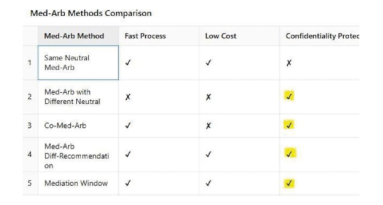
4. Med-Arb Methods Comparison
In this section, the Med-Arb methods discussed so far will be compared based on certain criteria. It should be noted that Med-Arb methods are not limited to those covered here; various other Med-Arb methods also exist. However, this analysis focuses on the five most commonly used methods.
- 206/207 -
The table compares Med-Arb methods using three criteria: fast process, low cost, and confidentiality protection. These criteria were selected based on the elements parties tend to prioritize when choosing a dispute resolution method. However, just like the Med-Arb methods, these criteria are not exhaustive. Many other factors may influence a party's choice of a specific method.
When analyzing the table, the Same Neutral Med-Arb method enables the same individual to act as both mediator and arbitrator, resulting in a faster process and lower cost. However, it offers weak protection in terms of confidentiality. This can be a significant drawback for parties involved in commercial disputes that contain sensitive information.
In contrast, the Med-Arb with Different Neutral method allows for separate professionals to handle the roles of mediator and arbitrator, prioritizing confidentiality. However, this leads to a longer and more expensive process, as mediation and arbitration are conducted by different individuals. In other words, the feature of having separate neutrals in the Med-Arb with Different Neutral method is both its strength and its weakness.
When examining the Co-Med-Arb method, it becomes evident that this approach does not offer a cost-effective solution, primarily due to the involvement of two separate professionals - one serving as the mediator and the other as the arbitrator. The necessity of engaging multiple neutrals naturally increases the overall cost of the dispute resolution process. However, a significant distinguishing feature of this method is that the mediator and arbitrator work in close coordination as a unified team from the very outset of the proceedings. This coordinated effort facilitates a smoother and more streamlined transition between the mediation and arbitration phases, ultimately resulting in a more expedited process compared to the Med-Arb with Different Neutral method, where such cooperation is typically absent.
Moreover, the separation of roles between the mediator and the arbitrator in the Co-Med-Arb structure plays a critical role in preserving the confidentiality of the proceedings. Since the decision-maker (arbitrator) is not the same individual who conducted the mediation, there is a clearer boundary between the informal and formal stages, reducing the risk of prejudicial exposure to sensitive information. Consequently, this model effectively addresses the confidentiality concerns that often arise in hybrid processes. For parties who prioritize a swift resolution while still valuing confidentiality, the Co-Med-Arb method may present itself as a highly appropriate and pragmatic option.
Turning to the Med-Arb Diff-Recommendation method, this approach is characterized by its balanced structure, managing to integrate elements of speed, cost-efficiency, and confidentiality protection in a harmonious way. Among the
- 207/208 -
various Med-Arb methods analyzed, this method arguably holds the greatest potential for fulfilling all three evaluative criteria simultaneously. One of the key advantages of this method lies in the mediator's preliminary involvement with the dispute. During the mediation phase, the mediator gains a comprehensive understanding of the underlying issues, the parties' respective positions, and the potential avenues for resolution. As a result, when the matter progresses to the arbitration stage, the arbitrator - who may receive a non-binding recommendation or summary from the mediator - is not required to initiate a full-scale investigation from scratch. This significantly contributes to the efficiency of the process.
In addition, the confidentiality aspect of this model is reinforced through procedural safeguards. Specifically, while the mediator may provide general insights or contextual information to assist the arbitrator, this is done without disclosing any sensitive, confidential, or privileged details that may have been shared privately by either party during the mediation. By carefully delineating the flow of information between phases and professionals, the Med-Arb Diff-Recommendation method upholds the integrity of confidential communications while still enabling an efficient progression from mediation to arbitration. For these reasons, it represents a particularly well-balanced and adaptable hybrid model suitable for a wide range of dispute contexts.
Finally, the Mediation Window method similarly stands out due to its ability to combine speed, cost-efficiency, and confidentiality protection. One of the most distinctive features of this method lies in its flexibility, as it allows parties to engage in mediation-like negotiations during the course of an ongoing arbitration proceeding. This mechanism is designed to foster collaboration and promote settlement-oriented dialogue, while still maintaining the formal structure and continuity of the arbitration process. As such, it offers an attractive option for parties who seek to achieve all three key criteria - efficiency, affordability, and confidentiality - within a single procedural framework.
In summary, each Med-Arb method addresses different sets of party needs and preferences, and every method is accompanied by its own unique advantages and limitations. The selection of a particular method ultimately depends on the parties' priorities and the specific characteristics of the dispute in question. For instance, if confidentiality is of paramount importance - such as in disputes involving sensitive commercial information - parties may opt for the Med-Arb with Different Neutral model, even if that choice results in a longer and more expensive process. Conversely, in scenarios where time-efficiency is a critical concern, parties may be willing to compromise on confidentiality in favor of faster and more cost-effective models.
- 208/209 -
Looking ahead, it is reasonable to expect that Med-Arb methods will continue to evolve in response to emerging practices and shifting dynamics within international legal frameworks. As hybrid dispute resolution continues to gain traction, it is likely that more adaptable and comprehensive Med-Arb methods will be developed-methods that seek to optimize the balance between flexibility, procedural integrity, and party autonomy. These advancements may offer more tailored solutions to the increasingly complex disputes of the modern legal landscape.
5. Conclusion
In contemporary dispute resolution, both individuals and legal entities seek efficient and structured mechanisms to address conflicts arising in commercial and legal relationships. The increasing complexity of business transactions and the rise of cross-border disputes have prompted parties to explore alternative dispute resolution (ADR) methods beyond traditional litigation. In response to these needs, hybrid mechanisms such as Med-Arb have emerged, combining mediation and arbitration to offer a more flexible, cost-effective, and controlled dispute resolution process.
The Med-Arb method is designed to facilitate amicable settlements through mediation while ensuring that, if mediation fails, the dispute proceeds to a binding arbitration process. By integrating these two stages, Med-Arb enables disputes to be resolved efficiently, eliminating the need for prolonged litigation. However, while this method presents several advantages, it also poses structural challenges, particularly concerning confidentiality and impartiality in the transition between mediation and arbitration.
Med-Arb is widely regarded as an efficient and cost-effective solution, as it allows parties to maintain control over the process while ensuring that a final, enforceable decision is reached. However, its effectiveness heavily depends on whether the mediator and arbitrator are the same person. In many applications, a single neutral is chosen for both roles, as this can expedite the process by eliminating the need for a new adjudicator to familiarize themselves with the dispute. Since the mediator is already well-acquainted with the case, arbitration can proceed more quickly, reducing procedural repetition and administrative burdens.
Despite these advantages, serious concerns arise regarding the confidentiality and impartiality of the Med-Arb process when the same individual serves as both mediator and arbitrator. Mediation is built upon the principle of confidentiality, allowing parties to negotiate openly without fear that the information
- 209/210 -
disclosed will be used against them in subsequent proceedings. However, when the mediator later assumes the role of arbitrator, there is a risk that information shared in confidence during mediation could influence the arbitration ruling. This compromises the integrity of both stages, discouraging parties from fully engaging in the mediation process and potentially leading to challenges against the arbitration award on the grounds of bias.
For these reasons, many legal scholars advocate for separating the roles of mediator and arbitrator to safeguard confidentiality and neutrality. While this approach enhances trust in the process, it also introduces additional costs and procedural delays. If a separate arbitrator is appointed, they may lack prior knowledge of the dispute, requiring parties to restate their claims, thereby undermining the efficiency that Med-Arb seeks to achieve.
To address these concerns, one proposed solution is to involve the arbitrator in certain phases of the mediation process without compromising confidentiality. This approach allows the arbitrator to gain a general understanding of the dispute, expediting arbitration while preserving the separation between mediation and adjudication.
Ensuring the effective implementation of the Med-Arb method requires structural modifications and procedural safeguards. These adjustments should aim to maintain impartiality, protect confidentiality, and enhance procedural efficiency while minimizing risks associated with the transition between mediation and arbitration.
A critical element in ensuring the success of Med-Arb is the establishment of a comprehensive procedural agreement at the outset. This agreement should clearly define:
- The scope and limits of confidentiality,
- Rules governing the use of evidence,
- Procedural guarantees ensuring impartiality, and
- The sequence and conditions under which arbitration will be initiated.
By addressing these aspects from the beginning, parties can reduce ambiguities and enhance trust in the process.
If parties opt for a single individual to serve as both mediator and arbitrator, additional safeguards must be implemented. In such cases, the arbitrator should be expressly prohibited from considering any confidential information disclosed during mediation unless explicitly agreed upon by both parties. Establishing a clear commitment that arbitration decisions will be based solely on evidence formally submitted during the arbitration stage is crucial in maintaining the integrity of the process. Without such measures, parties may hesitate to
- 210/211 -
fully engage in mediation, fearing that their disclosures could later impact the arbitration outcome.
Alternatively, if separate individuals are appointed as mediator and arbitrator, it may be beneficial for the arbitrator to be selectively involved in non-confidential aspects of the mediation process. This would allow them to gain a general understanding of the dispute, reducing procedural inefficiencies while maintaining the confidentiality of the mediation stage.
Furthermore, the development of international standards governing Med-Arb proceedings would enhance consistency and predictability across jurisdictions. Arbitration institutions and ADR bodies should establish clear guidelines on the use of Med-Arb to ensure that the process remains fair, effective, and widely accepted. A standardized framework would help parties navigate the complexities of Med-Arb while ensuring enforceability and procedural integrity in diverse legal systems.
Overall, the Med-Arb method offers a flexible, party-driven, and conclusive dispute resolution mechanism. However, its effectiveness depends significantly on its procedural design, including the selection of neutrals, confidentiality protections, and the regulatory framework governing the process.
While concerns regarding impartiality and confidentiality remain valid challenges, these risks can be effectively managed through the careful selection of neutrals, the implementation of transparent procedural agreements, and adherence to best practices in hybrid dispute resolution.
Particularly in international commercial disputes and long-term business relationships, Med-Arb provides a faster and more cost-effective alternative to traditional litigation. Additionally, the fact that Med-Arb results in an arbitral award rather than a private settlement enhances its recognition and enforceability under international arbitration conventions.
Given these advantages, Med-Arb is becoming an increasingly preferred dispute resolution mechanism. To further enhance its global applicability, ongoing efforts should focus on standardizing procedural rules and expanding its application across different legal systems. By addressing its structural challenges, Med-Arb can continue to serve as an effective and reliable method for resolving complex disputes in a timely and efficient manner.
- 211/212 -
Bibliography
M. B. Baril - D. Dickey: Med-Arb: The Best of Both Worlds or Just a Limited ADR Option? Online source, 2014.
Kristen M. Blankey: Keeping a Secret From Yourself? Confidentiality When Same Neutral Serves Both as Mediator and as Arbitrator in the Same Case. Baylor Law Review, 2011 (1), 317-367.
Gary B. Born: International Commercial Arbitration. Volume I. Netherlands, Kluwer Law International, 2014.
Christoph Buehring-Uhle: Co-Med-Arb: A Technique That Holds Promise of Getting the Best of Both Worlds. World Arbitration & Mediation Review, 1992 (1).
Betül Canatan: Med-Arb Yönteminin Getirdigi Olumsuzluklar ve Gizlilik Sorununa Yönelik Bazi Med-Arb Modelleri. Anadolu Üniversitesi Hukuk Fakültesi Dergisi, 2023 (1), 81-92.
R. Dendorfer - J. Lack: The Interaction Between Arbitration and Mediation: Vision v Reality. Dispute Resolution International, 2007 (1).
M. A. Hussain - M. F. Labanieh - N. Mahdzir - N. Sulaiman - O. S. A. Bawazir: The Potential Prospect of Artificial Intelligence (AI) in Arbitration from the International, National, and Islamic Perspectives. Journal of International Studies, 2023 (1), 95-122.
Istanbul Arbitration Centre (ISTAC). (n.d.). Arbitration Rules. Retrieved from https://istac.org.tr/tr/uyusmazlik-cozumu/tahkim/tahkim-kurallari/
Rahmatollah Mansouri: Med-Arb: The Preferable Method of Resolving International Oil and Gas Disputes. 2010, 37. Available at SSRN 4989836.
B. A. Pappas: Med-arb and the Legalization of Alternative Dispute Resolution. Harvard Negotiation Law Review, 2015 (1).
Zhiqiang Wei: The Rationality and System Perfection of Identity Compatibility between Arbitrator and Mediator in the Med-Arb Model. Beijing Law Review, 2024 (2), 761-775. ■
NOTES
[1] PhD student, Doctoral School of Law and Political Sciences, Károli Gáspár University of the Reformed Church in Hungary.
[2] Betül Canatan: Med-Arb Yönteminin Getirdigi Olumsuzluklar ve Gizlilik Sorununa Yönelik Bazi Med-Arb Modelleri. Anadolu Üniversitesi Hukuk Fakültesi Dergisi, 2023 (1), 81-92, 82.
[3] P. J. Carnavale - D. G. Pruitt: Negotiation and Mediation. Annual Review of Psychology, 1992 (1), 531-582, 562.
[4] Ibid. 563.
[5] Zhiqiang Wei: The Rationality and System Perfection of Identity Compatibility between Arbitrator and Mediator in the Med-Arb Model. Beijing Law Review, 2024 (2), 761-775, 762.
[6] M. A. Hussain - M. F. Labanieh - N. Mahdzir - N. Sulaiman - O. S. A. Bawazir: The Potential Prospect of Artificial Intelligence (AI) in Arbitration from the International, National, and Islamic Perspectives. Journal of International Studies, 2023 (1), 95-122, 96.
[7] Canatan 2023, 83.
[8] Wei 2024, 770.
[9] Wei 2024, 767.
[10] Canatan 2023, 83.
[11] Gary B. Born: International Commercial Arbitration. Volume I. Netherlands, Kluwer Law International, 2014, 279.
[12] Kristen M. Blankey: Keeping a Secret From Yourself? Confidentiality When Same Neutral Serves Both as Mediator and as Arbitrator in the Same Case. Baylor Law Review, 2011 (1), 317-367, 323.
[13] Canatan 2023, 83.
[14] Wei 2024, 766.
[15] Wei 2024, 765.
[16] Canatan 2023, 83.
[17] B. A. Pappas: Med-arb and the Legalization of Alternative Dispute Resolution. Harvard Negotiation Law Review, 2015 (1), 157, 174.
[18] Pappas 2015, 177.
[19] Ibid.
[20] Canatan 2023, 86.
[21] Blanket 2011, 335.
[22] Canatan 2023, 86.
[23] G. F. Philips: Same-neutral med-arb: What does the future hold? Message from the Chair, 2009 (2), 2.
[24] Pappas 2015, 177.
[25] M. B. Baril - D. Dickey: Med-Arb: The Best of Both Worlds or Just a Limited ADR Option? Online source, 2014, 8.
[26] Canatan 2023, 87.
[27] Blankey 2011, 326.
[28] Canatan 2023, 87.
[29] Christoph Buehring-Uhle: Co-Med-Arb: A Technique That Holds Promise of Getting the Best of Both Worlds. World Arbitration & Mediation Review, 1992 (1), 3.
[30] Rahmatollah Mansouri: Med-Arb: The Preferable Method of Resolving International Oil and Gas Disputes. 2010, 37. Available at SSRN 4989836.
[31] Baril - Dickey 2014, 8.
[32] Canatan 2023, 88.
[33] Baril - Dickey 2014, 8.
[34] Ibid.
[35] Ibid.
[36] Canatan 2023, 88.
[37] R. Dendorfer - J. Lack: The Interaction Between Arbitration and Mediation: Vision v Reality. Dispute Resolution International, 2007 (1), 73, 89.