

Paiman Ahmad[1]: Ethical Leadership Between Governance and Human Nature (Publico, 2017/1., 164-179. o.)
"To rule is easy, to govern difficult." Johann Wolfgang von Goethe[1]
This paper discusses the relationship between ethical leadership and good governance; furthermore, it highlights specific concepts and issues of ethical leadership and good governance. The remarks of this paper are based on the scholars' viewpoint on ethical leadership, human nature, leadership and good governance in general, as leadership means guidance and leading, thus people/communities expect leaders to practice codes and principles of ethics in leading the institutions, people and community or the country. In the 21[st] century ethical leadership and good governance as new trends of governance have attracted the scholars' attention, however, as a discipline of study, it is better developed and focused in the developed world compared to the developing world, since corruption, governance failure, poverty, hunger, conflict, and multifactor failures are experienced in the current century in the developing world.
Keywords: Ethical leadership, leadership, Ethics, Good Governance, Developing Countries
Main Questions of this Study:
- To what extend is a leader ethical in his/her conducting and performing the duties?
- To what extent does a leader ensure and promote ethics in practice?
- How does good governance affect ethical leadership in developing countries?
- Does the human nature affect ethical practice in a leader's approach and why?
- 164/165 -
1. Problem of the Study
Why studying ethical leadership is no yet the main topic for researchers? The lack of studying leaders' ethics and ethical code is becoming the main reason for the threat of corruption and poor governance in developing countries. In fact, human beings are born equal, but in the real world not all leaders lead equally and ethically. Some leaders are born in developed countries, while some in less developed, but that is not the reason for being unethical. Broadly speaking, the lack of ethics and integrity in developing countries posed the hazard of corruption and bad governance, which crippled reforms and economic growth. To enhance the efficiency and effectiveness of the systems in the developing countries, the leaders have to start practicing a code of ethics fulfilling the obligations therein over their personal interests. Developing countries are among the richest regions for natural resource, which means the economic well-being of the countries is endangered by the inappropriate ways leaders fulfill their personal interests, rather than the common interest of the public. The situation is complex; in developing countries social service, public service, education, health care, transportation, drinking water, electricity, etc., are all underdeveloped, yet countries like Iraq and Nigeria have high oil and gas exports? The hypothesis of this paper is that the lack of ethical leadership and poor governance have created this mess, and the only solution is good governance and ethical practice of leaders.
1.1. What is meant by leadership?
In terms of understanding leadership, it is crucial to know about leaders, in this regard, Mumford, Zaccaro et al. (2000) suggest that "patterns of personality can have an impact on leader skill development and performance."[2] Nye Joseph differently observes leadership as "a relationship between leaders and followers that varies in different contexts. Without specification of context, many propositions about leadership turn out to be very limited."[3] Additionally, Heifetz (1994) argues that "the exercise and even the study of leadership stir feeling because leadership engages our values."[4] An essential part of leadership is acquiring and adapting leadership principles; in the world of management and governance a leader emerges to guide and rule the people and community. More importantly, Burns (1987) suggests that "leadership is one of the most observed, but least understood phenomena on earth."[5] In fact, not every leader understands the factors that are needed to become an
- 165/166 -
effective leader who people in the institutions want. It could be helpful to point out what "leadership" means, and why do we need to study it and conduct research on it. According to Dwight D. Eisenhower "leadership is the art of getting someone else to do something you want done because he wants to do it."[6] Differently, James McGregor Burns defines the concept of transformational leadership as a process in which "leaders and their followers raise one another to higher levels of morality and motivation."[7] Notably, Bernard M. Mass further developed the idea of transformational leadership, in Leadership and Performance Beyond Expectations, the book he wrote in 1985, he defines leadership as "a model of integrity and fairness. Besides, inspiring people to reach for the impossible and get people to look beyond their self-interest."[8] In general, Leadership is yet to be further developed, leaders have to learn to be better leaders, and the leaders to be considered as individuals with "diferences" who can perform better for the common good of their communities.
1.2. Governance
An obvious explanation to start this discussion on governance is that the concept of leadership is not yet well-developed and it is a very complicated subject. The emergence of "governance, and good governance" further complicates the concept or develops it better. In arguing this, good governance is embedded in economics and public administration; international organizations such as the World Bank, the United Nations, IMF, OECD, EU, and many other organizations on different scales regionally and globally have started giving importance to "good governance" as a cure for dysfunction in different fields of studies. In this view, the SAGE handbook of Governance, defines governance as "theory, dilemma, practice,"[9] more precisely, "the changing nature of governance poses dilemmas for many older theories and practices." Insofar, governance is known as "an integrated part of social life."[10] Arguably, the word governance and good governance have become the most popular terms in many fields of studies in today's world. In a different notion, Lisa (2011) stated "governance suggests steering rather than top-down directing."[11] In this view, governance has to be flat, and harmonized in the institution.
- 166/167 -
1.2.1. Good governance
The notion of good governance is studied by the scholars and practitioners all over the world, because of the topic's nature, and the interest of scholars, thus, as a new trend of governance is quite developed. Moreover, Good governance means that processes and institutions produce results that meet the needs of society while making the best use of resources at their disposal.[12] In its most basic form, good governance defined by different institutions and multi-national organizations, according to what they do, not according to the concept of governance, therefore, "good governance" needs better integration with other missing aspects. According to the words of Ban Ki-moon (2009):
Good governance promotes equity, participation, pluralism, transparency, accountability and the rule of law, in a manner that is effective, efficient and enduring. In translating these principles into practice, we see the holding of free, fair and frequent elections, representative legislatures that make laws and provides oversight, and an independent judiciary to interpret those laws.[13]
Trough good governance a leader can be accountable to the people, and better integrated into the system of governance. Thus, a linkage between the key principles of good governance should be in the center of studying leadership. Practically speaking, good governance has its own principle; according to the United Nations Development Program and the World Bank good governance is:
- accountable;
- transparent;
- responsive;
- equitable and inclusive;
- effective and efficient;
- based on the rule of law;
- participatory;
- consensus oriented.[14]
2. The Nature of Human Leadership
According to John Stuart Mill (1987) "the intentions or reasons for an act tell us something about the morality of the person, but the ends of an act tells us about the morality of the actions. In virtue theories ethics have special attention and place, the question here is who has high moral and ethical standards, and how people can define them?"[15] In one sense, as
- 167/168 -
Plato remarks in his book II of the Republic (transl. 1992), leadership is a person's readiness to sacrifice his or her immediate self-interests:
In a city of good men, if it came into being, the citizens would fight in order not to rule.... There it would be clear that anyone who is really a true ruler does not by nature seek his own advantage but that of his subjects. And everyone, knowing his, would rather be benefited by others than take the trouble to benefit them.[16]
A very interesting question could be why we expect all leaders to be good or bad? What are the standards and principles that differentiate good guys from bad guys for the public, can history repeat itself in terms of giving more charismatic and selfless leaders. Those questions and thousand more questions have been the concern for many researchers in the field of leadership. Leadership is a very complex concern, and the question, what makes a successful leader regardless of the position is rarely answered sufficiently. This leaves us in a complex situation, where we are not yet able to define what really makes a good leader, "race, religion, education, tribe, gender, nature, nurture, social power or what?" As Levinas' "technical term highlights that other people are always more than our categories can capture." More precisely, Levinas pays attention to infinity in human beings, in which differentiations and identifications always fail as an adequate description of others.[17] It is impossible to give a better analysis than what was given by the ancient writers who wrote about human nature, such as Plato, Aristotle, Socrates, Hobbes, etc. Plato's argument makes sense that human beings are equal yet in the world of living differences are created. "The guardians cannot own personal property and cannot have families. (The idea is that only the desire to serve the common good motivates them, rather than money or power.) He hopes that the guardians will so love wisdom that they will not misuse their power."[18] Meanwhile, Fukuyama to some extent differs from other scholars on human nature by saying human nature "is the sum of the behavior and characteristics that are typical of the human species, arising from genetic rather than environmental factors."[19] In regard to duty and ethics, Hegel views that in the performance of duty the individual exhibits virtue "when the ethical order is reflected in his or her character, and when this is done by simple conformity with one's duties it is rectitude."[20] The most difficult part of leadership is the questions about the nature of human beings, in which the theories on human nature have already stated a lot about the concept. To sum up, "Socrates contends that the true way of human life is to love true knowledge. Likewise, in Plato, the supreme ideal of human life is
- 168/169 -
to recognize the idea of the good."[21] Eventually, all doctrines of human nature are subject to what Durkheim rightly calls the "laws of collective ideation."[22]
3. Ethical Leadership
In essence, the key components of ethics are diverse, ethics can be the personal trait, characteristics, or behaviors of an individual, which may need to be studied and analyzed carefully and accusatively for the better understanding of the concept of "ethical leadership". As stated by Dolan et al (2006) "ethical moral values refer to forms of conduct that one has to live by in order to reach desired outcomes in the form of final values."[23] Ethics are more connected to the researches in psychology and different viewpoints are available on the ethics, values and principles. Ethics are often defined as "doing the right thing even when no-one is looking". Moreover, it is suggested that ethical behavior in organizations is generated by the leaders, and transferred to the employees through reward and punishment systems.[24] Interestingly, Tang and Tan (2015) argue that "ethics, moral and professional skill is defined as novice teachers who possessed this skill are able to practice with high moral standards in the relevant professional practice."[25] In her book Ethics, the Heart of Leadership, Joanne Ciulla (2004) has defined 'good' as "morally good and technically effective", besides, she acknowledged that "ethics is the heart of leadership, and a good leader is ethical and effective". Furthermore, Ciulla makes and interesting comment: "the territory of ethics lies at the heart of leadership studies, and has veins that run through all leadership research, and ethics also extend to lands waiting to be explored."[26] What ethics mean and how leaders and people interpret ethics have been the focus of ethical theories for some time. The behavior and character of leaders are crucial; as Yukl (2012) remarks leaders influence their followers' lives either negatively or positively.[27] Since the leader has an effect on the achievements of the team and the organization, as leaders enhance cooperation for the better productivity of the organization and the people. It is hypothesized that leaders ought to be ethical in their behaviors in order to meet the trust of their followers, fostering trust and integration in organizations is a main factor for success. How should leaders conduct themselves to be ethical? Den Hartog & De Hoogh (2009) state "ethical leadership
- 169/170 -
is extremely important when team member interactions involve trust, fairness and empowering behavior."[28] In addition to that William Hitt (1990) sets three requirements for leaders to enhance ethical conduct:
1. achieve an understanding of ethics;
2. serve as a role model in making ethical decisions;
3. develop and implement a plan of action for promoting ethical conduct on the part of his or her staff.[29]
While the reactions to unethical leaders are quite different, the results are always negative. In these situations employees do not feel safe and experience anxiety and lack of trust. In fact, ethical leadership has an enormous influence on the organizations and teams, not to mention productivity. In addition, ethical leadership might mean practicing personal behaviors, according to the work principles and following the regulations of the organization the same as the followers. Walumbwa & Schaubroeck (2009) believe that "ethical leaders convey high moral standards to employees and encourage their followers to voice opinions and suggestions not only on ethical matters, but also on other work related processes and work context."[30] In this situation a leader creates a safe environment for everyone to feel free and committed while promoting creativity and valuing knowledge. Finding out more about the personal integrity, trustworthiness, fairness and honesty of a leader will lead us to have ethical leaders in the future. Furthermore, the importance of ethics in the work place elevates the value of human rights and human welfare in the work place. Indeed, the ethical development of leaders brings about ethical and trustworthy followers, as Brown et al. (2005) mention in defining ethical leadership, "the behavior of ethical leaders stimulates the ethical behavior of subordinates through communication and encouragement."[31] Social learning theory argues that people learn specific behaviors by observing a person who is perceived as legitimate in his/her actions. Here, employees observe leaders and take their behavior as a reference (Stouten, van Dijke, Mayer, De Cremer & Euwema, 2013).[32] As remarked by Herbert Spencer (1884) the times produce the person, not the other way around.[33] An ethical leader provides society with healthy and ethical members who can take the role of being leaders. Trust is the key without which we are unlikely to get things done well, but with it the team we work with can accomplish the goals and objectives set
- 170/171 -
out. Still, the question remains whether trust can be built among leaders and followers in small or even large? What should we do? To get the trust and to trust others is not easy but not impossible. To build a comprehensive approach in which trust is the key for sharing knowledge and information. It is essential to have integrity and transparency in the organization. The leader should consider giving the team members autonomy based on enforced regulations, while also addressing the needs of people and employees. This way ethical cohesion is created, where people are in a comfort zone, where they can work and share their knowledge freely and willingly. In simple terms, trust is part of human ethics, but it is a variable that depends on the environment and the culture of the country. Ethical values are a dilemma for many leaders, managers, followers and the public everywhere, in fact, many organizations have an ethical code, not only for the leaders, but for the whole organization regardless of position. There are no universal principles for a leadership ethical code; politicians, businessmen, managers, leaders, and the people all have different concerns. The language of ethical leaders conveys certain messages; many organizations and institutions enforce a specific code of ethics based on rules, laws and regulations, establishing some basic principles. Taking into consideration the health sector, in many countries specific codes of ethics are enforced by law or by organizational regulations, like the American Health Information Management Association. The Code of Ethics and Bylaws (1998), which advocated patient privacy rights and confidentiality of health information, establishes the following principles:
- respect the rights and dignity of all individuals;
- comply with all laws, regulations, and standards governing the practice of health information management;
- strive for professional excellence through self-assessment and continuing education;
- truthfully and accurately represent professional credentials, education, and experience;
- adhere to the vision, mission, and values of the association;
- promote and protect the confidentiality and security of health records and health information;
- strive to provide accurate and timely information;
- promote high standards for health information management practice, education, and research; and
- act with integrity and avoid conflicts of interest in the performance of professional and AHIMA responsibilities.[34]
However, if the codes of ethics are unwritten, the followers expect their leaders to "do the right thing at the right time", where preference is given to followers and the public. At the heart of the unwritten code of leadership ethics is the expectation that leaders will act in
- 171/172 -
the best interests of their followers - that they will put them first, before themselves.[35] In fact, ethical leadership means "shared responsibility, and good values". An ethical example is given in the work of Freeman & Lisa (2006) on Mandela and a prisoner who changed Mandela's notion of people. Mandela thought an evil system may corrupt people, but he said "it is my responsibility to find the good part of those people and bring it out. Instead of seeing people doing the wrong thing, we have to enable them to do the right thing".[36] In other words, an ethical leader is not only doing the right thing, but leading others to do the right thing in the organization, thus forming the culture of the organization. Eventually, the main obstacle in studying ethical leadership is not the available literature of the discipline, but the nature of the field, which is an on-going process with unexpected changes, which makes it difficult for us to define the dimensions of ethical leaderships in depth. Besides, integrating ethics, moral values, principles, virtues, personality, traits, skills, knowledge, and experience all together will need time and effort from leaders to understand and adapt them.
4. Role of Good Governance in Creating "Ethical Leaders"
In essence, leadership is engulfed in a crisis, and unethical practice is the top priority of the crisis. Kurtz & Schrank (2007) rightly remark "the absence of good governance is identified as the major setback in social and economic development efforts in third-world countries."[37] Richardson (2008) claims that governance has three legs: "economic, political and administrative".[38] Nevertheless, governance encompasses and embraces different disciplines and in each of those there is a need for leadership development. At the same time, the lack of ethical leadership restricts the overall objectives of good governance in the institutions and vise-versa. To be noted, the essence of ethical integrity is the main element of good leadership in organizations. In accordance with this, Menzel (2007) mentions that Ethical leadership is necessary for "good outcomes in government."[39] In this way, poor ethical leadership in many developing countries is resulted from poor governance and lack of ethical leadership approaches. Similarly, the lack of ethics and integrity pushed many leaders to be involved in corruption and illegal activities, which poses harm to the public interest. Luo (2007) highlights that "corruption causes millions of people to be trapped in
- 172/173 -
poverty and misery and breeds social, economic, and political unrest."[40] The systems in many developing countries are fragile and vulnerable to corruption. Even though the decentralization process is under way, yet this has not brought prosperity and integrity to the system and the people. Additionally, ethical leadership is a main element for good governance practices, as Barberis (2001) notes "public interest will be difficult to protect without ethics in government".[41] Currently, ethics and ethical leadership, transparency, corruption, good governance, integrity, practices have been the main focus of study in particular by the United Nations (UN), the World Bank, the Organization for Economic Cooperation and Development (OECD), Transparency International (TI), the European Union, OECD, and many other international bodies. For instance, according to Transparency International (TI)[42] the countries most affected by corruption are developing countries rich in natural resources.
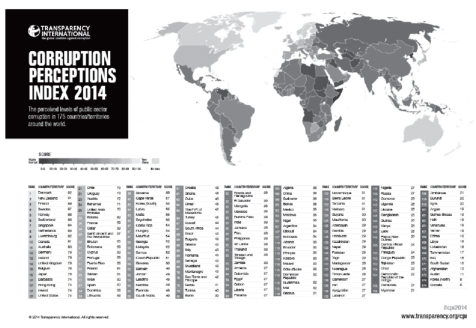
Figure 1 Corruption perceptions index 2014
- 173/174 -
The ethical governance of leaders is crucial for development and growth. How is it possible to promote good governance and ethical leadership where the government officials as leaders are not interested? Northouse, (2007) points out that "leaders help, establish, and reinforce organizational values".[43] But, is it possible and true in case of every country? The ethical conduct of leaders is stressed in Greenleaf's work (1977); according to his servant-leadership approach the leader puts the needs, welfare, and well-being of followers first. In this notion, the leader serves the followers, which is exceptional.[44] In Utilitarian ethics, the right action is the one that produces the greatest amount of benefits to the greatest number of people, i.e. the public good becomes an ethical factor. In other words, the leaders that pose threat to public good are considered as unethical, since maximizing personal interest affects the public welfare. Examining what is ethical and unethical among the actions of a leader is determined by the principles and obligations a leader has to comply with. Still, ethics are the essence of a human being, Rost (1991) argues that "the leadership process is ethical if the people in the relationship (the leaders and followers) freely agree that the intended changes fairly reflect their mutual purposes".[45] Aristotle reckoned with the individual as a moral agent. In the medium term, the right morals and character make a leader develop their own ethical trait gradually. Immanuel Kant remarkably examined the concept of morals and obligation, asking why I should be moral? Are there any reasons, other than the rightness of it? He added "we think we ought to do our duty for duty's sake, while part of us still asks for something in it",[46] which means self-interest. To be sure, giving the reasons and rational for a behavior is needed. Hardin (1995) in his book One for All wrote "you act rationally, if you do what you believe serves your interest. Is it possible that all leaders see the public interest as a rational objective and moral duty?"[47] In some ways, one may go further giving thousands of examples of developing country leaders, where the self-interest of the leader or his group takes priority over public interest. For instance, Saddam Hussein from the point of view of the Sunni population was an ethical and nationalistic leader who served their needs. However, when real facts are taken into account, he was a tyrant who killed millions of Shias and Kurds.Accordingly, Kant states "the good will", which lies at the heart of ethics, must eschew any laws which are merely empirical. Similarly, it can be said that "good will, morals, ethics, virtue, loyalty", are all part of human characteristics either born with or learned from society or family. In Provis's view "loyalty is to be unconditional"[48] which means being committed regardless of objectives. The view that loyalty is crucial Velasquez (2002) calls the "ethic of care" according to which we show special care
- 174/175 -
towards those particular persons with whom we have valuable and close relationships.[49] Consequently, there can be pressure from different sources on the leaders, at the same time the leader has to follow his ethical essence, which guides him towards the right path. In general, most leaders work for the government, for the private sector, or for non-governmental institutions, where they deal with people and their role is to lead. Certainly, good governance is a new trend, just like the study of "ethics" championed in the past. Good practice and better outcomes are becoming increasingly important, thus leaders are defined based on what they do during their ruling period.
There is a lot of discussion on ethical leadership, though many people think good leaders practice "good governance" in the institutions they lead, as Nnablife (2010) observes that "a good leader leads an organization transparently, and sets a good example at all levels of governance."[50] Does it mean all leaders have to be transparent to be seen as "good leaders"? It is suggested that good governance and ethical leadership will create a good system, good decisions and the outcomes will be desirable by all stakeholders. Banerji and Krishnan (2000) claim "leaders are expected to make ethical decisions. Besides, they documented those leaders to influence ethical choice."[51] Without jumping to a hasty conclusion on the relationship between ethical leadership and good governance, it can be witnessed that in many cases unethical leadership is coupled with poor governance and crisis. Interestingly, there is quite good and intensive literature on the ethical practice of leaders, and good studies have exhibited the correlation in a very good manner. The study of Neubert et al. (2009) revealed a positive relationship between ethical leadership style and ethical climate, by using an internet survey. Neubert et al. (2009) notes the influence of the ethical leadership of 250 Caucasian managers who were employed full time. Accordingly, ethical leaders respond positively to an ethical climate and the commitment of other members of the organization. Because, those managers have a moral authority "being fair, honest, trustworthy, and considerate", which affected the members of the organizations.[52] Indeed, the style, personality and character traits of the leader, the climate, and multiple other factors affect leadership and leaders approach. Interestingly, the principles for good governance and ethical practice, according to the Panel on the Nonprofit Sector, convened by Independent Sector (2007), are as follows:
- Legal Compliance and Public Disclosure
- Effective Governance
- Strong Financial Oversight
- Responsible Fundraising
- 175/176 -
Importantly, it has stressed that all directors of nonprofit corporations have a "duty of loyalty" that requires them to put the interest of the organization above their personal interests and make decisions they believe are in the best interest of the nonprofit.[53] In this report, almost 33 principles are mentioned in connection with nonprofit or charitable organizations, however, these principles, in one way or another, are relevant for the public sector too. Eventually, good governance means contributing to governance based on rule and standards which are set to be followed, regionally or globally by leaders. Ethical leaders will reinforce the process of good governance by integrating ethics into the process. According to the witty remark of Hamilton, Madison, & Jay (2008) "if men were angels, no government would be necessary."[54] Nye (2016) in defining good and bad leadership stated "we judge 'good' in terms of leader's intentions, means, and consequences."[55]
5. Concluding Remarks
"Human leaders are leaders who recognize that they are made up of strengths and weaknesses."[56]
To sum up, ethical leadership and good governance are to be the main concerns of all stakeholders, who intend to improve governance in their countries, regions, institutions, etc. It is to be mentioned that ethical leadership and good governance practices enrich and ensure a better future for the citizens. There has to be more research on the role of ethical leadership in good governance, in particular in the developing world, where poor governance and bad management have crippled the governance system. Therefore, "strengthening ethics and accountability is an organic process that requires an ongoing commitment by boards and staff of individual organizations and by the entire nonprofit community."[57] To my understanding, in developing countries, where the system of governance is not competitive, whistleblower "leaders" are needed to enforce good governance, who can encourage staff and the community to achieve better outcome for all. Improving ethical leadership is the key to bring down barriers for "good governance". Ultimately, leadership and governance, as complicated concepts, are built on strong basis and principles, in which there is a strong need for good governance into leadership discipline.
- 176/177 -
References
1. American Health Information Management Association, Code of Ethics and Bylaws, 1998. Available at: www.ncbi.nlm.nih.gov/pmc/articles/PMC3544144.
2. Ban Ki-moon Remarks to the Security Council on Timor-Leste, 19 February 2009. Available online at: www.un.org/en/globalissues/governance.
3. Banerji, P. - Krishnan, V.: Ethical Preferences of Transformational Leaders: An Empirical Investigation, Leadership and Organization Development Journal, 2000, Vol. 21. No. 8., 405-413.
4. Barberis, P.: Civil society, virtue, trust: Implications for the public service ethos in the age of modernity, Public Policy and Administration, 2001, Vol. 16. No. 3., 111-126.
5. Bass, B. M.: Leadership and Performance Beyond Expectations, Free Press, New York, 1985.
6. Ed. Bevir, Mark: SAGE Handbook of Governance, Sage Publication, London.
7. Blomgren, Lisa, Bingham: Hand book of governance, Sage Publications, London, 2011, 386.
8. Brown, M. E. - Treviño, L. K. - Harrison, D. A.: Ethical leadership: A social learning perspective for construct development and testing, Organizational Behavior and Human Decision Processes, 2005, 97, 117-134.
9. Burns, J. M.: Cited in Politics, Identity, and Education in Central Asia, 1978, eds. Pinar, Akcali., Cennet, E. Demir, Routledge, New York, 2013, 35.
10. Burns, J. M.: Leadership, Harper and Row, New York, 1978.
11. Ed. Cahn, Steven M.: Classics of Western Philosophy, Hackett Publishing Company, Cambridge, 2012, 125.
12. Cooley, Charles Horton: Human Nature and Social Order, New Brunswick-London, 2009, 18.
13. CIPD. Experiencing trustworthy leadership, Research Report, September 2014, University of Bath, School of Management.
14. Ciulla, J.: Ethics, the Heart of Leadership, Praeger, Westport, 2004, 18.
15. Ciulla, Joanne B.: Ethics and Leadership Effectiveness, 2009.
16. Cooley, Charles Horton: Human Nature and Social Order, New Brunswick-London, 2009, 18.
17. Day, David V. - Antonakis, John (eds.): The Nature of leadership, Sage Publications, London, 2012.
18. Den Hartog, D. N. - De Hoogh: Empowerment and leader fairness and integrity: Studying ethical leader behavior: From a levels-of-analysis perspective, European Journal of Work and Organizational Psychology, 2009, 18, 199-230.
19. Dolan, S. L. - Garcia, S. - Richley, B.: Managing by values; a corporate guide to living, being alive and making a living in the 21[st] century, Palgrave Macmillan, New York, 2006.
20. en.wikiquote.org/wiki/Dwight_D._Eisenhower.
- 177/178 -
21. Freeman, R. Edward - Stewart, Lisa: Developing Ethical Leadership, Business Roundtable Institute for Corporate Ethics, 2006, 9. Available online at: www.corporate-ethics.org/pdf/ethical_leadership.pdf.
22. Greenleaf, R. K.: Servant leadership: A journey into the nature of legitimate power and greatness, Paulist Press, New York, 1977.
23. Hamilton, A. - Madison, J. - Jay, J. (2008). The Federalist Papers, Wilder Publications, Redford, 2008.
24. Hardin, Russell: One for All, Princeton University Press, Princeton, 1995, 46.
25. Hegel: Social and Political Thought. Available online: www.iep.utm.edu/hegelsoc/#SH6c.
26. Heifetz, Ronald A.: Leadership without easy answers, Cambridge (USA) - London, The Belknap Press of Harvard University Press, 1994.
27. Kant, Immanuel: Ethical Philosophy, Hackett Publishing Company, Cambridge, 1983, 29.
28. Kaebnick, Gregory: Humans, Nature and Ethics, Center for Humans & Nature, Vol. 4., No. 2., 2011. Available online at: www.humansandnature.org/humans-nature-and-ethics.
29. Kurtz, M. J. - Schrank, A.: Growth and governance: Models, measures, and mechanism, Journal of Politics, 2007, 69, 538-554.
30. Leadership Ethics, what is right and wrong?" Available at: www.learn-to-be-a-leader.com/leadership-ethics.html. (Accessed: 20-01-2016)
31. Luo, Y.: An organizational perspective on corruption. In: Eds. Richter, W. L. - Burke, F.: Combating corruption, encouraging ethics: A practical guide to management of ethics (2nd ed.), Rowman & Littlefield Publishers, Inc., 2007.
32. Menzel, D. C.: Ethics management for public administrators: Building Organization of integrity, Armonk, M. E. Sharpe, New York, 2007.
33. Mumford, M. - Zaccaro, S. J. - Johnson, J. F. - Diana, M. - Gilbert, J. A. - Threlfall, K.: Patterns of leader characteristics: Implications for performance and development, The Leadership Quarterly, 2000b, Vol. 11. No. 1., 115-133.
34. Neubert, J. M. - Carlson, S. D. - Kaenar, M. - Roberts, A. J. - Chonko, B. L.: The Virtuous Influence of Ethical Relationship Behavior: Evidence from the Field, Journal of Business Ethics, 2009, Vol. 90. No. 2., 157-170.
35. Nnablife, N. K. E.: Defining and enforcing ethical leadership in Nigeria. African, Journal of Economic and Management Studies, 2010, Vol. 1. No. 1., 25-41.
36. Northouse, P. G.: Leadership: theory and practice (4[th] ed.), Sage Publications, Thousand Oaks, 2007.
37. Nye, Joseph S.: Leadership, American Governance, ed. Stephen L. Schechter, Macmillan, Detroit, 2016. Available at: dash.harvard.edu/bitstream/handle/1/11738396/Nye-Leadership.pdf?sequence=1
38. Panel on the Nonprofit Sector. Independent Sector, October 2007. Available online at: www.hewlett.org/uploads/files/Principles_Guide.pdf.
- 178/179 -
39. Principles for Good Governance and Ethical Practice A Guide for Charities and Foundations (2007). Panel on the Nonprofit Sector, Independent Sector, October 2007. Available online at: www.hewlett.org/uploads/files/Principles_Guide.pdf.
40. Rowe, W. Glenn - Guerrero, Laura: Cases in Leadership, Sage Publications, London, 2011, 441.
41. Stouten, J. - Van Dijke, M. - Mayer, D. M. - De Cremer, D. - Euwema, M. C.: Can a leader be seen as too ethical? The curvilinear effects of ethical leadership, The Leadership Quarterly, 2013, 24, 680-695.
42. Summary of Plato's theory of human nature, October 11, 2014: https://reasonandmeaning.com/2014/10/11/theories-of-human-nature-chapter-7-plato-part-1.
43. Tang, Keow Ngang - Tan, C. Chan: The Importance of Ethics, Moral and Professional Skills of Novice Teachers, 6[th] World conference on Psychology Counseling and Guidance, 14-16 May 2015, Procedia Social and Behavioral Sciences, Elsevier.
44. UNDP (1997) Governance for Sustainable Human Development, United Nations Development Programme.
45. Velasquez, M. G.: Business ethics, concepts and cases (5[th] edition), Prentice Hall, Upper Saddle River, 2002, 125.
46. Walumbwa, F. o. - Schaubroeck, J.: Leader personality traits and employee voice behavior: Mediating roles of ethical leadership and work group psychological safety, Journal of Applied Psychology, 2009, 94, 1275-1286.
47. Wendland, Aaron J.: What do we owe each other? New York Times, January 18, 2016, Available online at: https://opinionator.blogs.nytimes.com/2016/01/18/what-do-we-owe-each-other (Accessed on 19-01-2016.)
48. White Paper (2009). Mosaic project knowledge index, December 24. Available online at: www.mosaicprojects.com.au/PM-Knowledge_Index.html
49. www.brainyquote.com/quotes/quotes/j/johannwolf105474.html.
50. www.tparents.org/library/unification/books/euth/Euth03.htm.
51. www.transparency.org/cpi2014/results.
52. Yap, K. Sheng (nd): UNESCAP. Available online at: www.unescap.org/sites/default/files/good-governance.pdf
Paiman Ahmad (Paiman.ahmad.ramazan@uni-nke.hu) is from the Kurdistan Region of Iraq, she is currently a PhD candidate at the National University of Public Service-Faculty of Science of Public Governance and Administration, State and Economics Institute, in Budapest-Hungary. She is a scholarship student from the Kurdistan Region to Hungary based on the Stipendium Hungarian Scholarship first round of students. Paiman's research interests are as follows: Economic growth, energy governance, good governance, energy politics, oil price politics, Rentier economies, economic development and sustainability in the developing countries. Besides, her Doctorate Dissertation is on "the Good Governance of Petroleum Sector 'oil' for Economic development: the case of Kurdistan Region." Paiman participated in different international conferences, training, workshops and lectures including Germany, UK, USA, Hungary, Turkey, France, Croatia, Lithuania, Holland, and Ukraine. ■
NOTES
[1] See at: www.brainyquote.com/quotes/quotes/j/johannwolfl05474.html.
[2] Mumford, M. - Zaccaro, S. J. - Johnson, J. F. - Diana, M. - Gilbert, J. A. - Threlfall, K.: Patterns of leader characteristics: Implications for performance and development, The Leadership Quarterly, Vol. 11. No. 1., 2000, 115-133.
[3] Nye, Joseph. S.: Leadership, American Governance, ed. Stephen L. Schechter, Detroit, Macmillan, 2016. Available at: dash.harvard.edu/bitstream/handle/1/11738396/Nye-Leadership.pdf?sequence=1.
[4] Heifetz, R. A.: Leadership without easy answers, MA, Harvard University Press, Cambridge, 1994.
[5] Burns, J. M.: Cited in Politics, Identity, and Education in Central Asia, 1978, eds. Pinar, Akcali., Cennet, E. Demir, Routledge, New York, 2013, 35.
[6] See: en.wikiquote.org/wiki/Dwight_D._Eisenhower.
[7] Burns, J. M.: Leadership, Harper and Row, New York, 1978.
[8] Bass, B. M.: Leadership and Performance Beyond Expectations, Free Press, New York, 1985.
[9] Ed. Bevir, Mark: SAGE Handbook of Governance, Sage Publication, London.
[10] Ibid, 2011, 59.
[11] Blomgren, Lisa, Bingham: Hand book of governance, Sage Publications, London, 2011, 386.
[12] Yap, K. Sheng (nd), UNESCAP. Available online at: www.unescap.org/sites/default/files/good-governance.pdf.
[13] Ban Ki-moon Remarks to the Security Council on Timor-Leste, 19 February 2009. Available online at: www.un.org/en/globalissues/governance.
[14] UNDP: Governance for Sustainable Human Development, United Nations Development Programme, 1997.
[15] Eds. Day, David V. - Antonakis, John: The Nature of leadership, Sage Publications, London, 2012.
[16] Ed. Cahn, Steven M.: Classics of Western Philosophy, Hackett Publishing Company, Indianapolis, Cambridge, 2012, 125.
[17] Wendland, Aaron J.: What do we owe each other? January 18, 2016, New York Times. Available online at: https://opinionator.blogs.nytimes.com/2016/01/18/what-do-we-owe-each-other (Accessed: 19-01-2016).
[18] See: Summary of Plato's theory of human nature, October 11, 2014: https://reasonandmeaning.com/2014/10/11/theories-of-human-nature-chapter-7-plato-part-1.
[19] See Kaebnick, Gregory: Humans, Nature and Ethics, Center for Humans & Nature, Vol. 4., No. 2., 2011. Available online at: www.humansandnature.org/humans-nature-and-ethics.
[20] Hegel: Social and Political Thought. Available online: www.iep.utm.edu/hegelsoc/#SH6c.
[21] See more at: www.tparents.org/library/unification/books/euth/Euth03.htm.
[22] Cooley, Charles Horton: Human Nature and Social Order, New Brunswick-London, 2009, 18.
[23] Dolan, S. L. - Garcia, S. - Richley, B.: Managing by values; a corporate guide to living, being alive and making a living in the 21st century, Palgrave Macmillan, New York, 2006.
[24] White Paper. Mosaic project knowledge index, December 24, 2009. Available online at: www.mosaicprojects.com.au/PM-Knowledge_Index.html.
[25] Tang, Keow Ngang - Tan, C. Chan: The Importance of Ethics, Moral and Professional Skills of Novice Teachers, 6th World conference on Psychology Counseling and Guidance, 14-16 May 2015, Procedia Social and Behavioral Sciences, Elsevier.
[26] Ciulla, J.: Ethics, the Heart of Leadership, Praeger, Westport, 2004, 18.
[27] Yukl cited in Rowe, W. Glenn - Guerrero, Laura: Cases in Leadership, Sage Publications, London, 2011, 441.
[28] Den Hartog, D. N. - De Hoogh: Empowerment and leader fairness and integrity: Studying ethical leader behavior: From a levels-of-analysis perspective, European Journal of Work and Organizational Psychology, 2009, 18, 199-230.
[29] Hitt, W.: Ethics and Leadership: Putting Theory into Practice, Columbus, Battelle, 1990.
[30] Walumbwa, F. O. - Schaubroeck, J.: Leader personality traits and employee voice behavior: Mediating roles of ethical leadership and work group psychological safety, Journal of Applied Psychology, 2009, 94, 1275-1286.
[31] Brown, M. E. - Treviño, L. K. - Harrison, D. A.: Ethical leadership: A social learning perspective for construct development and testing, Organizational Behavior and Human Decision Processes, 2005, 97, 117-134.
[32] Stouten, J. - Van Dijke, M. - Mayer, D. M. - De Cremer, D. - Euwema, M. C.: Can a leader be seen as too ethical? The curvilinear effects of ethical leadership, The Leadership Quarterly, 2013, 24, 680-695.
[33] Heifetz, Ronald A.: Leadership without easy answers, Cambridge(USA)-London, The Belknap Press of Harvard University Press, 1994.
[34] American Health Information Management Association, Code of Ethics and Bylaws, 1998. Available at: www.ncbi.nlm.nih.gov/pmc/articles/PMC3544144.
[35] Leadership Ethics, What is Right or Wrong? Available online at: www.learn-to-be-a-leader.com/leadership-ethics.html. (Accessed: 20-01-2016)
[36] Freeman, R. Edward - Stewart, Lisa: Developing Ethical Leadership, Business Roundtable Institute for Corporate Ethics, 2006, 9. Available online at: www.corporate-ethics.org/pdf/ethical_leadership.pdf.
[37] Kurtz, M. J. - Schrank, A.: Growth and governance: Models, measures, and mechanism, Journal of Politics, 2007, 69, 538-554.
[38] Richardson, P.: Good Governance: The Challenge of Leadership in Africa, a Paper Presented at The International Management Conference, Lagos, 2008.
[39] Menzel, D. C.: Ethics management for public administrators: Building Organization of integrity, Armonk, M. E. Sharpe, New York, 2007.
[40] Luo, Y.: An organizational perspective on corruption. In: Eds. Richter, W. L. - Burke, F.: Combating corruption, encouraging ethics: A practical guide to management of ethics (2nd ed.), Rowman & Littlefield Publishers, Inc., 2007.
[41] Barberis, P.: Civil society, virtue, trust: Implications for the public service ethos in the age of modernity, Public Policy and Administration, 2001, Vol. 16. No. 3., 111-126.
[42] See: www.transparency.org/cpi2014/results.
[43] Northouse, P. G.: Leadership: theory and practice (4th ed.), Sage Publications, Thousand Oaks, 2007.
[44] Greenleaf, R. K.: Servant leadership: A journey into the nature of legitimate power and greatness, Paulist Press, New York, 1977.
[45] See Ciulla, Joanne B.: Ethics and Leadership Effectiveness, Chapter 13, 2009.
[46] Kant, Immanuel: Ethical Philosophy, Hackett Publishing Company, Cambridge, 1983, 29.
[47] Hardin, Russell: One for All, Princeton University Press, Princeton, 1995, 46.
[48] Provis, Chris: Ethics and organizational politics, Edward Elgar Publishing, 2004, 109.
[49] Velasquez, M. G.: Business ethics, concepts and cases (5th edition), Prentice Hall, Upper Saddle River, NJ, 2002, 125.
[50] Nnablife, N. K. E.: Defining and enforcing ethical leadership in Nigeria. African, Journal of Economic and Management Studies, 2010, Vol. 1. No. 1., 25-41.
[51] Banerji, P. - Krishnan, V.: Ethical Preferences of Transformational Leaders: An Empirical Investigation, Leadership and Organization Development Journal, 2000, Vol. 21. No. 8, 405-413.
[52] Neubert, J. M. - Carlson, S. D. - Kaenar, M. - Roberts, A. J. - Chonko, B. L.: The Virtuous Influence of Ethical Relationship Behavior: Evidence from the Field, Journal of Business Ethics, 2009, Vol. 90. No. 2., 157-170.
[53] Panel on the Nonprofit Sector. Independent Sector, October 2007, 9. Available online at: www.hewlett.org/uploads/files/PrinciplesGuide.pdf.
[54] Hamilton, A. - Madison, J. - Jay, J.: The Federalist Papers, Wilder Publications, Redford, 2008.
[55] Nye, Joseph. S.: Leadership, American Governance, ed. Stephen L. Schechter, Macmillan, Detroit, 2016. Available at: https://dash.harvard.edu/bitstream/handle/1/11738396/Nye-Leadership.pdf?sequence=1.
[56] CIPD. Experiencing trustworthy leadership, Research Report, September 2014, University of Bath, School of Management.
[57] Principles for Good Governance and Ethical Practice A Guide for Charities and Foundations, Panel on the nonproit sector, Independent Sector, October 2007. Available online at: www.hewlett.org/uploads/iles/Principles_Guide.pdf.
Lábjegyzetek:
[1] The author is PhD Candidate, National University of Public Service, Paiman.ahmad.ramazan@uni-nke.hu.