

Ruslan Seitkazin[1]: Political Communication and Influence Through Twitter (Publico, 2020/4., 94-105. o.)
https://doi.org/10.32575/ppb.2020.4.7
Abstract
Politicians are now learning that along with advertising on conventional media, they need to invest in online applications in order to get the attention of voters, particularly the youths. Among various microblogging services, Twitter is an essential part of popular culture. Today, Twitter is widely utilised not only to distribute information, but also political views and opinions. Therefore, politicians have turned to social media, particularly to Twitter, as a new form of political communication. The article attempts to capture the ways of using the potential of Twitter in communication strategies. It argues that in some occasions, Twitter plays a specific role in allowing politicians to monitor current political affairs and to interact with people, but in others, it is often employed as a personal branding strategy and not only during the election campaigns. It concludes with an insight that sentiment may impact the political opinion-making process which may lead to electoral intervention.
Keywords: Donald Trump, millennials, political parties, retweeting, social media
Absztrakt - Politikai kommunikáció és befolyásolás a Twitteren keresztül
A politikusok az utóbbi időkben tanulják meg, hogy a hagyományos médiában történő hirdetéssel együtt online alkalmazásokba is be kell fektetniük, hogy felhívják a választók, különösen a fiatalok figyelmét. A különféle mikroblog-szolgáltatások közül a Twitter a populáris kultúra elengedhetetlen része. Napjainkban a Twitter széles körben elterjedt, nemcsak információk, hanem politikai nézetek és vélemények terjesztésére is. Ezért a politikusok a közösségi média, így különösen a Twitter felé fordultak, mint a politikai kommunikáció új formájához. A cikk megkísérli megragadni a Twitter lehetőségeinek kihasználását a kommunikációs stratégiákban, egyes esetekben a Twitter sajátos szerepet játszik abban, hogy a politikusok figyelemmel kísérhessék az aktuális
- 94/95 -
politikai ügyeket és kapcsolatba léphessenek az emberekkel, más esetekben azonban gyakran személyes márkaépítési stratégiaként használják, és nem csak a választási kampányok során. A cikk azzal a meglátással zárul, hogy a hangulat befolyásolhatja a politikai véleményalkotási folyamatot, amely választási beavatkozáshoz vezethet.
Kulcsszavak: Donald Trump, millenniumi generáció, politikai pártok, retweetelés, közösségi média
- 95/96 -
1. Introduction
One of the defining phenomena that changed the world dramatically is the accessibility to the World Wide Web. Social media indeed is the lovechild of the Internet, which has many forms, such as microblogs, photo-sharing platforms, forums, social gaming, and so on. The power of social media is such that the number of users worldwide is supposed to reach some 2.77 billion monthly active media users by 2019.[1] Since the number of Internet users is gradually increasing, mainly among youths, it is undoubtedly important for political actors across the world to employ social media channels as a significant tool in political communication, particularly in times of election. In fact, millennials and generation Xers will represent some two-thirds of the electorate in the near future. Thus, prescient political actors will need to embrace social media in an extremely innovative way in order to get support from the largest bloc of young voters.
For instance, the U.K.'s 2017 General Election clearly demonstrates that the Labour Party had huge wins in gaining 21 seats from its Conservatives rivals because of efficient digital media campaigns that were all about spreading the right messages at the right times. Croud.com, however, notes that 'in the six weeks after announcement of the 2017 General Election, 'We Are Social' revealed that the Labour Party increased its following by 61% across Social Media platforms, such as Twitter, Facebook, and Instagram. The Conservatives' social media following rose by just 6% in the same period'.[2] It is argued that the party employed celebrity endorsement, positive messaging, and ads to stimulate youths to go to the polls. It is noted that a record of 622,000 people registered to vote in the final 24 hours of the registration period, the majority were young individuals.
Yet, it is believed that U.S. political leaders are known to play a leading role in this regard. For instance, Barack Obama is the most well-known example of using successfully social media channels in his last election campaign, introducing new strategies for political information diffusion, organising, fundraising and mobilising.[3]
It is fair to argue that social media have gained popularity among politicians even in those countries in which transparency of decision-making is questioned.
Generally speaking, it provides them an opportunity to interact with previously unengaged people, hence, social media platforms have become a legitimate and frequently utilised communication tool. Some argue that political parties and candidates employ Twitter, for instance, to go around the news media, trying to reach straight for voters.[4] Yet, in some campaign staffers, Twitter was used to impact the agendas and frames of
- 96/97 -
professional journalists.[5] It is also true that politicians utilise Twitter to mobilise the base and to reach wider attention.[6] It is noted that due to its use predominantly for political communication purposes, Twitter has developed a sense of mirroring collective emotive trends, which provides prognostic power with regard to some events in the social, cultural and political areas,[7] which can be arguably used in many ways, especially in times of election, for example.
If Twitter may predict electoral results, then its content could be used as a real-time supplement to traditional polling. Moreover, some scholars suggest that sentiment of tweets corresponds with voters' political preferences and opinion.[8] Furthermore, Twitter is said to be an ideal place to disseminate information, because it has a retweeting feature as a simple, but powerful mechanism. To put it more precisely, Twitter allows individuals to follow tweets outside the network through keyword or a hashtag. This provides the possibility to monitor tweets from media, politicians and other members of society. What is more, journalists, for example, integrate with the public, bloggers and the politicians to produce a massive array of electoral commentary.
Above all, retweeting is linked to certain values of the primary information items. It is suggested that besides just sharing information, people can retweet in order to publicly agree with someone, to entertain a concrete audience or comment on someone's post. It is apparent that Twitter allows journalists to design narratives, politicians to campaign, and the public to disseminate their political views and opinions about processes and candidates. Twitter serves as an input for them to direct their attention, strategise, vote, campaign, and so on.
2. Theoretical background
Researchers from different fields have studied the role of sentiment in online communication. There is an increasing number of research examining the relationship between sentiment originating in real world phenomena or events and tweets. It is found that events in the economic, political, cultural and social fields do have an important, prompt and highly determined impact on the different dimensions of public mood shown in tweets.
- 97/98 -
The results unveiled that large-scale examination of mood can give a 'solid platform to model collective emotive trends in terms of their predictive value with regards to existing social as well as economic indicators'.[9] In the following study of 2009 German federal election, it was analysed that tweet sentiment correlates to voters' political preferences.[10] Moreover, party sentiment profiles can mirror the similarity of political positions among political parties. It is also attempted to describe performances of political debates during the election campaigns by aggregating Twitter sentiment.[11]
Furthermore, an analytical methodology was advanced and visual representations that might help to understand the temporal dynamics of sentiment in reaction to the utilised debate video. The scholars provided metrics and visuals that can be used to notice sentiment pulse, even anomalies in such pulses, and indications of debatable topics that can be utilised to apprise the design of visual analytic systems for social media events. They also tried to connect measures of public opinion obtained from polls to sentiment measured from tweets.[12] The findings show that sentiment word frequencies in tweets meet with the several public opinion time series like political opinion in the 2008 to 2009 period and surveys on consumer confidence.
At the level of individual communication, research has investigated the role of sentiment in the communication in discussion forums, groups or other contexts. The key outcome of such research shows that emotive dimensions of messages that contain both negative and positive tones can trigger more feedback, attention or participation.[13] Moreover, the literature provides that emotional states circulated in messages may disseminate through various types of networks.[14] It is important to note that given the nature of political polarisation, which has demonstrated predominately in Twitter communication, sentiment associated with certain political parties, politicians and political topics may play a significant role, especially in times of election. It is also noted that diffusion of such sentiment may have an influence on the political opinion-making process.
- 98/99 -
It is clear that governments have employed various tactics to impact elections in other countries through sophisticated online methods which can both affect the balance of political power and more importantly, confidence in political institutions.
3. Is Twitter a tool of self-promotion?
Although social media have become a necessary instrument in political communication, the potential and peculiarities of various online platforms have made them much more attractive for politicians in many different countries with various political regimes. As it is argued above, Twitter has become one of such digital platforms of reference in online politics.[15]
It is noted that it is particularly politicians who see Twitter as the ideal place in which to construct the interpersonal communication that they have to maintain with the citizenry. Furthermore, the ease of spreading the content and making it viral across the Internet are some of the features that make Twitter one of the most useful digital platforms for political leaders.[16]
Arguably, Twitter has become a new mainstream medium to promote personalisation in politics. It is noted that such strategy is one of the most practical resources, both to strengthen and humanise personal ties with other social actors and get the attention of more audience. However, similarly, political leaders employ Twitter as a marketing tool, since the objective of their content is to provide various types of information about their campaign activities, share links to their personal brand and offer political declarations.[17] Moreover, some other political actors use Twitter as a means by which to spread their messages, whose content is primarily predicated on self-promotion.
The former reality television star and businessman turned Republican candidate who is now serving as the 45[th] President of the U.S. - Donald Trump is widely known for turning to Twitter to send out more political unconventional messages - which often consist in attacks of or snarky replies to his critics and to his army of followers. It is true that his personal Twitter account -@realDonaldTrump has been the main information source to generate sentiment and opinion on civil society and has become the White House's public diplomacy channel that caused the most headlines in the media worldwide. It is even more noteworthy that Donald Trump is the first U.S. President, who completely communicates with the public in a personal manner, reshaping the conventional ways of political
- 99/100 -
communication in terms of the use of negative sentiment and formality of language. It certainly creates some tension in global politics, however, his tweets enabled him to shape the ways in which he is covered by media outlets or even by individual journalists; and also the broader dispute about the policy and political agenda in the U.S.[18]
In addition, some may argue that his way of using the Twitter channel is more about self-promotion, rather promotion of his personal brand. The figure below indicates that 64 per cent of his tweets are connected directly to branding. The public policy and international relations topics are about 38 per cent of the total content. It is clear that during the election campaign, personal branding peaks from November 2016 to January 2017 and again from September to October 2017 when he had a speech at the UN, then tax reforms and Obamacare.
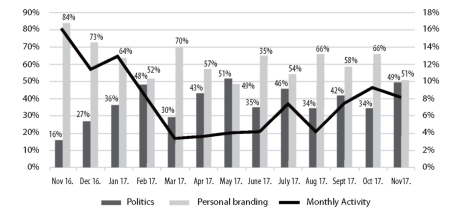
Figure 1 Dimensions of Twitter@realDonaldTrump
(Source: Information and Documentation Service, Elcano Royal Institute)
Over his first year of presidency, particularly during the second half of September 2017, he published a total of 143 tweets, which accounts for more than 9.5 posts a day. For instance, on 30 September he had 18 entries.[19] The topics in such tweets mainly concerned the Trump-Republican Tax Relief plan, criticism of certain NFL player's attitude to the national anthem, Health bill, terrorism, immigration, North Korea, and so on.
It is important to note that personal branding and identity are ever-present elements of Trump's tweets and promotion of such values account for 71 per cent of his output in the first year of the presidential activity. What is more, in his personal branding dimensions, messages are normally comprised by direct and simple slogans whose aim is to shape the marketing impact of his personal brand. It is argued that such types of slogans are meant to place the 'us or them' - those who agree with 'making America great again' versus those
- 100/101 -
who are 'opposed' to the Trump brand and consequently, opposed to the notion of 'making America great again'. It is apparent that such tweets highlight a positive reinforcement to 'us' and promote his image as a brand.[20]
It is true that there is no difference in Trump's tweets before and after being elected, since he keeps using this slogan in tweets, which can be argued to be done during the electoral campaigns only. For instance, 'MAKE AMERICA GREAT AGAIN', 'BUY AMERICAN and HIRE AMERICAN', 'THE UNITED STATES IS OPEN FOR BUSINESS'.
Moreover, his way of sending one-way and directly confrontational tweets do not add value to diplomacy but can only dissolve trust and intercultural communication. In addition, it is believed that not promoting diplomatic negotiations, which is the core element in diplomacy, will only deinstitutionalise international institutions and diplomacy as a whole and more importantly, the colloquial style in tweets diminishes the weight of intelligence from the diplomatic community, and as a result could lead to serious consequences and tensions between different nations.
4. Conclusion
Twitter research is at a very early stage. The literature review suggests that tweets containing words that mirror emotive state are likely to be retweeted more frequently than those, which do not have such words. However, both negative and positive emotions circulated in messages make them to be disseminated through Twitter. Therefore, it is assumed that not only information in general, but also sentiment in political context can be spread, which may impact the political opinion-making process and as a result, the electoral manipulation, which still remains a significant field for future analysis, since little is known about all this. Thus, it is important to understand the value of social media in contacting directly to voters and heavily influencing the results of their campaigns.
Nevertheless, there is no doubt that key to success of Twitter can be connected to the possibilities it provides, such as for following and responding to specific topics and affairs, for gauging public sentiment online, for informing the general public about issues and actions they are interested in, for communicating directly with politicians, journalists and other stakeholders. However, when we look closely at tweets of some politicians, it is clearly seen that they use social media channels merely for self-promotion and do not concern about interpersonal communication at all. Hence, it is believed that taking into account the new structures and practices that have been advanced with the advent of the new mainstream mediums, comparative study among various context and countries is needed in order to contribute with important rather interesting insights regarding the use of Twitter in political communication. Yet, this task is for future research.
- 101/102 -
References
1. Bollen, Johan, Alberto Pepe and Huina Mao, 'Modeling Public Mood and Emotion: Twitter Sentiment and Socio-economic Phenomena'. Proceedings of the Fifth International AAA1 Conference on Weblogs and Social Media 2009. https://arxiv.org/abs/0911.1583 (accessed 10 December 2020).
2. Chadwick, Andrew, The Hybrid Media System: Politics and Power. Oxford: Oxford University Press, 2013. DOI: https://doi.org/10.1093/oso/9780190696726.001.0001
3. Gibson, Rachel K, 'Party Change, Social Media and the Rise of 'Citizen-Initiated' Campaigning'. Party Politics 21, no 2 (2013), 183-197. https://journals.sagepub.com/doi/full/10.1177/1354068812472575 (accessed 10 December 2020). DOI: https://doi.org/10.1177/1354068812472575
4. Golbeck, Jennifer, Justin M Grimes and Anthony Rogers, 'Twitter Use by the U.S. Congress'. Journal of the Association for Information Science and Technology 61, no 8 (2010), 1612-1621. DOI: https://doi.org/10.1002/asi.21344
5. Hill, Alison L, David G Rand, Martin A Nowak and Nicholas A Christakis, 'Emotions as Infectious Diseases in a Large Social Network: the SISa Model'. Proceedings of the Royal Society B. 277, no 1701 (2010). DOI: https://doi.org/10.1098/rspb.2010.1217
6. Huffaker, David, 'Dimensions of Leadership and Social Influence in Online Communities'. Human Communication Research 36, no 4 (2010), 593-617. DOI: https://doi.org/10.1111/j.1468-2958.2010.01390.x
7. Joyce, Elizabeth and Robert E Kraut, 'Predicting Continued Participation in Newsgroups'. Journal of Computer-Mediated Communication 11, no 3 (2006), 723-747. DOI: https://doi.org/10.1111/j.1083-6101.2006.00033.x
8. Jungherr, Andreas, 'The Logic of Political Coverage on Twitter: Temporal Dynamics and Content'. Journal of Communication 64, no 2 (2014), 239-259. DOI: https://doi.org/10.1111/jcom.12087
9. Kreiss, Daniel, 'Seizing the Moment: The Presidential Campaigns. Use of Twitter during the 2012 Electoral Cycle'. New Media & Society 18, no 8 (2014), 1473-1490. DOI: https://doi.org/10.1177%2F1461444814562445
10. Kruikemeier, Sanne, 'How Political Candidates Use Twitter and the Impact on Votes'. Computers in Human Behavior 34 (2014), 131-139. DOI: https://doi.org/10.1016/j.chb.2014.01.025
11. O'Connor, Brendan, Ramnath Balasubbramanyan, Bryan R Routledge, and Noah A Smith, 'From Tweets to Polls: Linking Text Sentiment to Public Opinion Time Series'. Proceedings of the Fourth International AAAI Conference on Weblogs and Social Media in Washington, D.C. 2010. https://homes.cs.washington.edu/~nasmith/papers/oconnor+balasubramanyan+routledge+smith.icwsm10.pdf (accessed 10 December 2020).
12. Parmelee, John H and Shannon L Bichard, Politics and the Twitter Revolution: How Tweets Influence the Relationship between Political Leaders and the Public. Lanham, MD: Lexington Books, 2011.
13. Shamma, David A, Lyndon Kennedy and Elizabeth F Churchill, 'Tweet the Debates. Understanding Community Annotation of Uncollected Sources'. Proceedings of WSM 09,
- 102/103 -
October 23, 2009. www.ee.columbia.edu/~lyndon/pubs/wsm2009-twitter.pdf (accessed 10 December 2020). DOI: https://doi.org/10.1145/1631144.1631148
14. Smith, Steven M and Richard E Petty, 'Message Framing and Persuasion: A Message Processing Analysis'. Personality and Social Psychology Bulletin 22, no 3 (1996), 257-268. DOI: https://doi.org/10.1177/0146167296223004
15. Stromer-Galley, Jennifer, Presidential Campaigning in the Internet Age. Oxford: Oxford University Press, 2014. https://global.oup.com/academic/product/presidential-campaigning-in-the-internet-age-9780199731947?cc=hu&lang=en& (accessed 10 December 2020). DOI: https://doi.org/10.1093/acprof:oso/9780199731930.001.0001
16. Tumasjan, Andranik, Timm O Sprenger, Phillip G Sandner and Isabell M Welpe, 'Election Forecasts with Twitter: How 140 Characters Reflect the Political Landscape'. Social Science Computer Review 29, no 4 (2011), 402-418. DOI: https://doi.org/10.1177/0894439310386557
17. Wattal, Sunil, David Schuff, Munir Mandviwalla and Christine Williams, 'Web 2.0 and Politics: The 2008 U.S. Presidential Election and an E-Politics Research Agenda'. MIS Quarterly 34, no 4 (2010), 669-688. https://dl.acm.org/doi/10.5555/2017496.2017498 DOI: https://doi.org/10.2307/25750700
18. Wells, Chris et al., 'How Trump Drove Coverage to the Nomination: Hybrid Media Campaigning'. Political Communication 33, no 4 (2016), 669-676. DOI: https://doi.org/10.1080/10584609.2016.1224416
- 103/104 -
Internet Document
1. Clement, Jessica, 'How many people use social media?' Statista, November 24, 2020. www.statista.com/statistics/278414/number-of-worldwide-social-network-users/ (accessed 10 December 2020).
2. Elcano Royal Institute: Donald Trump's Twitter Account: A Brief Content Analysis. https://www.eurasiareview.com/18022018-donald-trumps-twitter-account-a-brief-content-analysis/?cv=1 (accessed 10 December 2020)
3. Information and Documentation Service, Elcano Royal Institute. www.realinstitutoelcano.org/wps/portal/rielcano_en/publications/Books (accessed 10 December 2020).
4. Nassour, Jawdat, 'General Election 2017: Did Digital Marketing Shape Surprise Results?' Croud, June 27, 2017. https://croud.com/blog/news/the-2017-general-election-shock-results-the-work-of-digital-marketing/ (accessed 10 December 2020).
5. Twitter Account of Donald J. Trump. https://twitter.com/realDonaldTrump (accessed 10 December 2020).
- 104/105 -
Ruslan Seitkazin is a PhD student of the Doctoral School of Public Administration Sciences at the University of Public Service in Budapest. He has more than nine years of practical hands on experience in the local government field. His last position was Head of Internal Policy Department at the Mayor's office of Pavlodar city, Kazakhstan. His research interests focus on civic-engagement through e-government and other online services with a specific emphasis on local government. He published in the conference proceedings of the Transylvanian International Conference in Public Administration: The Role of Knowledge Management in Public Sector: New Digital Perspectives (Romania, 2017); "The Future of Administrative Sciences": Centralization for Effectiveness - The Impact of Urgent Problems on Decision-Making (Hungary, 2018); Pro Publico Bono - Magyar Közigazgatás - Globalisation and Democracy: The Concept of Cosmopolitanism (Hungary, 2019); Univerzity Pavla Jozefa cafárika v Koąiciach -The Role of Private Sector in Outsourced Military and Prison Services: Experience of the UK and Germany (Slovakia, 2019). ■
NOTES
[1] Jessica Clement, 'How many people use social media?' Statista, November 24, 2020.
[2] Jawdat Nassour, 'General Election 2017: Did Digital Marketing Shape Surprise Results?' Croud, June 27, 2017.
[3] Sunil Wattal, David Schuff, Munir Mandviwalla and Christine Williams, 'Web 2.0 and Politics: The 2008 U.S. Presidential Election and an E-Politics Research Agenda'. MIS Quarterly 34, no 4 (2010), 669-688; Rachel K Gibson, 'Party Change, Social Media and the Rise of 'Citizen-Initiated' Campaigning', Party Politics 21, no 2 (2013), 183-197.
[4] Jennifer Stromer-Galley, Presidential Campaigning in the Internet Age (Oxford: Oxford University Press, 2014).
[5] Daniel Kreiss, 'Seizing the Moment: The Presidential Campaigns. Use of Twitter During the 2012 Electoral Cycle', New Media & Society 18, no 8 (2014), 1473-1490.
[6] John H Parmelee and Shannon L Bichard, Politics and the Twitter Revolution: How Tweets Influence the Relationship between Political Leaders and the Public (Lanham, MD: Lexington Books, 2011).
[7] Johan Bollen, Alberto Pepe and Huina Mao, 'Modeling Public Mood and Emotion: Twitter Sentiment and Socio-economic Phenomena, Proceedings of the Fifth International AAA1 Conference on Weblogs and Social Media 2009.
[8] Brendan O'Connor, Ramnath Balasubbramanyan, Bryan R Routledge and Noah A Smith, 'From Tweets to Polls: Linking Text Sentiment to Public Opinion Time Series', Proceedings of the Fourth International AAAI Conference on Weblogs and Social Media in Washington, D.C. 2010.
[9] Bollen et al., 'Modeling Public Mood', 1.
[10] Andranik Tumasjan, Timm O Sprenger, Phillip G Sandner and Isabell M Welpe, 'Election Forecasts with Twitter: How 140 Characters Reflect the Political Landscape', Social Science Computer Review 29, no 4 (2011), 402-418.
[11] David A Shamma, Lyndon Kennedy and Elizabeth F Churchill, 'Tweet the Debates. Understanding Community Annotation of Uncollected Sources', Proceedings of WSM 09, October 23, 2009.
[12] O'Connor et al., 'From Tweets to Polls'.
[13] Steven M Smith and Richard E Petty, 'Message Framing and Persuasion: A Message Processing Analysis', Personality and Social Psychology Bulletin 22, no 3 (1996), 257-268; David Huffaker, 'Dimensions of Leadership and Social Influence in Online Communities', Human Communication Research 36, no 4 (2010), 593-617; Elizabeth Joyce and Robert E Kraut, 'Predicting Continued Participation in Newsgroups', Journal of Computer-Mediated Communication 11, no 3 (2006), 723-747.
[14] Alison L Hill, David G Rand, Martin A Nowak and Nicholas A Christakis, 'Emotions as Infectious Diseases in a Large Social Network: the SISa Model', Proceedings of the Royal Society B. 277, no 1701 (2010).
[15] Andreas Jungherr, 'The Logic of Political Coverage on Twitter: Temporal Dynamics and Content', Journal of Communication 64, no 2 (2014), 239-259; Sanne Kruikemeier, 'How Political Candidates Use Twitter and the Impact on Votes', Computers in Human Behavior 34 (2014), 131-139; Tumasjan et al., 'Election Forecasts with Twitter'.
[16] Andrew Chadwick, The Hybrid Media System: Politics and Power (Oxford: Oxford University Press, 2013).
[17] Jennifer Golbeck, Justin M Grimes and Anthony Rogers, 'Twitter Use by the U.S. Congress', Journal of the Association for Information Science and Technology 61, no 8 (2010), 1612-1621.
[18] Chris Wells et al., 'How Trump Drove Coverage to the Nomination: Hybrid Media Campaigning', Political Communication 33, no 4 (2016), 669-676.
[19] More tweets: https://twitter.com/realDonaldTrump.
[20] Elcano Royal Institute: Donald Trump's Twitter Account: A Brief Content Analysis. https://www.eurasiareview.com/18022018-donald-trumps-twitter-account-a-brief-content-analysis/?cv=1 (accessed 10. 12. 2020)
Lábjegyzetek:
[1] The author is PhD student, University of Public Service, Doctoral School of Public Administration Sciences, seitkazin.ruslan@gmail.com.