

Lina Aleassa[1]: The EU's Regional Refugees Approach - A Contesting, yet, Promising Approach (Publico, 2023/3., 83-114. o.)
https://doi.org/10.32575/ppb.2023.3.5
Abstract
The European Union has drawn on its migration policy in the Middle East and North Africa as a method of region-building that takes resilience as its "Governing Principle" when responding to crises. The central theme of resilience is to keep refugees closer to their home instead of flowing into Europe. This approach might be promising, yet it has both positive and negative effects. In the absence of adequate resources, resilience building may exacerbate the economic, political and social vulnerabilities already existing in these countries. In addition, resilience does not seem to put an end to the refugees' suffering which, in turn, leads to increasing demands for better services, which could ultimately lead to violent riots that endanger the security of these states. Hence, resilience may seem to jeopardise rather than safeguard the security of these hosts. However, considering the case of displacement from Syria, the article focuses on the EU's approach to refugees in its neighbourhood, and attempts an in-depth analysis of the EU's refugee cooperation with Jordan, one of the key regional hosts, to argue that while resilience might be an approach with opposing effects, the EU and Jordan are working to make it a promising one. Their focus is to maintain a balance between the interests of refugees and of local communities. More importantly, the role of resilience in preserving Jordan's economic and social stability and its social cohesion makes it a more promising approach than simply providing humanitarian assistance.
Keywords: migration policy, regional refugee approach, resilience, security, the Syrian refugee crisis
Introduction
After twelve years of brutal war in Syria, the Syrian people continue to endure unimaginable levels of suffering with a very high human cost. The war has not only left the country completely ruined, but additionally, 400 thousand people have been killed and 13 million people have become internally displaced, of whom 5.6 million people are
- 83/84 -
registered with the United Nations High Commission of Refugees (UNHCR) while an estimated 7.1 million refugees have left the country and sought shelter elsewhere, primarily in the neighbouring Turkey, Lebanon and Jordan. This figure includes 5.5 million registered Syrian refugees across the region.[1]
These figures make the Syrian crisis one of the largest displacement crises in the world with a significant impact on the whole region, including Jordan. Jordan, which has always been a safe haven for refugees, continues to be the second largest host country of refugees per capita in the world and is currently home to over 750,000 registered refuges including Iraqis, Palestinians and Syrians.[2] For the EU, the Syrian crisis contributed to the 20152016 Migrant Crisis in Europe. In 2015 alone, the EU received almost 1.2 million asylum seekers of whom 334,820 were Syrians. Syrians thus represent 28% of all asylum seekers arriving in the EU.[3]
The inadequacy of the EU's migration policy, which seemed unable to respond to such a crisis, required a different approach.[4] Consequently, the EU has changed its external migration policy and redrawn it as a region-building approach with resilience as its main focus. Resilience building in these countries which host refugees aims to mitigate the effects of the mass influx in these states and keeps the refugees closer to their home, to secure the EU's borders. Hence, in 2016, within the framework of the European Union Global Strategy (hereinafter: EUGS), fostering resilience became the pivotal instrument in the pursuit of effective global action and the new governing rationale for responding to forced displacement crises including Syria. Resilience, as defined by the Commission, is "the ability of states and societies to reform, thus withstanding and recovering from internal and external crises".[5]
However, this approach may seem to have both positive and negative effects for Jordan, as a host. Some scholars, such as Giulia Sinatti and Rosanne Anholt argue that the EU, with its focus on resilience building of the country hosts, could jeopardise the stability of those states.[6] The existence of refugees has intensified the socio-economic strains which already exist in these host countries. Moreover, refugees are facing many difficulties regarding employment, education and medical care. This in turn motivates them to demand better services and greater rights, which could ultimately lead to violent riots. As a result, while the EU resilience building in theory aims to enhance Jordan's capacity to tackle the Syrian refugee crisis, in practice it does not seem to be capable of doing that and that is at odds with the EU's Regional Refugees Approach.
- 84/85 -
For this reason, the paper attempts to answer the following questions:
- How does the EU's regional refugee approach, built on resilience, have opposing effects in the country hosts of the Syrian refugees, in the case of Jordan?
- How are the EU as a donor and Jordan as a host working together to make resilience viable?
To be able to answer these questions, the paper will proceed as follows. First, the conceptual and theoretical frameworks will be presented and compared before a discussion of the magnifying effect of context-specific risks in Jordan resulting from massive inflows of Syrian refugees. The following section deals with the policies followed by Jordan to respond to these massive inflows. The next section presents a case study of Jordan's engagement with the EU's regional refugee approach and its goal of resilience building in Jordan. The paper then proceeds to illustrate the dark side of the EU's goal of building resilience and its implications for Jordan. Next, it will outline the benefits of the EU's approach and consider how cooperation between Jordan and the EU can be made achievable.
Finally, it will draw conclusions, identify implications for policy-makers and outline the upcoming research into resilience building.
Starting from the assumption that the regional impact of EU external migration policy can be better understood by exposing its dynamics with individual countries,[7] the article employs in-depth insights into the EU's refugee cooperation with Jordan, one of the key host states for displaced Syrians. It examines their cooperation and illustrates how Jordan and the EU have sought to tackle the challenges facing EU regional refugee initiatives related to resilience building.
The aim of this case study is two-fold. First, it contributes to the debate on how "trans-regional power dynamics flowing 'from beyond'" cooperate with and understand local dynamics. Secondly, it generates insights into the bright and dark side of resilience and its implications for policy making,[8] demonstrating that better application of resilience, as a regional building approach, requires a better understanding of the local context of the specific country hosts.
The value added by this paper is its contribution to the current debate about the role of resilience as a region-building approach. The author's main argument is that the EU's resilience building, especially in response to the migrant crisis, is more viable than presenting humanitarian aid, as it bridges the gap between the humanitarian development nexus, hence, it is more sustainable and promising. Further, resilience building in host countries mitigates the risks of the mass influx of migrants into these states and keeps the refugees closer to their homelands. This in turn contributes to the security both of the country hosts and the EU.
- 85/86 -
As for the methodology employed, this in-depth analysis of the EU's strategic cooperation with Jordan builds primarily upon primary sources including documents by the European Commission, the Council and the Jordanian Government, including their bilateral and multilateral agreements. It also employs textual analysis of secondary literature from official European and Jordanian websites, news reports, and scholarly literature on resilience.
The Theoretical Framework
The history of the EU's engagement in the Middle East and North Africa (MENA) region can be traced back to the 1970s. Back then, the founders of the EU started to design various processes to guide their relationships with Mediterranean countries, including Jordan. These processes were implemented through several policy frameworks including the Global Mediterranean Policy of 1972, the Euro-Arab Dialogue of 1973, the Euro Mediterranean Partnership and the European Neighbourhood Policy (ENP) of 2004 and its reviews.[9]
These frameworks regulate their collaboration on trade, governance, migration and security at the multilateral level.[10] In parallel, their bilateral cooperation has been regulated within the ENP framework. The EU has concluded bilateral agreements with most of its southern partners. These partnership agreements represent a key vector for regional governance that aim to enhance their economic, social and political cooperation.
With regards to migration policy, the broad EU approach in the MENA has always had migration as a core theme. As migration from the MENA is not a new phenomenon, the EU has pursued various initiatives that have enabled it to influence the governance of migration. The migration policy initiatives link EU-MENA cooperation with border-making and mobility partnerships that align visa liberalisation regimes with fighting irregular migration.[11]
When it comes to the analysis of EU policies towards the MENA, most of the literature is characterised by an assessment of the EU policies and instruments, often combined with an evaluation of the nature of EU power. Several studies have attempted to investigate its nature, especially within the context of the 2011 regional uprisings, their spillover effects and the EU's response to them. While most authors presented an interest-driven narrative of the EU policies towards the region, in which security and economic concerns prevail,[12] other literature considers the idea of 'normative power Europe'[13] with an interest in promoting democracy, rule of law and human rights.
Undoubtedly, the idea of normative power Europe raises many questions in the literature, as it has dominated the EU foreign policy discourse. This idea is framed within the narrative
- 86/87 -
of duty or responsibility which has shaped various EU policies. In the European Security Strategy (ESS) of 2003 and the 2004 ENP, and even during the initial response to the Arab uprisings, as emphasised by the first review of the 2011 ENP,[14] the EU's policy frameworks championed the EU, portraying it as a normative power whose impact rendered it an exemplary source of peace, wealth and democracy. The EU, reflecting on itself, saw the usefulness of its norms and values, and consequently, wanted to export them to its southern neighbours in the common interest of both sides.[15] Both the ESS and ENP aimed to present a bespoke policy to stabilise the EU's southern neighbours by exporting EU norms. Thus, in parallel to these themes, the first review of the 2011 ENP, and its so-called 'strategic option' emphasise its support for the Arab uprisings.[16]
However, internal and external developments within the EU, including Brexit, the Russian annexation of Crimea, an authoritarian regime in Belarus, the Arab uprisings and the EU 2015 migration crisis led the EU to embrace the insecurity narrative and the inevitability of crises.
As a result, a shift in the EU's view of itself, the neighbouring regions and the whole world[17] has transformed the EU's feeling of duty/responsibility into a threat/responsibility narrative. For this reason, the review of the 2015 ENP became a turning point for EU-MENA relations that demonstrated the de facto abolition of the EU's long-standing ambition of pursuing a values-based agenda in favour of promoting democracy in the EU's southern neighbourhood.[18]
In the area of foreign policy, the review of 2015 ENP is one of the first documents to introduce resilience building as a foreign policy goal for the EU. The document states that "[t]he measures set out in this Joint Communication seek to offer ways to strengthen the resilience of the EU's partners in the face of external pressures and their ability to make their own sovereign choices".[19] Moreover, stabilisation became a main priority guiding the EU's new strategy for security and prosperity, as confirmed by the promise that "the new ENP will take stabilization as its main political priority".[20]
Consequently, the new ENP seeks to work on conflict prevention through early warning, and by increasing partners' capacity. Furthermore, instead of presenting a one-size-fits-all policy, the reviewed ENP acknowledges the significance of considering each partner's capacities and needs through introducing the differentiation principle.[21]
- 87/88 -
It is also worth noting that the latest ENP review was concluded in November 2015, eight months before the adoption of the EUGS. In that respect, it was closely associated with the deliberations leading to the EUGS. The Global Strategy was presented in June 2016, after a comprehensive review of the EU's priorities for the EU, the region and the world. The EUGS mentions its commitment to state and societal resilience, to its eastern and southern neighbours, as one of the five new priorities of the EU. In this regard, the 2015 ENP paved the way for resilience to become a main priority for the EU foreign and security policy in the latter EUGS.
Based on this, the EU reframed its governance agendas relating to its neighbourhood, positioning 'resilience building' as a core narrative of region support[22] or a "guiding rationale in EU-Southern neighbourhood relations".[23] This in turn has led to a new partnership framework with countries in the MENA on the topic of migration. In line with the 2015 European Agenda on Migration and the 2016 European Union Global Strategy, these partnerships aim to build greater coherence between the EU's migration policy, its external actions, and "immediate challenges".[24]
As a result, through this refinement, the EU has drawn up its external migration policies as an instrument "embarked upon region-building",[25] through which the EU uses different means, policies and strategies, including resilience, to redesign or reshape its neighbouring countries with the aim of keeping refugees closer to their home and in the neighbouring host countries, to secure Europe borders.[26]
This leads us to the second concept, that this paper will be built upon, which is resilience. Resilience is a concept that is applied in several disciplines, including psychology, ecology, criminology, engineering sciences, human resources studies.
Within each field, the scholars have their own understanding of resilience, leading to different meanings and interpretations. However, a common ground in all these understandings is the notion of 'bouncing back'. After all, the English word 'resilience' originating from the 16[th] and 17[th] centuries, stems from the verb 'resile', which in turn was drawn from the Latin verb 'resilire', meaning to 'jump back'.[27] As a result, understanding the ability of an entity to recover from adversity and its ability to adapt is a central theme of studies of resilience.[28]
Starting in the first decade of this century, resilience gained currency in security studies and the broader field of global governance, particularly in connection with terrorism, migration and other issues related to security studies.[29] Many states, international organisations and institutions, including the EU, began to formulate their own written
- 88/89 -
strategies for resilience, in several foreign policy subfields such as the state and peacebuilding processes, and in development and humanitarian aid.[30]
Scholars of international relations seek to theorise and conceptualise resilience with respect to international security studies. They attempt to answer various questions, but are mainly concerned with what resilience means, how it is practiced, why it is good or bad to be resilient, considering "resilient of what?" and against what and identifying where resilience is found.
Turning to the first question, conceptualising resilience attempts to deal with the confusion related to it.[31] This confusion, which arises between the abstraction and operationalization of the concept,[32] divides scholars between two approaches: one approach focuses on the different qualities of an entity, including their resistance to change, as well as its opposite, their adaptability, reflexivity and responsiveness to change.[33] The second approach argues that in a world of ambiguity and uncertainty, it is inefficient to focus only the quality of an entity, rather, the main focus should be on the process of adaptation and self-governance.[34]
The questions of how and why are concerned with the operationalization of resilience. The proliferation in the use of the term resilience has prompted scholars to analyse the practice of many policies, to understand how resilience is understood and implemented through them. Some policies introduce resilience as their ultimate goal,[35] aiming at enhancing local communities, to allow them to be capable to respond to crises.[36] Other policies introduce resilience as an instrument, in a progressive process that never comes to an end, since it is an endless process of adaptation.[37] Other scholars challenge the idea of building societal resilience as an instrument to respond to crises. They argue that the unpredictability of crises makes adapting difficult to achieve through resilience policies.[38] This debate illustrates the difficulty scholars have in evaluating the suitability of resilience to respond to crises in a world of complexity and uncertainty.
The last question the international relations scholars attempt to deal with concerns the agent of resilience. This question investigates the level of the state or society that is capable of producing resilience. In order to understand resilience, as a fully comprehensive approach capable of achieving its potentials of development and peace, some scholars argue that the concept "needs to be broken down, both in terms of the capacities it describes and the levels at which it is mobilized".[39] Thus, Walklate et al. propose a typology of resilience with multiple levels, namely the individual, familial, communal, institutional, national, regional
- 89/90 -
and global levels.[40] Furthermore, they argue that these levels do not operate separately, but complement each other. This understanding of the multiple levels of resilience points to the fact that there is a wide variety of actors, with veto power or influence, who are capable of achieving resilience.
In summary, scholars of international relations aim to present a mature theory about the conceptual, theoretical and empirical approaches of resilience. This in turn leads us to the theoretical approach of this paper. Philippe Bourbeau's conceptual and theoretical approach of resilience and its typology will be a cornerstone of this paper.
The theoretical framework of this paper is built upon Bourbeau's understanding of resilience and its typology in the International Relations (IR). After studying resilience in international relations, he defines it "as the process of patterned adjustments adopted by a society or an individual in the face of endogenous or exogenous shocks".[41] This definition presents resilience as a process of adjustment. It is a dynamic process that makes resilience a systemic way of thinking when facing internal and external risks. This definition is an apt one for this paper, as the present author also believes that resilience is a continuous process of adjustment that aims to foster the capacities of individuals, communities or states before, during or after crises. This would perfectly suit the context of this paper as it attempts to provide empirical insights into resilience building in response to the Syrian refugee crisis and how it aims to enhance the capacities of refugees and the most vulnerable of the Jordanian communities during the crisis.
Bourbeau not only defines resilience, he also develops a typology of resilience.[42] These types represent the ways in which societies and policy-makers respond to crises. He distinguishes three types of resilience: the first type is related to engineering a form of resilience called Maintenance. In this type, the society strives to maintain the existence of equilibrium and preserve the status quo. As a result, the main goal is to ensure that the system can bounce back to its original equilibrium state after a crisis. In order to highlight how important preserving the status quo is and how threatening the crisis is, there is a possible alignment between security discourses and security practices.[43]
The second type, related to ecological resilience, is Marginal Resilience. It refers to the ability of a society to adapt after crises. The adaptation process enables the society to accept the existence of the crisis and the changes needed to keep the system functioning properly. This type is characterised by responses that lead to changes at the margins, but which do not contradict the basis of the policy. Resilience in this sense entails responding within the boundaries of the current policy.[44] This type is called marginal because it recognises the challenge that an entity is facing and acknowledges that marginal adjustment is needed. The
- 90/91 -
marginal adjustments are minor changes implemented within the main policy, although such marginal adjustments made at one point might become extremely important and influential at another point in time and thus no longer be regarded as marginal.
Considering the difference between this type and the first one, the problem in this type is presented as less threatening than in the first one hence discourse practices and security practices are unaligned.[45]
Even though a problem may be less threatening, the challenge remains of how to go beyond theory to apply adaptation thinking. Within the literature, adaptation is taken to refer to decision-making processes, sets of actions, and associated capacities for dealing with changes to systems.[46] Achieving this requires adopting various policies. Many initiatives need to be integrated to enhance the capacities for adaptation. A report by the Young Foundation organisation suggests some such initiatives. For instance, introducing resilience classes into the school curriculum; integrating resilience thinking into the work of agencies that help in finding jobs; or integrating it into health care.[47] Moreover, since resilience is a multi-level concept and can also be enhanced within these levels, the adaptation process should take place on all these levels, from the individual to the global level.
Another type of resilience is Renewal Resilience, which is linked to socio-ecological resilience. This type is characterised by responses that alter basic policy assumptions and potentially remodel social structures. It implies fundamentally changing existing policies and setting new directions for governance. In this type of resilience, some crises are seen positively with the aim of building the capacities of local communities.[48]
In this paper, however, the author argues that resilience building does not only fall into the Maintenance, Marginal or Renewal categories, but that several types of resilience can exist at the same time. In Jordan, the paper argues the EU's resilience building is not only one of these types, but all three or at least two of them together. The EU's resilience building aims to preserve and maintain the social cohesion and the political, social and economic stability of the country. Hence, it can be characterised as Maintenance resilience. Moreover, it also seeks to renew the policies dealing with refugees.[49] Thus, Renewal Resilience is also present. At the same time, it might also be regarded as Marginal, as it aims to bring about marginal changes to some of the already existing policies. Before proceeding to illustrate this, the implications of the Syrian refugee crisis for Jordan must be illustrated in order to understand why Jordan and the EU adopted resilience in the first place.
- 91/92 -
The Context-Specific Risks in Jordan
Understanding the specific context of Jordan makes the selection of the Jordanian case of a great interest. Lying in the heart of the Middle East, surrounded by Israel, Syria, Iraq, Saudi Arabia, Jordan is a middle-low ranked country economically with an increasing rate of poverty and unemployment affecting almost 25% of the whole population.[50] It has limited natural resources, especially in terms of water, as Jordan is currently second in the list of the world's water-poorest countries,[51] while regarding energy needs, Jordan mainly depends on imported oil and gas.
The geopolitics of Jordan makes this relatively small country a key partner in preserving the region's stability, hence the international community has a great interest in preserving Jordan's stability. Jordan's moderate policies make it a great ally for many regional and international actors. To support the country in preserving its security, the United States and, to a smaller extent, Saudi Arabia are considered the security providers for Jordan.[52] The United States is Jordan's single largest provider of bilateral assistance. In 2021 alone, it gave Jordan $1.65 billion, distributed between over $1.197 billion in fiscal support and $425 million in military aid.[53] To highlight the significance of the role of Jordan, it is worth mentioning that Jordan receives the third largest U.S. foreign aid, preceded only by Afghanistan ($4.89 billion) and Israel ($3.3 billion).[54] While Afghanistan receives this share because the country is recovering from war, Jordan and Israel receive it as strategically important partners for the U.S.[55]
As for Saudi Arabia, it is in the interest of the kingdom to maintain a stable Jordan. They do not only have much history and geography in common, but also share common interests.[56] The two countries have long had a similar political position with regards to regional and international issues, including on Palestine, Iran, Iraq, Syria and Yemen. This includes terrorism, and more recently, illicit drug trafficking from Syria.[57] To give an idea of the Saudi role in Jordan, it is worth mentioning that it is Jordan's largest economic partner, with investments of more than $13 billion. Further, trade between the two nations reached $5 billion in 2021.[58]
Besides the U.S. and Saudi Arabia, the EU also has interests in Jordan. Its interests in Jordan mainly stem from three main aspects. The first aspect is related to the Arab-Israeli conflict. In this regard, Jordan was among the first Arab countries to sign a peace treaty
- 92/93 -
with Israel and is a key player in the Middle East Peace Process as it supports the two states solution, as the only possible path for a lasting peace in the region.[59]
The second aspect is its role as a host for refugees. Despite being located amid a region of turmoil, Jordan has always been a safe haven for refugees. Although Jordan is not a signatory of the 1951 Refugees Convention and its 1967 Protocol, the country has received different waves of refugees. First, there were the Palestinians, whom Jordan has received since the first Arab-Israeli war of 1948. The Second wave was made up of Lebanese refugees, who came during the civil war of 1975. The Iraqis came in two waves; after the 1991 Gulf War and after the American invasion in 2003, and finally, there were the Syrian refugees.[60] As a result, this relatively small country continues to be the second largest host country of refugees per capita in the world.[61]
The final aspect is its role in fighting terrorism; as a member of the international campaign against terrorism, Jordan has played an active role in the United States-led Global War on terror.[62] It has also proved to be a heavyweight in the fight against the Islamic State in Iraq and the Levant (ISIL) and an active partner in the international-led coalition to combat ISIL fighters. These aspects illustrate the urgent need to support such a significant partner. To ensure this, the EU Delegation for Jordan works on the implementation, the following up and the advancement of their bilateral relations in various different fields.
Regarding the Syrian refugees, by September 2021 the UNHCR had registered 670,637 Syrian refugees and asylum seekers in Jordan. However, the total number of Syrian refugees is estimated at 1.3 million, taking into consideration the unregistered refugees.[63] In terms of distribution, those refugees are mainly housed outside the Syrian refugees' official camps: Zaatari, Margeeb Alfhood and Azraq, as the figure below shows. The fact that the majority of those refugees are within local communities and not in the Syrian main camps makes those refugees a greater challenge to the country's social cohesion.
The mass flows of refugees exacerbate the economic, political and social vulnerabilities which already exist in Jordan. These refugees have slowed Jordan's economic growth and increased the challenges facing it. Today, the country is struggling to provide housing, water, education, healthcare and jobs to its increased population and this huge number of Syrian refugees.[64] In addition, refugees have become a major competitor to Jordanians within the labour sector.[65] Above all, there are political and security challenges: Jordan is a main member of the international coalition to fight ISIL, while at the same time it combats extremist radical ideologies. Consequently, the country has always been a target
- 93/94 -
for radical groups. This was the case in 2016, when the country suffered from an attack on the border between Jordan and Syria, known as the al Rukban attack.[66] However, this is not the only terrorist attack to have occurred in Jordan. As a result, Jordan has adopted a flexible and reflexive approach, enabling the country to respond to these challenges.
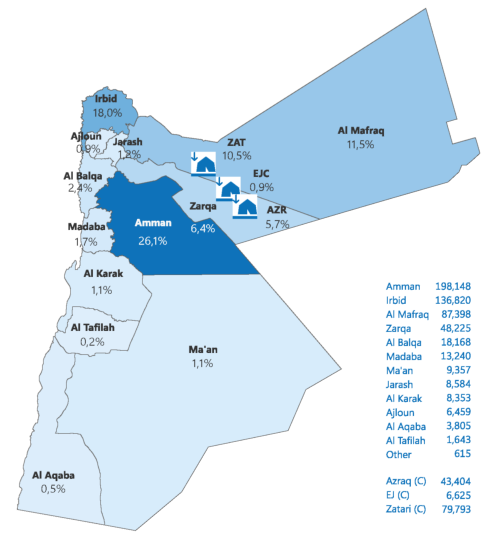
Figure 1: UNHCR registered persons of concern - refugees and asylum seekers in Jordan
Source: Operational Data Portal 2021a
- 94/95 -
To sum up, the specific context of Jordan, particularly, its relationship to refugees is the basis for the selection of the Jordanian case. There are two main aspects to this. The first aspect is its role as a host for refugees, since it continues to be the second largest host country of refugees per capita in the world, as mentioned above. Second, it plays a significant role in fighting terrorism. As a member of the international campaign against terrorism, Jordan has been playing an active role in the United States-led Global War on terror. It has also proven its worth in the fight against the Islamic State in Iraq and the Levant (ISIL), and has been an active partner in the international-led coalition to combat ISIL fighters.
Jordan's Policies in Response to the Syrian Refugee Crisis
The scholarship on the governance of refugees has analysed the issue through various lenses in an attempt to understand the determinants shaping the refugee policies of the country hosts. It is beyond the scope of this paper, of course, to analyse the governance of refugees in general. However, remaining within the scope of this paper, the analysis of Jordan's policies in response to the Syrian refugees will be built on the framework of policy legacies and policy memories.
While the term "policy legacies" highlights the structural dimension, "policy memories" reflects the role of actors in making sense of the past, and in mobilising different narratives about it with a view to the present.[67] This framework perfectly suits the aims of this paper as it illustrates Jordan's reflexive approach to the Syrian refugee inflows. This framework enables Jordan to preserve its stability, as it has been doing for decades. This stability, maintained despite the country's limited economic advantages, a volatile neighbourhood and successive refugee inflows, stems from two factors: international support, including from the EU, which will always be important in underpinning the kingdom's stability[68] and its reflexive, flexible approach.
Jordan's approach in response to the inflows of Syrian refugees is shaped by policy legacies and past memories.[69] Policy legacies can derive from multiple and overlapping regimes or policy fields, or from the history of single elements, or paradigms that have developed a life of their own, and which policy-relevant actors draw on in processes of construction. Tus, past policies affect the composition and shape of current ones.[70]
Past memories involve the personal histories of policy-relevant actors, or the ways in which they (selectively) remember past events or procedures when framing or implementing
- 95/96 -
policies. Hence, they highlight the subjective dimensions of policy legacies. Regarding refugees, memories of the reception afforded to refugees in the past is crucial for the way the various actors and agencies involved design their strategies.
These memories may shape red lines and the constraints of policy-shaping either directly or indirectly. Thus, in the context of the governance of Syrian refugees in Jordan, policy legacies and past memories are significant in policy-shaping processes. After all, Jordan has a long history of hosting different waves of refugees. In terms of size and presence in Jordan, the Palestinian and the Iraqi influxes are the most relevant when it comes to policy legacies and memories. However, their presence has different characteristics and has been subject to different governing policies.[71]
The mass inflows from Iraq to Jordan are a relatively recent phenomenon. A number of policy-makers responsible for the response to Syrian refugee inflows in the country, at least in the first years of the response, had also been involved in governing the Iraqi refugees in Jordan. Some policy-makers hence have personal memories and professional experiences of governing Iraqi displacement. This, in turn, resulted in a rationale that somehow shaped the response to Syrian refugees in a similar vein to the response to the Iraqis earlier.
On the other hand, the Palestinian influx is governed differently. The demographic composition of Jordan, where the Palestinians are the main component and their status as refugee-citizens,[72] have shaped political discourses and policies about refugees in the country. Jordan is not only home to millions of Palestinian refugees, but also around half of the population of Jordan is of Palestinian descent.[73]
Keeping this in mind, Jordan's policies aim to preserve the status quo in Jordan, where only Palestinians enjoy a permanent presence.[74] This, in turn, leads Jordan to adopt a reflexive flexible approach in response to the Syrian inflows, based on each phase of the conflict in line with Jordan's interest.
Accordingly, at the outbreak of the conflict in Syria, Jordan welcomed refugees and adopted an open door policy. It built official camps for Syrian refugees; first, it opened Al Za'atari, in July 2012, then, Mrajeeb Al Fhood in April 2013 and Al Azraq were opened in April 2014.[75]
However, the escalation of the conflict and the continuous inflows of refugees have made Jordan adopt a securitised approach to Syrian refugees, from 2013. According to the Securitisation theory, an issue is securitised once it is presented as a threat to national security. In order to emphasise how threatening the issue is, there will be a harmonisation between security actions and security discourse.[76]
- 96/97 -
The implication is that those refugees are viewed as a threat to Jordan, and that has been demonstrated by the government discourse, which began to emphasise that Jordan should not be left alone to face such a challenge.[77]
Representing the Syrian refugees as a challenge is understandable considering how those socio-economic strains challenge Jordan's economic and social security. This challenge can be seen in light of the dimensions of security. The United Nations Office for the Coordination of Humanitarian Affairs (OCHA) clarifies these dimensions, explaining that security goes beyond military protection to a wider dimension engaging threats to human dignity. As a result, security is expanded into a wide range of areas: Economic security, including the creation of employment and measures against poverty; Food security, comprising measures against hunger and famine; Health security: measures against disease, unsafe food and lack of access to basic health care; Environmental security: measures against resource depletion, natural disasters and pollution; Personal security: measures against physical violence, crime, terrorism, domestic violence and child labour; Community security: measures against interethnic, religious and other identity tensions and Political security: measures against political repression and human rights abuses.[78]
The expansion of the meaning of security, to integrate these dimensions, indicates that security threats are not restricted only to military threats, but there are various types of social, political, economic or environmental threats facing states. For this reason, securing external sources of income from international donors is a fundamental item on the Jordanian security agenda. In that respect, Syrian refugees may actually represent a valuable economic instrument to obtain such income.[79] Even building the camps for Syrian refugees can be interpreted as a means of shedding light on those refugees' suffering. Camps are built in order to make the world understand the crisis Jordan is going through, in the hope of greater international assistance.[80]
Another reason for securitising refugees is the refugees' mobilisation to demand better services. The level of mobilisation within the Syrian camps is varied. However, in Al Za'atari, this level has been relatively high. Conflicts between refugees and the authorities have been frequent and determined, creating a chaotic and tense environment.[81] The persistent protests made those camps highly securitised environments. For this reason, the government established the Syrian Refugee Camp Directorate in 2014, a branch of the Jordanian police responsible for security in the camps. The main goal of this directorate is to control the refugees' movements inside and outside the camps.
However, establishing this directorate was in line with Jordan's legal framework for dealing with refugees. This framework is built on the Jordan-UNHCR 1998 Memorandum of Understanding which was renewed in 2014. The essence of this memorandum is
- 97/98 -
that Jordan acknowledges the definition of "refugee" and their rights as stated in the 1951 Convention and its 1967 Protocol.[82] Based on this, registered Syrian refugees in Jordan have some rights including food assistance, subsidised healthcare and limited access to state educational institutions for an initial six months.[83] However, Syrian refugees are not allowed to make a legal claim to these services after the six-month period. Moreover, the Jordanian authorities can expel the refugees after their six-month protection status expires. Although the government has done so in only very few cases so far, it leaves Syrian refugees in an endless condition of uncertainty.[84]
For this reason, in order to avoid such uncertainty and in an effort to protect Jordanian infrastructure while responding to these drastic inflows, in June 2014, the National Resilience Plan was launched, which is a three-year programme of high priority investments. In adopting this plan, Jordan committed itself to investing US$2.41 billion in local institutions and host communities' various sectors, including health, education, employment, energy and housing.[85]
Another plan from later the same year was the Jordan Response Plan (JRP). This was launched in December 2014, as a one-year co-operative programme between the Ministry of Planning and International Cooperation and the United Nations Development Program.[86] This plan constituted a shift in the nature of the response to the crisis. Previously, the main goal of the Jordanian Government had been providing humanitarian relief while, from 2014, resilience building of refugees and local communities became the main theme. It aims at achieving long-term sustainable development, social integration and capacity building.
The continuous inflows of refugees emphasise the urgent need for more long-term resilient planning. For this reason, the JRP was extended until 2020 in two phases: from 2016-2018 and 2018-2020. It was subsequently renewed for an additional two years. The extension of the JRP for a further two years represented a shift from emergency intervention to a more sustainable approach to long-term resilience planning.
In addition, to avoid tension between the refugees and local communities, this plan was expanded to cover two pillars instead of one, having both refugee and resilience pillars. The first pillar addresses the need of the refugees while the second pillar addresses the need of the most vulnerable Jordanian communities.[87]
Moreover, Jordan joined the Refugee Resilience and Response Plan (3RP). This is one of the most prominent policy instruments for regional cooperation for forced migration governance in the region. It was established in 2015 in order to facilitate collaboration and coordination between international organisations, states and non-state actors in Turkey,
- 98/99 -
Jordan, Lebanon, Egypt and Iraq. The 3RP aims to establish a comprehensive approach to forced displacement which includes promoting access to national systems and supporting national ownership.[88] The essence of this plan was the surge in regional policy initiatives to support resilience through regional cooperation. However, similarly to other initiatives, these regional practices were only able to generate a medium level of societal resilience in host countries. What is more, even this medium level has since become harder to achieve, considering the risk context in each host country, the surge of Covid-19, and the current gap of funding between what is needed and what has been pledged by the international donors.[89]
This represents a challenge for the EU, as a major external actor and a significant donor. In addition, it illustrates the limitations of such an approach. However, a deeper understanding of the empirical insights which the EU gained from its resilience building in Jordan can better illustrate this limitation, as it demonstrates the disconnect between a theoretical understanding of resilience and what it is empirically capable of on the ground.
The EU's Regional Refugee Approach and Resilience Building in Jordan
Jordan and the EU enjoy a strategic partnership within the framework of the Euro-Med Partnership of the Barcelona Process and the European Neighbourhood Policy. Jordan's geopolitical situation and the crucial role Jordan plays in promoting stability, moderation and inter-faith tolerance in the region have enhanced this strategic partnership.
Since the establishment of their Association Agreement in 2002, the EU has been working to support Jordan in various sectors. To ensure this, the EU Delegation for Jordan works on the implementation, following up and advancement of their bilateral relations in several fields, including politics, economy, trade and security.[90] The significant role played by Jordan made it the first Mediterranean partner to conclude technical negotiations leading to an "Advanced Status" with the EU in 2010. In addition, within the framework of the European Neighbourhood Policy of 2015, the EU and Jordan have adopted the EU-Jordan Partnership Priorities. The Partnership Priorities are structured around three mutually reinforcing objectives: 1. macro-economic stability and sustainable and knowledge-based growth; 2. strengthening democratic governance, the rule of law and human rights; and 3. regional stability and security, including counterterrorism.[91]
In the context of the Syrian refugee crisis, the EU's support is expressed in line with the partnership's priorities and the revised ENP that aim to promote Jordanian resilience, enhance its capacities and realise its needs. For this reason, EU support is channelled in
- 99/100 -
two different directions: politically and economically. In the first aspect, the EU plays a significant role in increasing the international community's support for Jordan. To that end, the EU has been co-hosting Brussels Conferences for Supporting the Future of Syria and the Region since 2017. In these conferences, the EU has always emphasised that Jordan should not be left on its own and that the international community has a duty toward such a major host country. More importantly, these conferences not only represent an arena for fund raising, but also aim to set and implement plans that decrease the dichotomy between the humanitarian and development nexus.[92]
In terms of economic support, the EU is one of the main donors supporting Jordan. Since 2011, it has pledged nearly €3.2 billion through various instruments; humanitarian aid (€402 million),[93] bilateral assistance (€1,080 million)[94] and resilience assistance (€1,728 million) as the figure shows.
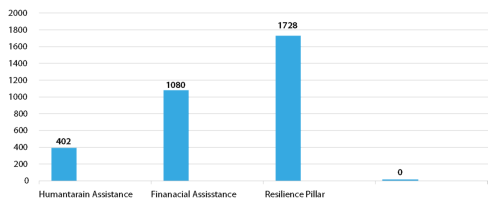
Figure 2: EU financial support to Jordan in response to the crisis since 2011 in million €
Source: Compiled by the author.
Regarding humanitarian aid, it addresses basic needs such as healthcare and food for refugees and for the most vulnerable Jordanian families. However, in line with the shift in focus from the humanitarian to the development nexus and in order to bridge the gap between them, the EU created the Regional Trust Fund in Response to the Syrian Crisis MADAD in 2014. This instrument mainly tackles longer term resilience. It is directed to support Jordan, Lebanon, Turkey, Egypt, Iraq, Armenia and the Western Balkans. Considering Jordan, the EU has committed €300 million in resilience support for Jordan since its establishment. The long-term aim of this fund, through focusing on education,
- 100/101 -
livelihood, water and health, is to achieve sustainable development goals for refugees and vulnerable Jordanians so that they can have a dignified life.
In addition, preserving Jordan's stability requires fighting poverty and unemployment. To that end, the EU mobilises its support through the Macro Financial Assistance (MFA) instrument, within the context of bilateral assistance. This seeks to foster Jordan's economic growth and support its economic reforms. To date, the EU has mobilised this program for Jordan three times; the first MFA was signed in March 2014, in a programme worth €180 million. The MFA II was renewed in September 2017 to pledge an additional €200 million. Finally, the MFA III, totalling EUR 500 million, was adopted on 15 January 2020.[95]
Moreover, as Covid-19 added new strains, the EU approved another MFA programme, pledging EUR 200 million to reinforce the resources available under MFA III. This aims to help Jordan deal with the economic fallout of the pandemic. As of November 2020, the EU had pledged EUR 250 million of macro-financial assistance, with EUR 150 million coming from this programme.[96]
A fundamental tool the EU has been using to support the country hosts are the agreements known as EU compacts. These compacts acknowledge that different partners face different challenges and aim at stabilisation, supporting the host countries, and building refugees and local communities' capacities in line with the goals of sustainable development.[97] The EU signed such a compact with Jordan in 2016 following the London Conference for Supporting the Future of Syria and the Region. For the first time, this instrumentalised refugees as a development opportunity that could contribute to their self-reliance and their development, along with the host communities. Through it, the EU commits to pledging multi-year grants and concessional loans comprising $700 million as an annual grant for three years, and concessional loans of $1.9 billion.[98]
In addition, to support Jordan's trade and facilitate its access to EU markets, the parties agreed on a special trade regime that simplifies the rules of origin for 52 Jordanian product categories. This scheme has motivated Jordanian companies to diversify their products and to create decent jobs for Jordanians and Syrians. For this reason, as of 2016, 15 companies have applied to benefit from this agreement. 13 companies have already obtained approval for exporting to the EU, 6 of which have exported goods to a value of €19.26 million.[99]
In return, Jordan has to meet certain targets connected to refugees. The first target is related to their labour market access, which Jordan agrees to facilitate. To do so, it has to issue 200,000 work permits for refugees in specified sectors, commits to employing certain quotas of refugees in various businesses, work on the investment climate, and legitimise Syrian businesses in the country. The second target is related to their education, with
- 101/102 -
Jordan committing to increase the enrolment of Syrian children at state schools and to increase their work training opportunities.[100]
Three implications can be derived from this compact. First, it changes the nature of the response from humanitarian aid to the development nexus. Second, it demonstrates a belief that facilitating refugees' access to the labour market contributes to their self-reliance and to the host communities' development.
The third implication is related to the type of resilience integrated within this compact. These initiatives can be categorised within the framework of Bourbeau's typology. In the context of maintenance resilience and preserving the status quo, the initiative aims to foster collaboration and expand international support for inclusive growth in Jordan. Considering the fact that Jordan is a key pillar of regional stability, the compact recognised the need to enable Jordan to meet its commitments as a host country and geostrategic partner.[101] Moreover, to avoid tensions within the Jordanian labour market and preserve social cohesion, the compact encourages the creation of special economic zones that can create job opportunities for the Syrians with the emphasis on the need to employ certain quotas of refugees in different businesses.
Within the framework of renewal resilience, the compact was game changing regarding how host countries and the international community respond to refugee situations. This compact made Jordan the first country in the Arab world to facilitate Syrian refugees' access to the labour market.[102] The Compact included concessional financing and trade concessions that relaxed rules of origin (ROO) for exporting goods to Europe and to supporting inclusive growth for Jordanians and Syrian refugees alike.[103]
Achieving the full potential of the incentives within the compact required Jordan to adjust existing policies and make policy changes to benefit Jordanian host communities.[104] For example, reforms included measures that improve Syrians access to and ability to register businesses among the Jordanians, to improve the business environment, to ease procedures, to waive the fees for obtaining work permits in selected sectors and to allow Syrians residing in the camps access to jobs in host communities. Furthermore, access to skills and vocational training opportunities and job-matching services for both Jordanians and Syrians have also been enhanced.[105]
These EU instruments aim to contribute to Jordan's security in the light of the OCHA dimensions, especially after the influx of refugees. The humanitarian aid assistance and MADAD funding seek to strengthen food, health, environment, personal or community security. To promote food security, the fund has financed projects that promote sustainable
- 102/103 -
agricultural development.[106] Regarding health security, there have been projects that aim to facilitate access to quality and equitable health care services for refugees and vulnerable Jordanians by reinforcing the health system and improving service delivery, especially in the context of the Covid-19 outbreak.[107] Preserving Jordan's resources and facilitating its transition to a green economy are at the heart of the environmental security goals. For this reason, the EU is promoting green investments in the private sector Jordan, by introducing the first internationally supported comprehensive green economy programme in the country.[108] In parallel, macro-financial Assistance and the Compact attempt to enhance the country's economic resilience with their focus on supporting economic growth and creating job opportunities.
Despite these efforts in several directions, many challenges still remain for Jordan as a host. The following section addresses these challenges and how Jordan and the EU cooperate to tackle them.
The limitations and achievements of resilience building in Jordan
Since resilience has become the governing rationale in response to the crisis, it was expected that it would contribute to the refugees' and the host communities' development, but nobody had any illusions that the road would be an easy one, as many challenges still remain.
Despite adopting resilience, this approach is incapable of solving the country's problems. Economic and social strains and dissatisfaction with the government's policies have put the country's social cohesion at risk. The level of dissatisfaction has made even the king himself subject to criticism, for being so generous with refugees at the expense of his people.[109]
More importantly, the country is incapable of fully meeting its commitments under the compact. Tat is not to say that no progress has been made, but challenges remain. In education, of 238,038 refugee children at school age, only 143,765 are enrolled in formal education.[110]
Regarding access to the labour market, the government has issued more work permits and achieved major progress in Jordan in including Syrian refugees in the country's labour market. In 2021 alone, a record 62,000 work permits were issued to Syrians. However, even with laws allowing refugees to work, with the country's unemployment rate standing at 23%, many refugees who hold work permits still struggle to find jobs and they are entitled to work only in certain closed sectors.[111]
- 103/104 -
The benefits of resilience building in Jordan
Jordan has been at the forefront of global efforts to support refugees, in line with the Global Compact on Refugees (GCR). Its efforts pursue different directions to make resilience viable. For Jordan, its social cohesion has always been a priority; to that end, many initiatives aim to address this issue. In education, for instance, many projects work towards this aim. One of these initiatives is Generations for Peace, launched in 2015, to reduce violence at schools. It organises many informal after-school activities that bring Syrian and Jordanian students together.[112]
In addition, to decrease the competition between refugees and local communities, Jordan requires aid organisations to target both refugees and host communities. In this vein, the official approval for any project requires that at least 30% goes to vulnerable host peoples (Jordanian) under the resilience pillar, and at least 30% refugees under the refugee pillar.[113]
Alongside these initiatives, Jordan has shown a unique example of leadership in hosting refugees, especially during the Covid-19 pandemic. The country was one of the world's first countries to give Covid-19 vaccinations to every UNHCR-registered refugee, including Syrians. Thanks to this, the proportion of the refugees affected by Covid-19 remained low.[114] The implication of such a step is that Jordan does not deny its refugees the right to health care and is trying to ensure that they have the same rights as Jordanians.
Furthermore, to maximise the benefits under the scheme of relaxed rules of origin, the government has established 18 special economic zones to create jobs for refugees and Jordanians. As a result, several companies have benefited. There has been an increase in Jordan's exports to the EU, with a total value of €56 million in 2019, in comparison with 19.2 million in 2016.[115] In addition, the government is working to encourage small and medium enterprises to be more involved in the scheme.[116] Thus, the implementation of the compact is a clear demonstration of the value of refugees as a development asset.
The 'jobs for refugees' experiment through the compact in Jordan has proven to be the most promising approach for decades.[117] Despite slow progress, there is always a room for improvement. The government has removed many obstacles that were hindering the compact.[118] One of these obstacles is related to work permit fees.
Prior to the agreement, refugees were dealt with like any labour migrant, and were obliged to pay almost €900 annually for a work permit. This high fee, along with lengthy administrative procedures and a lack of official documentation for refugees, resulted in only around 3,000 permits being issued before 2016. However, Syrians now pay only
- 104/105 -
a JD10 (12 €) administration fee for their work permits. This has led to a tremendous increase in the number of work permits issued. While in 2017 only 46,000 work permits were issued, this figure increased dramatically to 239,024 as of June 2021.[119]
Another area where progress has been made is in the range of sectors where Syrian refugees can work. Previously, Syrian refugees were mostly permitted to work only in closed sectors including agriculture, construction and manufacturing. However, since July 2021, Syrian refugees have been authorised to obtain work permits in all sectors open to non-Jordanians. This means they can now work in new sectors, including services, sales and crafts.[120]
With respect to the Syrian children's right to education, Jordan has pledged an investment of $97.6 million to establishing an additional 102 double shift schools.[121] This investment aims to expand the use of double shift schools, with the first morning shift for the Jordanian students, and the afternoon shift mainly for the Syrian pupils. The result, as of April-June 2021, was that 143,765 Syrian children of school age were enrolled in public schools out of 238,038. This constitutes 60% of all registered Syrian children.[122] This can be seen as considerable progress, in comparison with the situation prior to the compact.
Moreover, the 3RP response to the Syrian crisis is harmonised with another national policy, Vision 2025, which was launched in 2015 to achieve sustainable and inclusive growth.[123] This was adopted to ensure coherence between the 3RP and those plans and to avoid wasting time and resources. All these steps help to make the compact feasible and set the government on the right path to tackle the challenges related to resilience.
The EU, on the other hand, is working to meet these challenges through various schemes. One scheme work to foster Jordan's macroeconomic stability. The EU's macro-financial assistance has played a key role in reducing Jordan's Central Government debt, which stood at 109% to GDP in 2021.[124] Moreover, the EU contributes to fostering Jordan's economic resilience. Instruments like the European Investment Bank (EIB) and the European Bank for Reconstruction and Development have played a great role in supporting Jordan. The EIB, for instance, helps to improve the socio-economic infrastructure in the country. Since the signing of the EU-Jordan compact, its support has increased to €2.14 billion. Currently, its support covers 73 projects in various sectors including water and energy.[125] This represents an acknowledgement of the challenges posed by refugees and the importance of helping Jordan to meet its commitments.
Jordan is also addressed by the Economic Resilience Initiative (ERI), which the EU launched in 2016. The objective of this instrument is to enhance the EU's Southern
- 105/106 -
Neighbourhood and the Western Balkan countries' ability to withstand shocks and to improve their economic resilience. In Jordan, it has funded projects in various fields. In water and sanitation, for instance, in 2019 it approved a €65 million financing agreement. The project's goal is to improve the water supply systems in "Deir Allah and Al-Karamah" in the Jordan valley, serving almost 85,000 people in that region.[126]
To help Jordan meet the challenges facing it in the energy sector, the ERI seeks to ensure that Jordan has green and sufficient energy. Its efforts are particularly directed towards supporting the Jordanian governates which host the highest share of refugees. Thus, the EIB's last loan in this sector provided €45 million to Cities and Villages Development Bank, to support municipalities' investments in energy efficiency infrastructure.[127]
The role of the private sector, particularly SMEs, in achieving inclusive and sustainable growth cannot be ignored. Accordingly, the ERI has funded many projects supporting SMEs. One of these initiatives is Jordanian Action for Development of Enterprises (JADE), a 3-year project that was launched in 2017. Its aim is to support over 160 SMEs, start-ups and entrepreneurs and to create new employment opportunities for Jordanians.[128]
Since the Covid-19 pandemic, backing the private sector has become even more important. For this reason, the most recent EIB investment provided €24 million to enhance the economic resilience to Covid-19 of the companies most impacted by the pandemic.[129]
The Regional Trust Fund also plays a vital role in developing resilience in Jordan. Since its establishment, it has financed 36 projects in various sectors in Jordan: in education, 111,253 girls and boys have gained access to primary education; 45,551 more Syrians and Jordanians now have access to improved water services; 223,061 benefit from livelihoods and resilience support; 37,185 have benefited from protection services; 162,842 have gained access to medical care; 1,934 have access to higher education or vocational training and finally, 316,507 have been granted access to social cohesion services.[130]
Conclusion
This article has specifically focused on the EU's approach to the influx of refugees. Using an in-depth case study to challenge the claim that EU resilience building is only maintenance, marginal or reflexive in nature, it has argued instead that more than one type of resilience can be found together, with at least two types being built in Jordan. The EU-Jordan compact is an example of Reflexive Resilience that transforms the policy completely, leading to the creation of a new policy. For the first time, this policy regards refugees as a development
- 106/107 -
asset rather than merely a problem to be addressed, although more research is needed to show how they can really contribute to the development of local communities.
Maintenance resilience can also be found in Jordan. Various initiatives are currently contributing to Jordan's social cohesion and its stability. These can be characterised as Maintenance Resilience that aims to preserve the status quo. This type of resilience has enabled Jordan's institutions to function properly and preserve its stability.
The paper also illustrates the difficulties and benefits of resilience as a region-building initiative and concludes that, although Jordan and the EU continue to face challenges related to resilience building, yet, both sides are trying to tackle them and make it feasible. The final section of this paper suggests some scenarios that can make resilience more viable.
Recommendations
The final remarks in this paper suggest different approaches that the policy-makers in Jordan or the EU can adopt to make resilience more viable. The first approach is related to Jordan and envisages the relaxation of trade regulations. As outlined above, this scheme has contributed to increasing Jordan's exports to the EU market, although to reach its full potential, Jordan needs to raise the awareness of the business community of the scheme, particularly for manufacturers in remote areas.
The second scenario has Jordan working to take advantage of its stability within the region. This stability is a main factor in attracting local and external investment, although, high taxes discourage investors, who prefer other destinations like Turkey or Egypt. Hence, if Jordan identifies and addresses the challenges facing businesses, it would enjoy many benefits, for instance, decreasing taxes or improving infrastructure would be of a great interest to investors and would eventually lead to growth.
The final approach is for the EU to balance its humanitarian and political efforts in the region. This is not to say that it is the EU's responsibility alone to bring an end to the conflict. Doing so, however, would certainly make its resilience building in the region more viable.
References
Al Husseini, Jalal Jamal - Turrión, Ruth-Ferrero - Bardak, Ummuhan (2017): Migrant Support Measures from an Employment and Skills Perspective (MISMES): Jordan. Brussels: European Training Foundation.
Ali, Ali (2023): Disaggregating Jordan's Syrian Refugee Response: The 'Many Hands' of the Jordanian State. Mediterranean Politics, 28(2), 178-201. Online: https://doi.org/10.1080/13629395.2021.1922969
- 107/108 -
Al-Junaidi, Laith (2021): Jordan to Buy 50 Million m[3] of Water from Israel. Jordan Is Currently the World's Second Water-Poorest Country. Online: www.aa.com.tr/en/middle-east/jordan-to-buy-50-million-m3-of-water-from-israel/2389837#
Al Nawas, Bahaa Al Deen (2020): EU-Jordan Rules of Origin Scheme Beneficial but yet to Reach Full Potential - Stakeholders. The Jordan Times, 09 December 2020. Online: www.jordantimes.com/news/local/eu-jordan-rules-origin-scheme-beneficialyet-reach-full-potential-%E2%80%94-stakeholders
Alougili, Mazen A. S. (2019): The Impact of Syrian Refugee on Jordanian National Security. European Journal of Social Sciences, 2(3), 83-99. Online: https://doi.org/10.26417/ejss-2019.v2i3-78
Alsoudi, Abdelmahdi (2020): The Socio-Economic Impact of Syrian Refugees on Labor in Jordan: Case Study on Local Communities in Mafraq Governorate. Journal of Islamic Thought and Civilization, 10(1), 1-23. Online: https://doi.org/10.32350/jitc.101.01
Anholt, Rosanne - Sinatti, Giulia (2020): Under the Guise of Resilience: The EU Approach to Migration and Forced Displacement in Jordan and Lebanon. Contemporary Security Policy, 41(2), 311-335. Online: https://doi.org/10.1080/13523260.2019.1698182
Aradau, Claudia (2014): The Promise of Security: Resilience, Surprise and Epistemic Politics. Resilience, 2(1), 73-87. Online: https://doi.org/10.1080/21693293.2014.914765
Auguin, Anne-Cécile (2019): Jordan: EIB Provides a Grant of EUR 16.3 Million to Support the Implementation of Deir Alla and Al-Karamah Project. Online: www.eib.org/en/press/all/2019-273-eib-provides-a-grant-of-eur-163-million-to-support-the-implementation-of-deir-alla-and-al-karamah-project-in-jordan.htm
Auguin, Anne-Cécile (2022): Jordan: JOD 24 Million EIB Backing for Business Investment. Online: www.eib.org/en/press/all/2022-179-jod-24-million-eib-backing-for-jordanian-business-investment
Badarin, Emile - Schumacher, Tobias (2020): The EU, Resilience and the Southern Neighbourhood after the Arab Uprisings. In Cusumano, Eugenio - Hofmaier, Stefan (eds.): Projecting Resilience Across the Mediterranean. London: Palgrave Macmillan. 63-84. Online: https://doi.org/10.1007/978-3-030-23641-0_4
Bank, André (2016): Syrian Refugees in Jordan: Between Protection and Marginalisation. Online: www.giga-hamburg.de/en/publications/giga-focus/syrian-refugees-in-jordan-between-protection-and-marginalisation
Barbelet, Veronique - Hagen-Zanker, Jessica - Mansour-Ille, Dina (2018): The Jordan Compact Lessons Learnt and Implications for Future Refugee Compacts. London: Overseas Development Institute.
Bargués, Pol - Schmidt, Jessica (2021): Resilience and the Rise of Speculative Humanitarianism: Thinking Difference through the Syrian Refugee Crisis. Millennium: Journal of International Studies, 49(2), 197-223. Online: https://doi.org/10.1177/03058298211031297
BBC News (2016): Jordanian Troops Killed in Bomb Attack at Syria Border. BBC News, 21 June 2016. Online: www.bbc.com/news/world-middle-east-36584885
- 108/109 -
Beaujouan, Juline - Rasheed, Amjed (2020): The Syrian Refugee Policy of the Jordanian Government. In Beaujouan, Juline - Rasheed, Amjed (eds.): Syrian Crisis, Syrian Refugees. Voices from Jordan and Lebanon. London: Macmillan. 47-65. Online: https://doi.org/10.1007/978-3-030-35016-1_5
Bertelsmann Stiftung (2022): BTI2022 Country Report - Jordan. Gütersloh: Bertelsmann Stiftung.
Bicchi, Federica (2006): 'Our Size Fits All': Normative Power Europe and the Mediterranean. Journal of European Public Policy, 13(2), 286-303. Online: https://doi.org/10.1080/13501760500451733
Bourbeau, Philippe (2011): The Securitization of Migration. London: Routledge. Online: https://doi.org/10.4324/9780203829349
Bourbeau, Phillippe (2013): Resilience, Security, and World Politics. In Chandler, David - Coaffee, Jon (eds.): The Routledge Handbook of International Resilience. London: Routledge. 50-65.
Bourbeau, Phillippe (2015): Resilience and International Politics: Premises, Debates, Agenda. International Studies Review, 17(3), 374-395. Online: https://doi.org/10.1111/misr.12226
Carrion, Doris (2016): Bleak Prospects: Syrian Refugees in Jordan. Online: www.bpb.de/themen/migrationintegration/laenderprofile/230886/duestere-aussichten-syrische-fluechtlinge-in-jordanien/?p=all Cassarino, Jean-Pierre - Del Sarto, Raffaella A. (2018): The Governance of Migration and Border Controls in the European - North African Context. Online: www.iai.it/sites/default/files/menara_wp_13.pdf
Chandler, David (2014): Resilience. The Governance of Complexity. London: Routledge. Online: https://doi.org/10.4324/9781315773810
Clarke, Killian (2017): Protest and Informal Leadership in Syrian Refugee Camps. Online: https://pomeps.org/protest-and-informal-leadership-in-syrian-refugee-camps
Comfort, Louise K. - Boin, Arjen - Demchak, Chris C. eds. (2010): Designing Resilience. Preparing for Extreme Events. Pittsburgh: University of Pittsburgh Press. Online: https://doi.org/10.2307/j.ctt5hjq0c
Council of the EU (2017): Supporting the Future of Syria and the Region: Co-chairs Declaration. Brussels: General Secretariat of the Council, Press Office.
Crone, Manni - Falkentoft, Maja Felicia (2017): Europe Refugee Crisis and the Threat of Terrorism. An Extraordinary Threat? Copenhagen: Danish Institute for International Studies.
DARPE (2021): EBRD and EU to Promote Green Investments in Jordan. Online: https://darpe.me/ebrd-and-eu-to-promote-green-investments-in-jordan/
Delcour, Laure (2015): The 2015 ENP Review: Beyond Stocktaking, the Need for a Political Strategy. Online: www.academia.edu/19671963/The_2015_ENP_Review_Beyond_Stocktaking_the_Need_for_a_Political_Strategy
- 109/110 -
De Coning, Cedric (2016): From Peacebuilding to Sustaining Peace: Implications of Complexity for Resilience and Sustainability. Resilience, 4(3), 166-181. Online: https://doi.org/10.1080/21693293.2016.1153773
ECHO (s. a.): Jordan Factsheet. Online: https://civil-protection-humanitarian-aid.ec.europa.eu/where/middle-east/jordan_en
EEAS (2021): The European Union and Jordan. Online: www.eeas.europa.eu/jordan/european-union-and-jordan_en?s=201
El-Khazen, Ibrahim (2021): Jordan's King Reiterates Support for 2-state Solution to Israeli-Palestinian Conflict in UN Speech. Online: www.aa.com.tr/en/middle-east/jordans-king-reiterates-support-for-2-state-solution-to-israeli-palestinian-conflict-in-un-speech/2372384#
Elnimr, Khaled (2019): Jordan: The EU Bank Boosts Resilient and Sustainable Growth of Municipalities Through a Partnership with the Cities and Villages Development Bank. Online: www.eib.org/en/press/all/2019-271-the-eu-bank-boosts-resilient-and-sustainable-growth-of-municipalities-in-jordan-through-a-partnership-with-the-cities-and-villages-development-bank
Eroukhamanoff, Clara (2018): Securitisation Theory: An Introduction. Online: www.e-ir.info/2018/01/14/securitisation-theory-an-introduction/
European Commission (2011): Joint Communication to the European Parliament, the Council, the Economic and Social Committee and the Committee of Regions. A New Response to a Changing Neighbourhood. Online: https://eurlex.europa.eu/LexUriServ/LexUriServ.do?uri=COM:2011:0303:FIN:en:PDF
European Commission (2015): Joint Communication to the European Parliament, the Council, the Economic and Social Committee and the Committee of Regions. Review of the European Neighbourhood Policy. Online: www.europarl.europa.eu/cmsdata/219079/ec_eeas_joint-communication_review-of-the-enp_18112015_en.pdf
European Commission (2020): Action Document for the EU Regional Trust Fund in Response to the Syrian Crisis to Be Used for the Decisions of the Operational Board. Online: https://trustfund-syria-region.ec.europa.eu/system/files/2020-07/eutf_syria_ad_rider_jordan_health.pdf
European Commission (2021): Jordan Economic Analysis. Online: https://ec.europa.eu/info/business-economy-euro/economic-and-fiscal-policy-coordination/international-economic-relations/enlargement-and-neighbouring-countries/neighbouring-countries-eu/neighbourhood-countries/jordan_en#macro-financial-assistance
European Investment Bank (2021): Jordan and the EIB. Online: www.eib.org/en/projects/regions/med/jordan/index.htm
European Union External Action Service (2016): Shared Vision, Common Action: A Stronger Europe. A Global Strategy for the European Union's Foreign and Security Policy. Online: https://eeas.europa.eu/sites/eeas/files/eugs_review_web_0.pdf
Eurostat (2017): Asylum in the EU Member States. Online: https://ec.europa.eu/eurostat/documents/2995521/7921609/3-16032017-bp-en.pdf/e5fa98bb-5d9d-4297-9168-d07c67d1c9e1
- 110/111 -
Fakhoury, Tamirace (2021): The External Dimension of EU Migration Policy as Region-Building? Refugee Cooperation as Contentious Politics. Journal of Ethnic and Migration Studies, 48(12), 2908-2926. Online: https://doi.org/10.1080/1369183X.2021.1972568
FAO (2021): Enhancing Resilient Livelihoods and Food Security of Host Communities and Syrian Refugees in Jordan and Lebanon Through the Promotion of Sustainable Agricultural Development. Online: www.fao.org/documents/card/en/c/CB2934EN/
Freeman, Richard (2007): Epistemological Bricolage: How Practitioners Make Sense of Learning. Administration and Society, 39(4), 476 -496. Online: https://doi.org/10.1177/0095399707301857
Gandolfo, Luisa (2012): Palestinians in Jordan: The Politics of Identity. New York: Bloomsbury Publishing. Online: https://doi.org/10.5040/9780755607594
Grove, Kevin - Chandler, David (2016): Introduction: Resilience and the Anthropocene: The Stakes of 'Renaturalising' Politics. Resilience, 5(2), 79-91. Online: https://doi.org/10.1080/21693293.2016.1241476
Handmer, John W. - Dovers, Stephen R. (1996): A Typology of Resilience: Rethinking Institutions for Sustainable Development. Industrial & Environmental Crisis Quarterly, 9(4), 482-511. Online: https://doi.org/10.1177/108602669600900403
Harpviken, Kristian Berg - Schirmer-Nilsen, Bjørn (2021): The Plight of Syrian Refugees. Online: https://blogs.prio.org/2021/08/the-plight-of-syrian-refugees/
Huang, Cindy - Ash, Nazanin (2018): Jordan, Lebanon Compacts Should Be Improved, Not Abandoned. Online: https://deeply.thenewhumanitarian.org/refugees/community/2018/02/05/jordan-lebanon-compacts-should-be-improved-not-abandoned
Huang, Cindy - Gough, Kate (2019): The Jordan Compact: Three Years on, Where Do We Stand? Online: https://reliefweb.int/report/jordan/jordan-compact-three-years-where-do-we-stand
ILO (2019): ILO Response to Syrian Refugee Crisis in Jordan. Online: www.ilo.org/beirut/areasofwork/employment-policy/syrian-refugee-crisis/jordan/lang-en/index.htm
Istanabi, Tendra (2020): Resilience and Livelihoods: Bringing Together Two Approaches to Explain Social Capital in Kampung Kota Communities. IOP Conference Series: Earth and Environmental Science, 447(1), 1-10. Online: https://doi.org/10.1088/1755-1315/447/1/012020
JADE (2017): JADE: Jordanian Action for the Development of Enterprises. Online: https://leadersinternational.org/projects/jade/
Korosteleva, Elena A. - Flockhart, Trine (2020): Resilience in EU and International Institutions: Redefining Local Ownership in a New Global Governance Agenda. Contemporary Security Policy, 41(2), 153-175. Online: https://doi.org/10.1080/13523260.2020.1723973
Law Library of Congress (2016): Refugee Law and Policy in Selected Countries. Washington: Law Library of Congress.
Lenner, Katharina (2020): "Biting Our tongues": Policy Legacies and Memories in the Making of the Syrian Refugee Response in Jordan. Refugee Survey Quarterly, 39(3), 273-298. Online: https://doi.org/10.1093/rsq/hdaa005
- 111/112 -
Manners, Ian (2003): Normative Power Europe: A Contradiction in Terms? Journal of Common Market Studies, 40(2), 235-258. Online: https://doi.org/10.1111/1468-5965.00353
Nelson, Donald R. - Adger, W. Neil - Brown, Katrina (2017): Adaptation to Environmental Change: Contributions of a Resilience Framework. Annual Review of Environment and Resources, 32(1), 395-419. Online: https://doi.org/10.1146/annurev.energy.32.051807.090348
Omari, Raed (2022): Saudi-Jordanian Cooperation 'A Role Model' for the Entire Middle East. Arab News, 23 June 2022. Online: www.arabnews.com/node/2108456/middle-east
Opall-Rome, Barbara (2016): Jordan Proves Heavyweight in Fight Against ISIS. Defense News, 09 May 2016. Online: www.defensenews.com/home/2016/05/09/jordan-proves-heavyweight-in-fight-against-isis/
Operational Data Portal (2020): Jordan Response Plan 2020-2022 / Funding Status. Online: https://data2.unhcr.org/en/documents/details/77263
Operational Data Portal (2021a): Jordan: Statistics for Registered Syrian Refugees (as of 31 August 2021). Online: https://data2.unhcr.org/en/documents/details/88458
Operational Data Portal (2021b): Jordan: Economic Inclusion of Syrian Refugees Dashboard (June 2021). Online: https://data2.unhcr.org/en/documents/details/87833
Osisanya, Segun (2020): National Security versus Global Security. Online: www.un.org/en/chronicle/article/national-security-versus-global-security
Ozcurumez, Saime (2021): The EU's Effectiveness in the Eastern Mediterranean Migration Quandary: Challenges to Building Societal Resilience. Democratization, 28(7), 1302-1318. Online: https://doi.org/10.1080/13510347.2021.1918109
Particip Consortium (2021): The European Union Regional Trust Fund in Response to the Syrian Crisis. Ninth Results Report. Brussel: European Commission.
Reiter, Yitzhak (2004): The Palestinian-Transjordanian Rift: Economic Might and Political Power in Jordan. Middle East Journal, 58(1), 72-92. Online: https://doi.org/10.3751/58.1.14
Ripoll Servent, Ariadna (2019): The EU's Refugee 'Crisis': Framing Policy Failure as an Opportunity for Success. Politique Européenne, 65(3), 178-210. Online: https://doi.org/10.3917/poeu.065.0178
Salem, Hisham Ait - Morrice, Linda (2019): A Review of Social Cohesion Initiatives and Challenges with a Focus on Jordan and Education. UK: Centre for International Education and Development, University of Sussex.
Saudi Gazette (2022): Saudi Arabia, Jordan Reaffirm Security of the Two Kingdoms is One. Saudi Gazette, 22 June 2022. Online: https://saudigazette.com.sa/article/622123
Schumacher, Tobias (2017): The 2015 Review Process of the EU's European Neighbourhood Policy. Online: www.iemed.org/publication/the-2015-review-process-of-the-eus-european-neighbourhood-policy/
Seeberg, Peter (2009): The EU as a Realist Actor in Normative Clothes: EU Democracy Promotion. Democratization, 16(1), 81-99. Online: https://doi.org/10.1080/1351034080257585860; DOI: https://doi.org/10.1080/13510340802575858
- 112/113 -
Seeberg, Peter (2020): Syrian Refugees in Jordan and Their Integration in the Labor Market: Jordanian Migration Diplomacy and EU Incentives. Mediterranean Politics, 47(2), 192-211. Online: https://doi.org/10.1080/13629395.2020.1758452
Seligman, Martin E. P. - Csíkszentmihályi, Mihály (2000): Positive Psychology: An Introduction. American Psychologist, 55(1), 5-14. Online: https://doi.org/10.1037/0003-066X.55.1.5
Syria (2022). Online: www.acaps.org/country/syria/crisis/syrianregionalcrisis#:~:text=The%20Syrian%20regional%20crisis%20represents,%2C%20Lebanon%2C%20Iraq%20and%20
Temprano Arroyo, Heliodoro (2018): Promoting Labour Market Integration of Refugees with Trade Preferences: Beyond the EU-Jordan Compact. Badia Fiesolana: European University Institute. Online: https://doi.org/10.2139/ssrn.3293829
The UN Refugee Agency (2021a): Education Jordan April-June 2021. Online: https://reliefweb.int/sites/reliefweb.int/files/resources/Education%20dashboard_Q2%202021%20Summary.pdf The UN Refugee Agency (2021b): Refugees Receive Covid-19 Vaccination in Jordan. Online: www.unhcr.org/news/press/2021/1/5ffffe614/refugees-receive-covid-19-vaccinations-jordan.html
The UN Refugee Agency (2022): Jordan Issues Record Number of Work Permits to Syrian Refugees. Online: www.unhcr.org/news/press/2022/1/61effaa54/jordan-issues-record-number-work-permits-syrian-refugees.html#:~:text=And%20since%20July%20202www.unhcr.org/news/press/2022/1/61effaa54/jordan-issues-record-number-work-permits-syrian-refugees.html
The World Bank (2021a): Jordan's Economic Update. Online: www.worldbank.org/en/country/jordan/publication/economic-update-october-2021#:~:text=Debt%20remains%20a%20key%20challenge,on%20par%20with%20end%2D2020
The World Bank (2021b): Jordan. Online: https://thedocs.worldbank.org/en/doc/222b8edb65c7bfcbfc3f5afc05ad892a-0280012021/original/Jordan-Economic-Update-October-2021.pdf
Tocci, Nathalie (2019): Resilience and the Role of the European Union in the World. Contemporary Security Policy, 41(2), 176-194. Online: https://doi.org/10.1080/13523260.2019.1640342
United Nations Jordan (2021): On World Refugee Day, Jordan Continues to Be the Second Host Country of Refugees Per Capita in the World. Online: https://jordan.un.org/en/132334-world-refugee-day-jordan-continues-be-second-host-country-refugees-capita-world
U.S. Aid Jordan (2014): National Resilience Plan 2014-2016. Online: https://jordankmportal.com/resources/national-resilience-plan-2014-2016
U.S. Department of State (2022): U.S. Relations with Jordan. Online: www.state.gov/u-s-relations-with-jordan/
- 113/114 -
Walker, Jeremy - Cooper, Melinda (2011): Genealogies of Resilience: From Systems Ecology to the Political Economy of Crisis Adaptation. Security Dialogue, 42(2), 143-160. Online: https://doi.org/10.1177/0967010611399616
Walklate, Sandra - McGarry, Ross - Mythen, Gabe (2014): Searching for Resilience: A Conceptual Excavation. Armed Forces and Society, 40(3), 408-427. Online: https://doi.org/10.1177/0095327X1246541; DOI: https://doi.org/10.1177/0095327X12465419
World Population Review (2023): U.S. Foreign Aid by Country 2023. Online: https://worldpopulationreview.com/country-rankings/us-foreign-aid-by-country
Wunderlich, Daniel (2010): Differentiation and Policy Convergence against Long Odds: Lessons from Implementing EU Migration Policy in Morocco. Mediterranean Politics, 15(2), 249-272. Online: https://doi.org/10.1080/13629395.2010.485052
Young Foundation (2012): Adapting to Change: The Role of Community Resilience. Online: https://youngfoundation.org/wp-content/uploads/2012/10/Adapting-to-ChangeOctober-2012.pdf
Youngs, Richard (2016): Twenty Years of Euro-Mediterranean Relations. London: Taylor and Francis. Online: https://doi.org/10.4324/9781315657035
Lina Aleassa is a PhD candidate at the Corvinus University of Budapest in the school of International Relations and Political Science. Her subprogram is International Strategic Studies. Her research field is the European Union and its foreign policy, in particular within the scope of the EU and the southern neighbourhood and forced migration studies. She has participated in many international conferences, held in Jordan, Hungary, Germany, France and Bulgaria. Her publications include many conference proceedings and one book chapter. The main focus of these conferences was the EU and its adoption of resilience as a foreign policy strategy to respond to crises, within and beyond the EU. ■
NOTES
[1] Syria 2022.
[2] United Nations Jordan 2021.
[3] Eurostat 2017.
[4] Ripoll Servent 2019: 178-210.
[5] European Union External Action Service 2016.
[6] Anholt-Sinatti 2020: 311-335.
[7] Wunderlich 2010: 249-272.
[8] Bourbeau 2015: 374-395.
[9] Youngs 2016.
[10] Bicchi 2006: 286-303.
[11] Cassarino - Del Sarto 2018.
[12] Seeberg 2009: 81-99.
[13] Manners 2003: 235-258.
[14] Youngs 2016.
[15] Manners 2003: 240.
[16] European Commission 2011.
[17] A more detailed illustration about the shift in the EU's vision of itself and the world, the invertibility of crises can be stemmed from the Global Strategy for the European Union's Foreign and Security Policy of 2016 (see European Union External Action Service 2016).
[18] Delcour 2015.
[19] European Commission 2015:4.
[20] European Commission 2015:2.
[21] Schumacher 2017.
[22] Anholt-Sinatti 2020: 320.
[23] Badarin-Schumacher 2020: 63-84.
[24] European Union External Action Service 2016.
[25] Bicchi 2006: 288.
[26] Fakhoury 2021: 2908-2926.
[27] Bourbeau 2013: 50-65.
[28] Walker-Cooper 2011: 143-160.
[29] Aradau 2014: 73-87.
[30] De Coning 2016: 166-181.
[31] Chandler 2014.
[32] Istanabi 2020: 1-10.
[33] Seligman-Csíkszentmihályi 2000: 5-14.
[34] Comfort et al. 2010.
[35] Korosteleva-Flockhart 2020: 153-175.
[36] Tocci 2019: 176-194.
[37] Bargués-Schmidt 2021: 197-223.
[38] Grove-Chandler 2016: 79-91.
[39] Walklate et al. 2014:410.
[40] Walklate et al. 2014:408-427.
[41] Bourbeau 2013: 53.
[42] This typology is a development of John W. Handmer and Stephen R. Dovers' work (see Handmer-Dovers 1996: 482-511).
[43] Bourbeau 2013: 56.
[44] Bourbeau 2013: 58.
[45] Bourbeau 2013: 60.
[46] Nelson et al. 2017:397.
[47] Young Foundation 2012.
[48] Bourbeau 2011.
[49] The EU-Jordan Compact is considered a cornerstone for the EU resilience building and it does not only aim to renew policies in Jordan, what is more, it is recognised to be a relevant model that can be exported to other refugee hosting nations (see Temprano Arroyo 2018).
[50] The World Bank 2021b.
[51] Al-Junaidi 2021.
[52] U.S. Department of State 2022.
[53] U.S. Department of State 2022.
[54] World Population Review 2023.
[55] World Population Review 2023.
[56] Omari 2022.
[57] Saudi Gazette 2022.
[58] Omari 2022.
[59] El-Khazen 2021.
[60] Alougili 2019: 83-99.
[61] United Nations Jordan 2021.
[62] Opall-Rome 2016.
[63] Operational Data Portal 2021a.
[64] Alsoudi 2020: 1-23.
[65] Seeberg 2009: 90.
[66] BBC News 2016.
[67] Lenner 2020: 273-298.
[68] Bertelsmann Stiftung 2022.
[69] It is important to emphasise that Jordan's migration legacy is not only shaped within the frame of waves of refugees, but also of regional political and economic developments, together with the country's geographical location and its historical process of state building, which largely explain the migration legacy in Jordan. These factors explain Jordan's position as a source of highly-skilled emigrants and a home for foreign labour immigrants and refugees (see Al Husseini et al. 2017).
[70] Freeman 2007:476-496.
[71] Lenner 2020: 273-298.
[72] Gandolfo 2012.
[73] The Palestinians in Jordan are recognised as a major contributor to the Jordanian economy. Among the wealthiest families in Jordan who have a control over the banking sector and dominance in the private sector are families of Palestinian descent (see Reiter 2004: 72-92).
[74] Lenner 2020: 273-298.
[75] Beaujouan-Rasheed 2020:47-65.
[76] Eroukhamanoff 2018.
[77] Crone-Falkentoft 2017.
[78] Osisanya 2020.
[79] Lenner 2020: 273-298.
[80] Ali 2023: 178-201.
[81] Clarke 2017.
[82] Law Library of Congress 2016.
[83] Bank 2016.
[84] Carrion 2016.
[85] U.S. Aid Jordan 2014.
[86] Beaujouan-Rasheed 2020: 60.
[87] U.S. Aid Jordan 2014.
[88] Ozcurumez 2021: 1302-1318.
[89] Operational Data Portal 2020.
[90] EEAS 2021.
[91] EEAS 2021.
[92] Council of the EU 2017.
[93] ECHO s. a.
[94] European Commission 2021.
[95] European Commission 2021.
[96] European Commission 2021.
[97] Barbelet et al. 2018.
[98] Barbelet et al. 2018.
[99] EEAS 2021.
[100] Barbelet et al. 2018.
[101] Huang-Gough 2019.
[102] ILO 2019.
[103] Huang-Gough 2019.
[104] Seeberg 2020: 192-211.
[105] ILO 2019.
[106] FAO 2021.
[107] European Commission 2020.
[108] DARPE 2021.
[109] Harpviken-Schirmer-Nilsen 2021.
[110] The UN Refugee Agency 2021a.
[111] The UN Refugee Agency 2022.
[112] Salem-Morrice 2019.
[113] Beaujouan-Rasheed 2020: 60.
[114] The UN Refugee Agency 2021b.
[115] Al Nawas 2020.
[116] EEAS 2021.
[117] Huang-Ash 2018.
[118] Barbelet et al. 2018.
[119] Operational Data Portal 2021b.
[120] The UN Refugee Agency 2022.
[121] Badarin-Schumacher 2020: 75.
[122] The UN Refugee Agency 2021a.
[123] Beaujouan-Rasheed 2020: 63.
[124] The World Bank 2021.
[125] European Investment Bank 2021.
[126] Auguin 2019.
[127] Elnimr 2019.
[128] JADE 2017.
[129] Auguin 2022.
[130] Particip Consortium 2021.
Lábjegyzetek:
[1] The author is PhD candidate, Corvinus University of Budapest, Hungary, Lina.farahat@yahoo.com.