

Takács Lili[1]: Hacking the Attention Economy: The Use of the Twittersphere of Italian Party Leaders before the 2018 Elections[1] (Publico, 2022/4., 92-115. o.)
https://doi.org/10.32575/ppb.2022.4.6
Abstract
The 2018 Italian Parliamentary elections were marked by the success of populist parties. With the consolidation of hybrid media, campaigning on Twitter became an increasingly important communication channel for party leaders. An analysis of Twitter communications from 1 February 2018 to 4 March 2018 (day of the elections) reveals that Matteo Salvini and Matteo Renzi dominated the election campaign in the Twittersphere. Other party leaders did not use Twitter as skilfully as these two politicians and their engagement indicators are lower than those of Salvini and Renzi. The internal communicational dynamic between the party leaders shows that their main target was Matteo Renzi. Even though he had the most followers within this period and, overall, his communication indicators were good, in the end his party suffered a historical loss at the elections.
Keywords: campaign, Italy, parliamentary elections, political communication, Twitter
- 92/93 -
Introduction
The communicative style of political actors has become increasingly personalised,[2] thus analysing social media communication of party leaders during campaign period merits academic attention. This paper aims to understand how Italian party leaders communicated on Twitter from 1 February 2018 until 4 March (the date of the parliamentary elections).
The expansion of the use and significance of social media in this period was strengthened by several factors that make the Italian case special.
The structure of the paper is set out as follows: After briefly presenting the results of the 2018 elections, two introductory sections investigate how the Italian context provided fertile ground for the expansion of populist parties and outline the factors which contributed to digital campaigning. The first section thus provides the background of the current state of Italian politics. After this introductory section, the methodology and data collection methods of the study are presented and research questions are proposed. The next section analyses the Twitter communications of 6 Italian party leaders from 1 February until 4 March 2018.
Election results
There is a broad consensus amongst journalists and commentators that the 2018 election campaign in Italy was the ugliest ever, centred on fake news, insults and false promises.[3]
Up until Election Day, opinion polls had forecast neither the extent of the governing Democratic Party's (Partito Democratico, PD) loss nor the underperformance of Forza Italia (FI) compared to Lega. There was widespread speculation amongst political actors and traditional press about a possible PD-FI grand coalition that could counter antiestablishment forces since the Five Star Movement (Movimento 5 Stelle, M5S) had explicitly declared its unwillingness to make compromises with any of them after the election.[4] As it transpired, however, the election results rearranged the balance of power in Italy in a way no one could have foreseen.
The 2018 general elections resulted in a hung parliament without a clear winner in a tripolar scenario, where the protagonist political forces had apparently irreconcilable differences.[5] The centre-right coalition received the most votes, although it was not able to claim an absolute majority. This coalition, formed by Berlusconi's FI, Matteo Salvini's Lega and Giorgia Meloni's Brothers of Italy (Fratelli d'Italia, Fdl) obtained roughly 37% of the votes. A significant shift in balance occurred within the coalition: Lega outperformed FI, for the first time in national elections, attracting 17% and 14% of the votes, respectively.
- 93/94 -
In second place was a single party, M5S, with 32% of the votes, while the centre-left came third in a historic defeat of its main actor, Partito Democratico (which received 23% of the votes, its worst result since 1948).[6] Liberi e Uguali (LeU), a leftist party formed by ex-PD politicians, competed alone and obtained 3% of the votes. The mainstream parties from both the left and right - PD and FI - suffered severe losses either in terms of votes or of seats and thus were not able to form a coalition government, even with the participation of minor centrist parties.[7] However, the populist parties - Lega and M5S - together received almost 50% of the total votes and it became clear that no one could form a government without the support of at least one of them. It hardly seemed an exaggeration for Luigi Di Maio to state, one day after the elections, that the Third Republic - that of the Italian citizens - had been born.[8]
While the main contestants remained the same as in the 2013 elections (centre-right, centre-left, M5S), the internal composition of the two competing coalitions changed,[9] and a clear trend emerged: voters' support for populist parties (FI, M5S) grew, while traditional parties (PD, FI) lost ground. After lengthy negotiations, the first populist government of Western Europe came to power when M5S and Lega (the parties with the most and third most votes) decided to form a coalition. The M5S-Lega Government was the first government in Western Europe whose members did not belong to the European Parliament's mainstream party families.[10]
Background - politics
Although the results of the 2018 Italian parliamentary elections came as a surprise to most observers, since populist parties received more votes than ever before, the current state of Italian politics is decades in the making. An ongoing deep crisis of political representation can be observed, not only in Italy, but also in other mature Western democracies.[11]
During the decades following World War II, the Italian party system was stable in terms of supply and voter choice.[12] The main cause of this stability was the structure of cleavage: class and religious cleavages overlapped, thus strong ties were formed between social groups and their preferred parties.[13]
After the First Republic collapsed with the 1994 parliamentary elections, a bipolar system emerged where centre-right and centre-left coalitions took turns to be in power. In this bipolar system the left-right dimension became the defining element in Italian
- 94/95 -
politics, replacing group loyalty.[14] After about 20 years of electoral stability, in 2013 Italy experienced an electoral earthquake[15] when an anti-establishment, post-ideology party (M5S) emerged as a third pole in the political spectrum. For the first time since the advent of the Second Republic in 1994, no clear majority could claim victory in the elections, with both the centre-left and centre-right coalitions losing votes to new parties such as M5S or Civic Choice (Scelta Civica). These new parties rejected the above-mentioned left-right division, thus transforming the political space.
These factors may be interpreted as indicating that the Italian party system might be experiencing a de-alignment process: Compared to 2013, in the 2018 elections more than a quarter of the voters changed preference[16] which means that new opportunities arose for new political actors, since many voters became available on the electoral market.[17] From 2013 onwards, it became evident that the establishment vs. anti-establishment conflict (privileged elite vs. the common people) would play a fundamental role in structuring voter preferences.[18] This whole turbulent legislature (2013-2018) with its three grand coalition governments was presided over by cabinets supported by PD and the remnants of Berlusconi's PDL (Popolo della Libertá), after the majority of the party left the government a couple of months after the elections in 2013 in order to recreate FI.[19] The consecutive PD governments were unable to successfully manage the combination of the effects of the protracted economic and financial crisis, economic stagnation, illegal migration and social tensions, thus public trust in the party - and in mainstream parties in general - had been deeply eroded by March 2018.
Disillusionment with the political elites of the First and Second Republics led the frustrated electorate to make a statement in protest. The vacuum created by the mainstream political elite was filled by a mix of populist and extremist parties that weaponised wedge issues (e.g. illegal migration, economic problems) to their advantage.[20]
Besides the above-mentioned trust issues of the Italian electorate, other factors need to be taken into consideration in support of this paper's choice to focus on the communication of party leaders. The Italian polity was strongly affected by the process of the 'mediatisation' of politics:[21] the political sphere and discourse had to adapt to media logic[22] that preferred to focus on actual people rather than ideologies. This triggered a '(political) celebrity effect' in the collective imagery and then in the polity. As a consequence, a process of personalisation of leadership started within the Italian parties.[23] This phenomenon could
- 95/96 -
already be detected in Italy as early as the mid-1980s, when the mass party system started to tremble, but it became widely evident with the birth of the Second Republic and the rise of Silvio Berlusconi.[24]
The 2018 elections were the first under Rosatellum, the new electoral law approved in October 2017, just four months before the end of the legislature.[25]
Background - media
According to Reuters' Digital News Report in 2017 - the year before the parliamentary elections - the Italian media environment was characterised by a strong television sector, a weak and declining print sector, and growing use of the internet and social media for news.[26]
The traditional media environment in Italy is highly politicised, with traditional parties controlling all the means of communication, indeed, Italy is the country where TV became part of the government with the rise of Silvio Berlusconi. The media tycoon, who wielded significant economic power, was able to form four governments.
In 2018, Internet penetration was 73% in Italy, with 57% of the population (34 million) actively using social media and the average time spent on social media daily was 1 hour 53 minutes. Facebook is the most frequently used social media platform in Italy: in 2018 60% of Internet users used it actively, while 23% of them used Twitter actively.[27]
Bracciale and Cepernich argue that hybrid media campaigning became consolidated in Italy in 2018. Political parties used hybrid communicative strategies, integrating traditional media (TV, radio, press) with digital media (Internet). The structure of hybrid campaigning is based on three pillars: real space, television and Internet.[28] This new reality might prove problematic for traditional political forces - which in the Italian case are the 'mainstream' parties of the Second Republic - which need to deal with the transformation of representative democracy in terms of its political language and its ways
- 96/97 -
of communication.[29] The very nature of social media can contribute to strengthening populist parties when the logic of elites vs. common people is applied to it: these new online platforms are engineered in a way which gives equal opportunities to every user to publish content.[30] Average citizens can publish under the same conditions as journalists, politicians, traditional media outlets. While acknowledging the fact that social media service providers are able to influence - and filter - the appearance of content through the use of algorithms, this problem did not become part of the general discourse in Italy before the elections of 2018, thus it was not taken into consideration.
This was the first election with low-budget campaigns as electoral refunds were abolished by Decree Law No. 149/2013.[31] Apart from the lack of state funding, the reduced length of the campaign period also contributed to the deep changes in Italian election campaigning. The campaign period decreased to only two months so the parties were forced to concentrate their efforts and optimise resources. Since social media is almost a 'zero cost' communication instrument - at least compared to other options available mostly within the traditional media - and it is equally available to all parties,[32] it became the key theatre for the direct dissemination of political messages, hence the election campaign became highly digitalised. According to Vincos's estimates, compared to 2013 the volume of political communication (interactions) had more than doubled by 2018.[33] This central importance of social networks is further explained by their availability to increasingly large and active publics who are able to support and spread political leaders' communication,[34] thus directly impacting the attention economy (see below).
Methodology and data collection
Twitter is, of course, not the only social media platform where the political campaign was intensive before the elections, since almost all social media platforms are becoming increasingly relevant from the point of view of political communication. Twitter is currently recognised as one of the primary tools used by political leaders to communicate with their public as studies show that it is used by the vast majority of public figures to provide visibility to their views and statements. In Italy, Twitter is recognised to have an 'agenda setting' effect on the Italian mass media,[35] which is why it was chosen as the object of our analysis. The study aims to analyse a specific means of influencing voters' choices, namely the tweets of party leaders. The paper provides an analysis of politicians'
- 97/98 -
Twitter communication. When and how often do they tweet compared to each other and compared to their own parties' official accounts? Who dominated the Twittersphere in the election campaign and how did it affect the outcome of the vote? We decided to analyse the tweets produced by six party leaders (Matteo Renzi, Matteo Salvini, Silvio Berlusconi, Luigi Di Maio, Pietro Grasso and Emma Bonino) in the last months before the elections, from 1 February 2018 until 4 March (the date of the parliamentary elections). We collected data from Twitter and carried out a software-assisted corpus-based analysis. Our corpus of tweets contained 1,698 items, while the corpus of all activities (including any kind of mentions, comments, etc.) contained 44,883 items that formed the basis of our analysis.
Our main goal was to identify similarities and dissimilarities between the party leaders' communication strategies on Twitter. Quantitative and qualitative computerassisted methods are employed, as they are suitable for such a corpus-based analysis with a supervised approach.[36] While acknowledging the fact that the communication of party leaders cannot be explained independently from that of their parties, since their communication should be interdependent with that of their respective parties, this paper focuses more on the party leaders.
A detailed sentiment analysis was not carried out since it can be presumed that comments on politicians' official pages are moderated and a certain number of negative comments are deleted, while the followers' engagement is moderated.
Twitter can be considered as an apt platform for analysing online political communication since it is mostly used for short (limited length), public text messages. The basic actions carried out on Twitter are the following: posting original content (tweet) and sharing the original content posted by others (retweet). While there seems to be a general agreement that tweeting is a form of participation in the communication space,[37] there are several ways of decoding what retweeting means,[38] although the majority of scholars agrees that retweeting is a tool to propagate content.[39] More generally, sharing content on social media amplifies the reach of a message, thus it 'hacks' the status of the attention economy,[40] since it expands the circle of users who see the original content. Received retweets have also been studied widely. Bracciale et al. (2018)[41] argue that a logical distinction can be drawn between active and passive retweeting: while retweeting itself is an action, received retweets can be considered an indicator of success. Based on this logic, received retweets
- 98/99 -
have been interpreted as indicators of influence,[42] popularity,[43] position,[44] importance[45] and prominence.[46]
The next feature worth analysing is the hashtag function, since hashtags are central to the organisation of information on Twitter. Trough the use of hashtags, tweets can be sent to an audience larger than one's followers. These labels attached to messages exhibit many characteristics associated with participatory culture.[47] Hashtags are created by Twitter users (not by the site), and may be of various kinds, ranging from tags that categorise the subject matter of the tweet to idiosyncratic examples which function as expression punctuation.[48] Hashtags are individual since they generate "searchable language" through which words and phrases are categorised and aggregated into corpus-based lexicons that users can selectively explore and incorporate into their own messages.[49] They allow users to search tweets with metadata specifying the topic or intended audience of a piece of communication. This makes users' messages more findable and relatable, which strengthens interpersonal connections and creates a sense of commonality through shared values and interests.[50] Each hashtag identifies a stream of content, while users' choice of tags denotes participation in different information channels.[51] This feature is significant in examining election campaigns when candidates seek to gain the support of the electorate.
Even though several studies have been conducted on political communication on Twitter no institutionalised way of doing so has been developed. This is mainly due to the fact that rapid technological evolution (either regarding the platform or regarding analysis tools) generates conceptual chaos and makes it impossible to rely on past research for points of reference.[52] Based on the social media habit dimensions proposed by Bracciale and Cepernich (2018) this paper builds on the following indicators that measure the communicative strategies, skilfulness and engagement of party leaders. The indicators used by Bracciale and Cepernich[53] were complemented by other indicators.
1. Communicative strategies aim at maximising visibility: taking into consideration broadcast communication rule, the greater the communication flow, the greater the visibility
a) productivity indicators:
frequency - daily average tweets produced during the analysed period intensity - number of posts published per week
- 99/100 -
b) interactivity indicators:
mentions made - the percentage of tweets with a mention from the total number of produced tweets
replies made - the percentage of replies from the total number of tweets produced
retweets done - percentage of retweets out of the total number of produced tweets
2. Skillfulness reflects the party leaders' communication expertise in managing the structure flow on Twitter
a) hashtags: percentage of tweets with a hashtag out of the total tweets
b) communication style: links/photos/text
3. Engagement measures party leaders' potential for activating online supporters
a) retweets received
b) likes received
c) reach
d) all mentions: all mentions made using the username of the party leaders (tweets, comments, etc.)
4. Topics
a) most frequent hashtags
Table 1 • Summary of Twitter communication data used in the study.
| Salvini | Bonino | Meloni | Di Maio | Renzi | Grasso | Berlusconi | |
| All activity (in posts) | 10,657 | 2,665 | 5,861 | 6,950 | 10,249 | 2,505 | 5,992 |
| Number of own tweets | 612 | 94 | 120 | 52 | 79 | 47 | 694 |
| All mentions | 228,081 | 39,629 | 99,035 | 142,009 | 170,955 | 46,081 | 74,296 |
| All reach | 179,259,381 | 6,395,030 | 32,469,010 | 8,392,275 | 118,505,843 | 23,897,144 | 7,885,973 |
| Number of mentions in posts | 10,045 | 2,571 | 5,731 | 6,900 | 10,171 | 2,458 | 5,298 |
| Retweets received | 73,414 | 5,332 | 21,704 | 29,454 | 25,739 | 8,129 | 18,822 |
| Likes received | 240,813 | 19,160 | 69,766 | 56,876 | 85,911 | 22,886 | 45,898 |
Source: Compiled by the author.
- 100/101 -
Findings and discussion
Followers
Our findings reflect the domination of the Twittersphere by Matteo Salvini (indicator: all mentions, see later), even though in several indicators he was outperformed by other candidates. In terms of followers, Matteo Renzi was unquestionably the leading figure of the political debate on Twitter: both at the beginning and at the end of the campaign period he had more followers (3,423,626) than all the other party leaders combined. He had used this platform frequently during his time as Prime Minister, thus he already had had a wide range of followers by the time the campaign started. Salvini was also outperformed in this regard by Giorgia Meloni (FdI): in absolute numbers, the leader of FdI had more followers (702,085) than Salvini (679,432) by Election Day. When analysing the changes that occurred in the number of followers it can be seen that in percentage terms Salvini is only middle-ranking (7.24%), even though, through his own activity and through the engagements of his followers he managed to reach a much broader audience (estimation based on the number of retweets) than the other party leaders, Salvini was unable to increase the number of his followers significantly. Luigi Di Maio's followers increased by 47%, while Berlusconi's rose by 40.32%, although in terms of absolute number of followers they still lagged far behind Salvini which meant they had a narrower audience to propagate content to.
Number of posts and intensity
The 2018 election campaign saw the debut of Silvio Berlusconi's Twitter account. Within the timeframe of our analysis, he was the most active tweeter, with an average of 21.69 tweets per day (posting a total of 694). In this respect Berlusconi is followed by Matteo Salvini (612 tweets) and by Giorgia Meloni (120 tweets). Our findings show that the leaders of the centre-right coalition used Twitter within the timeframe of our analysis much more extensively than the leaders of any other political faction. They were followed by the centre-left coalition (PD, +EU) with a total of 173 tweets. The third 'pole' of the tripartite construction of the Italian politics (M5S of Luigi di Maio) underperformed in this respect compared to the centre-left (or compared to any other politician analysed here apart from Pietro Grasso [LeU]). Although this paper aims to analyse the communication of the party leaders, a short detour should be taken to consider the low number of tweets posted by Luigi di Maio. As Mosca et al.[54] (2015) demonstrated in their study, M5S can be considered an Internet-fuelled party, as according to his survey the Movement's supporters are more connected to the Internet and to various different social media platforms,
- 101/102 -
are more eager to obtain political information from the Web and are more eager to engage in propagating online political content to multiply the M5S's message than the rest of the Italian population. Based on these premises, one would suppose that Twitter was widely used by the M5S's Prime Minister candidate, since Di Maio took over the leadership of M5S from Beppe Grillo, who had built a highly personalised party.[55] When taking into consideration that the M5S posted only 44 tweets from its official account, one should draw the conclusion that the party did not centre its electoral campaign on Twitter with its PM candidate taking the lead in this regard.
Mentions and engagement
When analysing engagement and reach, two contestants stand out: Matteo Renzi and Matteo Salvini. The maximum reach of their tweets was 22,624,115 for Salvini and 23,264,766 for Renzi which means that, through retweeting, more than 22 million Twitter users were reached by a particular tweet of these politicians. Following these, a significant gap can be found: the third contestant within this classification is Giorgia Meloni, who reached about 90% fewer users than Renzi and Salvini (slightly more than 2 million users). It is interesting to note the difference between them and the Prime Minister candidate of what was at that time the largest party in Italy: Luigi Di Maio reached a maximum of only 1 million users. It is worth noting that even though Silvio Berlusconi tweeted the most within the timeframe of analysis, the maximum reach was about 721,000; thus, he was less successful in engaging with his followers in sharing his content.
The two Matteos' advantage is also unquestionable regarding the dimension of 'all reach', (all reach within 1 February and 4 March 2018). Matteo Salvini reached almost 180,000,000 users within this period, 61 million more than Matteo Renzi who had much more followers than him (see above). In this regard, Salvini managed to outperform Renzi, since he was able to convince his followers to engage more actively in propagating his content by retweeting, thus reaching a wide range of 'new' users - who had not followed Salvini - with his messages. The other party leaders lagged far behind them: while Meloni and Grasso managed to reach eight-figure numbers of followers, Di Maio reached 170 million fewer than Salvini (8.3 million), but he still outperformed Berlusconi and Bonino.
Taking into consideration the significant difference between Salvini and Renzi and the other party leaders, we analysed their tweets which had the maximum reach:
Renzi:
Non ho padrini, né padroni: a 39 anni ho fatto il Presidente del Consiglio. Sono grato per l'opportunità che mi hanno dato. Il mio indice di consenso è sceso, ma l'indice degli occupati è salito. Meglio commettere degli errori col cuore che vivacchiare.
- 102/103 -
Salvini:
#Salvini: Prima di farlo istituzionalmente, oggi, col cuore, davanti a voi, mi impegno e giuro di essere fedele al mio popolo, ai 60 milioni di italiani, di servirvi con onestà e coraggio, applicando la Costituzione e seguendo gli insegnamenti del Vangelo #PRIMAGLIITALIANI.
As can be seen, both these tweets have strong emotional resonance as the concept of heart appears in both of them. While Renzi highlights his experience as Prime Minister and expresses gratitude for it, he also mentions an important result of it: the increase in the employment rate. The tweet by Matteo Salvini, in contrast, can be considered a solemn declaration toward the Italians. It is important to note that both secular (Costituzione - constitution) and clerical (Vangelo) elements appear in it. An important difference can be observed: the language used by Renzi is more formal (use of E/3), while that of Salvini is more informal in style.
In terms of other engagement indicators (likes and retweets received) Salvini dominated the election campaign on Twitter: he received many more retweets (73,414) than the other leaders. Received retweets is one of the few indicators where Salvini was not closely followed by Renzi, since Di Maio with this limited Twitter activity was ranked second. In this regard only non-significant differences can be observed between Di Maio, Meloni and Renzi, while Grasso and Bonino are lagging behind. Observing the number of likes received, Salvini significantly outperformed any other party leader by receiving almost three times as many likes as Renzi, who came second in this regard. It might be asked whether Salvini's domination is a consequence of the law of averages or whether it indicates that he managed to engage his followers more than the others? In order to address this question, the average number of retweets per post and likes per post were calculated and our results show that, except for Bonino and Berlusconi, Salvini was surpassed by every other party leader.
Retweets and mentions
At first glance it could be presumed that, due to Salvini's high frequency of tweeting (with an average of 19.1 tweets/day compared to Di Maio's average of 1.6 or Renzi's 2.5), his posts did not generate as much noise within the Twittersphere as those of less frequent tweeters (e.g. Di Maio, Renzi). When analysing the significant underperformance of Berlusconi and Bonini - two candidates with indicative differences: Bonini with a low number of tweets produced, but with far more followers than Berlusconi, and Berlusconi with the highest number of tweets and the lowest number of followers - these factors might be worthy of consideration. The number of followers - which constitutes the pool of potential retweeters and likers - and the number of tweets produced differ significantly, although there is no correlation between the number of followers and retweets (r = 0.092) or between the number of followers and likes (r = 0.15). Thus, it appears that Salvini's domination in terms of retweets and likes received is not only the consequence of the law of averages nor is it a direct consequence of his capacity to engage his followers, since, examining the averages,
- 103/104 -
other party leaders were more successful in this regard. However, with the high number of posts he made Salvini managed to counterbalance the fact that the average number of retweets and likes he received was lower than the average of the whole corpus analysed.
In order to analyse which party leaders were the subject of public discourse on the Twittersphere a closer look should be taken at the indicator labelled 'all mentions'. Through the proprietary algorithm of the online listening software used for the analysis we were able to gather and analyse all statements, opinions and comments on Twitter that contain keywords specified in the search query (in our case, the username of the party leaders). The results show once again that Matteo Salvini managed to surpass the other party leaders since his username was mentions used more than 228 thousand times during the four weeks before Election Day. Even though Salvini stands out in this regard, it should be noted that only Renzi (cc. 170 thousand mentions) and Di Maio (cc. 142 thousand mentions) exceeded 100 thousand mentions, while other party leaders were less discussed in the Twitter conversation. 'Public discourse' on Twitter Correlation between all mentions and the number of followers is somewhat stronger than in the case of likes and retweets received, but it is still far from being direct (r = 0.446).
In connection with 'all mentions' another indicator - 'all mentions in posts' - should also be noted, since posts (Tweets) are the first content to be read on Twitter, while there is a lower chance of users also carefully reading all the comments. Based on this assumption, we consider mentions in posts to be a more direct awareness-raising tool than any other kind of mentions. Our results are quite similar to those regarding other indicators: Salvini and Renzi were able to derive a considerable advantage, while Di Maio came third in this ranking followed by Meloni and Berlusconi, with Bonino and Grasso lagging behind. Renzi slightly surpassed Salvini (10,171 vs. 10,045 mentions in posts), but there is no significant difference between them.
Topics
The defining pledges for the main leaders' campaign can be summarised as follows. Silvio Berlusconi insisted on tax reduction in the form of a 'flat tax'; Matteo Salvini backed up Berlusconi's proposal, but focused his campaign on anti-immigration and security-related issues. Meloni's views were close to those of Salvini, attacking immigration and globalisation but, while the Lega's electoral base is in the north, FDI is stronger in the centre and the under-developed south of Italy where Meloni proposed introducing a dedicated investment plan with tax breaks for companies.[56] Matteo Renzi backed the then PD-backed PM Paolo Gentiloni's policies and promised to enlarge the pool of recipients of the '80 euros', a tax deduction approved during his political tenure in the form of a monthly allowance for parents of each minor child, while Luigi Di Maio centred the
- 104/105 -
whole M5S campaign around its trademark proposal known as 'income of citizenship'.[57] Bonino, a former foreign minister and long-time political activist - in sharp contrast to Salvini and Meloni - campaigned with pro-European and pro-immigrant ideas including granting Italian citizenship to immigrants.[58] Pietro Grasso, an anti-mafia judge and former President of the Senate tried to pose as a leftist alternative to Matteo Renzi and proposed a reform of labour law.[59]
Eurobarometer data shows that in 2013, the major concerns of Italian voters were unemployment (58%) and economic growth (42%), with immigration only mentioned as an important problem facing the country by 4% of respondents. The picture before the 2018 elections is rather different, with traditional concerns about the state of the economy diminished at the expense of immigration (now mentioned as an important problem by 33% of the sample). While this is a key to understanding Salvini's long-term strategy, it must be coupled with the observation that although the issue of unemployment diminished by 16 percentage points, it remained overall the most important factor for Italian voters, which explains why Renzi emphasised this topic in his above-mentioned tweet. Apart from this tweet, probably these statistics played in favour of M5S's strategy to emphasise its policy of citizenship income as its flagship proposal.[60]
But how did they incorporate their proposals into their Twitter communication?
Through our software-assisted content analysis we were able to collect and compare the most frequent hashtags of the party leaders. Our results show that within the period analysed, the most frequent hashtags used by the party leaders did not function as a tool to propagate policy proposals. Two major categories of hashtags can be determined: hashtags referring to well-known Italian political TV shows (e.g. #dallavostraoarte, #portaaporta, #ottoemezzo, #la7) and hashtags encouraging people to vote for the respective parties (e.g. #4marzovotolega, #giorgiapresidente, #4marzovotofdi, #sceglipd, etc.). The second category is an acclaimed strategy of political communication as hashtags also generate popularly referenced topics, known as "Trending Topics". If a tag achieves trending status, then it may be assumed that it has influence, popularity, and importance,[61] which is why politicians tend to emphasise their party affiliations during parliamentary elections campaigns. The importance of the first category should be emphasised, since these hashtags refer to programmes shown on the traditional media which is still an important source of information for more than 80% of Italians.[62] By using hashtags referring to TV programmes, party leaders integrated both digital and traditional media logic in their Twitter communication. It is of a peculiar feature of the Twitter campaign that within their top hashtags only Silvio Berlusconi (#flattax) and Luigi Di Maio (#convergisuldimezzamento) used tags for the propagation of proposals. Even
- 105/106 -
though it is not a direct policy proposal, but only a subtle reference to it, Matteo Salvini's campaign motto (#primagliitaliani) must be mentioned in this regard since it is the only party motto that appeared among the top hashtags.
When comparing the most popular hashtags used by the party leaders with those of the corpus of their 'all mentions' database, several diferences can be observed. The two categories mentioned above (TV shows and encouragement to vote) are present within the corpus of all mentions, reflecting the party leaders' intentions to create a bridge between traditional and social media and to create Trending Topics. Among the top hashtags of their overall mentions, the names of the party leaders - except for the case of Pietro Grasso - appear and through this practice their audience is expanded. Apart from this, in the cases of Bonino, Renzi and Berlusconi no significant changes can be observed between the top hashtags used by the politicians and their 'all mentions' corpus. Tree 'new' politicised topics appear when analysing 'all mentions': a) the situation of Rome (#ilsalvaromasiamonoi, #romacapitale) found within the corpus of Meloni, Di Maio and Grasso, encompassing the whole right-left spectre of Italian politics; b) #novincoli appearing in the case of the same leaders; and c) #macerata, which we consider to be a politicised trending topic employed by right wing leaders campaigning with the topic of migration as a priority. All of these topics are divisive within Italian politics, with parties holding quite diferent positions. These diferences could be observed not only between parties of the left and those of the right, but even between parties on the same side of the political right-left scale (e.g. FDI supported Salva Roma, while Lega did not). As our results demonstrate, party leaders did not assume the responsibility for using hashtags referring to divisive topics, and in this regard they tried to remain neutral.
When analysing the Twitter communication of party leaders during the Italian election campaign their keyword cloud also merits a closer look. The 26 most frequently used words were examined in order to determine which topics dominated the Twitter feed of the respective leaders. the results show that words in connection with their above-mentioned flagship proposals can be found in every case,[63] although to a varying extent. Migration-related expressions can be found only amongst the leaders of the centre-right coalition: while Meloni most frequently used words connected to immigration (e.g. immigrazione, difendere, centri), Salvini's word cloud contains more general terms (e.g. amici, governare, piazza) and only the word 'immigrants' can be found. When analysing Berlusconi's top 26 words, it can be observed that while immigration is similarly on this list, it is less important than much more concrete policy proposal-related words compared to his coalition partners (e.g. flattax, giovani, disoccupazione, etc.). It should be highlighted that even though Meloni used more words (8 + 8 + 9) that can be directly or indirectly connected to the topic of immigration, due to the high number of their tweets, numerically both Salvini (32) and Berlusconi (42) used immigration-related expressions on more occasions
- 106/107 -
than Meloni. When taking into consideration the number of tweets posted, it can be seen that Meloni was much more 'fixated' on immigration than Salvini and Berlusconi since cc. 20.83% of her tweets contained words related to immigration, while this percentage is only 5.2 for Salvini and 6% for Berlusconi. It is important to highlight that mentions of the Macerata case[64] could not be found in the keyword clouds of the party leaders of the centre-right coalition, only within those of Renzi and Grasso.
Furthermore, it is interesting to note that the keyword cloud of Renzi and Salvini contained more general terms (e.g. parliamo, vogliamo, diretta, candidati, etc.) than the other party leaders analysed, whose keyword clouds more obviously reflect their policy proposals. Without further knowledge of their proposals, only vague ideas could be constructed about them based on their most frequently used words. On the other hand, Di Maio's word cloud clearly reflects M5S's policy proposals (inchiesta, spesa, parlamentari, dimezza, rimborsi, rendicontazione, etc.) making him the party leader who used his Twitter channel most actively to propagate policy content. Apart from Di Maio, Bonino and Grasso also used keywords extensively to propagate their flagship ideas, although their keyword cloud contains more 'neutral' filler words than that of Di Maio.
Through a graphic visualisation (see below), the internal communicational dynamic between the party leaders can be displayed. In order to obtain a sense of the proportions of this phenomenon, we analysed only those politicians that appeared in another party leader's keyword cloud. A manual content analysis was carried out of the tweets that contained the name of another party leader.
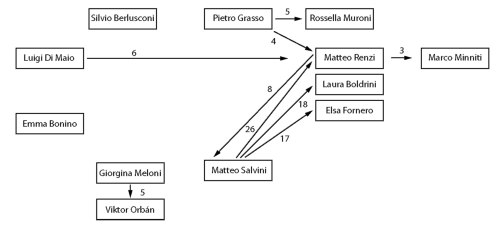
Figure 1 • Communication dynamics of Italian politicians in the 2018 election campaign
Source: Compiled by the author.
- 107/108 -
The numbers in the diagram show the number of mentions of other party leaders by the candidates. Matteo Renzi, Laura Boldrini and Marco Minniti are all members of PD which can be considered to have been the most attacked party during the election campaign. Even though Elsa Fornero is an independent politician (an ex-minister of the Monti Government, we visualised her close to the PD politicians, since the Monti Government was supported by the PD and not supported by Lega).
As the illustration shows, Renzi and the PD were the main targets of the other leaders. Bonino and Berlusconi stayed out of these dynamics, with no mention of other politicians to be found within their word cloud. Giorgia Meloni does not feature in these internal dynamics either, with only references to a foreign politician (Viktor Orbán) to be found in her Twitter account. It is important to highlight that, based on the 7 party leaders' most frequently used words, reference to Orbán was the only 'topic' going beyond Italy's national boundaries, with no references to other foreign politicians or more generally foreign policy-related words appearing (apart from 'Europe' but no 'EU' appears), meaning that the electoral campaign on Twitter concentrated mostly on domestic issues. According to our content analysis, this conversational part of the Twitter campaign shows signs of negative campaigning. The only positive mentions were intra-party (Renzi backing Minniti, Grasso backing Rossella Muroni). None of the party leaders mentioned their coalition partners.
Conclusions
Our findings indicate that Matteo Salvini and Matteo Renzi were the leading protagonists of the election campaign on the Twittersphere, while other party leaders significantly lagged behind in most indicators. Renzi's and Salvini's Twitter strategy consisted of actively engaging with their followers, thus the noise they made within the Twittersphere was louder than the other party leaders. However, there were significant differences between them: due to his previous experience as Prime Minister, Renzi had significantly more followers than Salvini, who tried to counterbalance this with an increased intensity of tweeting.
Renzi and Salvini stand out with regard to their campaigning on Twitter, as the other party leaders did not generate as much noise as they did. As can be seen in the case of Silvio Berlusconi, frequent tweeting does not equal active engagement on the part of the followers, however.
Renzi was the leading figure of the election campaign on Twitter from another point of view, too: when observing the internal communication dynamics of the party leaders, it can be seen that Renzi (and to a lesser extent other prominent politicians of his [now ex-] party e.g. Laura Boldrini) was the politician who was most in the crosshairs of the others, being criticised the most by the other party leaders. After analysing our dataset, it is hardly surprising that Matteo Salvini was the most active "attacker" of Renzi. However, not only a left-right division can be observed in this case, as Renzi was also criticised by M5S and by the leftist Pietro Grasso.
- 108/109 -
Even though Matteo Renzi managed to keep pace with Matteo Salvini in the Twittersphere, his party suffered a historic loss in the elections, while M5S became the biggest party in Italy despite Di Maio's - and the party's - limited activity on Twitter. An important difference between these politicians is also reflected in their use of Twitter for campaigning: Renzi and Salvini were leaders of personalised parties, while Di Maio's personality was less important in the campaign of the M5S.
It is important to highlight that within this study only a certain segment of political communication was analysed. The specific nature of Twitter communication (e.g. the shortness of messages) requires a different skillset than other social media. While there is no direct correlation between the use of Twitter by party leaders and the election results, a weak correlation can be found.
- 109/110 -
References
1. Aleahmad, Abolfazi - Karisani, Payam - Rahgozar, Maseud - Oroumchian, Farhad (2016): OLFinder: Finding Opinion Leaders in Online Social Networks. Journal of Information Science, 42(5), 659-674. Online: https://doi.org/10.1177/0165551515605217
2. Altheide, David L. - Snow, Robert P. (1979): Media Logic. Beverly Hills: Sage.
3. Ananasso, Agnese (2018): Raid razzista a Macerata, spari contro gli africani: 6 feriti. Fermato italiano incensurato. La Repubblica, 03 February 2018. Online: www.repubblica.it/cronaca/2018/02/03/news/macerata_sparatoria-187934230/
4. Bartolini, Stefano - Mair, Peter (1990): Identity, Competition and Electoral Availability: The Stabilisation of European Electorates, 1885-1985. Colchester: ECPR Press.
5. Becatti, Carolina - Caldarelli, Guido - Lambiotte, Renaud - Saracco, Fabio (2019): Extracting Significant Signal of News Consumption from Social Networks: The Case of Twitter in Italian Political Elections. Palgrave Communication, 5(1) 1-16. Online: https://doi.org/10.1057/s41599-019-0300-3
6. Bentivegna, Sara (2015): A colpi di tweet. La politica in prima persona. Bologna: Il Mulino.
7. Bentivegna, Sara - Marchetti, Rita (2017): Live Tweeting a Political Debate: The Case of the 'Italia bene comune'. European Journal of Communication, 30(6), 631-647. Online: https://doi.org/10.1177/0267323115595526
8. Binnie, Isla (2018): Leading Lady of Italy's Right Campaigns for a Baby Boom. Reuters, 18 January 2018. Online: www.reuters.com/article/us-italy-election-meloni/leading-lady-of-italys-right-campaigns-for-a-baby-boom-idUSKBN1FK21S
9. Biorcio, Roberto (2010): Gli antecedenti politici della scelta di voto: l'identificazione di partito e l'autocollocazione sinistra-destra. In Bellucci, Paolo - Segatti, Paolo (eds.): Votare in Italia. Bologna: Il Mulino. 187-212.
10. Bracciale, Roberta - Cepernich, Christopher (2018): Hybrid 2018 campaigning: Italian political leaders and parties social media habits. Italian Political Science, 13(1), 1-15.
11. Bracciale, Roberta - Martella, Antonio - Visentin, Chiara (2018): From Super-Participants to Super-Echoed. Participation in the 2018 Italian Electoral Twittersphere. Partecipazione e Conflitto, Special Issue: From Big Data in Politics to the Politics of Big Data, 11(2). Online: https://doi.org/10.1285/i20356609v11i2p361
12. Caló, Ernesto - Faggiano, Maria P. - Gallo, Raffaella - Mongiardo, Melissa (2018): Italian General Election 2018: Digital Campaign Strategies. Three Case Studies: Movimento 5 Stelle, PD and Lega. 2[nd] International Conference on Advanced Research Methods and Analytics (CARMA 2018), Valencia: Universitat Politecnica de Valencia.
13. Cha, Meeyoung - Haddadi, Hamed - Benevenuto, Fabrício - Gummadi, Krishna P. (2010): Measuring User Influence in Twitter: The Million Follower Fallacy. ICWSM, 10, 23-26. Online: https://doi.org/10.1609/icwsm.v4i1.14033
- 110/111 -
14. Chadwick, Andrew (2013): The Hybrid Media System. Politics and Power. New York: Oxford University Press. Online: https://doi.org/10.1093/acprof:oso/9780199759477.001.0001
15. Chiaramonte, Alessandro - Emanuele, Vincenzo - Maggini, Nicola - Paparo, Aldo (2018): Populist Success in a Hung Parliament: The 2018 General Election in Italy. South European Society and Politics, 23(4), 479-501. Online: https://doi.org/10.1080/13608746.2018.1506513
16. Conover, Michael - Ratkiewicz, Jacob - Francisco, Matthew - Goncalves, Bruno - Menczer, Filippo - Flammini, Alessandro (2011): Political Polarization on Twitter. ICWSM, 5(1), 89-96. Online: https://doi.org/10.1609/icwsm.v5i1.14126
17. D'heer, Evelien - Verdegem, Pieter (2014): Conversations about the Elections on Twitter: Towards a Structural Understanding of Twitter's Relation with the Political and the Media Field. European Journal of Communication, 29(6), 720-734. Online: https://doi.org/10.1177/0267323114544866
18. Dang-Xuan, Linh - Stieglitz, Stefan - Wladarsch, Jennifer - Neuberger, Christoph (2013): An Investigation of Influentials and the Role of Sentiment in Political Communication on Twitter during Election Periods. Information, Communication and Society, 16(5), 795-825. Online: https://doi.org/10.1080/1369118X.2013.783608
19. Data Report (2018): Italy 2018. Online: https://datareportal.com/reports/digital-2018-italy
20. Davis, Bud (2013): Hashtag Politics: The Polyphonic Revolution of #Twitter. Pepperdine Journal of Communication Research, 1(4), 16-22.
21. Elmer, Greg (2013): Live Research: Twittering an Election Debate. New Media and Society, 15(1), 18-30. Online: https://doi.org/10.1177/1461444812457328
22. Emanuele, Vincenzo - Maggini, Nicola - Paparo, Aldo (2020): The Times They Are A-Changin': Party Campaign Strategies in the 2018 Italian Election. West European Politics, 43(3), 665-687. Online: https://doi.org/10.1080/01402382.2019.1655966
23. Franzosi, Roberto (2018): Content Analysis. In Wodak, Ruth - Frochtner, Bernhard (eds.): The Routledge Handbook of Language and Politics. London - New York: Routledge. 153-168. Online: https://doi.org/10.4324/9781315183718-13
24. Freelon, Deen (2014): On the Interpretation of Digital Trace Data in Communication and Social Computing Research. Journal of Broadcasting and Electronic Media, 58(1), 59-75. Online: https://doi.org/10.1080/08838151.2013.875018
25. Garzia, Diego (2018): The Italian Election of 2018 and the First Populist Government of Western Europe. West European Politics, 42(3), 670-680. Online: https://doi.org/10.1080/01402382.2018.1535381
26. Gazzetta Ufficiale (2013): Decreto-Legge 28 dicembre 2013, n. 149. Online: www.gazzettaufficiale.it/eli/id/2013/12/28/13G00194/sg
27. Giglietto, Fabio - Valeriani, Augusto - Righetti, Nicola - Marino, Giada (2019): Diverging Patterns of Interaction Around News on Social Media: Insularity and Partisanship during the 2018 Italian Election Campaign. Information, Communication and Society, 22(11), 1610-1629. Online: https://doi.org/10.1080/1369118X.2019.1629692
- 111/112 -
28. Hawthorne, Joshua - Houston, Brian - McKinney, Mitchell (2013): Live-Tweeting a Presidential Primary Debate: Exploring New Political Conversations. Social Science Computer Review, 31(5), 552-556. Online: https://doi.org/10.1177/0894439313490643
29. Jungherr, Andreas (2015): Analyzing Political Communication with Digital Trace Data. Cham: Springer. Online: https://doi.org/10.1007/978-3-319-20319-5
30. Jürgens, Pascal - Jungherr, Andreas (2015): The Use of Twitter during the 2009 German National Election. German Politics, 24(4), 469-490. Online: https://doi.org/10.1080/09644008.2015.1116522
31. Kirchgaessner, Stephanie (2018): Emma Bonino: Italy's pro-Europe, pro-Immigrant Conscience. The Guardian, 26 February 2018. Online: www.theguardian.com/world/2018/feb/26/emma-bonino-italys-pro-europe-pro-immigrant-conscience
32. Kutter, Amelie (2018): Corpus Analysis. In Wodak, Ruth - Frochtner, Bernhard (eds.): The Routledge Handbook of Language and Politics. London - New York: Routledge. 169-186. Online: https://doi.org/10.4324/9781315183718-14
33. Manin, Bernard (2016): Principi del governo rappresentativo. Bologna: Il Mulino.
34. Marchetti, Rita - Ceccobelli, Diego (2016): Twitter and Television in a Hybrid Media System. Journalism Practice, 10(5), 626-644. Online: https://doi.org/10.1080/17512786.2015.1040051
35. Massetti, Emmanuele - Farinelli, Ariana (2019): From the Porcellum to the Rosatellum: 'Political Elite-Judicial Interaction' in the Italian Laboratory of Electoral Reforms. Contemporary Italian Politics, 11(2), 137-157. Online: https://doi.org/10.1080/23248823.2019.1609770
36. Mazzoleni, Gianpietro (2018): The Conventional Campaign of an Extraordinary Election. Journal of Modern Italian Studies, 23(4), 362-380. DOI: https://doi.org/10.1080/1354571X.2018.1500204
37. Mentana, Enrico (2018): 'Questa è la più brutta campagna elettorale.' Diario elettorale con il direttore del Tg La7, 05 March 2018. Online: www.youtube.com/watch?v=0BtmheGbAKU
38. Meraz, Sharon - Papacharissi, Zizi (2013): Networked gatekeeping and networked framing on #Egypt. The International Journal of Press/Politics, 18(2), 138-166. Online: https://doi.org/10.1177/1940161212474472
39. Molnár, Anna (2017): Politikai perszonalizáció - az olasz politika főszereplői a második köztársaság idején. Nemzet és Biztonság, 10(6), 41-60.
40. Monella Montalto, Lillo (2018): The Ultimate Guide to Who's Who in the Italian General Elections. Euronews, 12 February 2018. Online: www.euronews.com/2018/02/12/the-ultimate-guide-to-who-s-who-in-the-italian-general-elections
41. Mosca, Lorenzo - Vaccari, Cristian - Valeriani, Augusto (2015): An Internet-Fuelled Party? The Movimento 5 Stelle and the Web. In Tronconi, Filippo (ed.): Beppe Grillo's Five Star Movement. Organization, Communication and Ideology. Farnham: Ashgate. 127-151. Online: https://doi.org/10.4324/9781315569062
- 112/113 -
42. Newman, Nic - Fletcher, Richard - Kalogeropoulos, Antonis - Levy, David A. L. - Nielsen, Rasmus Kleis (2017): Digital News Report 2017. Reuters Institute for the Study of Journalism.
43. Newman, Nic - Fletcher, Richard - Kalogeropoulos, Antonis - Levy, David A. L. - Nielsen, Rasmus Kleis (2018): Digital News Report 2018. Reuters Institute for the Study of Journalism.
44. Page, Ruth (2012): The Linguistics of Self-Branding and Micro-Celebrity in Twitter: The Role of Hashtags. Discourse and Communication, 6(2), 181-201. Online: https://doi.org/10.1177/1750481312437441
45. Paparo, Aldo (2018): Challenger's delight: the success of M5S and Lega in the 2018 Italian general election. Italian Political Science, 13(1), 63-81.
46. Pedrazzani, Andrea (2018): Introduction to the Special Issue: 'Governo del cambiamento'? Italian Politics under the Yellow-Green Government. Italian Political Science, 12(3), 1-10.
47. Quattromani, Dario (2018): How a New Electoral Law Could Shape the 2018 Italian Elections. Sheffield Political Economic Research Institute. Online: http://speri.dept.shef.ac.uk/2018/03/02/how-a-new-electoral-law-could-shape-the-2018-italian-elections/
48. Shin, Jieun - Thorson, Kjerstin (2017): Partisan Selective Sharing: The Biased Diffusion of Fact-Checking Messages on Social Media. Journal of Communication, 67(2), 233-255. Online: https://doi.org/10.1111/jcom.12284
49. Signore, Adalberto (2018): Una campagna elettorale ferma a 70 anni fa. Il Giornale, 11 February 2018. Online: www.ilgiornale.it/news/cronache/campagna-elettorale-ferma-70-anni-fa-1493236.html
50. Silberfield, Anthony (2018): When Stars Align: The Digital Era and the Rise of Italy's Third Republic. Disrupting Democracy, Bertelsmann Foundation.
51. Small, Tamara A. (2011): What the Hashtag? A Content Analysis of Canadian Politics on Twitter. Information, Communication and Society, 14(6), 872-895. Online: https://doi.org/10.1080/1369118X.2011.554572
52. Strömbäck, Jesper (2008): Four Phases of Mediatization: An Analysis of Mediatization of Politics. The International Journal of Press/Politics, 13(3), 228-246. Online: https://doi.org/10.1177/1940161208319097
53. Vincos (2018): Elezioni 2018. Analisi delle conversazioni e interazioni in rete. Online: https://vincos.it/2018/03/02/elezioni-2018-analisi-delle-conversazioni-interazionirete/
54. Viola, Andrea (2018): Elezioni 2018, la campagna più brutta della storia. Anche i talk show ridotti a monologhi. Il Fatto Quotidiano, 19 February 2018. Online: www.ilfattoquotidiano.it/2018/02/19/elezioni-2018-la-campagna-piu-brutta-della-storia-anche-i-talk-show-ridotti-a-monologhi/4170604/
- 113/114 -
55. Zappavigna, Michele (2011): Ambient Affiliation: A Linguistic Perspective on Twitter. New Media Society, 13(5), 788-806. Online: https://doi.org/10.1177/1461444810385097
56. Zúñiga, Homero Gil - Diehl, Trevor (2017): Citizenship, Social Media, and Big Data: Current and Future Research in the Social Sciences. Social Science Computer Review, 35(1), 3-9. Online: https://doi.org/10.1177/0894439315619589
- 114/115 -
Lili Takács is a PhD student at the Doctoral School of Military Sciences at University of Public Service. Her research covers Italy-Libya relations, Italian foreign and security policy, and Italian politics. She holds a BA and MA degree in the field of international relations. Besides focusing on her academic research, she currently works in the private sector. ■
NOTES
[1] This publication was supported by the ÚNKP-20-3-ii-NKE-37 new national excellence program of the Ministry for Innovation and Technology of Hungary.
[2] Bentiyegna 2015.
[3] See for example Viola 2018; Signore 2018; Mentana 2018.
[4] Garzia 2018: 670-680.
[5] Caló et al. 2018.
[6] Emanuele et al. 2020: 665-687.
[7] Chiaramonte et al. 2018: 479-501; Giglietto et al. 2019: 1610-1629.
[8] Pedrazzani 2018: 1-10.
[9] Chiaramonte et al. 2018: 4.
[10] Paparo 2018: 63-81.
[11] Manin 2016.
[12] Bartolini-Mair 1990.
[13] Emanuele et al. 2020.
[14] Biorcio 2010: 187-212.
[15] Chiaramonte et al. 2018: 2.
[16] Paparo 2018.
[17] Emanuele et al. 2020: 3.
[18] Chiaramonte et al. 2018.
[19] Paparo 2018.
[20] Silberfield 2018: 5.
[21] Strömbäck 2008: 228-246.
[22] Altheide-Snow 1979.
[23] Mazzoleni 2018: 362-380; Molnár 2017: 41-60.
[24] Mazzoleni 2018.
[25] Rosatellum created a mixed electoral system (64% proportional - 36% majoritarian) where the following rules apply: first-past-the-post system is used in single member districts for the allocation about one third of the total seats in both Chambers (232 in the Chamber of Deputies and 116 in the Senate), while cc. two-third of the seats (386 in the Chamber of Deputies and 193 in the Senate) are allocated on proportional representation in multi-member districts, the remaining 12 (Chamber of Deputies) + 6 (Senate) are reserved for Italians abroad. Competition in the single member districts and multi-member districts is intertwined, since candidates in single member districts need to be supported by at least one party list that is running for the proportional representational seats. Votes are 'fused', meaning that votes for party lists extend to the single member district candidate supported by the relevant party list and vice versa. Thresholds also differ within the two arenas. In the proportion representation there is a national threshold of 10% for party lists and 3% for single party list votes. A 20% regional threshold in the alternative for the 3% national threshold for party lists of official ethnic minorities (Chiaramonte et al. 2018; Massetti-Farinelli 2019: 137-157; Quattromani 2018).
[26] Newman et al. 2017: 78.
[27] Data Report 2018.
[28] Bracciale-Cepernich 2018: 1.
[29] Chadwick 2013.
[30] Bracciale et al. 2018.
[31] Gazzetta Ufficiale 2013.
[32] Caló et al. 2018.
[33] Vincos 2018.
[34] Bracciale-Cepernich 2018.
[35] Marchetti-Ceccobelli 2016: 626-644; Becatti 2019: 1-16.
[36] Franzosi 2018: 153-168; Kutter 2018: 169-186.
[37] See Bentivegna-Marchetti 2017: 631-647; Hawthorne et al. 2013: 552-556.
[38] Freelon 2014: 59-75; Small 2011: 872-895.
[39] Small 2011; Elmer 2013: 18-30; Meraz-Papacharissi 2013: 138-166.
[40] Shin-Thorson 2017: 233-255.
[41] Bracciale et al. 2018.
[42] Dang-Xuan et al. 2013: 795-825; Cha et al. 2010: 23-26.
[43] Aleahmad et al. 2016: 659-674.
[44] D'heer-Verdegem 2014: 720-734.
[45] Jürgens-Jungherr 2015: 469-490.
[46] Jungherr 2015.
[47] Davis 2013: 16-22.
[48] Page 2012: 184.
[49] Page 2012; Zappavigna 2011: 788-806.
[50] Page 2012; Zappavigna 2011: 788-806.
[51] Conover et al. 2011.
[52] Bracciale et al. 2018; Zúñiga-Diehl 2017: 3-9.
[53] Bracciale-Cepernich 2018.
[54] Mosca et al. 2015: 127-151.
[55] Molnár 2017.
[56] Binnie 2018.
[57] Garzia 2018.
[58] Kirchgaessner 2018.
[59] Montalto Monella 2018.
[60] Garzia 2018.
[61] Page 2012.
[62] Newman et al. 2018.
[63] From the word cloud we did not take into consideration general expressions regarding the elections, e.g. Italy, vote, elections.
[64] About the Macerata case see Ananasso 2018.
Lábjegyzetek:
[1] The author is PhD student, University of Public Service, Doctoral School of Military Sciences, Takacs.Lili@uni-nke.hu.