

Emese Belényesi[1] - Adrienn Lajó[2]: Perspectives on Sustainable Projects Aligned with UN Development Goals (Publico, 2024/2., 173-192. o.)
https://doi.org/10.32575/ppb.2024.2.9
Abstract
Sustainability has emerged as a paramount global concern in the 21[st] century, and the United Nations Sustainable Development Goals (SDGs) stand at the forefront of the efforts to address it. This study delves into the profound implications of these SDGs for sustainable projects carried out by organisations. Sustainable projects are those that align with the principles and objectives outlined in the SDGs, thereby contributing to a more inclusive and environmentally responsible future. By attempting to achieve these goals, sustainable projects not only mitigate environmental degradation but also foster economic development and social progress. This study explores the critical link between sustainable projects of organisations and the SDGs, whether the projects have contradictory impacts or just the opposite, they can also strengthen each other. The hypothetical assumption is that there is tension between the goals and actions of contradictory and synergistic movements. The transformative power of sustainable projects is underscored through real-world examples and case studies, showcasing how they can address complex, interconnected challenges. The literature review lends support to the hypothesis that in some cases certain sustainable goals might confront each other. A pilot study methodology employing impact measurement is used to prove the hypotheses about how the goals support and contribute to or affect each other's results. The results underscore the essential role of sustainable projects. The conclusion also highlights the critical need for research and project development that can effectively navigate the tension between contradictory and synergistic goals within the SDG.
Keywords: ESG, SDG, strategy, sustainable projects, synergistic goals
- 173/174 -
Introduction
The Sustainable Development Goals outlined by the United Nations serve as guidelines for attaining global peace and prosperity. They present a collection of approaches to enable both developed and developing nations to eradicate poverty, enhance health and education, and address climate change. However, these 17 goals are closely interconnected, potentially leading to conflicting dynamics and varied outcomes.
The SDGs consist of 17 goals and 169 targets to ensure human well-being, economic prosperity, and environmental protection simultaneously. The goals thus established are interdependent and provide a blueprint for a global partnership between the developed and developing countries to achieve economic prosperity, ensure environmental protection and safeguard the well-being of people around the world.[1]
The SDGs assume that efficiency improvements will suffice to reconcile the tension between growth and ecological sustainability.[2] This paper draws on empirical data to test whether this assumption is valid, paying particular attention to projects by companies that concentrate on supporting targets or goals that are associated with a multiple impact on achieving the overall objectives of SDGs.
Literature review
Sustainability, particularly through the lens of the UN Sustainable Development Goals (SDGs), has gained immense prominence in global discourse in the 21[st] century. The interaction between the realisation of these SDGs and the types of sustainable projects undertaken by organisations and commercial enterprises forms a critical nexus influencing economic, environmental, and social progress.
In terms of the conceptual framework of sustainable projects and sustainable development goals, Dyllick and Muff (2016) present a typology ranging from business-as-usual to true business sustainability, delineating the various stages organisations undergo in adopting sustainable practices.[3] They stress the need for a comprehensive transformation of business models and practices to achieve genuine sustainability aligned with the SDGs. Elkington (1997) introduces the concept of the "triple bottom line" as a framework for businesses to assess their environmental and social impact in addition to financial performance.[4] This concept resonates strongly with the multifaceted approach of the SDGs, emphasising the need for organisations to address the ecological, social, and economic dimensions of their activities simultaneously.
- 174/175 -
In an analysis of the contradictions and tensions within and between the SDGs Hickel (2019) and Hickel (2015) highlights the inherent contradictions between economic growth and ecological preservation within the SDGs.[] He argues that pursuing unlimited growth on a finite planet, as advocated in some SDGs, contradicts the goal of ecological sustainability.[6] Frame, McDowell, and Fitzpatrick (2022) provide empirical evidence on the ecological contradictions of the SDGs in the context of Malaysia, emphasising the complexities and challenges facing the country in their implementation.[7] Menton et al. (2020) echo similar sentiments, pointing out the gaps and contradictions within the SDGs, especially concerning environmental justice.[8] Their work emphasises the need to address discrepancies in the SDGs and gaps in their scope to achieve a more holistic sustainability agenda. Pradhan et al. (2017) examined SDGs to find the positive and negative correlations between indicator pairs to allow the identification of particular global patterns.[9] They established that the attainment of the SDG agenda will greatly depend on whether the identified synergies among the goals can be leveraged. In addition, the highlighted tradeoffs, which constitute obstacles in achieving the SDGs, need to be negotiated and made structurally nonobstructive by implementing deeper changes in the current strategies.
In connection with corporate strategy and sustainable development Eccles and Serafeim (2013) discuss the performance frontier and the importance of innovation for sustainable strategy.[10] They emphasise the role of innovation in navigating potential conflicts between various SDGs, by aligning them more synergistically with organisational goals. Whiteman, Walker, and Perego (2013) discuss planetary boundaries and their significance in defining the ecological limits for corporate sustainability efforts.[11] They argue that businesses must operate within planetary limits, aligning with several SDGs related to environmental conservation. Sharma and Vredenburg (1998) emphasise the development of organisational capabilities through proactive corporate environmental strategies.[12] Their work sheds light on the integration of environmental concerns within an organisation's strategic capabilities, possibly aligning with certain SDGs.
Kolk and Lenfant (2010) investigated multinational corporations' reporting on CSR and conflict in Central Africa, underscoring the complex relationship between CSR initiatives and regional conflicts.[13] Their study highlights the ethical and practical challenges of aligning SDGs with business activities in regions marred by conflict. Hopkins (2012) highlights the significance of corporate social responsibility (CSR) and its impact on
- 175/176 -
business strategies, emphasising the relevance of CSR in advancing the SDGs.[14] Waddock (2017) differentiates between Environmental, Social, and Governance (ESG) initiatives and CSR activities, providing insights into the evolving landscape of sustainability in business and its connection to the SDGs.[15] His work contributes to understanding how organisations navigate the complex terrain of sustainability and societal responsibilities. In contrast, Lozano and Huisingh (2011) explore the interrelationships between corporate social responsibility, sustainability, and governance, emphasising the importance of governance structures in driving sustainable practices.[16] Their study sheds light on how CSR initiatives within organisations can align with the SDGs.
In their examination of the role of corporate commitment and political activity, Russo and Harrison (2005) explore the relationship between organisational design and environmental performance focusing on the electronics industry.[17] This work underlines the significance of organisational structures in influencing environmental outcomes, potentially intersecting with SDG objectives. Möllering, Rasche, and Henry (2022) investigate cross-sector social partnerships as a form of corporate political activity.[18] They provide insights into how businesses engage with external stakeholders to promote sustainability and SDG-related goals. Schuler Rehbein, and Cramer (2002) studied the pursuit of strategic advantage through political means drawing attention to how corporate political activity may influence and align with certain SDGs, especially in fostering supportive policy environments.[19] Schaltegger and Wagner (2011) explore sustainable entrepreneurship and innovation, identifying the categories and interactions that drive sustainable practices in businesses.[20]
Schaltegger and Burritt (2017) went on to explore the measurement and management of sustainability performance in supply chains.[21] Their work demonstrates the importance of quantifying and managing the environmental and social impacts of business operations, thus aligning with SDG goals. In a slightly different vein, Hamilton (2013) examines the link between corporate responsibility and economic development, emphasising the performance requirements for sustainable economic growth, an issue relevant to various SDGs.[22] This study explores how organisations can contribute to economic growth while maintaining responsible and sustainable practices.
In conclusion, this literature review has demonstrated the multifaceted nature of the relationship between sustainable projects and the SDGs. It highlights the tensions, contradictions, and potential synergies between them, demonstrating that a more comprehensive approach is required to align organisational practices with the diverse and
- 176/177 -
interconnected objectives of the SDGs. Taken together, these scholarly works emphasise the need for further research and the development of strategic approaches to navigate the complex landscape of sustainable development and sustainable development goals.
Research questions and hypotheses
In the dynamic landscape of sustainable development, the pursuit of United Nations' Sustainable Development Goals (SDGs) has become a central focus for various entities, including corporations. This research aims to address two critical questions shaping the discourse on SDGs and corporate engagement.
The research explores the critical link between sustainable projects conducted by organisations and the SDGs, as projects can strengthen each other or, on the contrary, have contradictory effects. By this means, the study will attempt to answer the first research questions (Q1) of How can tension be identified between the goals and actions of contradictory and synergistic movements of SDGs that can be eased by dedicated SDG projects of companies? Another research question (Q2) explores the link between targeting strategy and measurement: How can new metrics of SDG projects identify the gap between the goals and create a link with the targets?
The assumption of our first hypothesis is that there is a significant tension between the goals and actions of contradictory and synergistic movements. As the first hypothesis (H1) states: There is a significant tension between the goals and actions of contradictory and synergistic movements of SDGs in the dedicated SDG projects of companies, impacting their alignment with SDG objectives. The second hypothesis (H2) assumes the need for a specialised measurement approach: New metrics developed for SDG projects will identify a gap between the stated goals and their actual achievement, highlighting discrepancies or missed links among specific SDG targets. The first research question seeks to unravel the intricate relationship between contradictory and synergistic movements across the spectrum of SDGs. As companies align their actions with specific goals, a complex interplay of tensions may emerge. Some goals might inherently come into conflict with each other, while others synergistically complement each other. This study intends to identify instances during the pursuit of project goals where tensions arise between SDGs that are contradictory and synergistic and, crucially, whether projects initiated by companies that are dedicated to meeting one or more SDGs can serve as mechanisms to ease these tensions. Exploring this aspect is of fundamental importance not only for corporate strategists but also for policymakers and stakeholders aiming to take a harmonised approach to sustainable development.
The second area of investigation concerns how new metrics for measuring the achievement of SDG projects can identify the gaps between goals and create a link between targets.
The second research question addresses the critical need for further developing metrics in the evaluation of SDG projects. Traditional metrics often fall short in capturing the multidimensional nature of the SDGs and fail to provide a nuanced understanding of the gaps between goals. This study will investigate how new, innovative metrics can be
- 177/178 -
developed to bridge this gap and establish a clear link between targets. By doing so, the research aims to contribute to the refinement of measurement tools, providing a more comprehensive and accurate assessment of the impact and efectiveness of SDG projects. This is particularly relevant for companies seeking to align their operations with the SDGs and for policymakers endeavouring to gauge the progress that has been made in achieving global sustainable development targets.
Through a rigorous examination of these two interconnected research questions, this study aspires to shed light on the complexities, challenges, and opportunities at the intersection of corporate initiatives and the SDGs. The findings have the potential to inform strategic decision-making for both businesses and policymakers, fostering a more cohesive and efective approach to sustainable development.
Data and methodology
The literature review underlines the hypothesis that in some cases the sustainability goals might contradict or conflict with each other. A pilot study methodology with impact measurement is used to prove the hypotheses of how the goals support and contribute to each other's results. Given the complex nature of the topic, a mixed-method research approach is used. Interview - conducting interviews with key stakeholders involved in sustainable projects and the implementation of SDGs within organisations - and case study - analysing specific sustainable projects in a sample organisation, examining their alignment with particular SDGs and how conflicts or synergies emerge - methods were used in the qualitative research, whereas the data analysis of project performance metrics method was used in the quantitative research. The method of triangulation was used: the approach combined the qualitative insights gathered from interviews and the case study with quantitative data from performance metrics to gain a more comprehensive understanding of how sustainable projects relate to the SDGs.
A significant positive correlation between a pair of SDG indicators is classified as a synergy while a significant negative correlation is classified as a trade-off. As in previous research, this study set out to rank synergies and trade-offs between SDG pairs on global and country scales in order to identify the most frequent SDG interactions. For a given SDG, positive correlations between indicator pairs were found to outweigh the negative correlations in most countries. Among the SDGs, the positive and negative correlations between indicator pairs allowed for the identification of specific global patterns.[23]
An Expert Group on SDG Indicators endorsed a set of 230 individual indicators for monitoring progress in achieving the SDGs (Figure 1). This analysis made use of both country and country-disaggregated data. Hence, multiple time-series are available for the same indicator depending on the level of disaggregation. This study captures synergies and trade-offs
- 178/179 -
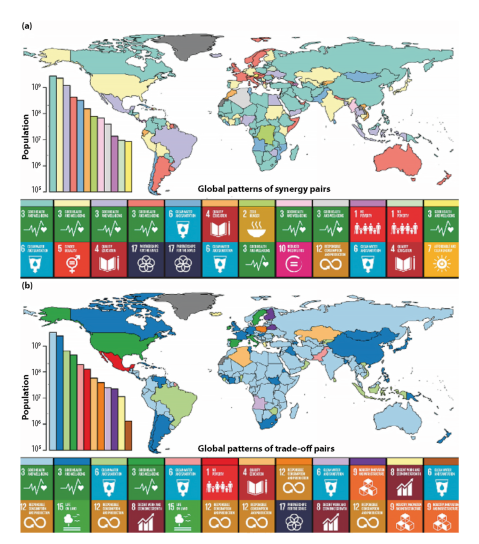
Figure 1: Global patterns of (A) synergy and (B) trade-off pairs with corresponding population for the year 2015 (bar chart)
The synergy between SDGs 3 (Good health and well-being) and 6 (Clean water and sanitation) is widely observed among countries with a total population of 2.7 billion.
The trade-off between SDGs 3 (Good health and well-being) and 12 (Responsible consumption and production) is largely encountered among countries with a total population of 3.4 billion. The grey colour depicts regions with no data or with less than 10 data pairs.
Source: Pradhan et al. 2017
- 179/180 -
in a statistical sense, that is, as the existence of a significant positive and negative correlation, respectively. The correlation analysis is carried out between unique pairs of indicator time-series, taking into consideration both country-level and country-disaggregated data.[24]
Discussion
To find an answer to our research questions of whether tension between goals can be eased by dedicated SDG projects being run by companies and, if so, whether new metrics for SDG projects would identify the gap between goals and create a link between targets, we conducted a pilot case study of a multinational company.
A global beverage company, Diageo,[25] implemented sustainable projects which are closely aligned with the principles and objectives of the United Nations Sustainable Development Goals (SDGs). In line with this article's title "Sustainable Projects from the Perspective of the UN Sustainable Development Goals" it is possible to explore how Diageo's initiatives contribute to and balance the often-conflicting demands of the SDGs.
The company has taken significant steps towards achieving several SDGs. These include SDG 6 (Clean Water and Sanitation) through their commitment to responsible water usage, SDG 12 (Responsible Consumption and Production) by promoting responsible drinking of alcohol and the sustainable sourcing of raw materials, and SDG 13 (Climate Action) through their efforts to reduce carbon emissions and mitigate climate change impact.
Moreover, the focus on community development and empowerment through initiatives related to SDG 1 (No Poverty), SDG 2 (Zero Hunger), and SDG 8 (Decent Work and Economic Growth) can be explored in the context of balancing contradictory elements within sustainable projects. Dedicated projects often address complex issues, such as balancing economic growth with environmental conservation and social responsibility.
The research investigated specific case studies or examples of how sustainable projects navigate and harmonise the potentially conflicting aspects of the UN SDGs, shedding light on the company's approach to creating a more sustainable and equitable world while contributing to the overall global goals.
A detailed analysis of the synergistic projects aimed to determine whether new metrics constitute a more sophisticated measurement that could capture the complex interactions and trade-offs between goals.
Our research explored the intricate relationships between Sustainable Development Goals (SDGs) and corporate initiatives, focusing on specific projects and their alignment with key goal areas. The table below outlines noteworthy projects, their associated SDGs, and the performance metrics employed by a global company, Diageo, to assess their impact (Table 1).
- 180/181 -
Table 1: Consolidated project and metric summary on SDG synergistic projects of Diageo in 2023
| SDGs in synergy | Goal areas in synergy | Project name | Tool | Company Aim with Project | Company Target description | 2030 Target | Performance F23 | Performa nce F22 | Baseline year | Background information |
| SDG 3 - Good health and well being SDG 8 - Decent Work and Economy Growth SDG 12 - Responsible consumption and production | Social - Governance | Promote Positive Drinking | DrinklQ | The aim is to invite consumers to change their attitudes to alcohol and empower them to achieve a balanced lifestyle | Number of markets that have launched DRINKiQ - Champion health literacy and tackle harm through DRINKiQ in every market where we live, work source and sell | 21 | 21 | 21 | F20 | Launched DRINKiQ inali the markets where it's legally permissible |
| SDG 4 - Quality education SDG 10 - Reduced inequalities | Social - Governance | Champion in inclu- sion and diversity | Learning for Life and other skills programme | The aim is to promote sustainable growth and a resilient supply chain through inclusive programmes giving equal access to resources, skills and employment opportunities. Other aim is to tackle barriers faced by other under-represented groups including the ethnically diverse community and people with disabilities | Number of people reached through Learning for Life and other skills programmes in fiscal 23 - Provide business and hospitality skills to 200,000 people, increasing employability and improving livelihoods through Learning for Life and our other skills programmes | 200 000 | 31 600 | 22 230 | F20 | Markets with no such programmes are Australia, South Korea, Turkey and Eastern Europe |
| SDG 4 - Quality education SDG 8 - Decent Work and Economy Growth SDG 12 - Responsible consumption and production | Social - Governance | Champion in inclu- sion and diversity | DBA- Diageo Bar Academy | The aim is to drive sustainable growth in the hospitality sector and make it more diverse | Number of participations in training sessions delivered through Diageo Bar Academy in fiscal 23 - Through the Diageo Bar Academy (DBA) we will deliver 1.5 million training sessions, providing skills and resources to help build a thriving hospitality sector that works for all | 1 500 000 | 236 000 | 190 383 | F20 | 88% of survey respondents agreed or strongly agreed that DBA presents a modern and progressive view of the bar community |
| SDG 4 - Quality education SDG 8 - Decent Work and Economy Growth SDG 10 - Reduced in equalities | Social - Governance | Champion in inclu- sion and diversity | Creating inclusive communities | We're committed to addressing barriers women face in accessing the skills, resources and opportunities we provide | Percentage of beneficiaries of our community programmes who are women - Ensure 50% of beneficiaries of our community programmes are women and that our community programmes are designed to enhance diversity and inclusion of under-represented groups | 50% | 59% | 64% | F20 | The scope currently includes female beneficiaries of registered business and hospitality skills programmes. In future, the scope of this target will also include female representation on our water sanitation and hygiene (WASH) committees and women who benefit from initiatives such as our smallholder farmer programmes |
| SDG 4 - Quality education SDG 13 - Climate action SDG 17 - Partnerships for the Goals | Environmental - Social | Pioneeer Grain- to glass susutaina- bility | Regenerative agriculture adaptives | The aim is to help farmers implement projects to test new regenerative farming approaches and practices, measure the results and share what we learn | Number of regenerative agriculture pilot programmes initiated - Develop regenerative agriculture pilot programmes in five key sourcing landscapes | 5 | F23 | The programmes include: - On-the-ground programmes with farmers to test and integrate regenerative and low-carbon practices in crop production systems - On-farm measurements and data collection protocols to track improvements in soil health, soil carbon, bio- diversity, water stewardship and farm profitability - Collaborative programmes with our suppliers, other commodity off-takers, expert agronomists, technology providers, NGOs or specialist organisations | ||
| SDG 4 - Quality education SDG 6 - Clean water and sanitation SDG 13 - Climate action SDG 17 - Partnerships for the Goals | Environmental - Governance | Pioneeer Grain- to glass susutaina- bility | Water colletive actions | The aim is to collaborate with multiple stakeholders to create solutions and interventions that improve the water security across entire water-stressed catchments | Percentage of priority water basins with collective action participation - Engage in collective action in all priority water basins to improve water accessibility, availability and quality and contribute to net positive water impact | 100% | 50% | 33% | F20 | Priority water basins identified using a Diageo criticalityassessment (based on expert judgement and consumption volumes) and those facing high water risk, according to the WRI Aqueduct tool |
| SDG 4 - Quality education SDG 6 - Clean water and sanitation SDG 13 - Climate action SDG 17 - Partnerships for the Goals | Environmental - Social | Pioneeer Grain- to glass susutaina- bility | Water replenishment | The water replenishment programme, an important contribution to supporting the climate resilience of company's communities and supply chains. | Replenish more water than we use for operations in water- stressed areas (Percentage of water replenished in waterstressed areas ) | 100% | 71,5% | 43,2% | F20 | |
| SDG1- No poverty SDG 3 - Goodhealthandwellbeing SDG 4 - Quality education SDG 5 - Gender Equality SDG 6 - Clean water and sanitation SDG 8 - Decent Work and Economic Growth SDG 9 - Industry, innovation, and infrastructure SDG 13 - Climate action SDG 14 - Life below Water SDG 15 - Life on Land SDG 17 - Partnerships for the Goals | Environmental - Governance | Pioneeer Grain- to glass susutaina- bility | Preserve water for life | We work with suppliers, research organisations and other partners to build more resilient local supply chains | Number of smallholder farmers in our supply chain supported by our smallholder farmer programme in fiscal 23 - Provide all local sourcing communities with agricultural skills and resources, building economic and environmental resilience (supporting 150,000 smallholders) | 150 000 | 12 900 | F22 | The work with smallholder farmers is currently focussed around sorghum value chains in five countries | |
| SDG 3 - Good health and well being SDG 6 - Clean water and sanitation SDG 13 - Climate action SDG 17 - Partnerships for the Goals | Environmental - Social | Pioneeer Grain- to glass susutaina- bility | WASH | The aim is to provide access to clean water, sanitation and hygiene (WASH) in water-stressed communities near our sites and in water-stressed areas that supply our raw materials | Percentage of water-stressed markets with investment in WASH - Invest in improving access to clean water, sanitation and hygiene (WASH) in communities near our sites and local sourcing areas in all our water-stressed markets | 100% | 100% | 88,9% | F20 | The scope excludes water-stressed markets in which Diageo operates where there is no demand or require- ment for new community WASH projects (Turkey, Indonesia, Seychelles). |
Source: Diageo 2023
- 181/182 -
A specific case study that illustrates how Diageo's sustainable projects align with the United Nations Sustainable Development Goals (SDGs) and balance potentially conflicting elements is the company's 'Preserve Water for Life' programme. This initiative is a good example of how Diageo's efforts contribute to SDG 6 (Clean Water and Sanitation) while addressing various other goals.
The 'Preserve Water for Life' programme focuses on improving access to clean water and sanitation in water-stressed regions where the company operates, particularly in Africa. The programme aims to provide 20 million people with access to clean drinking water by 2030. In general, this directly contributes to SDG 6's target of ensuring the availability and sustainable management of water and sanitation for all. Specifically, the relevant goals include:
- SDG 6 (Clean Water and Sanitation): This goal is at the core of the 'Preserve Water for Life' programme. Diageo's efforts to provide clean drinking water not only directly address this goal but also serve as a foundation for achieving several other SDGs.
- SDG 1 (No poverty): Access to clean water reduces the financial burden on communities who may have previously spent a significant portion of their income on buying or treating water. This economic relief contributes to reducing poverty and aligns with the aim of SDG 1.
- SDG 5 (Gender Equality): Many of Diageo's community-focused initiatives within the 'Preserve Water for Life' programme also include a strong focus on women's empowerment. Access to clean water can reduce the time women spend fetching water, enabling them to pursue other opportunities, thus contributing to gender equality as per SDG 5.
- SDG 8 (Decent Work and Economic Growth): The 'Preserve Water for Life' programme often involves local job creation and skills development, providing opportunities for community members. This contributes to decent work and economic growth, aligning with SDG 8.
- SDG 13 (Climate Action): While not directly related to the 'Preserve Water for Life' programme, Diageo's efforts to reduce water wastage and operate efficiently in water-stressed areas can indirectly contribute to mitigating climate change, supporting the objectives of SDG 13.
- SDG 14 (Life below Water) and SDG 15 (Life on Land): By responsibly managing water resources and protecting ecosystems, Diageo's programme supports the broader goals of conserving life on land and below water, as clean water is essential for all forms of life.
- SDG 17 (Partnerships for the Goals): Diageo's collaborative approach to implementing the 'Preserve Water for Life' programme involves working with governments, NGOs, and local communities. This multi-stakeholder engagement aligns with SDG 17, emphasising the importance of partnerships in achieving the SDGs.
These interconnections illustrate how the 'Preserve Water for Life' programme acts as a catalyst for positive change across a range of SDGs. By providing clean water, it addresses
- 182/183 -
an immediate and critical need, while also creating a ripple effect, fostering economic development, poverty reduction, gender equality, and environmental conservation. This holistic approach demonstrates how focusing on one SDG can have far-reaching and complementary benefits for achieving other goals, highlighting the synergies between the different dimensions of sustainability within Diageo's project.
In addition to the case study, we also used the interview method to test our hypothesis, as it is a versatile tool in academic research and can be tailored to suit various research needs and objectives. The key to effective qualitative research lies in careful planning, clear formulation of objectives, and meticulous methodology, both in terms of interview design and data analysis.
Qualitative research always aims to gather information to describe a current phenomenon or situation. In our case it is aimed at understanding the current ESG practices in terms of various needs of the company, meaning we interviewed leaders in the ESG area with governance, reporting and compliance points of view. The research also had an analytical element: it focused both on understanding relationships and testing our hypotheses, analysing the correlation between ESG established SDG projects and measurement methods.
The interviews were self-administrated: they were distributed to respondents to complete on their own, via email. The documents thus distributed included open-ended questions allowing more in-depth qualitative responses, although they concentrated particularly on the areas of measurement, compliance, and reporting, so they were semi-structured. Taking a topical approach, the following components were explored within the interview:
- General project understanding. Concerning the organisation's target setting and understanding the deliverables of the projects to present the desired results, all the answers referred to a specific target setting method, whereby the company has set 25 targets across a range of ESG issues that matter to the business, to the communities they work with, to society as a whole and to the planet. They clearly stated that targets were set in line with the objectives and timeline of the UN's 2030 Sustainable Development Goals.
- Alignment with the SDGs. Every participant in the research understood that the specific alignment with SDGs would depend on the nature and focus of the organisation's sustainable projects. Moreover, it is possible for the projects to align with more than one UN SDG.
- Synergies and contradictions. According to the answers, leaders explore cases of synergies between sustainable projects and recognise that SDGs could involve initiatives that simultaneously address environmental, social, and economic aspects. However, they also emphasised that conflicts might arise if a project, while pursuing sustainability, inadvertently impacts another SDG negatively.
- Decision-making and priority setting. Since it is conducted by business leaders, the decision-making process might involve careful consideration of performance and strategy, along with stakeholder engagement. Engaging with relevant stakeholders involves local communities, environmental experts, and representatives from affected groups. This allows diverse perspectives to be considered to ensure
- 183/184 -
a comprehensive understanding of the potential impacts of a proposed scheme. Impact assessment means evaluating the positive and negative consequences of the project on various SDGs. Developing a prioritisation framework that considers the relative importance of each SDG and the severity of potential impacts is essential to the organisation. It should prioritise goals based on factors such as urgency, irreversibility of impact, and overall societal benefit.
- Mitigation strategies. According to our research, the company explores ways to adapt a project or to implement mitigation strategies that minimise the negative impacts on conflicting SDGs. This could involve technology upgrades, community engagement programmes or alternative approaches. On the other hand, the company does not put special emphasis on mitigating tensions if any are clearly identified as not being sources of concern. Specific strategies for mitigating tensions between sustainable projects and SDGs depend on the context, but some general approaches may include integrated planning, capacity building actions, stakeholder collaboration and transparent reporting, which is of crucial importance.
- Impact measurement. Concerning the measurement aspects, participants understood that the company needs to implement a monitoring system to track the project's ongoing impact on SDGs. This allows for adjustments in strategies if unforeseen conflicts arise during the project lifecycle. The performance of non-financial KPIs is integrated into the relevant focus area sections. The organisation concentrates on 25 ESG targets backed by several key performance indicators. The document also includes detailed non-financial reporting boundaries and methodologies. Beside each single area, we highlight the relevant impacted SDG.
- Stakeholder involvement. The company realises that there might be some gaps in the current measurement methods which may not take into consideration time lags in reporting, baseline data changes or the subjectivity of metrics. Measuring the impact of a project on a specific goal may not capture the full extent of its influence on other related goals. External factors, such as economic conditions or regulatory changes, can influence the impact of a sustainable project on SDGs. Isolating the project's contribution amidst these external influences can be challenging. Companies typically highlight case studies or examples that showcase how stakeholder input has shaped their approach to sustainability. In general, stakeholder engagement can occur through various channels, such as consultative workshops, surveys and feedback, partnerships, and regular reporting.
- Learning from controversial nature. Major challenges identified by respondents included changes in environmental regulations or policies, which can affect the success of sustainable projects. It is important to ensure proactive engagement with regulatory bodies such as the FRC, CDP and ISSB, etc. Concerns over "greenwashing" underline the importance of transparent communication, measurable targets, and third-party verification to build trust. The ability to adapt projects based on feedback and changing circumstances was found to be crucial, demonstrating the importance of flexibility in achieving long-term sustainability goals.
- 184/185 -
- Future development. In summary, addressing tensions between SDGs and sustainable projects requires a combination of rigorous research, adaptive strategies, and a commitment to collaboration and transparency. Organisations that embrace these principles are better positioned to contribute meaningfully to sustainable development. To make this improvement, the organisation carries out interdisciplinary research, long-term impact studies, metrics standardisation and local context mapping, while using innovative technologies.
Based on the answers, all the respondents discussed Diageo's "Society 2030: Spirit of Progress", a comprehensive ESG action plan addressing critical issues across the company, people, brands, suppliers, and communities. The initiative is characterised by three priority programmes:
- P1: Promote Positive Drinking - Encouraging responsible alcohol consumption
- P2: Champion Inclusion and Diversity - Fostering an inclusive corporate culture
- P3: Pioneer Grain-to-Glass Sustainability - Ensuring sustainability in production processes
Our interviews focused on exploring how the project's goals aligned with UN SDGs, in particular the synergies and conflict with the SDGs which have an impact on decision making and priority setting.
The initiative aligns with several SDGs, including: SDG3 Good Health and Well-being) through promoting responsible drinking; SDG 6 (Clean Water and Sanitation) via water conservation efforts; SDG 7 (Affordable and Clean Energy); SDG 8 (Decent Work and Economic Growth); and SDG 13 (Climate Action) through sustainable production practices and community engagement. Besides these, the 25 ESG targets set by the initiative are directly mapped to the objectives and timeline of the UN's 2030 SDGs.
In terms of identifying the synergies between goals, the initiative often aligns with multiple SDGs such as renewable energy projects supporting SDG 7, 8, and 11. However, potential conflicts were also noted such as the potential conflict of water usage reduction with local water stress (SDG 6). This highlights the need for careful planning and a solid understanding of trade-offs.
The responses indicate that integrated planning, stakeholder collaboration, and transparent reporting are key strategies. There is also a recognition of the need for adaptive management, although it is not a current focus.
The initiative uses non-financial KPIs to measure the impact of the project, while acknowledging some challenges, such as the subjectivity of the metrics and short-term measurement limitations.
Stakeholder engagement was highlighted as vital to the project's success, with Diageo engaging various stakeholders, including business partners, employees, governments, and communities, to ensure the initiative aligns with broader societal goals.
The main challenges of the projects and the accurate measurement of their success were robust and rapid regulatory changes, greenwashing concerns, and balancing conflicting
- 185/186 -
SDGs. Areas for future development could include long-term impact studies, innovative technologies, metric standardisation, and harmonising contradictory and synergistic goals within the SDGs.
The "Society 2030: Spirit of Progress" initiative - a dedicated programme involving various subprogrammes and several projects with their specified measurement objectives -demonstrates the company's commitment to integrating ESG principles deeply into its business strategy, aligning closely with various UN SDGs. The company employs a range of strategies to mitigate conflicts, measure impact, and involve stakeholders. While facing challenges related to its measurement methods and having to balance conflicting goals, the company's approach reflects a dedication to sustainable development, emphasising the need for continuous improvement, adaptability, and holistic planning. The established projects of the company address these challenges, enhancing the means of measurement and putting the theoretical goals into practice.
By means of a literature review and empirical data analysis, our study provided insights into the interconnectedness of SDGs and the potential for companies to play a significant role in addressing conflicting dynamics. The analysis of a multinational company, Diageo, illustrated how its sustainable projects align with various SDGs and contribute to a balanced approach.
The examination of global patterns of synergy and trade-off pairs, as illustrated by Pradhan et al.'s study, offered a broader context for understanding the intricate relationships between different goals on a global scale. By utilising both country data and country-disaggregated data, our study statistically analysed correlations between project goals and outcomes and SNGs, shedding light on the most frequent interactions and identifying meaningful patterns.
The case study on Diageo's 'Preserve Water for Life' programme further exemplified the practical implications of corporate initiatives that are aligned with the SDGs. This programme not only directly addressed SDG 6 but also demonstrated how a focused project could have ripple effects, positively impacting several other goals such as poverty reduction, gender equality, economic growth, and environmental conservation.
In addressing the first research question, our findings support the hypothesis that dedicated SDG projects can play a crucial role in easing tensions between contradictory and synergistic movements, offering a pathway to harmonised corporate contributions to sustainable development.
Furthermore, a possible indicator was identified for measuring the tension between the contradictory goals. A proposed SDG Tension Index (SDGTI) aims to quantify the level of tension or synergy between SDGs in specific corporate sustainability projects, providing a measure that can guide strategic decision-making and project adjustments to enhance the alignment of such projects with global sustainability objectives. Components of this index would include an IS (interaction score) which quantifies the nature and degree of interaction between pairs of SDGs involved in a project. Each pair of SDGs would be evaluated based on their potential for conflict (negative score) or synergy (positive score). The score would be determined through empirical data and expert assessments related to
- 186/187 -
the specific project context. The Impact Weight (IW) means that each SDG will be assigned a weight based on its importance or priority within the specific context of the project or region. This weighting helps to prioritise actions where the tension or synergy has the most significant impact on overall sustainability outcomes. The adjustment factor (AF) accounts for external influences such as regulatory changes, market dynamics, and socio-economic conditions that could alter the interaction dynamics between SDGs.
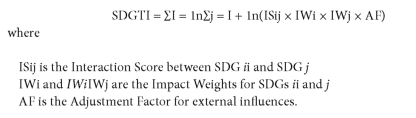
Consequently, a positive SDGTI suggests that the project is generally creating synergies between SDGs, enhancing their collective achievement. A negative index indicates significant tensions between SDGs, suggesting that there are areas where strategic adjustments might be necessary to minimise conflicts and enhance the overall sustainability performance of the project.
Regarding the second research question, our exploration of new metrics for SDG projects highlighted the importance of further developing the measurement tools. The case study showcased how specific projects could be analysed across multiple SDGs, providing a nuanced understanding of their impacts and contributions.
In essence, our research contributes to the ongoing discourse on sustainable development by emphasising the potential of corporate initiatives to navigate complex SDG interactions. The findings underscore the importance of holistic approaches, collaborative partnerships and innovative metrics in ensuring effective progress toward global sustainable development goals. As we move forward, this study encourages continued exploration and refinement of strategies that align corporate actions with the principles of the SDGs, fostering a more cohesive and impactful approach to global sustainability.
Our study has also illuminated crucial knowledge gaps, underscoring the intricate interconnectedness of Sustainable Development Goals (SDGs), the imperative for collaboration across diverse sectors, and the necessity of bridging the gap between global targets and local implementation. As we navigate the complex landscape of sustainable development, the gaps thus identified pose both challenges and opportunities for future research and practical application in the area of projects addressing SDGs.
In conclusion, the results underscore the essential role of sustainable projects within the frame of an organisation-measurement approach as well as their occasionally controversial nature. It is also worth emphasising the critical need for research and project development that can effectively navigate the tension between contradictory and synergistic goals among the SDGs with the aim of resolving or at least mitigating such tension so that SDG projects of companies can identify and ease the tension between the goals and actions
- 187/188 -
of contradictory and synergistic movements (R1). Moreover, it can be concluded that an impact measurement model development including new metrics of identified by SDG projects is a suitable way for companies to determine the gap between goals and create a link between targets (R2).
As the SDGs aim to address a wide range of global challenges, this research has recognised a need for more comprehensive and integrated approaches to sustainable development. Knowledge gaps have been identified in the following areas: the interconnectedness of goals, the lack of collaboration across different sectors and the need to bridge the gap between global targets and local implementation.
An intriguing avenue for exploration lies in the potential adaptation of our model within the public sphere, particularly within the realm of universities. The question of whether such a model can be effectively employed by universities to establish meaningful links between global sustainability targets and local implementation efforts remains an open inquiry. As knowledge hubs and catalysts for change, universities have a unique opportunity to contribute to the global pursuit of SDGs. By addressing the knowledge gaps identified in this research, universities can play a pivotal role in fostering collaboration, influencing policy, and taking or supporting tangible actions that resonate at both global and local scales.
Conclusions and implications
In conclusion, our research aimed to explore the complexities and synergies involved in the pursuit of Sustainable Development Goals (SDGs) and corporate engagement, focusing on two pivotal questions. The first question investigated the tension between contradictory and synergistic movements among SDGs, with a particular emphasis on whether dedicated SDG projects initiated by companies could mitigate such tensions. The second question examined the development of new metrics for SDG projects, aiming to identify gaps between goals and to establish links between targets.
As we move forward, it is our hope that this study not only highlights existing gaps but also serves as a catalyst for further research, innovation, and practical initiatives. Bridging these knowledge gaps is not only essential for achieving the ambitious targets set by the SDGs but also for cultivating a collective understanding and commitment to sustainable development that spans the academic, public, and private spheres.
This study also highlights the need for policymakers to facilitate and encourage corporate alignment with the United Nations Sustainable Development Goals (SDGs). To optimise the positive impacts of sustainable projects, policies should foster an environment that supports holistic and integrated approaches to sustainability. Governmental bodies and international organisations could consider the implementation of frameworks that encourage companies to identify and manage the tensions between contradictory SDG targets. These frameworks should promote transparency in reporting and encourage the use of innovative metrics that can clearly demonstrate the synergies and trade-offs
- 188/189 -
involved in corporate sustainability projects. Moreover, policies should support research and development in sustainability practices that prioritise the most impactful SDGs for regional contexts, fostering a deeper collaboration between the public and private sectors. This would involve providing incentives for companies that align their operations with SDG targets, including tax benefits, grants, or public recognition. By doing so, governments can play a crucial role in advancing global sustainability efforts, making it not only a corporate responsibility exercise but a collaborative endeavour that involves all sectors of society.
By adopting the SDG Tension Index, organisations can systematically assess and manage the complex interactions between sustainability goals, allowing them to develop more informed and effective sustainability strategies.
Incorporating ESG strategies on curriculum integration, research, policy advocacy or partnerships into the operational and educational frameworks of universities can significantly amplify their impact on sustainable development. By embracing these roles, universities can not only contribute to achieving the SDGs but also equip a new generation of leaders to tackle the world's most pressing challenges.
Acknowledgments
The research was supported by the Network Science Research Group at the Ludovika University of Public Service.
References
Diageo (2023): Annual Report 2023. London: Diageo. Online: https://www.diageo.com/~7media/Files/D/Diageo-V2/Diageo-Corp/investors/results-reports-and-events/annu-al-reports/diageo-annual-report-2023.pdf
Dyllick, Thomas - Muff, Katrin (2016). Clarifying the Meaning of Sustainable Business: Introducing a Typology from Business-as-Usual to True Business Sustainability. Organization & Environment, 29(2), 156-174. Online: https://doi.org/10.1177/1086026615575176
Eccles, Robert G. - Serafeim, George (2013): The Performance Frontier: Innovating for a Sustainable Strategy. Harvard Business Review, May 2013. Online: https://hbr.org/2013/05/the-performance-frontier-innovating-for-a-sustainable-strategy
Elkington, John (1997): Cannibals with Forks: The Triple Bottom Line of 21st Century Business. New Society Publishers. Online: https://doi.org/10.1002/tqem.3310080106
Frame, Mariko L. - McDowell, William G. - Fitzpatrick, Ellen T. (2022): Ecological Contradictions of the UN Sustainable Development Goals in Malaysia. The Journal of Environment & Development, 31(1), 54-87. Online: https://doi.org/10.1177/10704965211060296
- 189/190 -
Hamilton, James T. (2013): Environmental Equity and the Siting of Hazardous Waste Facilities in OECD Countries: Evidence and Policies. In Folmer, Henk - Tietenberg, Tom (eds.): The International Yearbook of Environmental and Resource Economics 2005/2006. Edward Elgar, 97-156. Online: https://doi.org/10.4337/9781845425593.00010
Hickel, Jason (2015): Why the New Sustainable Development Goals Won't Make the World a Fairer Place. The Conversation, 24 August 2015. Online: https://theconversation.com/why-the-new-sustainable-development-goals-wont-make-the-world-a-fairer-place-46374
Hickel, Jason (2019): The Contradiction of the Sustainable Development Goals: Growth Versus Ecology on a Finite Planet. Sustainable Development, 27, 873-884. Online: https://doi.org/10.1002/sd.1947
Hopkins, Michael (2012): The Planetary Bargain: Corporate Social Responsibility Matters. Earthscan. Online: https://doi.org/10.4324/9781849773201
Igini, Martina (2024): Only 16% of SDG Targets on Track to Be Met by 2030, Report Finds. Earth.org, 17 June 2024. Online: https://earth.org/only-16-of-sdg-targets-on-track-to-be-met-by-2030-report-finds/
Kolk, Ans - Lenfant, François (2010): MNC Reporting on CSR and Conflict in Central Africa. Journal of Business Ethics, 93(2), 241-255. Online: https://doi.org/10.1007/s10551-009-0271-1
Lozano, Rodrigo - Huisingh, Don (2011): A Review of the Relationships between Corporate Social Responsibility, Sustainability and Governance. World Sustainability Series, 1, 213-235.
Menton, Mary - Larrea, Carlos - Latorre, Sara - Martinez-Alier, Joan - Peck, Mika - Temper, Leah - Walter, Mariana (2020): Environmental Justice and the SDGs: From Synergies to Gaps and Contradictions. Sustainability Science, 15, 1621-1636. Online: https://doi.org/10.1007/s11625-020-00789-8
Pradhan, Prajal - Costa, Luís - Rybski, Diego - Lucht, Wolfgang - Kropp, Jürgen P. (2017): A Systematic Study of Sustainable Development Goal (SDG) Interactions. Earth's Future, 5(11), 1169-1179. Online: https://doi.org/10.1002/2017EF000632
Möllering, Guido - Rasche, Andreas - Henry, Leona A. (2022): Managing Competing Demands: Coping With the Inclusiveness-Efficiency Paradox in Cross-Sector Partnerships. Business and Society, 61(2), 267-304. Online
Russo, Michael V. - Harrison, Niran J. (2005): Organizational Design and Environmental Performance: Clues from the Electronics Industry. Academy of Management Journal, 48(4), 582-593. Online: https://doi.org/10.5465/amj.2005.17843939
Schaltegger, Stefan - Burritt, Roger (2014): Measuring and Managing Sustainability Performance of Supply Chains. Supply Chain Management: An International Journal, 19(3), 232-241. Online: https://doi.org/10.1108/SCM-02-2014-0061
Schaltegger, Stefan - Wagner, Marcus (2011): Sustainable Entrepreneurship and Sustainability Innovation: Categories and Interactions. Business Strategy and the Environment, 20(4), 222-237. Online: https://doi.org/10.1002/bse.682
- 190/191 -
Sharma, Sanjay - Vredenburg, Harrie (1998): Proactive Corporate Environmental Strategy and the Development of Competitively Valuable Organizational Capabilities. Strategic Management Journal, 19(8), 729-753. Online: https://doi.org/10.1002/(SICI)1097-0266(199808)19:8<729::AID-SMJ967>3.0.CO;2-4
Schuler, Douglas A. - Jones, Jesse H. - Rehbein, Kathleen - Cramer, Roxy (2002): Pursuing Strategic Advantage Through Political Means: A Multivariate Approach. Academy of Management Journal, 45(4), 659-672. Online: https://doi.org/10.5465/3069303
Waddock, Sandra (2017): The Difference Makers: How Social and Institutional Entrepreneurs Created the Corporate Responsibility Movement. London: Routledge. Online: https://doi.org/10.4324/9781351280167
Whiteman, Gail - Walker, Brian - Perego, Paolo (2013): Planetary Boundaries: Ecological Foundations for Corporate Sustainability. Journal of Management Studies, 50(2), 307-336. Online: https://doi.org/10.1111/j.1467-6486.2012.01073.x
Emese Belényesi, PhD is employed at the Ludovika University of Public Service, Faculty of Public Governance and International Studies, Budapest, Hungary. She is an associate professor, accredited trainer, executive coach, and adult education expert. She has an MA degree in economics, MBA degree, certificate of Trainer in English for Business, and PhD in Education Science. Her work experience is connected to banking and business sectors, public administration, higher education and adult education. In her teaching work she is specialised in management subjects, while her work as a trainer focuses on the professional and competence development of leaders and managers. Her research activity and publications are connected to the field of public management, as well as to leadership and competence development.
Adrienn Lajó is a PhD student at the Ludovika University of Public Service, Doctoral School of Public Administration Sciences. She is also an accredited accountant and auditor, change manager and IFRS expert, certified in CPD sustainability reporting. She has an MA degree in economics, accounting and finance, and MBA degree in international business management and HR. Her work experience is connected to finance, assurance and audit areas, organisational development and strategy, moreover ESG reporting. She has worked both in the business sector and public administration and also as a visitor lecturer at higher education. In her teaching work she specialises in change management and organisational development. Her research activity and publications are connected to the field of change management, as well as to environmental, social and governance activities of organisations under the area of structuring economical organisations and social studies.
- 191/192 -
Annex 1
Interview questions
1. Can you describe a sustainable project that your organisation has undertaken or is currently involved in? How would you define the principles and objectives that guide sustainable projects within your organisation? (General Project Understanding)
2. In your perspective, how does the sustainable project align with the principles and objectives outlined in the UN Sustainable Development Goals (SDGs)? Are there specific SDGs that the project explicitly addresses, and if so, how? (Alignment with SDGs)
3. Can you share instances where you observed synergies between the goals of the sustainable project and the SDGs? On the contrary, have you encountered situations where the goals of the sustainable project conflicted with the objectives of certain SDGs? (Synergies and Contradictions)
4. How are decisions made when there are conflicting goals between the sustainable project and SDGs? Can you describe the process of prioritising certain goals over others when conflicts arise? (Decision-Making and Priority Setting)
5. In your experience, what strategies or approaches have been effective in mitigating tensions or conflicts between the goals of sustainable projects and SDGs? How does your organisation navigate the complexities of balancing contradictory and synergistic movements within the SDGs? (Mitigation Strategies)
6. How is the impact of the sustainable project on SDGs currently measured within your organisation? In your opinion, are there gaps in the current measurement methods that may affect the accurate representation of the project's impact on specific SDGs? (Impact Measurement)
7. How are stakeholders, both internal and external, involved in decision-making processes related to the alignment of sustainable projects with SDGs? Have you observed any instances where stakeholder perspectives influenced the project's alignment with certain SDGs? (Stakeholder Involvement)
8. Can you provide examples of controversies or challenges faced by sustainable projects in relation to SDGs, and what lessons were learned from these experiences? How have controversies or challenges influenced decision-making for future projects? (Learning from Controversial Nature)
9. What do you think are the critical needs for research and project development to effectively navigate the tension between contradictory and synergistic goals within the SDGs? In your opinion, how can organisations better resolve or mitigate tensions between SDGs and sustainable projects in the future? (Future Development) ■
NOTES
[1] Igini 2024.
[2] Hickel 2019.
[3] Dyllick-Muff 2016.
[4] Elkington 1997.
[5] Hickel 2019.
[6] Hickel 2015.
[7] Frame et al. 2022.
[8] Menton et al. 2020.
[9] Pradhan et al. 2017.
[10] Eccles-Serafeim 2013.
[11] Whiteman et al. 2013.
[12] Sharma-Vredenburg 1998.
[13] Kolk-Lenfant 2010.
[14] Hopkins 2012.
[15] Waddock 2017.
[16] Lozano-Huisingh 2011.
[17] Russo-Harrison 2005.
[18] Möllering et al. 2022.
[19] Schuler et al. 2002.
[20] Schaltegger-Wagner 2011.
[21] Schaltegger-Burritt 2014.
[22] Hamilton 2013.
[23] Pradhan et al. 2017.
[24] Pradhan et al. 2017.
[25] Certain parts of this chapter are based on the website of the company and the below-mentioned site: www.sec.gov/Archives/edgar/data/835403/000083540323000016/deo-20230630.htm
Lábjegyzetek:
[1] The author is PhD, Associate Professor, Ludovika University of Public Service, Faculty of Public Governance and International Studies, Department of Public Management and Information Technology, belenyesi.emese@uni-nke.hu
[2] The author is PhD student, Ludovika University of Public Service, Doctoral School of Public Administration Sciences, adriennlajo@gmail.com