

Csaba Fási[1]: Rethinking the S Pillar of ESG: Corporate Social Responsibility in a Corporate and EU Context (Publico, 2025/3., 77-99. o.)
https://doi.org/10.32575/ppb.2025.3.5
Abstract
This study examines the role of corporate social responsibility (CSR) within the ESG (Environmental, Social, Governance) framework, with a special focus on the social ("S") dimension and its regulatory context in the EU. The central question of the research is how the social aspect of the ESG approach can become an integral part of corporate strategy and what regulatory instruments are best suited for encouraging socially responsible operations in the EU. While the environmental dimension has seen more development to date, the social dimension is becoming more prominent, in particular through Directive 2014/95/EU and the CSRD. This study aims to explore the mechanisms through which CSR can be integrated into the day-to-day operations of companies and how these practices affect their market position and social acceptance. The study uses qualitative methods, applying legal and literature analysis, which highlights the importance of employee welfare, community relations and transparent reporting. The results suggest that the inclusion of social considerations in mandatory reporting is not only an ethical but also an economic imperative. Corporate social performance affects credit risk, investor decisions and social trust. The study will allow a deeper understanding of the relationship between CSR and the ESG framework and thus contribute to the promotion of a sustainable and inclusive economy.
Keywords: ESG, corporate social responsibility, corporate citizenship, social dimension, European Union, social dimension
Absztrakt - Az ESG S pillérének újragondolása
A vállalati társadalmi felelősségvállalás vállalati és uniós kontextusban
Ez a tanulmány a vállalati társadalmi felelősségvállalás (CSR) szerepét vizsgálja az ESG (környezeti, társadalmi, irányítási) keretrendszeren belül, különös tekintettel a társadalmi ("S") dimenzióra és annak uniós szabályozási kontextusára. A kutatás központi kérdése, hogy az ESG társadalmi aspektusa hogyan válhat a vállalati stratégia szerves részévé, és milyen szabályozási eszközök ösztönzik a társadalmilag felelős működést az EU-ban. Míg a környezetvédelmi dimenzió fejlődése előrehaladottabb, a társadalmi dimenzió egyre hangsúlyosabbá válik, különösen a 2014/95/EU irányelv és a CSRD révén. A kutatás célja annak feltárása, hogy milyen mechanizmusokon keresztül integrálható a CSR a vállalatok mindennapi működésébe, és hogy ezek a gyakorlatok hogyan befolyásolják a vállalatok piaci pozícióját és társadalmi elfogadottságát. A tanulmány kvalitatív módszereket, jogi és szakirodalmi elemzést alkalmaz, kiemelve a munkavállalói jólét, a közösségi kapcsolatok és az átlátható jelentéstétel fontosságát. Az eredmények azt mutatják, hogy a társadalmi szempontok beépítése a kötelező jelentéstételbe nemcsak etikai, hanem gazdasági kötelesség is. A vállalati társadalmi teljesítmény hatással van a hitelkockázatra, a befektetői döntésekre és a társadalmi bizalomra. A tanulmány hozzájárul a CSR és az ESG közötti kapcsolat mélyebb megértéséhez, valamint a fenntartható és befogadó gazdaság előmozdításához.
Kulcsszavak: ESG, társadalmi felelősségvállalás, társadalmi dimenzió, Európai Unió, vállalati állampolgárság
- 77/78 -
Introduction
In recent years, a new, complex approach to evaluating the performance of companies has gained ground: the ESG framework, i.e. evaluation which takes into account environmental (Environmental), social (Social) and governance (Governance) perspectives. While the analysis of environmental and governance factors in business has made significant technical and regulatory progress, the social dimension remains underrepresented. Yet this is precisely the area that has the most direct impact on the internal functioning of companies, the wellbeing of their employees and their relations with local communities. This raises the question of why the 'S' component is lagging behind the other pillars, and how this may be changing in the light of the EU's increasing regulatory activity.
The existing research shows that CSR tends to become a strategic tool in developed countries, while in developing regions it tends to be less visible. At the same time, concepts such as Corporate Social Responsibility (CSR) or corporate citizenship have evolved into integrated organisational strategies, especially within the ESG framework. The European Union has been a particularly active player in this transformation: regulatory instruments such as the Non-Financial Reporting Directive (hereinafter: NFRD) and the Corporate Sustainability Reporting Directive (hereinafter: CSRD) have made it mandatory to measure and disclose social impacts, thus encouraging social transparency and responsible corporate behaviour.
The focus of this study is on the EU framework governing the social pillar of the ESG: how are regulatory trends and business practices shaping the integration of social responsibility into corporate operations? The paper will explore how mandatory ESG reporting affects corporate social performance, and the role EU regulation plays in this.
The first part of the study describes the emergence and evolution of the concept of ESG, followed by an outline of the theoretical foundations of the social dimension and the EU regulatory environment. It then presents the relationship between ESG performance and the competitiveness of companies, the linkages between CSR and corporate citizenship and the ESG system, as well as the main CSR practices adopted by companies. The paper ends with a presentation and discussion of the empirical research findings before offering conclusions and recommendations to further strengthen the social dimension of ESG in corporate practice.
The social dimension of the ESG and its EU dimension
ESG is no longer merely a slogan. It shapes corporate strategies, influences investment decisions and has a measurable impact on the global economy. It reflects the shared values of businesses, their customers and their communities. Meanwhile, many are adopting a comprehensive view of ESG that goes beyond environmental sustainability.
The "S" in ESG stands for the social or societal pillar. Recent research on CSR has highlighted how introducing regulations on climate change and environmental risk exposure in finance has fostered much greater development of the environmental dimension (the E of ESG)
- 78/79 -
than of the social dimension (the S of ESG).[1] It is also worth emphasising that initiatives to promote social responsibility are more typical of industrialised countries than of poorer or developing countries.
According to Matos, social factors should capture the relational dimension of the company with both internal stakeholders (employees) and external stakeholders (actors in the local community in which the company operates) and its impact on improving the multidimensional wellbeing of employees (quality of work, health and safety at work, training and development) and in terms of promoting local sustainable development.[2]
Some aspects of this approach have already been explained above, but it is also important to stress that this pillar must be integrated into the various strategies in the European Union, as in the 2018 European Pillar of Social Rights and its related action plan. The 2018 document is structured around three chapters, which are summarised under the headings 1. Equal opportunities and the right to work; 2. Fair working conditions; and 3. Social protection and inclusion.[3] The latter document, the Action Plan, was adopted in 2021.[4]
The first definition of the social dimension in the EU's regulation appears in the EC Directive 95 of 2014 on non-financial reporting (NFRD),[5] which stresses that equal attention should be paid to both the environmental and social dimensions. The Directive states that the social dimension should be considered both internally (as it affects employees) and externally (in the company's relations with the local community/consumers), while bearing in mind the human rights dimension, which primarily (but not only) concerns relations with suppliers. In addition, the non-financial reporting guidelines,[6] which set out which issues from the social dimension should be included in non-financial reporting, are also emphasised. These include concrete information on respect for the core International Labour Organisation (ILO) conventions, discrimination and diversity issues, occupational issues and respect for employee participation, trade union relations, human capital value enhancement, occupational safety and health and the impact on consumers and the most vulnerable, research capacity and responsible markets, and finally, support for local community relations and local community development. In addition, of course, the directive prescribes respect for human rights, devoting a specific chapter to this in the directive and the guidelines, while human rights are also naturally fully included in the social dimension.[7]
The social dimension of the ESG, as one of the three pillars alongside environmental and governance factors, addresses labour rights, workforce diversity, community engagement and corporate practices related to the overall social impact of companies' policies and actions. In the European Union, this dimension is increasingly coming to the fore through both voluntary initiatives and mandatory requirements. Empirical research shows that the EU is an arena
- 79/80 -
where CSR is being proactively incorporated into the ESG framework not only as an ethical commitment but also as a strategic business tool to influence investment and lending decisions.[8]
EU policies have played a key role in shaping how companies report and manage social issues. For example, NFRD and its subsequent versions, leading finally to the Corporate Sustainability Reporting Directive (CSRD) require large companies to disclose information on their social practices. These requirements oblige companies to provide qualitative and quantitative data on indicators such as freedom of association, child labour practices and measures to ensure diverse and inclusive workplaces.[9] As a result, European financial institutions today often incorporate these social performance indicators into their risk and credit assessments, thus linking the quality of a company's social disclosure to its cost of debt and overall market valuation.[10]
Strict EU regulation aims to ensure that the social aspects of the ESG model are not merely voluntary add-ons, but constitute an essential element of corporate reporting. Mandatory reporting rules can be characterised as a qualitative tool that reinforces corporate social responsibility (CSR) by holding companies accountable for their labour practices and community contributions. The publication of the detailed social information obtained in this way aims to reduce information asymmetry between companies and stakeholders, which promotes greater transparency and stakeholder trust.[11] In many cases, these practices also lead to a convergence of social standards across CEE countries as companies seek to meet international and European benchmarks for social performance.[12]
Recent research also indicates that the EU regulatory framework is constantly evolving in response to changing societal expectations. Zhao notes that the EU has successively introduced several key regulations, including the NFRD and the CSRD, which together address issues that go beyond mere environmental impacts. These measures explicitly recognise that the social performance of companies contributes to the wider picture of sustainable development by ensuring that companies care for the wellbeing and livelihoods of their employees and affected communities. By setting standardised social criteria within ESG reports, the EU promotes sustainable consumption and production and helps to attract investment which is geared towards socially responsible practices.[13]
Taken together, the evolving EU regulatory environment and the strategic incorporation of social performance measures underline the dual role of the social dimension in the ESG approach: as both an ethical imperative and as a driver of corporate competitiveness. By requiring a high level of social disclosure, the EU encourages companies to internalise CSR as an integral part of their operational and strategic framework, with the ultimate aim of promoting a more inclusive and sustainable economy.[14]
- 80/81 -
Historical overview of the ESG milestones and regulations
The environmental, social and governance (ESG) framework has made significant strides and is now an essential part of investing and corporate accountability in Europe and beyond.[15]
The ESG approach can also be understood in the complex context of sustainability, focusing on three main areas: environment, social and governance. The environmental dimension includes, for example, energy and resource use, waste management, climate change and air pollution management. The social aspects, in contrast, involve the relationship between the company and its employees, working conditions, health and safety, and cooperation with suppliers, customers and communities. Corporate governance aspects cover issues such as executive pay, internal control systems, ensuring shareholder rights, gender equality and reducing corruption.[16]
Sustainability has become a central issue in recent years, after it was first introduced into international thinking in 1972 with the report The Limits to Growth, which highlighted the harmful consequences of accelerating population growth, excessive industrial development and environmental pollution and called for a change in attitudes. The next important step came in 1987 with the Brundtland report, known as Our Common Future. The central idea of the report, that development can only be sustainable if it ensures that meeting the needs of the present does not jeopardise the opportunities of future generations, still shapes the debate on the subject.[17] As a result, corporate responsibility and ethical and environmentally responsible behaviour have become increasingly prominent.
Although the foundations of the ESG framework were already emerging in the 1990s, the term itself only became widely used in the early 2000s. A significant milestone was the 1992 UN Earth Summit, held in Rio de Janeiro, which elevated environmental issues to the global level.[18] During the subsequent decade, a number of international initiatives were launched, including the Global Reporting Initiative (GRI), which provided guidelines for sustainability reporting.[19]
The concept of ESG was first officially introduced in 2004 in the UN publication Who Cares Wins, a report produced in collaboration with 18 financial institutions from nine countries. The aim was to develop practical recommendations to enable actors of the financial sector to integrate environmental, social and governance considerations more deeply into their practice. A year later, the UNEP's financial initiative, the Freshfields Report, further reinforced the importance of these considerations in financial decision-making.[20]
- 81/82 -
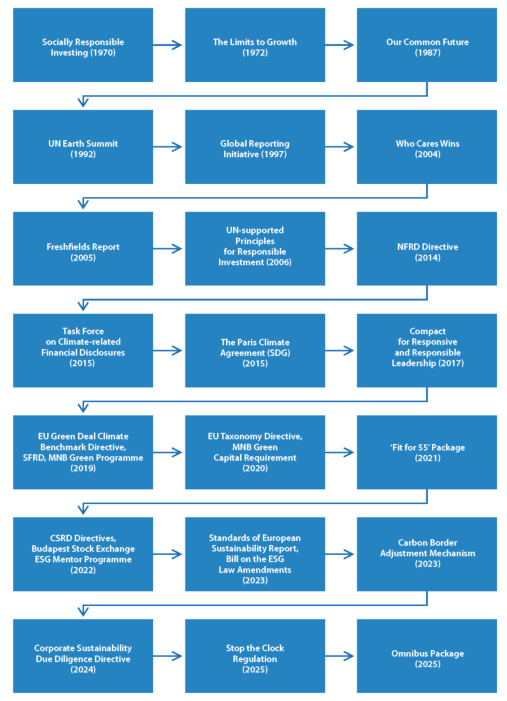
Figure 1: Milestones in the development of the ESG framework and regulations
Source: compiled by the author based on data from Szendrey-Dombi 2024
- 82/83 -
The 2015 Paris Climate Agreement was a historic breakthrough, as all the countries of the world agreed to take joint action to combat climate change.[21] Two years later, in 2017, at the World Economic Forum in Davos, nearly 140 business leaders signed the Compact for Responsive and Responsible Leadership, committing their firms to aligning their business goals with the UN Sustainable Development Goals. They recognised that promoting social wellbeing is in the long-term interests of business.[22] In particular, the Covid-19 pandemic highlighted the importance of workers' rights and workplace safety. Employers have come under increasing pressure to take responsibility for the wellbeing of their workers and to ensure that they can work safely.
The European Union has developed an extremely ambitious set of laws with respect to environmental, social and governance (ESG) reporting and 2025 was a pivotal year for its general implementation. Laws that will link how companies will report on sustainability impacts, better manage ESG risks, and avoid being accused of merely cosmetic 'greenwashing' measures are being consolidated into a smaller number of major laws.
The key law is the Corporate Sustainability Reporting Directive[23] (CSRD), which replaces the former Non-Financial Reporting Directive. The significant difference is that the CSRD dramatically expands the number of commercial entities which are obliged to report on sustainability. Approximately 50,000 companies will report on this area, including large companies operating in the EU and some very large and medium-sized companies outside the EU but with significant operations in the EU, which will now have to submit audited sustainability reports as part of their annual filings. In order to ensure some comparability amongst reported sustainability impacts, the CSRD references the European Sustainability Reporting Standards (ESRS), which are guidelines developed by EFRAG to align EU rules and frameworks with other international frameworks.
In addition to the CSRD, the EU has enacted the Sustainable Finance Disclosure Regulation[24] (SFDR). The SFDR mainly applies to participants in the financial market, and its purpose is to establish a mandatory disclosure framework to guide fund managers and other investors on how to incorporate ESG risks into their investment decisions. This disclosure requirement is intended to enhance transparency in the ESG market and to minimise the opportunity for firms to make misleading claims regarding ESG and sustainability.
The new EU Corporate Sustainability Due Diligence Directive[25] (CSDDD) is another important piece of legislation, as it imposes a requirement on companies to determine and respond to human rights and environmental risks in the value chain. The Taxonomy Regulation[26] is also a significant development, as it establishes a common classification system
- 83/84 -
that defines sustainable economic activities. At the very least, companies cannot present misleading representations of being green.
As well as the above legislation, the EU is developing other policies to align economic activity with climate goals. The 'Fit for 55' package[27] establishes a framework for reducing greenhouse gas emissions by 55% by 2030. Meanwhile, the Carbon Border Adjustment Mechanism[28] (CBAM) addresses the economic disincentives faced by EU producers that incur carbon penalties, even though the products that they are importing are not subject to them. The new EU CBAM thus means that carbon costs cannot be offshored to gain a price advantage based on foreign laws.
The EU will also rely more heavily on policies from the European Banking Authority, which means that banks need to identify and manage ESG risks, regardless of materiality, by no later than mid-2025. At the same time, the EU appears to be willing to penalise companies for misleading claims regarding sustainability, meaning that companies will be scrutinised. In late 2024, EU leaders also initiated an 'omnibus regulation' to try to rationalise some of the requirements, specifically the CSRD, the Taxonomy Regulation and the CSDDD to issue more integrated reports.
Overall, what is happening in the EU, when considered as a whole, is leading to a situation where sustainability reporting will not be a voluntary exercise; it is now a legal obligation with standards, enforcement, and material consequences. For any companies operating in or with the EU, 2025 will be the year that ESG reporting will become just another event in the business year, an integrated report that reflects the companies' strategy, risk management and information for stakeholders.
The concept of corporate social responsibility
Corporate Social Responsibility (CSR), broadly defined, is a voluntary commitment by companies to generate positive social and environmental impacts that go beyond making a profit or complying with legal requirements.[29] Over the past few decades, CSR has evolved from isolated philanthropic gestures to an integrated strategic framework that encompasses environmental stewardship, social engagement, ethical governance and community development.[30] This transformation reflects the growing recognition among academics and practitioners alike that sound CSR practices create lasting value for both companies and stakeholders.
Empirical research shows that CSR plays a multifaceted role in enhancing corporate performance and gaining a competitive advantage. In particular, studies have shown that companies with well-developed CSR programmes tend to enjoy stronger brand loyalty,
- 84/85 -
improved reputation and greater resilience to risk, even in times of crisis.[31] Research in the tourism sector, for example, shows that proactive CSR initiatives can mitigate the adverse effects of negative social media events, thereby stabilising corporate reputations in turbulent times.[32] Similarly, integrating CSR into corporate strategy is associated with improved consumer brand choice, as companies that demonstrate strong ESG practices tend to enjoy higher levels of consumer trust and experience long-term profitability.[33]
In recent years, considerable attention has been paid to the internal mechanisms through which CSR becomes embedded in corporate culture. Board composition and leadership characteristics have been identified as critical determinants of CSR effectiveness; for example, evidence indicates that companies with greater board diversity, including a higher proportion of female board members, have more comprehensive CSR disclosure, reflecting increased attention to social issues.[34] In parallel, the emergence of digital technologies and advanced management control systems has enabled companies to better integrate CSR into their day-to-day operations and strategic decision-making.[35] These systems facilitate the collection, monitoring and dissemination of non-financial performance data, thereby reducing the information asymmetry between companies and stakeholders - a key challenge in the CSR landscape.
CSR implementation varies significantly across regions and cultures. In some contexts, CSR initiatives often harmonise with local cultural values, such as community solidarity and family ethics, which enrich the way in which companies interpret and implement socially responsible practices.[36] Furthermore, within the financial services sector, CSR disclosure is associated with improved transparency and stakeholder confidence, as recent studies of environmental and social disclosures by banks within the Euro area have shown.[37] These regional adaptations underline that CSR is not a one-size-fits-all approach, but rather a dynamic construct that needs to be adapted to the specific socio-cultural and regulatory context in which companies operate.
The impact of ESG performance on the competitiveness of companies
ESG performance affects companies' competitiveness through various mechanisms.[38] With healthy ESG activities, firms may improve their operational efficiency, enhance brand value, be better positioned to manage risk, have greater access to capital and enjoy enhanced flexibility in financial matters.[39] However, a number of studies have revealed that this relationship is
- 85/86 -
complex, with contradictions or nuances depending on firm size, industry characteristics, and external conditions.[40]
One of the key benefits that can be derived from ESG performance is operational efficiency. By employing sustainable practices - waste reduction, better resource conservation, lower costs - firms can create lasting performance improvements.[41] For example, organisations like the Hisense Group have begun extensively investing in energy-saving technology and reducing their carbon emissions, which has led to performance efficiencies and cost savings while improving productivity. Companies that have introduced cleaner technologies (e.g. sonochemical mordanting in textile dyeing), which are also ESG-driven innovations, have even managed to streamline their processes for dyeing fabrics.[42] In addition to various operational efficiencies, strong ESG practices enhance corporate reputation and brand value, which helps to build the trust and loyalty of customers, employees and investors, more of whom are considering environmental and social responsibility when making decisions.[43] Moreover, positive media coverage of firms that are considered ESG-friendly may even establish or reinforce a firm's positive reputation on the market.[44]
ESG is very much linked to risk and risk management. Companies may mitigate the risks of operational breakdowns, reputational issues and financial malpractice by being proactive in preventing detrimental environmental outcomes, socially irresponsible and unethical behaviour and governance orchestrated crime.[45] In addition, firms with positive ESG marks enjoy better access to capital as some investors in the financial markets are incorporating ESG into their investment decisions.[46] Green finance policies reinforce this behaviour by incentivising financial institutions to support more sustainable firms through offering tangible financial benefits, often in the form of a lower cost of debt.[47]
Moreover, ESG performance fosters innovation and technological collaboration enhancing competitiveness by developing sustainable products and processes.[48] Firms that engage in ESG activities more often than firms that do not prioritise them invest more in R&D and collaborate with partners to accelerate green innovation.[49] Stakeholder relationships also benefit, as meeting investor, customer and local community expectations can develop a sense of ownership and reinforce the company's social license to operate.[50]
Nonetheless, the relationship between ESG and competitiveness can be controversial. Some firms that engage in ESG activities do so for image management purposes, and do not commit
- 86/87 -
to substantive change, which creates a 'window-dressing effect'.[51] Moreover, the impact of ESG measures is context-sensitive, where firm size, financing conveniences, geographic location and industrial sensitivity to ESG are all factors that contribute to whether a firm is impacted.[52] The implementation of an ESG framework can come with added costs and tradeoffs, especially in resource-intensive or sensitive industries.
The role of investors is also highly relevant here, as more exposure to the market means that companies must adopt higher ESG standards, reinforcing trust in investors[53] - which is impactful in companies with greater market presence. Similarly, good ESG leads to better financial leverage, enabling firms to address external disturbances and adopt long-term sustainable approaches.[54]
Disclosure is also important for adopting an ESG framework. Transparent reporting processes and the provision of information describing environmental and social strategies enhances accountability, as it illustrates a firm's commitment to sustainability and demonstrates transformations relating to economic, environmental, and social strategies.[55] Firms' governance and their ownership structures also have an impact on ESG, for example in the case of State-Owned Enterprises (SOEs). Market-driven structural reforms affording more accountability than past ownership along with open markets encourage market-oriented perspectives to enhance stakeholders' views of resource allocation and ESG levels.[56] This can also be driven by leadership styles and experiences, as most notably the experiences of CEOs with sustainability agendas, formal training, and with previous political engagements tend to yield higher ESG outcomes for companies.[57]
Similarly, when firms use strategic approaches to leverage ESG through planning, for instance, this involves reinforcing sustainability and related philosophies through the company's planning processes and associating sustainability principles with all levels and objectives of the organisation, while frameworks like the Balanced Scorecard (BSC) create a concerted approach to sustainable planning.[58] Additionally, strategic enhancements of ESG performance for firms in more volatile industries, such as energy, can ultimately enable firms to mitigate the risks associated with the volatility of the crude oil market, especially when also accounting for improved performance resulting from peer effects in their markets.[59]
- 87/88 -
The concept of corporate citizenship
Corporate citizenship[60] is broadly defined as a company's commitment to operating in a way that has a positive impact on society and the environment, going beyond minimal legal compliance to include the active adoption of ethical, social and sustainable practices. This concept is often used interchangeably with CSR, but is distinguished by its focus on strategically integrating social values into internal operations and external stakeholder relationships.[61] In essence, corporate citizenship involves a company's efforts to balance its economic, legal, ethical and discretionary responsibilities while maintaining beneficial relationships with its employees, communities and other stakeholders.[62]
Corporate citizenship has evolved from traditional ad hoc philanthropic activities to a comprehensive framework that integrates sustainability measures across the organisation. For example, the internal dissemination of sustainability initiatives has been shown to improve employees' perceptions of corporate citizenship, thereby strengthening internal culture and enhancing the external reputation of the company.[63] This internal engagement is often influenced by the personal characteristics of entrepreneurs and business leaders. Studies have demonstrated that the social identity of entrepreneurs can significantly shape corporate citizenship practices, thus linking personal identity with wider CSR initiatives.[64] Such a perspective underscores the idea that corporate citizenship is not a mere afterthought, but forms an integral part of a company's strategic identity.
Despite its widespread acceptance, several obstacles remain on the road to the effective measurement and implementation of corporate citizenship. Several scholars have argued that, although corporate citizenship, CSR and corporate social performance are often used interchangeably, operationalising these constructs remains complex.[65] For example, a comprehensive literature review using text mining revealed considerable heterogeneity in the characterisation of corporate citizenship, which underlines the need for clear definitions and standardised metrics for academic research and practical evaluation.[66] Furthermore, research comparing customer citizenship with corporate citizenship has emphasised the need for a comprehensive understanding of stakeholder expectations, since behaviours indicative of responsible corporate action have a direct impact on brand image and competitive performance.[67]
From a strategic point of view, strong corporate citizenship behaviour can bring significant competitive advantages. Companies that actively disseminate sustainability knowledge both
- 88/89 -
internally and externally tend to experience better employee engagement, increased brand loyalty and stronger local community ties.[68] Furthermore, perceived corporate citizenship positively influences customer brand loyalty, which in turn translates into improved corporate reputation and long-term financial performance.[69] Thus, when corporate citizenship is effectively institutionalised, it serves as a multi-level mechanism that promotes both ethical accountability and business success.
Practices adopted by companies to promote corporate responsibility
A few decades ago, if they were asked what corporate responsibility meant, most people would have associated it with products, warranties and guarantees. Several concepts have sought to define the role and responsibility of companies, the most widely known and used of which is CSR:
"The responsibility of an organisation for the impact of its decisions and activities on society and the environment, through transparent and ethical behaviour that contributes to sustainable development, including the health and wellbeing of society. It considers the expectations of stakeholders, complies with applicable laws, is consistent with international standards of conduct, and is embedded throughout the organisation and its relationships."[70]
Table 1: Levels of socially responsible HR practices
| Individual level |
| • Focus on the physical and mental wellbeing of workers |
| • Fair career opportunities and a learning-centred organisational culture design |
| • Conscious and long-term support for employees' careers |
| Organisational level |
| • Organisation development with stakeholder involvement and strengthening of leadership engagement |
| • Build partnerships with business actors to promote responsible operations |
| • Active participation in society, for example through voluntary programmes |
| Institutional level |
| • System-wide embedding of core values into operation |
| • Respect for human rights and diversity |
| • Ensure employee participation in decision-making processes, and promote transparency |
Source: compiled by the author
- 89/90 -
Table 2: Differences between the organisational and institutional level
| Test aspect/Level | Organisational level | Institutional level |
| Level of impact | Individual company | Industry, national or global level |
| Factors | Corporate culture, leadership, CSR objectives | Laws, social norms, regulatory frameworks |
| Character | Voluntary, tailored | Often mandatory or generally expected |
| Examples | Internal welfare programmes, DEI (equal opportunities) initiatives | Labour laws, ILO conventions, industry codes |
| Stakeholders | Employees, management, shareholders | Governments, NGOs, trade unions |
Source: compiled by the author
Corporate Social Responsibility (CSR) is a central element of modern business thinking that emphasises the importance of ethical behaviour, social responsibility and sustainable development. Companies can adopt a variety of approaches to contribute to society in a responsible way - strategies that not only benefit the community but can also help strengthen a company's market position and improve its economic performance.
Promotion of health in the workplace is an area that is closely intertwined with CSR, as this relationship creates a positive interaction that requires committed leadership and clearly defined objectives within sustainability strategies.[71] CSR initiatives that target local communities are effective in supporting corporate efficiency gains, as employees are often willing to commit to an organisation that represents real values in return for less financial gain.[72] Socially conscious business practices have long-term benefits, contributing not only to the wellbeing of employees, but also to the development of the economy and the quality of life of the community. In recent years, there has been a surge of interest in researching the relationship between CSR and human resource management (HRM), with a particular focus on areas such as green management, stakeholder relations, employee engagement, building a competitive advantage, employee satisfaction, performance enhancement, sustainability and improving research methods. To ensure socially responsible operations, it is essential that companies integrate CSR and HRM within a sustainable business model.[73]
All this suggests that companies can become truly socially responsible if they focus their activities not only on material growth, but also on working together with people, local communities, consumers and business partners.[74]
- 90/91 -
The CSR ethos can be achieved, for example, by integrating workplace health programmes and community-focused initiatives, aligning CSR and HR strategies, and consciously improving environmental performance. Strategic planning and the systematic use of credible ESG indicators are essential for the successful implementation of CSR and can become the cornerstones of sustainable business operations in the long term.
Discussing the results
This study has highlighted the growing importance of the social ('S') dimension within the ESG (Environmental, Social, Governance) framework, particularly in the European Union. The research has shown that while significant progress has already been made with regard to its environmental aspects, social aspects such as employee wellbeing, safety at work, support for local communities and respect for human rights are gradually being integrated into corporate strategies and reporting obligations.
The results show that the social dimension of the ESG is not only an ethical obligation, but also a strategic tool to enhance corporate competitiveness. Corporate Social Responsibility and citizenship are becoming increasingly institutionalised and implemented through systems that cover the whole organisation. Non-financial reporting obligations strengthen transparency and build trust among stakeholders.
Integrating corporate social responsibility into the ESG framework contributes to a more sustainable, inclusive and ethical business environment. Well-functioning CSR practices have a positive impact on brand equity, consumer trust and employee engagement, thereby enhancing companies' economic performance in the long term. At the same time, the EU's regulatory efforts provide an incentive to promote socially responsible behaviour.
The study has mainly examined the development of the social dimension in the EU context, so the results are of limited applicability to other geographical regions, especially to developing countries. Furthermore, although the study presents several qualitative examples, the quantitative analysis is limited, so the empirical evidence needs to be investigated further.
For future research, it is recommended to refine the quantitative measurement of the social dimension and to conduct comparative analyses with regions outside the EU.[75] In addition, it would be worthwhile mapping the impact of CSR and ESG at the level of specific industries and to investigate the links between CSR and corporate financial performance. It would also be useful to explore the long-term effects of ESG measures through longitudinal studies.
- 91/92 -
Table 3: ESG performance scores of leading technology firms and automotive companies across major rating agencies
| Company | Region | MSCI[76] | (LSEG) Refinitiv[77] | Sustainalytics[78] | ISS ESG[79] | S&P Global[80] |
| Apple Inc. | United States of America | BBB (Average) | 71 | 18.9 (Low Risk) | B | 36 |
| Microsoft Corp. | United States of America | AA (Leader) | 87 | 16.9 (Low Risk) | B | 50 |
| Alphabet Inc. (Google) | United States of America | BBB (Average) | 81 | 25.5 (Medium Risk) | B- | 42 |
| General Motors Co. | United States of America | BBB (Average) | 72 | 27.6 (Medium Risk) | C+ | 47 |
| Volkswagen AG | Germany | B (Laggard) | 84 | 29.5 (Medium Risk) | C+ | |
| Toyota Motor Corp. | Japan | BBB (Average) | 79 | 28.2 (Medium Risk) | C | 48 |
Source: compiled by the author based on data from the rating agencies
Conclusion
The central question this study addressed concerned why the development of the social dimension has lagged behind the environmental dimension in the ESG (Environmental, Social and Governance) framework and how the European Union is trying to promote the institutionalisation of CSR in the corporate sector through regulatory and strategic instruments.
The study shows that, although the ESG concept is based on three equal pillars, in practice the 'S' component - the social dimension - is often overshadowed in corporate practices and regulations. To address this, EU legislation, such as the non-financial reporting directives (NFRD, CSRD), aims to strengthen the social dimension by requiring large companies to disclose detailed and measurable data on employee wellbeing, human rights, community engagement and equal opportunities. The social dimension is thus not only an ethical obligation, but also a factor influencing competitiveness.
- 92/93 -
The main lesson of the study is that corporate social responsibility (CSR) and corporate citizenship are not only of moral but also of strategic importance. Firms can gain a competitive advantage by integrating CSR into their business model, especially when transparency, employee wellbeing, support for local communities and a commitment to diversity are also included. However, the success of CSR practices was also shown to be dependent on the corporate culture, the composition of the management and the local social and legal environment. The study also underlines that the integration of CSR and human resource management (HRM) is essential to ensure socially responsible operations.
Table 4: Putting the proposals into practice
| Action level | Objective | Concrete actions |
| Strategic level - Management | Integration of CSR into corporate strategy | CSR - policies; ESG reporting |
| Operational level - HR and organisational operations | Developing socially responsible operations | Health programmes; CSR-HRM integration |
| Community level - Social relations | Community and stakeholder engagement | Community projects; responsible partnership |
| Monitoring and evaluation | Measurement and development of social impact | Development of performance indicators; feedback; international standards |
Source: compiled by the author
References
Aleksić, Marko - Bjekić, Radmila - Rodić, Marijana (2020): Application of Corporate Social Responsibility and Companies' Environmental Performance. Journal of Engineering Management and Competitiveness, 10(2), 81-89. Online: https://doi.org/10.5937/JEMC2002081A
Alonso-Nuez, María-Jesús et al. (2022): Corporate Social Responsibility and Workplace Health Promotion: A Systematic Review. Frontiers in Psychology, 13. Online: https://doi.org/10.3389/fpsyg.2022.1011879
Alsayegh, Maha F. - Abdul Rahman, Rashidah - Homayoun, Saeid (2020): Corporate Economic, Environmental, and Social Sustainability Performance Transformation through ESG Disclosure. Sustainability, 12(9). Online: https://doi.org/10.3390/su12093910
Becchetti, Leonardo - Bobbio, Emanuele - Prizia, Federico - Semplici, Lorenzo (2022): Going Deeper into the S of ESG: A Relational Approach to the Definition of Social Responsibility. Sustainability, 14(15). Online: https://doi.org/10.3390/su14159668
- 93/94 -
Boros, Anita - Lentner, Csaba - Nagy, Vitéz (2022): A fenntarthatóság új szempontjai: a nem pénzügyi jelentések európai gyakorlatának elemzése [New Aspects of Sustainability: An Analysis of Non-financial Reporting Practices in Europe]. Pénzügyi Szemle, 67(2), 186-200. Online: https://doi.org/10.35551/Psz_2022_2_2
Bravo, Rafael - Pina, José M. - Tirado, Beatriz (2021): Effects of Internal Brand Knowledge Dissemination on the Employee. International Journal of Bank Marketing, 39(7), 1273-1291. Online: https://doi.org/10.1108/ijbm-12-2020-0608
Burbano, Vanessa - Delmas, Magali - Cobo, Manuel (2023): The Past and Future of Corporate Sustainability Research. Organization & Environment, 37(2), 133-158. Online: https://doi.org/10.1177/10860266231213105
Cahyono, Suham (2023): A Bibliographic Study for Management Control Systems on Journal of Management Accounting Research. Jurnal Bisnis Dan Akuntansi, 25(1), 1-16. Online: https://doi.org/10.34208/jba.v25i1.1798
Caldana, Adriana - Lourenção, Marina - Krüger, Caroline - Pennabel, Adriana - Santos, Neusa (2021): Development of a Sustainable Brand Identity Model: Fostering the Implementation of SDGs in the Brazilian Power Sector. Benchmarking: An International Journal, 29(9), 3008-3029. Online: https://doi.org/10.1108/bij-06-2021-0363
Chen, Huiya - Jung, Wonsik - Yoon, Sungjoon (2022): Validating Antecedent Factors Affecting Ethical Purchase Behavior: Comparing the Effect of Customer Citizenship versus Corporate Citizenship. Sustainability, 14(21). Online: https://doi.org/10.3390/su142114486
Chen, Jingliang - Chen, Ning C. - Yu, Kangkang - Hall, Colin M. (2021): Does Entrepreneurs' Darwinian Social Identity Contribute to Business Performance via Corporate Social Responsibility in China? The Role of Entrepreneurs' Well-Being. Frontiers in Psychology, 12. Online: https://doi.org/10.3389/fpsyg.2021.781399
Cherkasova, Victoria - Fedorova, Elena - Stepnov, Igor (2023): Market Reaction to Firms' Investments in CSR Projects. Journal of Economics Finance and Administrative Science, 28(55), 44-59. Online: https://doi.org/10.1108/jefas-08-2021-0150
Dúl, János - Papp, Tekla - Csitei, Béla (2025): Hungarian Family Enterprises and Family Farms in the Frame of Corporate Social Responsibility. Juridical Tribune - Review of Comparative and International Law, 15(1), 141-183. Online: https://doi.org/10.62768/TBJ/2025/15/1/08
Fang, Xintong - Zhang, Xiaodan - Hou, Deshuai (2025): Is the ESG Performance of State-Owned Enterprises Becoming a Pivotal Role? - Based on the Empirical Evidence from Chinese Listed Firms. Sustainability, 17(11). Online: https://doi.org/10.3390/su17115072
Farkas, Szilveszter (2013): A fenntarthatóság vállalati szintű mutatói, jellemzői. In Beszteri, Béla (ed.): A felfedező tudomány: a Széchenyi István Egyetem és az MTA VEAB közös konferenciája. Győr, 2013. május 16. Győr: Széchenyi István Egyetem Kautz Gyula Gazdaságtudományi Kar, 60-67. Online: https://kgk-archiv.sze.hu/images/dokumentumok/VEABtanulmanyok/farkas_szilveszter.pdf
- 94/95 -
Fási, Csaba (2023): A fenntarthatóság dimenziói és a hazai felsőoktatási intézmények helyzetének egyes aspektusai a fenntarthatósági rangsorok tükrében [Dimensions of Sustainability and Some Aspects of the Situation of Domestic Higher Education Institutions in the Light of Sustainability Rankings]. Acta Humana - Emberi Jogi Közlemények, 11(3), 117-135. Online: https://doi.org/10.32566/ah.2023.3.6
Gaál, Adrián - Nagy, Attila Zoltán (2025): Analysis of the Small and Medium-Sized Enterprises ESG Rating in Hungary. International Journal of Applied Economics, Finance and Accounting, 22(1), 82-93. Online: https://doi.org/10.33094/ijaefa.v22i1.2241
Gambacorta, Leonardo - Polizzi, Salvatore - Reghezza, Alessio - Scannella, Enzo (2023): Do Banks Practice What They Preach? Brown Lending and Environmental Disclosure in the Euro Area. ECB Working Paper, No. 2023/2872. Online: https://doi.org/10.2139/ssrn.4632041
Gurol, Burcu - Lagasio, Valentina (2023): Women Board Members' Impact on ESG Disclosure with Environmental and Social Dimensions: Evidence from the European Banking Sector. Social Responsibility Journal, 19(1), 211-228. Online: https://doi.org/10.1108/srj-08-2020-0308
Hermawan, Marko - Handoyo, Alan (2025): Harmonizing ESG in a Local Context; Integrating Social Dimension and Kekeluargaan Values in the Context of Indonesia Culture. Corporate Social Responsibility and Environmental Management, 32(2), 2225-2236. Online: https://doi.org/10.1002/csr.3057
Herrera, Juan - Heras-Rosas de las, Carlos (2020): Corporate Social Responsibility and Human Resource Management: Towards Sustainable Business Organizations. Sustainability, 12(3). Online: https://doi.org/10.3390/su12030841
Hu, Jiaen - López-Bonilla, Luis M. - López-Bonilla, Jesús M. (2023): CSR Perceptions and Brand Attitudes in Chinese Luxury Hospitality: The Moderating Effect of Ads vs. Media Reports. Sustainability, 15(9). Online: https://doi.org/10.3390/su15097689
Kasradze, Mariam - Saraji, Mahyar - Štreimikiené, Dalia (2023): Challenges to Corporate Social Responsibility Adoption for Sustainability: A Picture Fuzzy Approach. Integrated Environmental Assessment and Management, 19(5), 1254-1275. Online: https://doi.org/10.1002/ieam.4740
Katsamakas, Evangelos - Sánchez-Cartas, J. Manuel (2023): A Computational Model of the Competitive Effects of ESG. Plos One, 18(7). Online: https://doi.org/10.1371/journal.pone.0284237
Lee, Hyuck - Rhee, Tae-hwan (2023): How Does Corporate ESG Management Affect Consumers' Brand Choice? Sustainability, 15(8). Online: https://doi.org/10.3390/su15086795
Li, Weihao - Hu, Hongbing - Hong, Zekun (2024): Green Finance Policy, ESG Rating, and Cost of Debt - Evidence from China. International Review of Financial Analysis, 92. Online: https://doi.org/10.1016/j-.irfa.2023.103051
Lin, Yuya (2024): Research on the Impact of Corporate ESG Performance on Long-Term Sustainable Competitive Advantage. Journal of Modern Business and Economics, 1(2). Online: https://doi.org/10.70767/jmbe.v1i2.230
- 95/96 -
Lippai-Makra, Edit - Kovács, Zsuzsanna Ilona - Kiss, Gábor Dávid (2022): The Non-Financial Reporting Practices of Hungarian Listed Public Interest Entities Considering the 2014/95/EU Directive. Journal of Applied Accounting Research, 23(1), 301-318. Online: https://doi.org/10.1108/JAAR-04-2021-0086
Liu, Dingru - Jin, Shanyue (2023): How Does Corporate ESG Performance Affect Financial Irregularities? Sustainability, 15(13). Online: https://doi.org/10.3390/su15139999
Liu, Kai - Wang, Jiang - Liu, Liqun - Huang, Yingjun (2023): Mixed-Ownership Reform of SOEs and ESG Performance: Evidence from China. Economic Analysis and Policy, 80, 1618-1641. Online: https://doi.org/10.1016/j.eap.2023.10.016
Liu, Manzi - Lu, Jia - Zhao, Chen - Luo, Jie - Liu, Qiyao - Wang, Hui - Fang, Shuting - Yang, Yaxin (2024): Antecedents and Consequences of Environmental, Social, and Governance: A Bibliometric Analysis Based on the Web of Science Database. Corporate Social Responsibility and Environmental Management, 32(1), 984-1001. Online: https://doi.org/10.1002/csr.2981
Lu, Dan - Meng, Tiantian - Lau, Yeng Wai - Ong, Tze San (2025): Mechanisms of Investor Attention in Enhancing ESG Performance: Evidence from Chinese Listed Companies. Discover Global Society, 3(1). Online: https://doi.org/10.1007/s44282-025-00218-0
Markowski, Łukasz - Kotliński, Kamil - Ostrowska, Aleksandra (2023): Sustainable Consumption and Production in the European Union - An Attempt to Assess Changes and Convergence from the Perspective of Central and Eastern European Countries. Sustainability, 15(23). Online: https://doi.org/10.3390/su152316485
Matos, Pedro (2020): ESG and Responsible Institutional Investing around the World. A Critical Review. Charlottesville, VA: CFA Institute Research Foundation. Online: https://doi.org/10.2139/ssrn.3668998
Michalskí, Dariusz (2024): Operationalization of ESG-Integrated Strategy Through the Balanced Scorecard in FMCG Companies. Sustainability, 16(21). Online: https://doi.org/10.3390/su16219174
Naeem, Nasruzzaman - Cankaya, Serkan - Bildik, Recep (2022): Does ESG Performance Affect the Financial Performance of Environmentally Sensitive Industries? A Comparison between Emerging and Developed Markets. Borsa Istanbul Review, 22, S128-S140. Online: https://doi.org/10.1016/j.bir.2022.11.014
Newman, Carol - Rand, John - Tarp, Finn - Trifkovic, Neda (2020): Corporate Social Responsibility in a Competitive Business Environment. The Journal of Development Studies, 56, 1455-1472. Online: https://doi.org/10.1080/00220388.2019.1694144
Ni, Kejin - Zhang, Rui - Tan, Lei - Lai, Xiaobing (2024): How ESG Enhances Corporate Competitiveness: Mechanisms and Evidence. Finance Research Letters, 69. Online: https://doi.org/10.1016/j.frl.2024.106249
Ottenstein, Philipp - Erben, Saskia - Jost, Sébastien - Weuster, Carl - Zülch, Henning (2021): From Voluntarism to Regulation: Effects of Directive 2014/95/EU on
- 96/97 -
Sustainability Reporting in the EU. Journal of Applied Accounting Research, 23(1), 55-98. Online: https://doi.org/10.1108/jaar-03-2021-0075
Park, Jong Gyu - Park, Kijung - Noh, Heena - Kim, Yong Geun (2023): Characterization of CSR, ESG, and Corporate Citizenship through a Text Mining-Based Review of Literature. Sustainability, 15(5). Online: https://doi.org/10.3390/su15053892
Peng, Caizi (2025): The Impact of Goldwind's ESG Performance on Financial Performance. Scientific Journal of Economics and Management Research, 7(5), 200-208. Online: https://doi.org/10.54691/k1abkq66
Pieńkowski, Dariusz - Skýpalová, Renata (2024): The Unfair Value Shared in Fair Trade Value Chains. Economics and Environment, 89(2). Online: https://doi.org/10.34659/eis.2024.89.2.671
Qian, Simeng (2024): The Effect of ESG on Enterprise Value under the Dual Carbon Goals: From the Perspectives of Financing Constraints and Green Innovation. International Review of Economics & Finance, 93, 318-331. Online: https://doi.org/10.1016/j.iref.2024.03.010
Sang, Shuairan - Yan, Aiguo - Ahmad, Mahmood (2024): CEO Experience and Enterprise Environment, Social and Governance Performance: Evidence from China. Sustainability, 16(11). Online: https://doi.org/10.3390/su16114403
Shukla, Akanksha - Geetika - Shukla, Nimesh (2021): Corporate Social Responsibility Measures: A Brief Review. Business Perspectives and Research, 10(1), 101-120. Online: https://doi.org/10.1177/2278533721992206
Szalay, Rita ed. (2021): ESG Jelentési Útmutató. Budapest: Budapesti Értéktőzsde. Online: https://www.bet.hu/Kibocsatok/Ajanlasok-kibocsatoknak/bet-esg-/esg-guide
Szendrey, Orsolya - Dombi, Mihály (2024): A hazai fenntarthatósági közzététel helyzete és fejlődési lehetőségei [Status and potential for development of domestic sustainability disclosure]. Észak-magyarországi Stratégiai Füzetek, 21(1), 98-114. Online: https://doi.org/10.32976/stratfuz.2024.8
Thompson, Cedric (2023): Global Reporting Initiative (GRI): Purpose, Standards, and Importance. Investopedia.com, 17 May 2023. Online: https://www.investopedia.com/global-reporting-initiative-7483127
Tojeiro-Rivero, Damián - Moreno, Rosina (2019): Technological Cooperation, R&D Outsourcing, and Innovation Performance at the Firm Level: The Role of the Regional Context. Research Policy, 48(7), 1798-1808. Online: https://doi.org/10.1016/j~.respol.2019.04.006
Tóth, Tibor (2018): Az európai szociális modell változásai és perspektívái. Európai Tükör, 21(2), 33-50. Online: https://folyoirat.ludovika.hu/index.php/eumirror/article/view/1178/499
Tőzsér, Dávid - Lakner, Zoltán - Sudibyo, Novy A. - Boros, Anita (2024): Disclosure Compliance with Different ESG Reporting Guidelines: The Sustainability Ranking of Selected European and Hungarian Banks in the Socio-Economic Crisis Period. Administrative Sciences, 14(3). Online: https://doi.org/10.3390/admsci14030058
- 97/98 -
United Nations (1992): United Nations Conference on Environment and Development, Rio de Janeiro, Brazil, 3-14 June 1992. Online: https://www.un.org/en/conferences/environment/rio1992
United Nations (2005): A Legal Framework for the Integration of Environmental, Social and Governance Issues into Institutional Investment. Online: https://www.unepfi.org/ industries/investment/a-legal-framework-for-the-integration-of-environmental-social-and-governance-issues-into-institutional-investment/
Wang, Binli (2025): ESG Performance and Corporate Competitive Advantage. Advances in Economics, Management and Political Sciences, 156(1), 144-150. Online: https://doi.org/10.54254/2754-1169/2025.20652
Wang, Runze - Zhu, Wenli (2024): How Does ESG Performance Affect Corporate Financial Performance? Scientific Journal of Economics and Management Research, 6(7), 54-61. Online: https://doi.org/10.54691/a3rjcc12
Wanyan, Ruiyun - Zhao, Tongpu (2024): The Contradictory Impact of ESG Performance on Corporate Competitiveness: Empirical Evidence from China's Capital Market. Journal of Environmental Management, 371. Online: https://doi.org/10.1016/j~.jenvman.2024.123088
World Economic Forum (2016): The Compact for Responsive and Responsible Leadership: A Roadmap for Sustainable Long-Term Growth and Opportunity. Online: https://www3.weforum.org/docs/Media/AM17/The_Compact_for_Responsive_and_Responsible_Leadership_09.01.2017.pdf
Wut, Tai Ming - Xu, Jing - Wong, Shun-Mun H. (2023): Timing and Congruence Effects of Corporate Social Responsibility Practices on Social Media Crises in the Tourism Industry. Journal of Hospitality and Tourism Technology, 14(2), 154-171. Online: https://doi.org/10.1108/jhtt-02-2022-0043
Zhang, Dongyang - Bai, Dingchuan - Chen, Xingyu (2024): Can Crude Oil Futures Market Volatility Motivate Peer Firms in Competing ESG Performance? An Exploration of Shanghai International Energy Exchange. Energy Economics, 129. Online: https://doi.org/10.1016/j.eneco.2023.107240
Zhang, Hua - Lai, Jie (2024): Greening through ESG: Do ESG Ratings Improve Corporate Environmental Performance in China? International Review of Economics & Finance, 96. Online: https://doi.org/10.1016/j~.iref.2024.103726
Zhang, Yanyun - Zhou, Qi - Xia, Weibang - Rather, Luqman J. - Li, Qing (2022): Sonochemical Mordanting as a Green and Effective Approach in Enhancing Cotton Bio Natural Dye Affinity through Soy Surface Modification. Journal of Cleaner Production, 336. Online: https://doi.org/10.1016/j.jclepro.2022.130465
Zhang, Zhaoting - Zhang, Lei (2024): Investor Attention and Corporate ESG Performance. Finance Research Letters, 60. Online: https://doi.org/10.1016/j~.frl.2023.104887
Zhao, Wu (2024): Research Trend in the Development of Environmental, Social, and Governance (ESG). Advances in Economics Management and Political Sciences, 122(1), 183-194. Online: https://doi.org/10.54254/2754-1169/2024.17815
- 98/99 -
EU related legislation
Regulation (EU) 2019/2088 of the European Parliament and of the Council of 27 November 2019 on sustainability-related disclosures in the financial services sector
Regulation (EU) 2020/852 of the European Parliament and of the Council of 18 June 2020 on the establishment of a framework to facilitate sustainable investment, and amending
Regulation (EU) 2019/2088
Regulation (EU) 2023/956 of the European Parliament and of the Council of 10 May 2023 establishing a carbon border adjustment mechanism
Directive 2014/95/EU of the European Parliament and of the Council of 22 October 2014 amending
Directive 2013/34/EU as regards disclosure of non-financial and diversity information by certain large undertakings and groups
Directive (EU) 2022/2464 of the European Parliament and of the Council of 14 December 2022 amending Regulation (EU) No 537/2014,
Directive 2004/109/EC, Directive 2006/43/EC and Directive 2013/34/EU, as regards corporate sustainability reporting
Directive (EU) 2024/1760 of the European Parliament and of the Council of 13 June 2024 on corporate sustainability due diligence and amending
Directive (EU) 2019/1937 and Regulation (EU) 2023/285
Directive (EU) 2025/794 of the European Parliament and of the Council of 14 April 2025 amending
Directives (EU) 2022/2464 and (EU) 2024/1760 as regards the dates from which Member States are to apply certain corporate sustainability reporting and due diligence requirements
European Commission (2021a): 'Fit for 55': Delivering the EU's 2030 Climate Target on the Way to Climate Neutrality. COM/2021/550. Online: https://eur-lex.europa.eu/legal-content/EN/ALL/?uri=CELEX%3A52021DC0550
European Commission (2021b): The European Pillar of Social Rights Action Plan. COM(2021) 102 final. Online: https://eur-lex.europa.eu/legal-content/EN/TXT/HTML/?uri=CELEX:52021DC0102
European Union (2017): Communication from the Commission - Guidelines on non-financial reporting (methodology for reporting non-financial information). C/2017/4234. Online: https://op.europa.eu/en/publication-detail/-/publication/845ab879-6182-11e7-9dbe-01aa75ed71a1
Csaba Fási, PhD is a certified public administration manager and a research fellow at the Department of Governance and Public Policy of the Faculty of Public Governance and International Studies at the Ludovika University of Public Service. He is also a manager of various development programmes and the deputy professional leader of the Thematic Excellence Programme implemented at the Faculty. His research areas include human-centred approaches to new technologies, public service preparedness, and the examination of competitiveness and digitalisation in relation to governance. Currently, he is studying the impact of new technologies on modern governance and citizens, as well as focusing on the analysis of the relationship between sustainability and governance. ■
NOTES
[1] Matos 2020.
[2] Matos 2020.
[3] Tóth 2018.
[4] European Commission 2021b.
[5] Directive 2014/95/EU.
[6] European Union 2017; Boros et al. 2022.
[7] Becchetti et al. 2022.
[8] Markowski et al. 2023; Zhao 2024.
[9] Pieńkowski-Skýpalová 2024; Ottenstein et al. 2021; Lippai-Makra et al. 2022.
[10] Markowski et al. 2023; Zhao 2024; Tőzsér et al. 2024.
[11] Pieńkowski-Skýpalová 2024; Ottenstein et al. 2021.
[12] Markowski et al. 2023; Lippai-Makra et al. 2022.
[13] Zhao 2024.
[14] Markowski et al. 2023; Pieńkowski-Skýpalová 2024; Ottenstein et al. 2021.
[15] Liu et al. 2024.
[16] Szalay 2021; Dúl et al. 2025.
[17] Fási 2023.
[18] United Nations 1992.
[19] Thompson 2023.
[20] United Nations 2005.
[21] Szendrey-Dombi 2024.
[22] World Economic Forum 2016.
[23] Directive (EU) 2022/2464.
[24] Regulation (EU) 2019/2088.
[25] Directive (EU) 2024/1760.
[26] Regulation (EU) 2020/852.
[27] European Commission 2021a.
[28] Regulation (EU) 2023/956.
[29] Lee-Rhee 2023.
[30] Burbano et al. 2023; Katsamakas - Sánchez-Cartas 2023.
[31] Lee-Rhee 2023; Cherkasova et al. 2023.
[32] Wut et al. 2023.
[33] Lee-Rhee 2023.
[34] Gurol-Lagasio 2023.
[35] Cahyono 2023.
[36] Hermawan-Handoyo 2025.
[37] Gambacorta et al. 2023.
[38] Wang 2025.
[39] Ni et al. 2024.
[40] Wang-Zhu 2024.
[41] Peng 2025.
[42] Zhang et al. 2022.
[43] Lin 2024.
[44] Zhang-Lai 2024.
[45] Liu-Jin 2023.
[46] Zhang-Zhang 2024.
[47] Li et al. 2024.
[48] Qian 2024.
[49] Tojeiro-Rivero - Moreno 2019.
[50] Zhang-Lai 2024.
[51] Wanyan-Zhao 2024.
[52] Naeem et al. 2022.
[53] Lu et al. 2025.
[54] Fang et al. 2025.
[55] Alsayegh et al. 2020.
[56] Liu et al. 2023.
[57] Sang et al. 2024.
[58] Michalski 2024.
[59] Zhang et al. 2024.
[60] It represents a company's responsibility towards societies. The primary goals are definitely to maximise and improve the quality of life.
[61] Shukla et al. 2021; Park et al. 2023.
[62] Kasradze et al. 2023; Chen et al. 2021.
[63] Caldana et al. 2021.
[64] Chen et al. 2021.
[65] Shukla et al. 2021.
[66] Park et al. 2023.
[67] Chen et al. 2022.
[68] Bravo et al. 2021.
[69] Hu et al. 2023.
[70] Farkas 2013.
[71] Alonso-Nuez et al. 2022.
[72] Newman et al. 2020.
[73] Herrera - Heras-Rosas 2020.
[74] Aleksić et al. 2020.
[75] Gaál-Nagy 2025.
[76] Availability of ratings: https://knowesg.com/esg-ratings?q=§or=
[77] Availability of ratings: https://www.lseg.com/en/data-analytics/sustainable-finance/esg-scores
[78] Availability of ratings: https://www.sustainalytics.com/esg-ratings
[79] Availability of ratings: https://www.issgovernance.com/sustainability/sustainability-gateway/
[80] Availability of ratings: https://bit.ly/4qVD6Kl
Lábjegyzetek:
[1] The author is PhD, Research Fellow, Ludovika University of Public Service Faculty of Public Governance and International Studies, Department of Governance and Public Policy, fasi.csaba@uni-nke.hu