

Györgyi Nyikos[1] - Gábor Soós[2]: Public Procurement Controls in Hungary (Publico, 2017/4., 144-168. o.)
Abstract
Hungary has established a specific control system for public procurements funded from EU funds. The necessity to conform to the requirements of the control body as well as public procurement legislation often causes delays and affects the decisions of public authorities. The aim of the article is to show how the controls related to EU funded public procurements work in Hungary and to see how it might affect public authorities. The article introduces the features of the system and provides an analysis of data from the relevant bodies to see the challenges related to the control system.
The results show that even though there seems to be some positive impact on the regularity of procedures, the delays and the interference in the decisions of contracting authorities is problematic. It would be advisable to streamline the control process such as through checks based on samples or focusing on the riskiest procedures.
Keywords: public procurement, EU funds, audit, ex ante controls, Hungary, public authorities
- 144/145 -
1. Introduction
When purchasing goods and services, bodies belonging to the public administration (the so called 'contracting authorities') must use a public procurement procedure. This is often a long and complex process, which is a major challenge for public authorities. In case the procedure provided in the public procurement legislation[1] is not followed, remedies may be sought before the national review bodies where damages can be awarded or even the contract may be declared ineffective. Public procurement receives special attention in the context of EU funded projects, since an incorrect application of the rules can lead to a finding of irregularities and therefore financial corrections, through which funding is withdrawn from a project.[2] The use of EU funds is monitored by a number of bodies including the European Commission, the European Court of Auditors and national audit authorities. In order to avoid public procurement irregularities, it is useful to establish additional control systems at national level.
Hungary has established a specific control system for public procurements funded from EU funds. While all EU Member States are obliged to have adequate systems of supervision and control, we are not aware of another EU country which controls procedures on such a large scale. The Hungarian control body controls documents and procedures both ex ante and during the procedure itself for all EU funded procurements above the EU thresholds for goods and services and above HUF 300 million (approx. EUR 1 million) for works contracts.[3] In addition, ex post controls exist for all procedures below these values.
The main aim of this article is to show the functioning of the Hungarian control system and to investigate how impacts the procurements of contracting authorities. We provide both a theoretical analysis of the difficulties related to the control system and data received from the control body is also analysed to estimate how contracting authorities might be affected by the controls. Our hypothesis is that public authorities take more care when carrying out public procurement, although this, and the length of the control process itself is likely to cause delays in the process. Further, if the procurement is not prepared with due care, then this can result in even more interruptions in the process due to several calls for missing documents by the control body or a refusal to grant a green light for the process. While little reference can be found in the academic literature to such an analysis of control
- 145/146 -
systems of other countries, a brief mention will also be made of the types of controls that exist elsewhere.
2. Summary of Public Procurement Procedures in the EU
Conducting a public procurement procedure in accordance with the EU rules involves a number of decisions and lots of preparation. Preparation and planning are critical and will influence all future activity on the contract. However, it is often the case that the contracting authority either underestimates the planning stage of the process or does not carry it out at all.[4] The most significant decision that has to be made during the preparation process is the "decision on what to purchase". Here the contracting authority must choose what goods, services or works it wishes to purchase in order to fulfil its needs. While the Public Procurement Directives do not impose restrictions on "what to buy", in fact for EU funded projects there are restrictions imposed by EU legislation in form of the so called eligible costs. So, for the eligibility part, the contracting authority who is a beneficiary of EU funds must carefully select the goods, service or works it wishes to buy from the funds awarded to it.
Once the contracting authority has decided what it wishes to purchase, it must be decided how the purchase is going to be made, i.e. whether a public procurement is necessary. Any purchase will have to be made by means of a formal public procurement procedure, as long as the estimated value of the procurement exceeds the thresholds set out in the Directives (or the corresponding national legislation). At the same time the contracting authority should also check whether any exceptions[5] in the Directive can be applied.
If the contracting authority makes a purchase in relation to which a public procurement procedure is necessary, the procedure has to be planned very carefully. All necessary information has to be set out in the procurement documents, which will have to be made available to all the potential tenderers interested in the contract.
An important feature of the procurement is the definition of technical specifications which is a detailed description of the product, service or work to be purchased. Where possible, specifications should be defined in terms of performance or functional requirements and if standards or in exceptional cases specific makes or sources are referred to, the description must use the words "or equivalent".
The contracting authority must also choose the most appropriate procedure for conducting the procurement. According to the EU rules, open and restricted procedures can always be used, while other types (competitive procedure with negotiation, competitive dialogue and negotiated procedure without publication of notice) are subject to strict conditions.
- 146/147 -
It is also important for the contracting authority to decide what selection criteria and award criteria it wishes to apply during the procedure. It may also set conditions for the performance of the contract, which, according to the Directives, may include economic, innovation-related, environmental, social or employment-related considerations.
Once the procurement documents have been prepared and tenders (or requests to participate) have been submitted, a series of decisions have to be made during the conduct of the procedure. First the contracting authority must establish whether the tenders (or requests to participate) conform to the conditions set out in the procurement documents and the public procurement rules. If some documents have not been submitted, a request for the supply of missing information should be issued to the tenderers concerned. Under this principle only minor errors may be corrected and any change must not affect any feature of the offer which is evaluated under the award criteria.
Probably the most important decision that a contracting authority has to make is to whom the contract should be awarded. This must be based on the evaluation of tenders on the basis of the award criteria set out in the procurement documents. In case only numerical criteria are used (e.g. price and/or cost only) then the selection of the winner will essentially be automatic, based on the tenders submitted. However, if other criteria are used aiming to evaluate the best price-quality ratio (e.g. aesthetic characteristics, quality of staff, etc.), then the contracting authority does have a certain amount of discretion in the evaluation of these aspects. Nevertheless, this discretion is again limited by the principles of equal treatment and transparency, which are subject to the control mechanisms described in section 3.
Finally, decision whether, after its signature, the contract should be modified, is also strictly limited by the Public Procurement Directives. Modifications without assessment of the strictly defined conditions are inter alia possible where the so called de minimis conditions are fulfilled: where the value of the modification is below the EU threshold values, and 10% of the initial contract value for service and supply contracts and below 15% of the initial contract value for works contracts. In addition, the modification may not alter the overall nature of the contract.
3. The Hungarian Public Procurement Control System
3.1. The functions of the control system
In general, efficient enforcement is of utmost importance for compliance with the rules in any field of law, including public procurement.[6] The EU obliges all Member States to have an effective remedies system in order to increase compliance with the rules. However, this
- 147/148 -
is not always thought to be sufficient, since applying for remedies might be a costly and burdensome exercise and not all interested parties might be willing to start a case before the competent review bodies. So most EU Member States have decided to set up additional control systems to increase compliance with the legislation on public procurement.
The control processes receive special attention in the context of EU funds, due to the severe sanctions and the possible loss of funding. The statistics also show that public procurement is a risky area in the context of using EU funds. In fact, when spending EU funds, public procurement is the area most affected by irregularities in the EU Member States. According to the experience of audits, the infringement of the public procurement rules was the most significant type of irregularity that occurred during the implementation of the EU cohesion funds over the 2009-2013 period.[7] According to a system audit of the European Court of Auditors (ECA) in 2011, 44% of quantifiable errors were related to public procurement.[8] These infringements can have serious consequences. If a breach of the rules is found, then the European Commission (or the Member State authorities) may impose financial corrections, meaning that the EU financial support from the project is partially or totally withdrawn. In addition, if the public procurement system does not function properly, payment of funds may also be suspended, causing potential delays in the necessary payments to be made.
Public procurement procedures also involve a quite high corruption risk. This partly comes from the fact that large sums are available from EU funds and there is some discretion on how to allocate funding. A study involving the Czech Republic, Slovakia and Hungary revealed that when additional public resources became available for discretionary allocation, there was a considerable increase of corruption but this could be counter-balanced by a more stringent regulation, monitoring and transparency.[9] The risk of corruption involving EU funds is also an issue in other countries such as Romania, which also has a large share of EU funds in its public spending.[10] Beyond the European context, in the American literature we can also find reference to the importance of internal controls to fight procurement fraud.[11]
Strict controls of EU funded public procurement have the aim of ensuring the lawful spending of funds and avoiding the loss of funding from the EU through changing the attitudes and behaviour of public authorities. If funds are withdrawn, then the burden of paying for the projects in question will fall exclusively on the national budgets. While changing the behaviour of authorities is a key element to success, it is also important to
- 148/149 -
design the control process in a way that does not constitute an excessive burden for public authorities that receive EU funds. In particular, the delays, the administrative burdens and the autonomy of the decision-making should be minimised. Nevertheless, our hypothesis is that a "fear" of being controlled will always change the way in which the controlled entities behave. In an ideal situation they will ensure that their procurement decisions are always in conformity with the public procurement rules and therefore auditors will not find any irregularities in the procurement processes. Furthermore, strict control can also cause them to be very careful in the application of the rules, leading to a situation where they do not carry out their procurement in the most official and optimal way, but use procedures and criteria which surely conform to the relevant legislation.
3.2. Controls in other EU Member States
The amount of literature on the control systems of other countries is fairly scarce. However, from the information available it can be established that they tend to be less comprehensive than the Hungarian system. A detailed comparative study has been carried out for the Public Procurement Network[12] which can offer an insight into the institutional system of EU Member States, including the authorities responsible for the supervision of public procurements. According to the study, a number of countries, such as Italy, Austria, Belgium, Bulgaria, Greece and Spain appoint their national court of auditors to control the legality of public procurement procedures. In other countries the role of supervision and control is carried out by specialised bodies that belong to the government structure (Lithuania, Poland, Romania, Slovakia and Malta). In Slovenia, audits are carried out by the National Review Commission whose members are nominated by Parliament. In some countries the supervision of public procurements belongs to the national competition authority, which is the case in the Czech Republic, Sweden, Finland, the Netherlands and Denmark. In Greece, controls are carried out before the conclusion of the contract by the National Court of Auditors for contracts above EUR 1 million. In Italy an independent body, the Authority for the Supervision of Public Contracts has been set up.
In Poland the main controller of procurement procedures compliance is the Public Procurement Orders Agency, which carries out scheduled and unscheduled documentary inspections of procurement at the request of state bodies, public organizations and citizens and analyses information in the procurement bulletin. Procurements that are financed or co-financed by EU funds, equal to or exceeding EUR 10 million in respect of the procurement of goods and services and EUR 20 million in case of works are subject to mandatory control.[13] Further, a good example of a country taking steps to fight corruption in public procurement is Malta, which has also established a system investigating fraud and corruption in public procurement, where after receiving any form of reporting
- 149/150 -
concerning fraudulent activities in public procurement, the Director of Contracts, after having conducted his own investigations, can forward reports and findings to the Police Commissioner or the Internal Audit and Investigations Department.[14]
The most interesting fact about the supervisory bodies in other EU Member States is that unlike in the Hungarian case, their controls are based on a sample of procurements and in some cases they are based on complaints, so generally they do not control every single procedure. In Sweden for example priority is given to cases where the authority thinks that their actions will have the desired effect.[15] The Finnish authority also seeks to focus on the essential issues and avoids inflexible and prolonged procedures.[16] Generally the approach of countries other than Hungary is that no prior consent of the control body is required to launch the procedure or to award and conclude the contract. For example in case of Poland, the Public Procurement Orders Agency may make recommendations, turn to the review body or fine the contracting authority.[17] As described above, mandatory ex ante controls do also exist in Poland, however, their thresholds are much higher than in case of Hungary. It should also be reiterated that controls of national courts of auditors generally close with a report stating the evaluation of the controlled activities and containing recommendations on how to address these,[18] but they do not give their consent to the launch of procedures.
For monitoring the correct use of EU funds, Hungary has opted for a strict control system, which has various elements of ex ante, ex post control and control integrated in the process. This is supplemented by the mandatory remedies system required by EU law,[19] other checks by national audit authorities and the control of public procurement notices by the Public Procurement Authority. The key feature of the system is that practically all EU funded public procurement procedures are subject to the mandatory control process. The main Hungarian body responsible for the control of public procurements funded from EU funds is the Department for Public Procurement Control (DPPC) of the Prime Minister's Office. Lower value procurements are controlled by the competent Managing Authority (authority responsible for selecting beneficiaries of EU funds). The control system is described below in more detail.
- 150/151 -
3.3. Ex ante controls[20]
In Hungary, ex ante controls are carried out by the DPPC for public supply contracts, public service contracts and public service concessions reaching or exceeding the EU thresholds and for public works contracts and public works concessions reaching or exceeding HUF 300 million (approx. EUR 1 million). In this control process both the competent Managing Authority and the DPPC are involved.
As a first step the beneficiary (contracting authority) must send the procurement documents to the Managing Authority who will check the eligibility, accountability and technical aspects of the procurement within 5 working days. The contracting authority must modify the documents, if necessary, in accordance with the comments of the Managing Authority. Then the contracting authority sends the procurement documents to the DPPC for ex ante control. Control by the DPPC is carried out in two stages. First the DPPC checks whether exclusion criteria, selection criteria, award criteria, contract performance conditions and securities ensuring contract performance have been defined in conformity with the public procurement rules. A certificate on the launching of the procedure is issued within 5 working days. If it is found that some aspect of the procedure does not comply with the public procurement rules, then the contract notice or other procurement documents must be amended. When this process is complete, the DPPC will check all other public procurement law aspects of the relevant documents within 5 working days. During both processes, calls for missing documents may be issued, which can slow down the process considerably. Finally, a supportive certificate, a supportive certificate with conditions or a non-supportive certificate is issued with respect to the contract documents. In the second case, amendments to the documents must be made, while in the last case the documents must be withdrawn.
It must be highlighted that until the end of 2016, ex ante control was carried out in one step and the contracting authority was prohibited from starting the procedure until a supportive certificate (conditional or unconditional) was issued by the DPPC. However, the legislation in force from 1 January 2017 allows the contracting authority to start the procedure at the same time as sending the documents to the DPPC (except for accelerated procedures or negotiated procedures without publication of a notice). The decision to start the proceedings (i.e. publication of the notice) in parallel with the controls is a significant one, since the contracting authority does not have a certificate from the control body stating that there are no irregularities in the documents. This might lead to a necessity to amend the contract documents subsequently, even more than once. Therefore, the contracting authority is faced with a choice of uncertainty and delays caused by the control process. Nevertheless, it is expected that the overall time for purchases can be reduced for those contracting authorities that are brave enough to launch the procedure before the conclusion of the control procedure.
- 151/152 -
3.4. Controls integrated in the process[21]
Once the first part of the procurement process is complete, i.e. the time limit for submitting tenders has been reached, the control process is continued with a control integrated in the process. The DPPC delegates an observer to each procedure who has the right to attend the meetings of the evaluation committee and has the right to observe all documents and decisions related to the procedure. At the end of the procedure, all documents have to be sent to the observer who, within 10 working days, issues a closing certificate on the lawfulness of the procedure.
Since 1 January 2017, the contracting authority may award the contract at the same time as the control procedure is carried out and may also conclude the contract; however, the contract cannot come into force until the DPPC has issued a supportive closing certificate. In this case, the contracting authority is faced with the same kind of dilemma as with ex ante controls. It has to make a decision whether to wait for the closing certificate from the DPPC or award and even conclude the contract in order not to delay the procedure. In the latter case it has to be fairly confident that everything has been carried out lawfully during the procedure. Otherwise it might have to repeat the award process and conclude the contract with a different economic operator. This dilemma also has a significant potential to affect the decisions of the contracting authority with respect to the exclusion and evaluation of tenders and the award of the contract. Nevertheless, despite causing some uncertainty, the change of the regulation could be beneficial for the contracting authority as it can speed up the process, unless of course the certificate is non-supportive and the contracting authority must repeat the whole or a part of the procedure.
3.5. Other control procedures
The most significant control processes that have an effect on the public procurement procedure are those described in sections 3.3 and 3.4 above. Nevertheless, it must be highlighted that other control procedures also exist and they too have some potential of impacting the public procurement procedure. For public supply and public service contracts above the EU thresholds and public works contracts above HUF 300 million ex ante control is also carried out for the modification of contracts.[22] Control is first carried out within 5 working days by the Managing Authority on eligibility, accountability and technical aspects, and then the public procurement law aspects of the modification are checked by the DPPC within 13 working days from the receipt of the documents. If revision is necessary, the contracting authority has 5 working days for sending the revised documents to the DPPC. Any further comments by the DPPC must be sent to the contracting authority within 7 working days. Once the contract is amended, the amendment also has to be sent
- 152/153 -
to the Managing Authority who may start irregularity proceedings or a procedure for remedies if it thinks that the modification is not in conformity with the relevant rules. Therefore, extra care must also be taken when the contracting authority decides to modify an existing public procurement contract.
Contracts below the EU thresholds, in case of public supply and public service contracts and below HUF 300 million for public works contracts are also subject to control, but that other process is much simpler.[23] In that case the Managing Authority must be notified of the conclusion of the contract or the contract amendment and must be provided with the written summary of the procedure and all other procurement documents. The Managing Authority checks these within 7 working days. If any irregularities are found, an irregularity procedure, or in case of a breach of the public procurement rules, a procedure for remedies may be initiated.
In addition, general controls, for procurements funded from EU funds or national funds, also exist. Contract notices are controlled by the Public Procurement Authority to see if they conform to formal requirements and public procurement law aspects.[24] However, the Authority may only call upon the contracting authority to correct any unlawfulness, but does not have the power to block the launch of procedures or the entry into force of the contracts. The Public Procurement Authority carries out checks on the performance of contracts as well. If it finds an irregularity in the performance of the contract, review proceedings may be initiated by the Authority. While these are considered to be less significant and less rigorous than the controls carried out for EU funded procurements, these may also affect the way in which contracting authorities act and the decisions they make during the public procurement procedure.
4. Data on the Functioning of the Control System
4.1. Methodology
The DPPC constantly collects data on the issuing of the relevant certificates, which can form a useful basis for our analysis. In addition to the types of certificates, we have also obtained data from the DPPC on the number of cases where the contracting authority issued a non-supportive certificate, which means that it did not allow the procedure to go ahead or continue, but following the revision of documents, a supportive certificate was issued with respect to the same procedure. This case means that some decision(s) had to be changed during the procedure, in order to have the possibility to complete it and sign the contract. Furthermore, data from the Public Procurement Authority has been used on the duration of public procurement procedures from the year 2013 until mid-2017.
- 153/154 -
The changes in the length of procedures can therefore be contrasted with the issuing of certificates and the number of EU funded public procurements.
When selecting the data, it was important to see quantitative figures on the issuing of certificates to see the volume of the work done by the DPPC and how many public procurement decisions might be affected by its activities, i.e. the issuing of certificates. The numbers of supportive and non-supportive decisions was also important since it is the latter which has a truly significant effect on the purchases, as in this case the procedure has to be abandoned or re-started. The distinction between the quality control certificates and regularity certificates was also important, since the former has more of a preventive nature in that a procedure containing some irregularity is stopped before it is launched (or before the tenders are evaluated). On the other hand the number of regularity certificates indicate the opinion of the DPPC on the whole conduct of the procedure. In the latter case errors are more difficult to be corrected. However, in order to see the link between the issuing of certificates and the changing of the behaviour of contracting authorities, the number of cases where there was a change in the process having an effect of regularizing the procedure (i.e. making the public procurement procedure lawful) was an important aspect of the analysis. The number of opinions on contract amendments was also collected in order to see the possible difficulties faced by public authorities after the tendering phase, in case they had to modify the concluded contract for some reason. Finally, to put the issuing of certificates into the wider context, data was used from the Public Procurement Authority on the ratio of EU funded and nationally funded public procurements.
The data selection process was limited, however, by the data that is actually collected and recorded by the DPPC. As regards the time span, data on the issuing of certificates was available from 2012, while data on the changing of certificates was only available for 2015 and 2016. It would have also been useful to obtain figures on the actual length of time it took for the DPPC to issue certificates; however, such data could not be provided by the DPPC. Therefore, the analysis has to be restricted to any conclusions that could be drawn from the limited amount of data available.
4.2. Quality control
In the 2012-2016 period, the DPPC issued the following number of supportive and non-supportive certificates with respect to the quality control phase (ex ante):
- 154/155 -
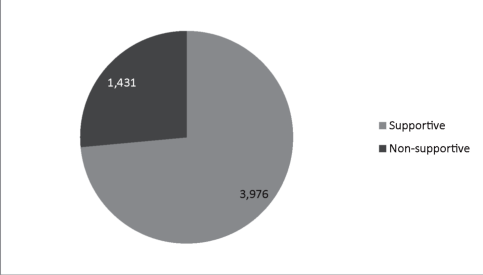
Figure 1 Number of Quality Control Certificates 2012-2016[25]
Table 1 Annual breakdown of Quality Control Certificates sent out[26]
| Year | Type of quality control certificate | Number |
| 2012 | supportive | 837 |
| non-supportive | 416 | |
| 2013 | supportive | 1,452 |
| non-supportive | 287 | |
| 2014 | supportive | 768 |
| non-supportive | 488 | |
| 2015 | supportive | 628 |
| non-supportive | 166 | |
| 2016 | supportive | 291 |
| non-supportive | 74 |
The data shows that when public procurement documents were subjected to ex ante controls in the quality control phase, the majority of contracting authorities received a green light from the DPPC. It was only in 1,431 cases within the 4-year period examined where the launch of the procedure was denied due to non-compliance with the relevant
- 155/156 -
legislation and principles. In these cases, the contracting authority had to change its mind in what to include in the contract documents or in extreme cases decide not to go ahead with the procurement. While there is no data on what change each of these procedures entailed, the errors could relate for example to discriminatory selection criteria, award criteria or technical specifications. These then have to be re-thought by the contracting authority.
Non-supportive certificates amounted to approximately 26% of all certificates issued. This does not mean that errors were found in such a proportion of cases, since the figure concerning supportive certificates also includes those cases where a non-supportive certificate was later changed to a supportive certificate following an amendment of documents (see below). Therefore, the actual rate of errors could in fact be higher. In any case, it can be observed from the data that the DPPC has filtered out a significant number of errors in the control process and in many cases the existence of the controls had a direct impact on the conduct of public authorities. In addition, it can be supposed that the strict control process also had an impact on the conduct of those public authorities that received a supportive certificate. First of all, the existence of the control system might have an effect in "regularizing" procedures in the first place. Secondly, in many of the procedures the DPPC provides comments on the procurement documents and issues the supportive certificates on the basis of conditions that have to be fulfilled by the contracting authority (e.g. amending or completing certain parts of the documents). Therefore, even in many of the 3,976 cases when the supportive certificate was issued, decisions had to take into account the opinion (or potential opinion) of the control body.
It must be remembered that prior to 2017, it was unlawful to start the procedure before the supportive quality control certificate was issued; therefore, it is possible that contracting authorities relied more on the decision of the DPPC to correct any mistakes and were less careful in their decision on what they included in the procurement documents. It is submitted that in the current regime, described above in section 3, contracting authorities will need to take extra care if they decide to launch the procedure before being in possession of a supportive certificates. Otherwise they will have to go through the inconvenience of having to modify the procurement documents and possibly even the conditions for participating in the tender, which in certain cases even leads to an obligation to prolong the time limit to submit tenders.
4.3. Regularity control
In the 2012-2016 period, the DPPC issued the following number of supportive and non-supportive certificates with respect to the regularity phase (integrated into the process):
- 156/157 -
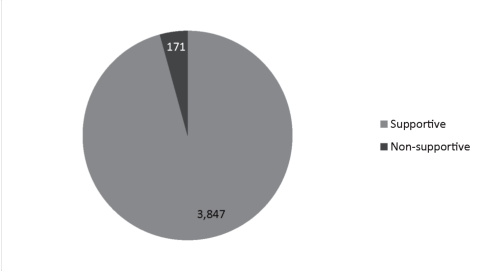
Figure 2 Number of Regularity Certificates 2012-2016[27]
Table 2 Annual breakdown of Regularity Certificates sent out[28]
| Year | Type of regularity certificate | Number |
| 2012 | supportive | 813 |
| non-supportive | 27 | |
| 2013 | supportive | 1,065 |
| non-supportive | 28 | |
| 2014 | supportive | 916 |
| non-supportive | 57 | |
| 2015 | supportive | 862 |
| non-supportive | 51 | |
| 2016 | supportive | 191 |
| non-supportive | 8 |
It can be seen from the data that between 2012 and 2016, compliance with the law during the conduct of the procedure was much higher than during the quality control phase. In the 5-year period only 171 non-supportive regularity certificates were issued, which is a relatively low proportion, compared to the total number of certificates, which was 4,018.
- 157/158 -
This means that only just over 4% of the certificates were non-supportive. Here again there can be a significant overlap between the two categories as in many cases supportive certificates might have been issued later on for procedures which initially received a non-supportive certificate. However, even if we supposed that in all 171 cases the issuing of the non-supportive certificate was followed by a supportive certificate, the rate of procedures with a non-supportive certificate first time round would still be only just below 4.5%.
From the above it is evident that the direct impact of the non-supportive certificates has been much less in the regulatory phase, as there were relatively few cases which resulted in a need for the contracting authority to change its decisions. There can be various explanations for this phenomenon. One possibility is that any irregularities had already been dealt with in the quality control phase and once all the documents were correct, the likelihood of the contracting authority committing errors was reduced. Furthermore, as mentioned in section 3, the DPPC must delegate an observer to each procedure. Normally, the observer only controls the documents submitted and only takes part in the actual procedure in exceptional circumstances. Nevertheless, the observer has the possibility to comment on the actions of the contracting authority, so it is likely that any potential unlawful decision is settled before the issuing of certificates, so in practice very few non-supportive certificates are issued. Still, it can be said that the control process itself has an actual impact on the way decisions are made during the procurement procedure.
As discussed in section 3, until the end of 2016, the award of the contract could not be made until the regularity certificate was issued. However, as from 1 January 2017, the contracting authority may decide to award and even conclude the contract, provided that it comes into force only when the supportive certificate by the DPPC is issued. This creates a new dilemma for contracting authorities and it will be interesting to see in the future how this impacts on the decision-making process.
4.4. Control of contract amendments
The DPPC has also been active in controlling the proposed amendment of contracts. The following table shows the number of such controls and their distribution:
Table 3 Opinions on contract amendments and further comments 2012-2016[29]
| Lawful | 2,502 |
| Not lawful | 519 |
| Partially lawful | 304 |
| Total | 3,325 |
- 158/159 -
The data shows that compared to the number of non-supportive regularity certificates, the proportion of contract amendments deemed "not lawful" by the DPPC has been quite high (around 15%). If we add the "not lawful" and "partially lawful" opinions, then the figure is almost 25%. This is similar to the proportion of non-supportive quality control certificates. This shows that while public authorities seem to take extra care during the conduct of the procedure, compared to the preparatory stages, at the stage of contract amendments they again pay less attention to the legal requirements. Therefore, the direct impact of the control process is also quite significant at this stage of the process.
4.5. Changes in the opinion of the DPPC
An interesting dimension of the control process involves looking at the number of cases which actually led to contracting authorities taking actions to correct any errors in their documents or the decisions affecting the procedure (i.e. "regularize" documents and decisions). The main purpose of the control process is not to punish the contracting authorities for any irregularities, but to help them carry out their procurements in a lawful way, thus avoiding any negative consequence later on both for the contracting authority itself (e.g. having to pay damages) and the EU Member State (e.g. financial corrections).
The number of cases where errors were corrected, so that a supportive certificate was issued in 2015-2016 was distributed between the types of certificate, as follows:
- 159/160 -
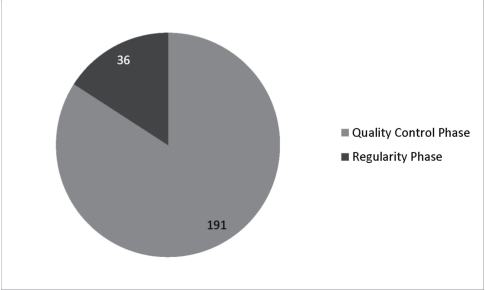
Figure 3 Amendment of documents in a way to change a non-supportive certificate to a supportive certificate 2015-2016[30]
Table 4 Number of quality control certificates[31]
| Year | 2015 | 2016 |
| Supportive | 628 | 291 |
| Non-supportive | 166 | 74 |
Table 5 Number of regularity control certificates[32]
| Year | 2015 | 2016 |
| Supportive | 862 | 191 |
| Non-supportive | 51 | 8 |
In addition, there was a change in the DPPC's position from irregular/combined to regular in case of contract amendments in 2015-2016 in a total of 69 cases.[33] It is unfortunate that no data is available for procedures prior to 2015.
- 160/161 -
Using the data, our findings discussed in sections 4.2 and 4.3 can be confirmed, namely that the control process had much more direct impact on contracting authorities' conduct in the quality control phase than in the regularity phase. There were only 36 occasions in the regularity phase where decisions were "regularized", which is only 16% of the total number of cases when this happened. The 191 cases of changing to a supportive certificate seem reasonable in the light that in 2015-2016 there were 240 non-supportive certificates. The explanation for the difference is that some contracting authorities might have abandoned their procurement procedures as a result of the non-supportive certificate. Nevertheless, it can be seen that in the vast majority of cases errors have been subsequently rectified. The ratio of rectification of errors for the regulatory phase is slightly lower, which shows that controls caused the contracting authorities not to complete the procedure in more cases than in the quality control phase.
The relatively low numbers may also be the result of contracting authorities being more careful about the regularity of their procurements and now they have more experience about the DPPC's approach, i.e. the types of errors which lead to issuing a non-supportive certificate. Therefore, in 2015-2016 the direct impact of controls were less significant than the possible indirect impact resulting from a "fear" of controls and the possible issuing of non-supportive certificates.
4.6. Length of time of public procurement procedures
It is also interesting to consider the average length of time of public procurement procedures as the control system might have impacted on this as well. Unfortunately, the data obtained from the Public Procurement Authority does not separate procedures funded from EU funds and those funded from purely national funds. However, the trend in the speed of conducting procedures between 2013 and the first half of 2017 can be seen from the following table:
Table 6 Average duration of public procurement procedures in Hungary[34]
| Year | Average duration of procedures (days) |
| 2013 | 113.15 |
| 2014 | 138.71 |
| 2015 | 156.31 |
| 2016 | 204.85 |
| 2017 (Q1-Q2) | 212.11 |
- 161/162 -
The table shows that the duration of procedures has increased quite significantly; in fact the average public procurement procedure took almost twice as long in 2017 than in 2013. However, if we look at the decision speed (the time between the deadline for receiving tenders and the award of the contract), Hungary is still deemed acceptable by the European Commission's 2017 Single Market Scoreboard (2017),[35] as the length of decision-making was below 120 days. In this indicator Hungary did better than the Czech Republic, Ireland, Greece, Italy and Slovakia.
Together with this data, the changes in the proportion of EU funded procedures can also be contrasted. It is clear that changes in the proportion of different funding sources in the procurements do not affect the speed at which procurement decisions are made. While for example in 2016, there has been a sharp drop in the percentage of procedures financed from EU funds, the duration of procedures showed a significant increase.
In addition, as shown above, the number of quality control and regularity certificates has also decreased significantly in 2016 in line with the reduction of the number of EU funded procedures. This also suggests that the time taken for public procurement procedures must have also been affected by other factors.
Table 7 Proportion of public procurement procedures connected to EU funds in Hungary[36]
| Year | Value of procurements | Number of procedures |
| 2012 | 54.1% | 43.2% |
| 2013 | 61.1% | 50.8% |
| 2014 | 49.2% | 50.2% |
| 2015 | 38.1% | 45.9% |
| 2016 | 29.9% | 16.2% |
Unfortunately, there is no data available on the actual duration of control procedures carried out by the DPPC. Therefore, it cannot be concluded that any of the increase in the duration of the procedures would be due to an increase in the length of the control process. However, it can be said that with the process of purchasing taking longer and longer, controls lasting several weeks will definitely not help those contracting authorities who wish to carry out EU funded public procurements quickly and effectively. One must remember that the data on the duration only includes potentially the controls integrated in the process, as ex ante controls (at least until 2016) take place prior to the launch of the procedures. This means that the actual process for higher value procedures funded from EU funds will be even longer.
- 162/163 -
4.7. Discussion and recommendations
From the above it is clear that the Hungarian control system has some effect on some public procurement procedures co-financed by EU funds. Direct influence occurs when the result of the control process leads to an actual change in the public procurement documents, potentially affecting even the final outcome of procedures, i.e. to whom the contract is awarded. It can also be supposed that decisions of contracting authorities are also being influenced indirectly since they pay more attention to the interpretation of the rules.
It has been found that the most influence throughout the procedure occurs in the initial stages of the process, when the procurement documents are submitted to the DPPC. In the controls integrated in the process (regularity phase) much fewer errors have been found; therefore, the direct influence on the decisions of contracting authorities have been much less. This means that the biggest effect on the conduct of public authorities occurs, when they are putting the procurement documents together and setting the subject matter and the conditions of the procurement process.
However, the data also shows that in fact the majority of procurements receive a supportive certificate, meaning that no significant errors are found that would preclude permission to go ahead with the procedure. Conditions can of course be set by the DPPC in its decision, but the largest influence occurs when the public procurement is "blocked" by the DPPC and fundamental changes have to be made to the decisions of the contracting authority.
The table below shows the total number of EU funded public procurements in Hungary between 2012 and 2016. This can then be compared to the number of non-supportive certificates issued by the DPPC.
Table 8 Number of public procurement procedures connected to EU funds in Hungary[37]
| 2012 | 3,647 |
| 2013 | 6,038 |
| 2014 | 7,121 |
| 2015 | 6,482 |
| 2016 | 1,398 |
If we consider that from 2012 until 2016 there have been 24,248 procedures and in the 2012-2016 period in "only" 1,431 cases was a non-supportive quality control certificate and in 171 cases a non-supportive regularity certificate issued, then one might conclude that the direct influence of the control procedure only affects an insignificant number of public procurements. However, it must be remembered that the DPPC's control only concerns higher value procurements and the data from the Public Procurement Authority includes
- 163/164 -
all public procurements regardless of their value. Therefore, it can be concluded that the control of the DPPC directly affects a smaller proportion of procurement procedures, but these belong to the higher value categories, therefore it has a more significant effect on the correct use of EU funds than would appear from the data.
Despite the seemingly positive impact on the decision-making, one must not forget that the ex ante control system causes the public procurement procedures to be significantly delayed compared to a situation where no such control existed. It is notable that checking of notices by the Public Procurement Authority (required also for nationally funded procurements), was already thought to delay the launch of the procedures,[38] even though that is a much simpler procedure than the mandatory controls for EU funded procurements. Therefore it is not surprising that contracting authorities in Hungary often complain about the control procedures being too slow and constituting an excessive burden for them when carrying out their public procurements.[39] The average duration of all public procurement procedures has increased in recent years. Although, as mentioned above, there is insufficient data to prove that this trend has been affected by the control process, a faster and more efficient control system could make the job of contracting authorities somewhat easier. Further, it can be seen that even if all the deadlines set out in the legislation were fully observed by the control body (which might not always be the case) it still adds a significant amount of time for the procedures to be completed where both ex ante control and control integrated in the process are used. In the light of this and the data discussed above, it is questionable whether such a complex procedure is really necessary, especially if errors are found only in a small proportion of procedures. It is also questionable whether it is really necessary to check all of the procedures, as this causes a burden and increases the time of the procedures for every single contracting authority engaged in EU funded public procurement.
In light of the number of errors occurring, it is evident that putting a strong system of control for EU funded public procurements is inevitable in Hungary. Nevertheless, the additional time taken by the existence of the control system is not proportionate to the necessary interference in the decision-making of contracting authorities. Therefore, it would be better to have a control system, which takes more into account the necessity of speed and efficiency when conducting public procurements.
In the view of the authors, the Government should re-think the necessity of the current system and take steps to streamline the control process. The starting point should be a more in-depth analysis of the behavioural patterns of contracting authorities as a result of the control process. In a policy context, it could be made sure that policy-makers rely on
- 164/165 -
evidence, not assumptions, as suggested by Bavel et al.[40] in their policy paper written for the European Commission.
Then alternative options should be explored, such as controls based on samples in the way that EU projects are audited in general. The relatively small amount of errors found in the control integrated into the process (regularity phase) also calls its necessity into question, since it seems that the vast majority of contracting authorities comply with the rules, once the procurement documents are in order. Higher value projects could be subjected to mandatory controls; however, it is proposed that the thresholds above which this is done are increased considerably. This would allow the DPPC or any another competent body to focus on the most important cases only where the financial risk is larger.
A concentrating of resources on the riskiest procedures or contracting authorities with a poor record of compliance with the rules could also be a viable option. This would also be an incentive for authorities to comply, since then they would not be in the focus of control bodies, resulting in a reduction of administrative burden for them. In parallel the proportion of procedures subject to ex post control could be increased, which does not have an effect of slowing down procedures so much. It is submitted that by switching to a higher proportion of ex post controls the dissuasive effect of the system would not go away, since the possibility of irregularity procedures and the withdrawal of funding would still remain. However, contracting authorities could be incentivised to focus more on ensuring the legality of procedures as they would not be able to rely on certificates of the DPPC to ensure prior to or during the procedure that what they are doing is lawful. The DPPC already provides significant guidance for contracting authorities on what aspects should be taken into account when preparing and conducting public procurement, highlighting also the most common errors that are found when preparing procedures.[41] Therefore, there is already significant help available from the control body that contracting authorities can rely on.
5. Conclusion
Hungary has established a very strong control system for public procurements funded from EU-funds. This system is used for higher value procurements, while for procedures with a lower estimated value lighter forms of control are used. Our analysis suggests that ex ante controls carried out by the DPPC has an appreciable impact on the decisions of public authorities when designing their procedures. The controls also seem to have a similar direct
- 165/166 -
impact on the decisions relating to the amendment of contracts. In the phase of conducting the procedure, public authorities tend to have a lower error rate; however, informal contacts with the DPPC's observer is also liable to considerably influence procedures. Due to insufficient data, it cannot be proven that the increasing duration of procedures is caused by delays in the control process; nevertheless, in the opinion of the authors, more efficient controls could be a useful step in improving the situation. Even if the deadlines set out in the legislation had been duly kept by the DPPC, the additional time for launching and completing the procedures could be quite significant.
On the positive side, the data shows that in 2015-2016 the majority of errors found by the DPPC have been corrected, so an initial non-supportive certificate was "turned into" a supportive certificate later on. While it can be established that strict controls are necessary in order to avoid the potential loss of EU funds, it is the view of the authors that the actual and potential delays caused by the procedures do not necessarily outweigh the reduction of risks caused by the strong influence of the contracting authorities' decisions. The revised system, which has been in place since 1 January 2017, is a step in the right direction, but has the problem of the lack of legal certainty. So, it is hoped that further revisions will be made to lessen the possible negative impact of controls even further.
- 166/167 -
Bibliography
1. Ed. Sue Arrowsmith: EU Public Procurement Law: An Introduction, Asia-Link Project, Nottingham, 2011.
2. René van Bavel, Benedikt Herrmann, Gabriele Esposito, Antonios Proestakis: Applying Behavioural Sciences to EU Policy-making, European Commission, Joint Research Centre, Institute for Prospective Technological Studies, EUR 26033 EN, 2013.
3. Tiziana Bianchi, Valentina Gumi: The Comparative Survey on the National Public Procurement Systems across the PPN, Rome, December 2010.
4. Department of Contracts, Addressing Fraud and Corruption in Public Procurement, Ministry of Finance of Malta, May 2017.
5. Deputy State Secretariat for Public Procurement Supervision, Minőségellenőrzési útmutató [Guidance on Quality Control], Prime Minister's Office, Budapest, 2017.
6. Deputy State Secretariat for Public Procurement Supervision, Szabályossági útmutató [Guidance on Regularity], Prime Minister's Office, Budapest, 2017.
7. Valentina Dimulescu, Raluca Pop, Irina Madalina Doroftei: Risks of corruption and the management of EU funds in Romania, Romanian Journal of Political Science, 13(2013)/1. 101-123.
8. ECA, European Court of Auditors Annual Report concerning the financial year 2011.
9. ECA, Special Report. Efforts to address problems with public procurement in EU cohesion expenditure should be intensified, European Court of Auditors, 2015.
10. European Commission, Decision of 19.12.2013 on the setting out and approval of the guidelines for determining financial corrections to be made by the Commission to expenditure financed by the Union under shared management, for non-compliance with the rules on public procurement, C(2013) 9527 final.
11. European Union, Public Procurement - Guidance for Practitioners on the avoidance of the most common errors in projects funded by the European Structural and Investment Funds, Brussels, 2015.
12. Fazekas Mihály, Jana Chvalkovska, Jiri Skuhrovec, Tóth János István, Lawrence Peter King: Are EU funds a corruption risk? The impact of EU funds on grand corruption in Central and Eastern Europe, Working Paper series: CRCB-WP/2013:03, GTI-WP/2013:03. Budapest, 2013. 20. 13.
13. FCCA, Supervision of public procurement. Finnish Competition and Consumer Authority, 2017. Source: https://www.kkv.fi/en/facts-and-advice/competition-affairs/supervision-of-public-procurement (accessed 06.05.2018).
14. Jacek Mazur: A lengyel számvevőszék hozzájárulása a jogalkotáshoz és más legfőbb ellenőrző intézmények tapasztalatai, Pénzügyi Szemle, 61(2016)/3. 349-366.
15. Nyikos Györgyi, Soós Gábor: Kohéziós Politika és közbeszerzés együttes alkalmazásának lehetőségei és kihívásai az új szabályozás fényében, Közbeszerzési Szemle, VI(2016)/5. 45-60.
16. Nyikos, Györgyi, Robert, Talaga: Cohesion Policy in Transition. Comparative Aspects of the Polish and Hungarian Systems of Implementation; Comparative Law Review (Torun) 18 Pp. 111-139, 29 P. (2014)
17. OECD, Monitoring of Public Procurement, Public Procurement Brief 27, 2013.
18. Rene G. Rendon, Juanita M. Rendon: Auditability in public procurement: An analysis of internal controls and fraud vulnerability, Int. J. Procurement Management, 8(2015)/6. 710-730.
19. SCA, The Swedish Competition Authority's supervision over public procurement, Adm no. 119/2016.
20. Single Market Scoreboard, Performance per Policy Area: Public Procurement. (Reporting period: 01/2016-12/2016). European Commission, 2017.
21. Tátrai Tünde: A közbeszerzés jogi és hatékonysági aspektusai, Vezetéstudomány, XLI(2010)/7-8. 68-76.
22. Tátrai, Tünde; Nyikos, Györgyi: The Uses and Abuses of Public Procurement in Hungary. In Gia, Luigi Albano; Keith F. Snider; Khi V Thai: Charting a Course in Public Procurement: Innovation and Knowledge Sharing. Boca Raton, PrAcademics Press, 2013. 29-54, 26.
23. Sergiy Yaremenko, Olexandr Shatkoviskiy: The Control of Public Procurement - Polish Experience Relevant to Ukraine. Source: http://eupublicprocurement.org.ua, (accessed 06.05.2018).
- 167/168 -
Dr. habil. Györgyi Nyikos PhD (nyikos.gyorgyi@uni-nke.hu) Associate Professor at the Hungarian National University of Public Service. Györgyi Nyikos was formerly the Head of the EU Competence Centre at MFB Hungarian Development Bank Ltd, Cohesion Policy First Counsellor at the Permanent Representation of Hungary to the EU, Deputy State Secretary for Development Affairs and Deputy Governor of the EBRD Governing Council. She was also General Counsel of the Office of Fiscal Council of the Republic of Hungary and prior to that Vice-President for public administration at the National Office for Regional Development. Her research work is in cohesion/regional policy, public procurement and public finance management.
Gábor Soós (soos.gabor.gergely@hallg.uni-nke.hu) PhD student at the National University of Public Service and Legal Advisor at MFB Hungarian Development Bank Ltd., he works with the legal aspects of the implementation of financial instruments funded from the ESI Funds. He is also involved in projects which aim at the training of civil servants and the improving of public services. His main research activities are in public procurement, EU cohesion policy, financial instruments and EU internal market rules. ■
NOTES
[1] Public procurement in the EU is governed by the public procurement directives, i.e. Directive 2014/23/EU, Directive 2014/24/EU and Directive 2014/25/EU. These provide the basis for national public procurement legislation in all EU Member States.
[2] European Commission, Decision of 19.12.2013 on the setting out and approval of the guidelines for determining financial corrections to be made by the Commission to expenditure financed by the Union under shared management, for non-compliance with the rules on public procurement. C(2013) 9527 final.
[3] The general EU threshold for goods and services is EUR 144,000 for central government authorities, EUR 221,000 for other contracting authorities and EUR 5,548,000 for works contracts. A separate control system exists for certain public procurements funded from purely national funds, but this article focuses on EU funded public procurements.
[4] European Union, Public Procurement - Guidance for Practitioners on the avoidance of the most common errors in projects funded by the European Structural and Investment Funds, Brussels, 2015. 11.
[5] E.g. in-house procurement, research and development services etc.
[6] Ed. Sue Arrowsmith: EU Public Procurement Law: An Introduction, Asia-Link Project, Nottingham, 2011. 288.
[7] ECA (2015): op. cit. 8.
[8] ECA, European Court of Auditors Annual Report concerning the financial year 2011.
[9] Fazekas Mihály, Jana Chyalkoyska, Jiri Skuhrovec, Tóth János István, Lawrence Peter King: Are EU funds a corruption risk? The impact of EU funds on grand corruption in Central and Eastern Europe, Working Paper series: CRCB-WP/2013:03, GTI-WP/2013:03. Budapest, 2013. 20.
[10] Valentina Dimulescu, Raluca Pop, Irina Madalina Doroftei: Risks of corruption and the management of EU funds in Romania, Romanian Journal of Political Science, 13(2013)/1. 101-123.
[11] Rene G. Rendon, Juanita M. Rendon: Auditability in public procurement: An analysis of internal controls and fraud vulnerability, Int. J. Procurement Management, 8(2015)/6. 710-730.
[12] Bianchi, Guidi: op. cit.
[13] Sergiy Yaremenko, Olexandr Shatkoviskiy: The Control of Public Procurement - Polish Experience Relevant to Ukraine, Source: http://eupublicprocurement.org.ua, (accessed 06.05.2018).
[14] Department of Contracts, Addressing Fraud and Corruption in Public Procurement, Ministry of Finance of Malta, May 2017.
[15] SCA, The Swedish Competition Authority's supervision over public procurement, Adm no. 119/2016.
[16] FCCA, Supervision of public procurement. Finnish Competition and Consumer Authority, 2017. Source: <https://www.kkv.fi/en/facts-and-advice/competition-affairs/supervision-of-public-procurement> (accessed 06.05.2018).
[17] Yaremenko, Shatkoviskiy: op. cit.
[18] Jacek Mazur: A lengyel számvevőszék hozzájárulása a jogalkotáshoz és más legfőbb ellenőrző intézmények tapasztalatai, Pénzügyi Szemle, 6i(2016)/3. 349-366.
[19] Directive 89/665/EEC on the coordination of the laws, regulations and administrative provisions relating to the application of review procedures to the award of public supply and public works contracts (as amended by Directive 2007/66/EC).
[20] Government Decree No. 272/2014, ss.101-104.
[21] Government Decree No. 272/2014, ss.105-107.
[22] Government Decree No. 272/2014, s.108.
[23] Government Decree No. 272/2014, ss.98-100.
[24] Prime Minister's Office Decree No. 44/2015.
[25] Source: data received from the DPPC.
[26] Source: data received from the DPPC.
[27] Source: data received from the DPPC.
[28] Source: data received from the DPPC.
[29] Source: data received from the DPPC.
[30] Source: data received from the DPPC.
[31] Source: data received from the DPPC.
[32] Source: data received from the DPPC.
[33] Source: data received from the DPPC.
[34] Source: Public Procurement Authority. Data includes all procedures with a contract notice both above and below the public procurement thresholds. Data is based on the dates provided by contracting authorities in the relevant notices.
[35] Single Market Scoreboard, Performance per Policy Area: Public Procurement. (Reporting period: 01/201612/2016), European Commission, 2017.
[36] Source: Public Procurement Authority.
[37] Source: Public Procurement Authority.
[38] Tátrai Tünde: A közbeszerzés jogi és hatékonysági aspektusai, Vezetéstudomány, XLI(2010)/7-8. 68-76.
[39] The system applicable as from 1 January 2017 has the aim of lessening the delays caused by the controls, however as discussed above, launching the procedure before controls are finished leads to less legal certainty and possible problems later on in the process.
[40] René van Bavel, Benedikt Herrmann, Gabriele Esposito, Antonios Proestakis: Applying Behavioural Sciences to EU Policy-making, European Commission, Joint Research Centre, Institute for Prospective Technological Studies, EUR 26033 EN, 2013. 4.
[41] Deputy State Secretariat for Public Procurement Supervision, Minőségellenőrzési útmutató [Guidance on Quality Control], Prime Minister's Office, Budapest, 2017; Deputy State Secretariat for Public Procurement Supervision, Szabályossági útmutató [Guidance on Regularity], Prime Minister's Office, Budapest, 2017.
Lábjegyzetek:
[1] The author is PhD, Associate Professor, National University of Public Service, nyikos.gyorgyi@uni-nke.hu.
[2] The author is LLM, PhD student, National University of Public Service; Legal Advisor, MFB Hungarian Development Bank Ltd, soos.gabor.gergely@hallg.uni-nke.hu.