

Bálint Teleki[1]: The Role of Finance in EU Climate Resilience[1] (Publico, 2023/3., 49-68. o.)
https://doi.org/10.32575/ppb.2023.3.3
Abstract
This paper examines the essential financial instruments as the pillars of the climate resilience of the European Union. The research is based on qualitative methodology, i.e. the analysis of relevant policy documents, budgetary documents and legal sources, as well as the review of relevant literature. In order to emphasise the importance of the issue discussed, first of all the relevant terms and definitions such as climate risk and climate resilience are set out, and the whole issue of climate change is briefly outlined. After that, the two main sections of the article are structured as follows. First the role of the budgetary tools of the EU is discussed - including the latest facilities such as the 2021-2027 MFF, NextGenerationEU and RRF. The second main point is established around the role of the central bank system - including the European Central Bank and the central banks of the member states - in climate resilience. The last chapter before the final discussion briefly sketches the experimental co-financing tools - mostly pilot projects - which are aimed at the energy efficiency of the infrastructure.
Keywords: central banks, climate finance, EU ETS, European Central Bank, European Commission, MFF 2021-2027, NextGenerationEU, project finance, RRF
Introduction
Climate change is recognised as an imminent threat globally, and Europe is no exception to this. A longstanding objective of the European Union (EU) is to change Europe in such
- 49/50 -
a manner as to reduce or deflect the impacts of the climate change as much as possible. This attitude was strengthened by the Paris Agreement on climate change and by the UN 2030 Agenda for Sustainable Development in 2015.
This article undertakes to examine the EU's climate resilience from a financial perspective. This involves both the funding of programmes related to the climate resilience programmes of the EU and the actions taken by the EU in order to make the whole European economy greener. The first chapter will briefly introduce the phenomenon known as climate change and the term 'climate resilience' along with some climate specific financial challenges by identifying the main types of climate risks. In connection with this, the reform of the EU Emission Trading System will be briefly summarised. Subsequently, the article will be structured around three pillars.
The first pillar is dealt with in the section which focuses on the structure of the EU budget, and highlights the aspects of the 2021-2027 Multiannual Financial Framework (MFF), the NextGenerationEU and the Recovery and Resilience Facility (RRF) which are relevant to the topic of this paper. A short sub-section will be devoted to one of the most interesting phenomena linked to the contemporary EU policy making, which is the ever more present (soft) requirement of the horizontal presence of green and digital solutions.
The second pillar focuses on the role of the European Central Bank (ECB) and the European System of Central Banks (ESCB) in the EU's climate resilience, along with the role of the national central banks of the EU member states, since there is a significant relationship between the supranational and the national level. This section also discusses the relevant actions of other EU institutions and agencies, such as the European Commission or the European Banking Authority (EBA).
Finally, for the third pillar of the article, the last question analysed concerns whether the so-called smart finance is relevant to EU climate resilience, focusing on both already existing good practices and future possibilities. In the last section, entitled 'Discussion' the main points made in the article are summarised along with an outline of the questions which are in need of further research and discussion.
Regarding methodology, the article is based on qualitative methods, mainly on the analysis of the relevant strategic documents, budgetary documents reports, laws and soft law. The author drew mostly on legal material - including soft law documents - such as official communications, press releases, presentations, etc. issued by the European Commission, the European Central Bank and other institutions and agencies of the EU.
The reader may find that the article covers rather too many issues and in places does not go into as much detail as one might desire. This is intentional, as the author would like to provide an overview of the abovementioned three pillars, which he identified as the most important parts of the field specified in the title of the article, while not exceeding the recommended length of a journal article.
- 50/51 -
Impacts of the Climate Change on the European Union
The Joint Research Centre of the European Commission (JRC) conducted a study in 2020 with the title Climate Change Impacts and Adaptation in Europe and presented its results in an extensive report using the acronym PESETA IV (Projection of Economic Impacts of Climate Change in Sectors of the European Union Based on Bottom-up Analysis No. IV).
This study[2] presented many shocking conclusions - including but not limited to the following. (This model is based on the worst-case scenario - i.e. what would happen without climate adaptation and mitigation resulting in a warming of 3.0 °C or more. Hopefully, and based on current global and EU practice, this is just a theoretical scenario, and the warming will not exceed 1.5 °C.) In the event of a rise in temperatures of 3.0 °C or more:
- The exposure of the population of the EU and the UK to the elements of nature would rise dramatically: e.g. 300 million citizens would be exposed to extreme heatwaves; the number of citizens exposed to wildfires would increase by 15 million for at least 10 days per year.
- Drought and (river and coastal) flood losses would increase in an extreme way, both in financial terms and by the number of exposed citizens, e.g. by 2100 the coastal flood losses would amount to €250 billion/year, effecting a population 22 times larger than the population affected today.
- Calculated in comparison with today's economy, annual welfare loss in the EU and UK could represent 1.4% of GDP.
- Ecological domains would shift northwards, resulting in severe changes of the prevailing domains in southern Europe and the boreal areas, and the encroachment of the tropical domain into Europe.
- The burden of climate change shows a clear north-south divide, with southern regions in Europe impacted more than northern areas (by a wide spectrum of impacts ranging from drops in wheat and maize yield by more than 10% and a reduction in hydropower output to much more frequent heatwaves and considerable welfare losses in general).
In order to prevent the realisation of this worst-case scenario effective and rapid action has to be taken in the fields of climate mitigation and adaptation. In general, the climate resilience of the EU has to be established and maintained. It is obvious that Europe alone cannot prevent any of this, but Europe plays an important role as an international actor influencing almost the whole global community on issues like this (see below).
- 51/52 -
What does the term 'climate resilience' mean?
The definition of climate resilience is best approached through the lens of international actors. The largest global actor in this field is the United Nations, especially its Bureau of the UN Framework Convention on Climate Change (UNFCCC), which publishes annual reports entitled Climate Action Pathway - Climate Resilience whose executive summaries of the 2020 and 2021 editions will be used for this article.
UNFCCC states that climate resilience can be achieved through working towards three separate but connected goals: 1. Resilient people and livelihoods; 2. Resilient Business and Economies; and 3. Resilient Environment Systems, and puts the emphasis on people.[3] On the other hand, UNFCCC balances the focus between people and nature, and introduces another trichotomy based on the Race to Resilience campaign: 1. Urban resilience; 2. Rural resilience; and 3. Coastal resilience.[4] However, both reports agree that building climate resilience requires mitigation and adaptation actions that must be combined to tackle the current and future impacts of climate change.[5] To understand the approaches recommended in these reports, it is therefore first necessary to define the terms 'mitigation' and 'adaptation'.
According to NASA, mitigation - reducing climate change - involves reducing the flow of heat-trapping greenhouse gases into the atmosphere, either by reducing sources of these gases (for example, the burning of fossil fuels for electricity, heat, or transport) or enhancing the 'sinks' that accumulate and store these gases (such as the oceans, forests and soil). Adaptation - adapting to life in a changing climate - involves adjusting to actual or expected future climate, with the goal of reducing our exposure to the risks from the harmful effects of climate change, including making the most of any potential beneficial opportunities associated with climate change.[6]
At this point the most important strategic document of the EU climate resilience is probably the European Green Deal. The European Green Deal traces a pathway to climate change neutrality and sustainable development, by transforming the EU into a low-carbon, resource-efficient and prosperous society and economy (i.e. mitigation), and includes a new and revised EU Adaptation Strategy.[7] Furthermore, although the European Environmental Agency (EEA) is a decentralised agency with somewhat restricted competences, lacking any sort of direct powers - focusing on mostly methodological, statistical, supportive and advisory tasks and networking activities (see 401/2009/EC Regulation, especially Articles 2-5) - the Climate-ADAPT system was established as a partnership between the Commission (to be precise its DG CLIMA) and the EEA. The Climate-ADAPT includes
- 52/53 -
a wide range of subjects related to climate adaptation, from knowledge management and sharing to policy-making.[8]
It is important to note that the EU considers itself a global actor in this field, which means it tries to shape the global trends related to climate resilience. These solutions belong to the field of soft power, which is increasingly important in the European policy mix.[9]
Climate specific challenges in finance
Climate risks can be divided into two main groups: 1. physical risks; and 2. transition risks. Physical risks involve financial losses/increased costs from the impact of chronic and acute physical events. Transition risks arise from the costly adjustment towards a low-carbon economy and it is typically prompted by changes in climate and/or environmental policy, technological advances, and/or shifts in public preferences.[10]
A significant share of the market is exposed to these risks, especially to transition risk. According to Ozturk et al. the emergence of environmental policies to control and reduce greenhouse gas emissions has exposed firms in energy intensive industries to significant transitional climate risks due to the potential costs involved in adjusting their business operations to a heavily regulated, low carbon economy.[11] One way to handle this exposure is the use of emission trading systems. Carbon emissions trading schemes offer a relatively cost-effective alternative for such firms as these contracts allow them to trade emissions allowances, thus offering a tool to manage emission-related costs internally. Such a system has existed in the EU since 2005.
The author has no intention to deeply analyse the emission trading system of the European Union (ETS) in the present article, although it is worth briefly discussing some currently ongoing amendments to the system. An ordinary legislation procedure is in progress, which aims at making the rules of the ETS much stricter through the following provisions: 1. a reduced cap and a more ambitious linear reduction factor for GHG emissions; 2. revised rules on the free allocation of allowances and the market stability reserve; 3. extension of the ETS to maritime transport; 4. a separate new ETS for buildings and road transport; 5. an increase in the Innovation and Modernisation Funds and new rules on using ETS revenues. The proposal is currently being negotiated by the European Parliament and the Council, but according to the timeline, the end of the procedure is to be expected soon.[12]
In addition to this, a new regulatory framework is being introduced called the Effort Sharing Regulation (ESR). The ESR, adopted in 2018, sets national targets for emission reductions from road transport, the heating of buildings, agriculture, small industrial
- 53/54 -
installations and waste management. These sectors - which had not been previously included in the EU Emissions Trading System (EU ETS) - currently generate about 60% of EU greenhouse gas emissions.[13]
However, as the idea behind all emission trading systems is that the tradeable amount of emission has to be gradually reduced, a long-term solution would instead be the 'greening' of the asset portfolios of banks and companies. The section below will examine how the central banks and financial supervisors can stimulate the latter.
Goals Reflected in the EU Budget
This section will examine the strictly interpreted budgetary aspects of the topic under discussion, through the relevant budgetary documents. Conclusions are drawn in relation to the present role of the 'green' requirements of contemporary EU policy-making, especially its budgetary impact.
The 2021-2027 MFF and the NextGenerationEU
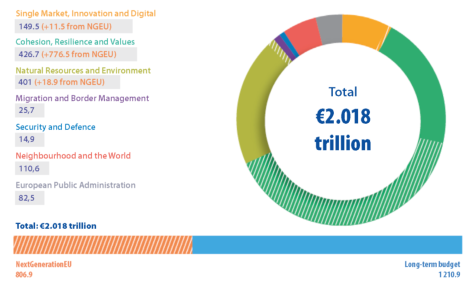
Figure 1: The NextGenerationEU in the climate finance
Source: European Commission 2021b: 6
- 54/55 -
The Covid-19 pandemic created a formidable challenge for the European Union. However, it also represented an opportunity, and the crisis management on the part of the EU included a huge injection of extra resources under the umbrella of NextGenerationEU recovery package, almost doubling the original budget of the 2021-2027 MFF (see Figure 1), as well as adding extra resources for the purposes of 'Natural Resources and Environment', - although this particular field received only around 5% extra compared to the original budget. The total value of the NextGenerationEU package is €806.9 billion, of which €723.8 billion is the Recovery and Resilience Facility (RRF) - €338.0 billion is provided as grants, while another €358.8 billion is provided in the form of loans.[14]
The set of priorities of the 2021-2027 MFF and the NextGenerationEU places a special emphasis on environmental and climate-related issues, along with digitalisation. 50% of the resources are allocated to: 1. research and innovation; 2. climate and digital transition via the Just Transition Mechanism (see below); and 3. for recovery, preparedness and health issues - another type of resilience the EU is in desperate need of. Another 30% will be spent entirely on fighting climate change - the highest share that this field has ever received in any EU budgets. The remaining 20% is allocated to digital transformation. Additionally, in the years 2026 and 2027, 10% of the annual budgets will be spent on the preservation of biodiversity.[15]
"The programme for the environment and climate action (LIFE) aims to facilitate the shift towards a sustainable, circular, energy-efficient, renewable energy-based, climate-neutral and climate-resilient economy. LIFE will contribute to reduce greenhouse gas emissions and our vulnerability to the harmful effects of climate change to protect, restore and improve the quality of the environment - including air, water and soil - and to halt and reverse biodiversity loss. Moreover, it will tackle the degradation of ecosystems, including through supporting the implementation and management of the Natura 2000 network, thereby contributing to sustainable development."[16] As Figure 2 shows, this programme lacks NextGenerationEU funding.
"The Just Transition Mechanism has been proposed as part of the European Green Deal investment plan to make sure that no one and no region is left behind in the transition to a climate-neutral economy. The primary goal of the mechanism is to provide support to the most negatively affected regions and people and to help alleviate the socio-economic costs of the transition."[17] In contrast to the LIFE programme, the Just Transition Mechanism receives more than half of its funding from the NextGenerationEU budget (see Figure 3).
- 55/56 -
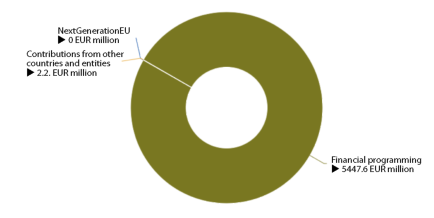
Figure 2: LIFE and the NextGenerationEU
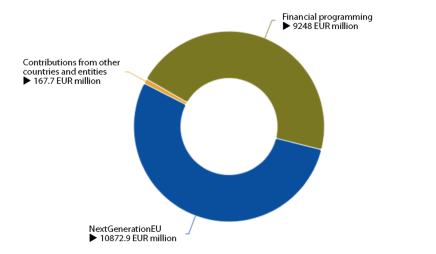
Figure 3: Just Transition Mechanism and the NextGenerationEU
- 56/57 -
The annual budget for the financial year 2022
Table 1 shows that beyond the LIFE programme, the Just Transition Mechanism (and Fund) and the support administrative expenditures, there are two further relevant contributors to EU climate resilience, namely the decentralised agencies and the pilot projects (and preparatory actions).
Table 1: Climate action in the 2022 annual budget of the EU
General summary of appropriations (2022 and 2021) and outturn (2021)
| Title chapter | Heading | Appropriations 2022 | Appropriations 2021 | Outturn 2020 | |||
| Commitments | Payments | Commitments | Payments | Commitments | Payments | ||
| 09 01 | Support administrative expenditure of the 'environment and climate action' cluster | 23 529 592 | 23 529 592 | 20 670 583 | 20 670 583 | 10 532 177,14 | 10 532 177,14 |
| 09 02 | Programme for the environment and climate action (life) | 732 015 892 | 505 003 984 | 717 877 237 | 350 843 819 | 579 020 837,52 | 405 961 552,87 |
| 09 03 | Just transition fund (JTF) | 1 159 748 744 | 1 315 000 | 1 136 966 552 | p. m. | ||
| 09 04 | Public sector loan facility under the just transition mechanism (JTM) | p. m. | p. m. | p. m. | p. m. | ||
| 09 10 | Decentralised agencies | 54 147 639 | 54 147 639 | 50 761 533 | 50 761 533 | 44 753 257,- | 44 753 257,- |
| 09 20 | Pilot projects, preparatory actions, prerogatives and other actions | 8 121 000 | 10 848 233 | 3 500 000 | 9 273 323 | 16 025 862,- | 5 613 986,23 |
| Title 09 - Total | 1 977 562 867 | 594 844 448 | 1 929 775 905 | 431 549 258 | 650 332 133,66 | 466 860 973,24 | |
Source: European Commission 2022:2
Two decentralised agencies are entitled to funding under Title 09, and these are the European Chemicals Agency (ECHA) and the European Environment Agency (EEA). According to the explanation in the document, in case of the ECHA, the appropriation is intended to cover staff, administrative and operational expenditures for the activities of the agency related to the implementation of legislation on the export and import of hazardous chemicals, on persistent organic pollutants, on waste and on the quality of water intended for human consumption. The EEA is organically linked to Title 09. Both agencies also receive funding from the European Free Trade Agreement (EFTA), and the EEA also receives funding
- 57/58 -
from candidate countries as well as from potential candidate countries from the Western Balkans.[18]
Appropriations for 'Pilot projects' are aimed at testing the feasibility and usefulness of these projects of an experimental nature, and appropriations for 'Preparatory actions' are for financing the implementation of preparatory actions in the field of applications of the Treaty on the Functioning of EU and the Euratom Treaty, designed to prepare proposals with a view to the adoption of future actions.[19]
Digital and Green: The new informal horizontal requirements in EU policy-making
It cannot be overlooked that in EU policy-making nowadays two aspects are always taken into consideration, and the policy solutions chosen always try to meet these two criteria, with the intention of making everything as 'green' and 'digital' as possible. This is confirmed by examining policy-shaping in three very different fields in the past few years - and further examples can easily be found elsewhere.
The EU's new Industrial Strategy, introduced in 2020 has three key priorities, two of which are: "making Europe climate-neutral by 2050 and shaping Europe's digital future."[20] Among the five key priorities of the Erasmus+ Implementation Programme, the first is: "Making Erasmus+ a more environmentally sustainable programme and fostering sustainable behaviours" and the third is: "Promoting the use of digital tools and the development of digital skills."[21] Even for the Data Act, which is per definitionem a digital development, it is emphasised that: "By having more information, consumers and users such as farmers, airlines or construction companies will be in a position to take better decisions such as buying higher quality or more sustainable products and services, contributing to the Green Deal objectives."[22]
This clearly suggests that, with the current post-European Green Deal policy-making attitude, virtually any policies made and funded by the EU contribute to the green and sustainable (and digital) development of Europe, therefore from a financial aspect, the funding of almost all policies should be considered indirect funding of a greener and more sustainable (and more digital) Europe.
- 58/59 -
The Role of the ECB and the Central Banks of the Member States
Greening the economy is a rather resource-intensive task, and one of the most important of the resources required is an appropriate means of financing. This is not surprising, considering that in order to make the economy gradually more sustainable, whole sectors with a serious history and even, ad absurdum, whole geographical regions must be excluded from the asset portfolios, especially those whose products/services can be replaced with sustainable alternatives. This is a serious challenge, making green finance solutions indispensable. Accordingly, credit institutions play a crucial role in the transition to a low-carbon and climate resilient economy. However, the inclusion of central banks in the fight against climate change poses another challenge, as contradictions can arise between the classical main target of price stability and the green mandate of present requirements. Climate change contributes to the volatility of inflation as well as to increases in the price level itself.[23] (The so-called 'green inflation' means three different types of inflation, namely: 1. climateflation - which is caused by the physical impact of climate change, which is a physical-type risk; 2. fossilflation - which is caused by our global exposure and dependence on the hydrocarbons; and 3. greenflation - which primarily affects the raw materials necessary for the transition risks, i.e. it is a transitional risk.[24])
According to Schmidt (2021), when it comes to sustainability, the ECB has so far displayed varying degrees of ambition, and should expand its commitment within its mandate. The problem with the latter requirement is that the mandate of the European System of Central Banks (ESCB), including the ECB covers issues of sustainability in a rather indirect and implicit way.[25] According to the first sentence of Article 127 para (1) of the Treaty on the Functioning of the European Union (TFEU), the primary mandate of the ECB - as is usual for the central banks of European countries - is maintaining price stability. The second sentence of Article 127 para (1) TFEU adds: "Without prejudice to the objective of price stability, the ESCB shall support the general economic policies in the Union with a view to contributing to the achievement of the objectives of the Union as laid down in Article 3 of the Treaty on European Union [TEU]." The second sentence of Article 3 para (3) of TEU declares: "It [i.e. the EU] shall work for the sustainable development of Europe based on balanced economic growth and price stability, a highly competitive social market economy, aiming at full employment and social progress, and a high level of protection and improvement of the quality of the environment." The latter provision explicitly declares sustainability to be a value of the EU that should be promoted by the EU, but as was mentioned before, from the aspect of the ECB/ESCB there is no explicit delegation of any kind of its tasks and/or competences in this regard.
- 59/60 -
This does not mean, however, that the ECB does not have contributions to make in the field, but rather that this contribution is theoretical at this point. The ECB follows the relevant action plan of the Commission[26] which sets the three following goals for sustainable finance:
- "reorient capital flows towards sustainable investment in order to achieve sustainable and inclusive growth;
- manage financial risks stemming from climate change, resource depletion, environmental degradation and social issues; and
- foster transparency and long-termism in financial and economic activity."
In December 2019, the European Banking Authority (EBA) issued its own sustainable finance action plan. It explicitly aimed at incorporating the ESG approach into its everyday life - here strictly focusing on banking operations. A large part of the document deals with the management of ESG-related risks, discussing related expectations and instructions.[27]
In July, 2021[28] the ECB issued a press release setting some more specific goals, stating that the ECB Governing Council is committed:
- "to further incorporating climate change considerations into its monetary policy framework;
- to expanding its analytical capacity in macroeconomic modelling, statistics and monetary policy with regard to climate change;
- to including climate change considerations in monetary policy operations in the areas of disclosure, risk assessment, collateral framework and corporate sector asset purchases;
- to implementing the action plan in line with progress on the EU policies and initiatives in the field of environmental sustainability disclosure and reporting."
Beyond the above commitments, a "systemic climate stress test" was carried out in 2021, which made two major contributions: 1. It started the tradition of ECB climate stress tests. 2. It found and emphasised that acting early - which in this context means pre-dominantly taking mitigation measures - is crucial, especially for and because of those banks and companies which are more exposed to the impacts of climate change.[29]
In preparation for the 2022 climate stress test, the ECB accepted the Network for the Greening of the Financial System (NGFS) model of scenarios, which takes into consideration both transition risks (long- and short-term) and physical risks. For the long-term transition risks the so-called NGFS Phase II trichotomy model was accepted, containing scenarios named 'Net Zero 2050', 'Delayed Transition' and 'Current Policies' whose conclusions ranged from optimistic to pessimistic. Short-term transition was deemed to be a median
- 60/61 -
'Delayed Transition' scenario. In terms of physical risks, the document distinguished drought and heat risks from flood risks.[30]
The key findings of the actual ECB 2022 climate stress test were - including but not limited to - the following: 1. "It was a useful learning exercise for banks and supervisors [...]. 2. Banks have made considerable progress with respect to their climate stress-testing capabilities, (but there are still) many deficiencies [...]. 3. Climate risks are relevant for the large majority of significant institutions directly supervised by the ECB. 4. Many banks appear to lack clearly defined long-term strategies [...]." 5. Physical risks and short-term transition risks can also do considerable damage. 6. "Banks have started to integrate climate risk into their stress-testing frameworks", and some of them have developed their own climate stress tests.[31]
The ECB indisputably does what it can do within its mandate, which is rather restricted as was illustrated above. Therefore, the role of the national central banks and their initiatives cannot be overstated. It was not long ago that central banks started to realise that they too have a role in building a climate resilient economy. Parallel to that, many governments also realised the same, which influenced the shaping of the secondary mandates of central banks, since the so-called 'sustainability mandates' have a certain importance as a commitment and also expectation from the national legislator and the government towards the national central bank regarding the importance of the fight for sustainability with financial instruments.
Dikau and Volz (2021) found in there comprehensive research - based on the IMF Central Bank Legislation Database - that among the 135 investigated central banks 70 have a sustainability mandate, although among these only 15 countries and one monetary union have so-called explicit (or direct) sustainability mandates, meaning that only in these countries are the central banks charged with mandates that include an explicit objective for the bank to assist in the promotion or support of sustainable economic growth or development.[32] (For instance, with effect as of 2 August 2021, Article 3 para (2) of Act CXXXIX of 2013 on the Hungarian National Bank [Magyar Nemzeti Bank - MNB] was amended as follows: "Without prejudice to its primary objective, the MNB shall support the maintenance of the stability of the system of financial intermediation, the enhancement of its resilience, its sustainable contribution to economic growth; furthermore, the MNB shall support the government's economic policy and its policy related to environmental sustainability, using instruments at its disposal.")
Implicit (or indirect) sustainability mandates are those cases where the other secondary mandates shall be interpreted in the context of the goal of sustainable development. The aforementioned 15 countries with explicit sustainability mandates include only two EU member states (the Czech Republic and Hungary) and the aforementioned monetary union is not the Eurozone (it is the West African Monetary Union). On the basis of this, it can be
- 61/62 -
concluded that the West European central banks do not have sustainability mandates, but this does not mean that they would not fight to achieve such goals.[33]
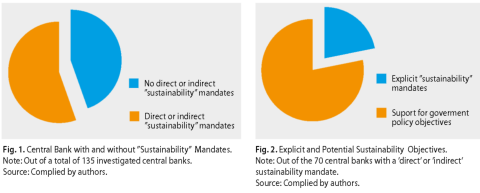
Figure 4: Central bank sustainability mandates globally
Source: Dikau-Volz 2021: 9
Bergius (2021) puts emphasis on the importance of the Network for Greening the Financial System (NGFS).[34] This is an international network founded in 2017, which consists of central banks and financial supervisors - at the moment it has 116 members and 19 observers - who are committed to the fight for sustainable finances. The ECB and many national central banks in the EU are members of this network. In fact, the initiative to establish the NGFS came from the Swedish Riksbank and it was realised with the active help of the Banque de France.
According to Bergius (2021), the two greatest innovators among the European central banks in the field of sustainable finances are De Nederlandsche Bank (DNB) and the Banque de France (BdF). Beyond their participation in the NGFS, these banks are the key initiators of the TCFD (Financial Stability Board's Task Force on Climate-Related Financial Disclosures) reporting, which became a standard in climate-risk-related reporting. The DNB hopes to "inspire other central banks as well as the financial sector" and engages in discussion with the risky issuers. In 2016 a sustainable financing platform was launched by the DNB which became involved in the Dutch Climate Agreement of 2018, and in 2019 most of the Dutch financial sector started to implement its methods of measuring the carbon footprints of investments and loans. The BdF accepted its own Responsible Investment Charter back in March, 2018, which is a key document of ESG integration in investment policies as a contribution to sustainable finance.[35]
- 62/63 -
Some other examples that Bergius (2021) mentions as good examples are the central banks of countries which are not members of the EU (Norges Bank, Schweizerische Nationalbank) or which are no longer members (Bank of England), but still part of the European financial sector and of the NGFS. Interestingly, the Deutsche Bundesbank is a rather controversial actor.[36] On the one hand they have been trying to implement ESG aspects since 2007, but on the other hand their infamously conservative attitude towards the role of central banks is an obstacle in the way of progress. Even recent leaders, like Governor Jens Weidmann (2011-2021) openly stated that monetary policy and environmental issues should not be mixed.[37]
Regarding the Hungarian National Bank, it has to be mentioned that the MNB does exemplary work in the field of green finances, beside and beyond its explicit sustainability mandate, and its activities in this regard began years before the aforementioned mandate was provided. The MNB Green Program was published on 11 February 2019, introducing an elaborate three-pillar structure for the realisation of sustainable convergence both in the Hungarian economy and in the framework of the MNB.[38] These pillars are: 1. Financial sector related program points; 2. Social and international relations; and 3. Green transition and operation of the MNB. The so-called Green Recommendations ("on climate-related and environmental risks and the integration of environmental sustainability considerations into the activities of credit institutions") are also proof of the early awakening of the MNB.[39]
Examples of Innovative Financing Schemes in the EU
According to the dictionary of the Law Insider (2022), smart financing means that "the interventions that are proven to be the best value for money are financed and delivered efficiently, with a focus on results", e.g. 'Smart financing for smart buildings' means 'sustainable energy renovation in buildings', which "is an area where pooling of projects and public guarantees can make a huge difference".[40] The definition of the somewhat different concept of innovative finance, according to the ILO (2022) is "a set of financial solutions and mechanisms that create scalable and effective ways of channelling both private money from the global financial markets and public resources towards solving pressing global problems".[41]
Smart/innovative finance can be a key approach for sustainability issues. Robinson and Gnilo (2016) examine two projects, one in the Philippines (managed by UNICEF) and one in Cambodia (managed by World Bank), both cases related to rural sanitation issues, namely
- 63/64 -
to improve the situation caused by open air defecation.[42] In this case, the poorest often suffer the highest sustainability losses in post-ODF (open defecation free) communities - since the commitment and investment needed is often unaffordable for them. Therefore, smart finance framework has to be designed in a way that encourages upgrading and improvement to more durable and resilient toilets, and other higher sanitation and hygiene outcomes, without undermining demand creation and sanitation marketing activities that rely on household commitment and investment.[43] Huston et al. (2015) discuss the concept of a smart and sustainable urban regeneration (smart-SUR) framework, emphasising the importance of a common vision and partnership management - meaning the public-private partnership - including in the context of the financing aspect.[44]
The European Union also have certain innovative financing schemes. Jahn et al. (2020) mention the most relevant ones in their presentation related to the energy aspects of the Horizon 2020 on behalf of the Executive Agency for Small and Medium-sized Enterprises (EASME), which - as an executive agency - is part of the organisation of the European Commission. The establishment of new innovative, operational financing schemes is the declared aim of the EU decision-makers.[45]
The ICPEU and I3CP projects aim at the proliferation of energy efficient buildings, boosting investor confidence, creating finance sector protocols for data management. Another two projects, the Energy Efficiency Mortgage action plan (EeMAP) and data protocol (EdDaPP) aim to create a standardised energy efficient mortgage, for building owners to improve energy efficiency or acquire an already energy efficient property by way of preferential financing linked to the mortgage, in a pilot project being tested by 45 banks.[46]
Some further projects which are worth mentioning include:[47]
- CITYnvest: Introduction of "innovative financing schemes (revolving funds, EPC, third party financing, cooperative models, etc.) in 3 pilot regions (Belgium, Bulgaria, Spain)".
- TrustEE: Securitisation scheme for industrial energy efficiency.
- ESI Europe: Energy savings insurance scheme for Small- and Medium-sized Enterprises.
- EuroPACE: Supports energy renovations of buildings by linking the debt to the property and collecting it through property taxes.
- E-FIX: Aims at Capacity building and roll out of operational innovative financing schemes in the Eastern Europe/Caucasus regions, including crowdfunding solutions.
- 64/65 -
These programmes generally function on a project finance basis. Project finance - generally - is the funding (financing) of long-term infrastructure, industrial projects and public services using a non-recourse or limited recourse financial structure. The debt and equity used to finance the project are paid back from the cash flow generated by the project.[48]
Conclusion
The European Union has taken serious action to combat climate change and build climate resilience. Climate resilience, as the sum of the climate adaptation and climate mitigation measures, cannot be overemphasised these days, when - according to the communis opinio of the scientists - we are in the last decade in which we can change the course of the events.
It is praiseworthy that in 2022 all the relevant budgetary documents of the EU include some kind of response to the issue of climate change. There are elaborated programmes, such as the LIFE programme or the Just Transition Mechanism, which are explicitly aimed at combatting climate risks including transition risks which is the most prevalent and perhaps the most hidden form of risk in the portfolios of the banks and companies. It is also noteworthy, however, that the NextGenerationEU, which added enormous additional resources for environment and climate action, does not include the LIFE programme, but doubles the budget of the Just Transition Mechanism. It should also be recalled that references to the 'green and digital transition' are included in an almost horizontal way across the whole spectrum of the sectoral policies of the EU.
The picture is somewhat more complex when we look at the field of monetary policy. The main conclusion at the moment is that the European Central Bank in itself does not possess the necessary means to be effective in the climate combat as an independent actor. There is no doubt that the commitment is there - see the relevant programmes and reports cited above - but the ECB must be interpreted on the one hand in the context of some other actors at the supranational level, especially the European Commission and the European Environmental Agency - and on the other hand in the context of the central banks of the member states, which depend on other international actors such as the NGFS. Most of the Western European central banks (especially the Dutch, French and English banks) do exemplary work in this field, while some central banks of the CEE region are also very active - including the Hungarian National Bank.
It would seem reasonable to continue this discussion around one basic question: Will this be sufficient to defend the EU from the harmful effects of the climate change? A related problem, of course, is that Europe alone is too small an actor to combat a global risk like that alone, but still, not only is the struggle a noble one, but also the example the EU sets can guide the world.
- 65/66 -
References
Arroyo, José Manuel Fernández (2020): Erasmus Priorities 2021-2027. Presentation. European Commission, DG EAC. Online: https://errin.eu/system/files/2020-11/jose-manuelfernandez-arroyoec.pdf
Bergius, Susanne (2021): Central Banks in Europe: On the Road to more Sustainability. In Bolsinger, Harald - Hoffmann, Johannes - Villhauer, Bernd (eds.): The European Central Bank as a Sustainability Role Model. Philosophical, Ethical and Economic Perspectives. Cham: Springer. 55-73. Online: https://doi.org/10.1007/978-3-030-55450-7_6
Bua, Giovanna - Kapp, Daniel - Ramella, Federico - Rognone, Lavinia (2022): Transition Versus Physical Climate Risk Pricing In European Financial Markets: A Text-Based Approach. ECB Working Paper Series, 2677. Online: https://doi.org/10.2139/ssrn.4154034
Dikau, Simon - Volz, Ulrich (2021): Central Bank Mandates, Sustainability Objectives and the Promotion of Green Finance. Ecological Economics, (184), 1-20. Online: https://doi.org/10.1016/j.ecolecon.2021.107022
EBA (2019): EBA Action Plan on Sustainable Finance. European Banking Authority, 06 December 2019. Online: www.eba.europa.eu/sites/default/documents/files/document_library/EBA%20Action%20plan%20on%20sustainable%20finance.pdf
ECB (2021a): ECB Economy-Wide Climate Stress Test. Methodology and Results. ECB Occasional Paper Series, 281. Online: www.ecb.europa.eu/pub/pdf/scpops/ecb.op281~05a7735b1c.en.pdf
ECB (2021b): ECB Presents Action Plan to Include Climate Change Considerations in Its Monetary Policy Strategy. Press Release, 08 July 2021. Online: www.ecb.europa.eu/press/pr/date/2021/html/ecb.pr210708_1~f104919225.en.html
ECB (2022a): Macro-Financial Scenarios for the 2022 Climate Risk Stress Test. Online: www.bankingsupervision.europa.eu/ecb/pub/pdf/ssm.macrofinancialscenariosclimateriskstresstest2022~bcac934986.en.pdf
ECB (2022b): 2022 Climate Risk Stress Test. Online: www.bankingsupervision.europa.eu/ecb/pub/pdf/ssm.climate_stress_test_report.20220708~2e3cc0999f.en.pdf
EEA (2022): About Climate-ADAPT. European Environmental Agency. Online: https://climate-adapt.eea.europa.eu/about
European Commission (2018): Action Plan: Financing Sustainable Growth. COM(2018) 97 final. Brussels, 08.03.2018. Online: https://eur-lex.europa.eu/legal-content/EN/TXT/PDF/?uri=CELEX:52018DC0097&from=EN
European Commission (2020a): The European Green Deal. COM(2019) 640 final. Brussels, 11.12.2019. Online: https://ec.europa.eu/info/strategy/priorities-2019-2024/european-green-deal_en
European Commission (2020b): Proposed Mission: A Climate Resilient Europe. Prepare Europe for Climate Disruptions and Accelerate the Transformation to a Climate Resilient and Just Europe by 2030. Online: https://research-and-innovation.ec.europa.eu/knowledge-publications-tools-and-data/publications/all-publications/climate-resilient-europe_en
- 66/67 -
European Commission (2020c): Making Europe's Businesses Future-Ready: A New Industrial Strategy for a Globally Competitive, Green and Digital Europe. Press Release, 10 March 2020. Online: https://ec.europa.eu/commission/presscorner/detail/en/ip_20_416
European Commission (2020d): Data Act: Commission Proposes Measures for a Fair and Innovative Data Economy. Press Release, 23 February 2022. Online: https://ec.europa.eu/commission/presscorner/detail/en/ip_22_1113
European Commission (2021a): Questions and Answers. The Effort Sharing Regulation and Land, Forestry and Agriculture Regulation. Press Corner, 14 July 2021. Online: https://ec.europa.eu/commission/presscorner/detail/en/qanda_21_3543
European Commission (2021b): The EU's 2021-2027 Long-Term Budget and NextGenerationEU. Facts and Figures. Online: https://op.europa.eu/en/publication-detail/-/publication/d3e77637-a963-11eb-9585-01aa75ed71a1/language-en
European Commission (2022): European Union's General Budget for the Financial Year 2022. Title 9 - Environment and Climate Action. Online: https://eur-lex.europa.eu/legal-content/EN/TXT/PDF/?uri=CELEX:32022B0182&from=EN
European Parliament (2022): Review of the EUETS. 'Fit for 55' Package. Online: www.europarl.europa.eu/RegData/etudes/BRIE/2022/698890/EPRS_BRI(2022)698890_EN.pdf
Feyen, Luc et al. (2020): Climate Change Impacts and Adaptation in Europe. JRC PESETA IV Study. Luxembourg: Joint Research Centre of the European Commission. Online: https://doi.org/10.2760/171121
Huston, Simon - Rahimzad, Reyhaneh - Parsa, Ali (2015): 'Smart' Sustainable Urban Regeneration: Institutions, Quality and Financial Innovation. Cities, 48, 66-75. Online: https://doi.org/10.1016/j.cities.2015.05.005
ILO (2022): Innovative Finance. Online: www.ilo.org/empent/areas/social-finance/WCMS_747999/lang-en/index.htm Investopedia (2022): Project Finance. Online: www.investopedia.com/terms/p/projectfinance.asp
Jahn, A. - Paquel, K. - Eibl, M. (2020): Smart Finance. Presentation. European Commission, EASME, #H2020 Energy info days. Online: https://ec.europa.eu/inea/sites/default/files/june27-presentation_6.pdf
Kolozsi, Pál P. - Horváth, Balázs I. - Csutiné Baranyai, Judit - Tengely, Veronika (2022): Monetáris politika és zöld átmenet. Hitelintézeti Szemle, 21(4), 7-28. Online: https://doi.org/10.25201/HSZ.21.4.7
Law Insider (2022): Smart Financing. Online: www.lawinsider.com/dictionary/smart-financing
MNB (2019): MNB Green Program. Hungarian National Bank, 11 February 2019. Online: www.mnb.hu/en/supervision/green-program
MNB (2021): Recommendation No. 5/2021 (IV.15.) of the MNB on Climate-Related and Environmental Risks and the Integration of Environmental Sustainability
- 67/68 -
Considerations into the Activities of Credit Institutions. Hungarian National Bank, 15 April 2021. Online: www.mnb.hu/letoltes/zold-ajanlas-en.pdf
MNB (2022): Recommendation No. 10/2022 (VIII.2.) of the MNB on Climate-Related and Environmental Risks and the Integration of Environmental Sustainability Considerations into the Activities of Credit Institutions. Hungarian National Bank, 02 August 2022. Online: www.mnb.hu/letoltes/green-recommendation-vol2-no-10-2022-viii2.pdf
Nagy, Zoltán - Sereg, Péter (2022): A pénzügyi közvetítőrendszer a környezetvédelem szolgálatában, avagy a zöld pénzügyi megoldások. Pro Futuro, 12(2). Online: https://doi.org/10.26521/profuturo/2022/2/12400
NASA (2022): Responding to Climate Change. Online: https://climate.nasa.gov/solutions/adaptation-mitigation/
Ozturk, Serda S. - Demirer, Riza - Gupta, Rangan (2022): Climate Uncertainty and Carbon Emissions Prices: The Relative Roles of Transition and Physical Climate Risks. Economics Letters, 217(1). Online: https://doi.org/10.1016/j.econlet.2022.110687
Robinson, Andy - Gnilo, Mike (2016): Promoting Choice: Smart Finance for Rural Sanitation Development. In Bongartz, Petra - Vernon, Naomi - Fox, John (eds.): Sustainable Sanitation for All: Experiences, Challenges, and Innovations. Warwickshire, Rugby: Practical Action Publishing. 225-244.
Schmidt, Michael (2021): On the Role of the ECB in Sustainable Finance. In Bolsinger, Harald - Hoffmann, Johannes - Villhauer, Bernd (eds.): The European Central Bank as a Sustainability Role Model. Philosophical, Ethical and Economic Perspectives. Cham: Springer. 39-42. Online: https://doi.org/10.1007/978-3-030-55450-7
Tocci, Nathalie (2020): Resilience and the Role of the European Union in the World. Contemporary Security Policy, 41(2), 176-194. Online: https://doi.org/10.1080/13523260.2019.1640342
UNFCCC (2020): Climate Action Pathways. Climate Resilience - Executive Summary. Bureau of the UN Framework Convention on Climate Change Online: https://unfccc.int/climate-action/marrakech-partnership/reporting-and-tracking/climate_action_pathways
UNFCCC (2021): Climate Action Pathways. Climate Resilience - Vision and Summary. Bureau of the UN Framework Convention on Climate Change. Online: https://unfccc.int/climate-action/marrakech-partnership/reporting-and-tracking/climate_action_pathways
Bálint Teleki is a lawyer (J.D.) and environmental economist (M.Sc.), a PhD candidate (Doctoral School of Public Administration Sciences, Ludovika University of Public Service, Budapest), Assistant Lecturer (Department of European Studies, Ludovika University of Public Service, Budapest), and Editor (European Mirror, Ludovika University of Public Service, Budapest). His main research areas are the agency-type bodies of the EU, the administrative system of the EU, the financial supervisory system of the EU and digital and green finances. ■
NOTES
[1] TKP2021-NKTA-51 has been implemented with the support provided by the Ministry of Culture and Innovation of Hungary from the National Research, Development and Innovation Fund, financed under the TKP2021-NKTA funding scheme.
[2] Feyen et al. 2020.
[3] UNFCCC 2020.
[4] UNFCCC 2021.
[5] See UNFCCC 2020; 2021.
[6] NASA 2022.
[7] European Commission 2020b.
[8] EEA 2022.
[9] European Commission 2020b; European Commission 2020a; Tocci 2020: 176-194.
[10] Bua et al. 2022.
[11] Ozturk et al. 2022.
[12] European Parliament 2022.
[13] European Commission 2021a.
[14] European Commission 2021b.
[15] European Commission 2021b.
[16] European Commission 2020a.
[17] European Commission 2020a.
[18] European Commission 2022.
[19] European Commission 2022.
[20] European Commission 2020c.
[21] Arroyo 2020.
[22] European Commission 2020d.
[23] Kolozsi et al. 2022: 7-28.
[24] Nagy-Sereg 2022.
[25] Schmidt 2021: 39-42.
[26] European Commission 2018.
[27] EBA 2019.
[28] ECB 2021b.
[29] ECB 2021a.
[30] ECB 2022a.
[31] ECB 2022b.
[32] Dikau-Volz 2021: 1-20.
[33] Dikau-Volz 2021: 1-20.
[34] Bergius 2021: 55-73.
[35] Bergius 2021: 55-73.
[36] Bergius 2021: 55-73.
[37] Bergius 2021: 55-73.
[38] See MNB 2019.
[39] See MNB 2021; MNB 2022.
[40] Law Insider 2022.
[41] ILO 2022.
[42] Robinson-Gnilo 2016: 225-244.
[43] Robinson-Gnilo 2016: 225-244.
[44] Huston et al. 2015: 66-75.
[45] Jahn et al. 2020.
[46] Jahn et al. 2020.
[47] Jahn et al. 2020.
[48] Investopedia 2022.
Lábjegyzetek:
[1] The author is Assistant Lecturer, Ludovika University of Public Service, Faculty of Public Governance and International Studies, Department of European Studies, Teleki.Balint@uni-nke.hu