

Ama Kissiwah Boateng:[1] Limited Capacities of Local Governments to Implement National Climate Policies: Evidence from Ghana's New Juaben South Municipality[1] (Publico, 2025/3., 101-117. o.)
https://doi.org/10.32575/ppb.2025.3.6
Abstract
This paper highlights how secondary cities, often overlooked in climate governance literature, face distinct implementation challenges compared to capital cities, yet play a key role in Ghana's overall climate response. Utilising qualitative data in the form of interviews and document analysis it identifies significant barriers, including budgetary allocations, conflicting political priorities and weak organisational capacity at the municipal level.
The paper concludes that effective climate action in these municipalities depends on establishing robust systems for local climate data collection and analysis, which currently remain underdeveloped. Additionally, integrating climate action into core local government functions, rather than treating it as a standalone initiative, is essential for sustainable urban development in Ghana's rapidly growing urban centres.
Keywords: barriers, climate policy, Ghana, municipalities, secondary cities, urbanisation
Absztrakt
Az afrikai nagyvárosok küszködnek az éghajlatváltozás folyamatos és előre jelzett hatásaival. Ennek egyik oka a városi lakosság számának növekedése és a városi igazgatás nehezen reagáló tervezési rendszere. A klímaváltozáshoz való alkalmazkodás és/vagy a problémák enyhítése széles körben elismert stratégiai cél. Az országos klímastratégiák elfogadásának és megvalósításának előrehaladása ellenére azonban kevés figyelem irányult a kutatás terén arra, hogyan kezelik és támogatják ezek a helyi kormányzati szintek szerepét. Ez az írás kritikai vizsgálat alá veszi a ghánai országos klímastratégiát és a városi szabályozásokat, hogy bemutassa, milyen szinten támogatott ebben a vonatkozásban a helyi önkormányzatok szerepe. Három nagyváros szabályozásának példáján keresztül bemutatjuk, hogy az éghajlatváltozás globális ügy, hatásainak kezelése azonban jelentős mértékben igényel helyi lépéseket, illetve azok országos és önkormányzati forrásokkal való támogatását. Mivel a városi környezet explicit részletezése helyett jobbára csak utalásokat találhatunk, szükséges és lehetséges a klímaváltozással kapcsolatban további kutatás a helyi önkormányzati szinteken ahhoz, hogy a szükséges lépések azonosíthatóvá váljanak. Mivel az intézményi berendezkedés hiányosságai miatt a helyi önkormányzatok továbbra sem kényszerülnek a stratégia megvalósítására, ezért ezeket a cél eléréséhez gyorsan pótolni kell.
Kulcsszavak: Városi tervezés, helyi önkormányzat, klímapolitika, Ghána, Afrika
- 101/102 -
Introduction
Research has emphasised the crucial role of cities in addressing the multifaceted impacts of climate change.[2] While numerous case studies have been conducted on large metropolitan areas and capital cities that are often considered key players in climate action, there is a noticeable lack of attention to secondary or rapidly urbanising cities.[3] The situation is worse in developing countries, where cities face several developmental challenges.[4] For instance, secondary cities, which typically have populations between 300,000 and 500,000, are particularly susceptible to the adverse effects of climate change.[5]
In regions such as Africa and Asia, smaller cities are experiencing rapid population growth but their infrastructure often remains limited, making effective climate governance a pressing concern.[6] Moreover, several scholars have pointed out that integrating climate change considerations into local government policies is often marginalised in many sub-Saharan African nations. This marginalisation stems primarily from a lack of financial resources, inadequate technical capacity, and insufficient political will to prioritise climate action. These barriers hinder local governments' ability to prioritise climate change effectively within their operational frameworks and strategic plans.[7]
The emergence of such a scenario highlights the critical need for more extensive research focusing on secondary city governments, particularly in Africa and other developing countries, that are often underrepresented in the literature. The current paper aims to bridge this gap by conducting a detailed case study on Ghana. Specifically, it examines the New Juaben South municipality, a representation of fast-urbanising local governments in Ghana that has received limited research attention despite significant demographic changes. Over the past few decades, Ghana has experienced consistent population growth in its urban areas, particularly in secondary cities.[8]
Climate change response at different governance levels in Ghana
Ghana is particularly vulnerable to the adverse effects of climate change, as various sectors critical to its economy and well-being face significant threats. Over recent decades, the manifestations of climate change have increasingly impacted sectors such as agriculture, urban planning, water resources and energy.[9] As these impacts intensify, Ghana has adopted
- 102/103 -
a comprehensive and holistic approach in order to mitigate current challenges and prepare for future risks, as illustrated in Figure 1.
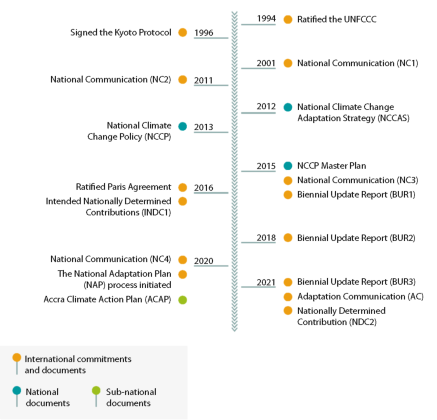
Figure 1: Ghana's climate policy milestones at different government levels
Source: compiled by the author
International commitments and frameworks
Since 1995, Ghana has been a committed participant in global efforts to combat climate change, having joined the United Nations Framework Convention for Climate Change (UNFCCC). This commitment is further reflected in its adherence to the Kyoto Protocol of1997 and the Paris Agreement, which ratified it in 2016. Ghana has consistently updated and submitted various reporting obligations through these international agreements, highlighting its dedication to the climate action framework. Among the key reports it has submitted are the Biennial Update Reports (BURs), National Communications (NCs), Nationally Determined Contributions (NDCs), National Adaptation Plans (NAPs) and Adaptation Communication (AC).
- 103/104 -
The NCs, which outline the country's climate-related goals and strategies, have been submitted at various intervals: in 2001, 2011, 2015, and most recently in 2020. In conjunction with the NCs, Ghana has submitted three BURs, dated 2015, 2019 and 2021, which provided updates on national Greenhouse Gas (GHG) inventories and detailed the progress of various mitigation activities, including the need for additional support.[10] These reports illustrate Ghana's ongoing efforts to comprehensively assess, monitor and address its GHG emissions.
Additionally, Ghana's initial NDC was submitted in 2016, marking a significant step in enhancing the country's commitment to emission reductions as stipulated in the Paris Agreement. The NDC outlines the country's intention to reduce its greenhouse gas emissions and adapt to the realities of climate change. The updated NDC, released subsequently, details a robust plan consisting of 31 concrete action programmes. These programmes are categorised into 20 mitigation initiatives to reduce emissions and 11 adaptation strategies to bolster the country's resilience against climate impacts. The focus is on seven critical economic sectors for sustainable development, and it is set to be implemented within ten years, from 2020 to 2030.[11]
National policy framework
In response to the critical challenge posed by climate change and in alignment with the UNFCCC directives, Ghana has undertaken significant steps to integrate climate considerations into its national development planning. The country adopted the National Climate Change Adaptation Strategy (NCCAS) in 2012, followed closely by the National Climate Change Policy (NCCP) in 2013.[12]
The NCCP serves a vital purpose in addressing the multifaceted impacts of climate change, mainly focusing on key sectors that are significantly affected, including infrastructure, natural resources, agriculture and food security. Tese areas have been identified through comprehensive studies highlighting the vulnerability of these fields to climate fluctuations, emphasising the urgent need for targeted strategies to enhance resilience. The policy prioritises enhancing preparedness and taking responsive measures for disaster management, recognising the increasing frequency and intensity of climate-related disasters, such as floods and droughts. By outlining concrete actions and frameworks, the NCCP aims to equip Ghana with the necessary tools to respond effectively to these challenges, fostering a holistic approach to climate resilience.
Conversely, the NCCAS is an overarching framework designed to fortify Ghana's resilience to climate impacts both in the present and the future. Its primary aim is to enhance the country's adaptive capacity by improving its infrastructure, bolstering its institutional capacity, and increasing public knowledge surrounding climate issues. The strategy was meticulously crafted to guide the prioritisation of adaptation programmes from 2010 to 2020. It operates
- 104/105 -
under the auspices of the UNFCCC guidelines while aligning with the Hyogo Framework for Action from 2005 to 2015, emphasising disaster risk reduction. Through the NCCAS, Ghana seeks to implement practical adaptation measures that can be integrated into existing development policies, thereby fostering a more resilient society that is capable of withstanding the effects of climate change.
The NCCP and NCCAS represent a comprehensive response to the climate crisis, addressing both immediate needs and long-term sustainability goals. They set a strategic direction for Ghana to manage its vulnerabilities and leverage opportunities from climate adaptation efforts, ultimately contributing to inclusive and sustainable national development.
The sub-national level
In the context of sub-national governance and decentralised urban planning, the Ghana Shared Growth and Development Agenda (GSGDA) serves as an overarching national policy framework designed to guide the formulation of medium-term development plans.[13] These plans are vital for metropolitan, municipal, and district assemblies (MMDAs) across Ghana. A key expectation of local governments within this framework is to formulate and integrate strategies that address the multifaceted challenges posed by climate change into their development agendas.
Within this framework, the NCCP and NCCAS distribute the responsibilities of adaptation governance among various state institutions, highlighting the role of local governments as critical players in executing climate action strategies. However, the implementation of these policies exhibits a predominantly top-down structure. Ministries, departments and agencies (MDAs) at the national level hold substantial authority over the planning, monitoring and evaluation of adaptation initiatives.
Despite this imperative, the effectiveness of MMDAs in urban climate governance has been notably compromised by a significant lack of robust local and regional climate policies. The reliance on a centralised approach underscores the challenges which MMDAs face. These assemblies may struggle to engage effectively with the climate action agenda without sufficient autonomy or tailored policy frameworks to guide their efforts. The Accra Climate Action Plan remains the sole reference point at the sub-national level for climate change policymaking, emphasising the need to further develop localised policies to empower other municipalities in their climate governance efforts.[14] Analysis of this scenario reveals a crucial opportunity for enhancing local capacity and fostering a more cohesive and comprehensive approach to climate adaptation and resilience across Ghana's diverse regions.
- 105/106 -
Materials and methods
This paper adopted a case study research approach to comprehensively examine the constraints that secondary cities and local governments face in addressing the multifaceted challenges of climate change. Specifically, the New Juaben South municipality serves as the focal point of this research, providing a unique opportunity to investigate the dynamics and particularities of smaller urban areas. Unlike mega-cities, which often dominate the discourse and research on urbanisation and climate impacts, secondary cities like New Juaben South have historically been granted only limited attention. This gap in the research underscores the importance of exploring how local governments in these regions engage with climate action and the unique obstacles they encounter.
The research employed qualitative methods, mainly focus group discussions, to delve into the perspectives of various stakeholders, including local government officials, community leaders, civil society organisations and individuals from teacher's associations and religious groups. These discussions are crucial for understanding how climate change is perceived at the community level and how these perceptions influence local governance and policy-making processes.
Subsequent sections of the paper will systematically present the findings from these focus group discussions. Ultimately, the paper aims to contribute to a deeper understanding of the role of secondary cities in the broader landscape of climate change, highlighting the need for tailored interventions and support mechanisms to empower these municipalities in their climate adaptation and mitigation efforts.
Profile of the New Juaben South municipality
Considered one of the most rapidly urbanising cities in Ghana, the New Juaben South municipality is in the Eastern Region and covers a land area of 60 square kilometres. Koforidua is the administrative capital of the Municipality. The population of the Municipality, according to the 2021 population and housing census, stands at 232,776. The Municipality lies within the Semi-deciduous Forest Zone of Ghana, with a bi-modal rainy season of between 1,200 mm and 1,700 mm, reaching its maximum during the peak periods of May and June and September and October. The dry season in New Juaben typically occurs between November and February. Humidity and temperature are generally high, ranging between 20 °C and 32 °C. The land is gently undulating, at heights ranging between 152 meters and 198 meters above mean sea level. The highest area of the municipality is the mountain belt along the eastern boundary of the municipality. The municipality is drained mainly by the river Densu and its tributaries. Regarding vegetation, it falls within one of the country's three agro-climatic zones, namely the semi-deciduous rainforest. The flora and fauna of the district are diverse and include various types of economic and ornamental tree species with varying heights. The key sectors of the economy are the service sector and other socio-economic activities.
- 106/107 -
While most of its industrial establishments are in the municipality's central business area, agricultural production is in small settlements and peri-urban localities.[15]
Study population
The target population for this study comprised decentralised government and non-governmental stakeholders from the New Juaben South municipality, specifically those individuals and organisations whose work is closely linked to climate change and environmental management. Investigating the views of this population is critical for understanding the local context of climate initiatives and environmental policies, as these stakeholders are directly involved in implementing, evaluating, and advocating such efforts.
Purposive sampling was selected as the most appropriate technique to gather data. This technique is particularly beneficial when the aim is to conduct an in-depth investigation into specific phenomena, enabling the researcher to gather rich, detailed information from a select group of individuals who are most familiar with the subject.
Before the data collection phase, invitation letters were dispatched to various departments and agencies known for their expertise in and engagement with climate change and environmental management. These letters outlined the objectives of the study, the importance of the subjects' participation, and the impact their insights could have on the research outcomes. Each organisation was requested to nominate two representatives to participate in focus group discussions, which served as this study's primary data collection instrument. These discussions were designed to foster an interactive environment where participants could share perspectives, experiences and insights.
It was initially projected that heads of departments and programme officers would be the primary participants in these discussions, given their positions of authority and knowledge. However, in several instances, other staff members were nominated to participate, demonstrating a recognition of the value of diverse viewpoints within the organisations. This inclusion of various roles enriched the discussions. It provided a broader understanding of the challenges and opportunities stakeholders face in the realm of climate change and environmental management within the municipality.
Overall, the targeted approach to participant selection and data collection employed reflects a commitment to obtaining comprehensive and nuanced insights into the interconnectedness of climate initiatives and local governance, ultimately contributing to more informed decision-making and policy development in the region.
- 107/108 -
Table 1: Sampled stakeholders
| Type of stakeholders | Organisations | Number of participants |
| Local government | New Juaben South Municipality | 3 |
| Decentralised ministries, departments and agencies | EPA | 2 |
| Regional and Municipal NADMO | 2 | |
| GMET | 1 | |
| Land Use and Spatial Planning Authority | 1 | |
| Forestry Commission | 2 | |
| Department of Gender | 3 | |
| Department of Children | 3 | |
| Water Resources Commission | 1 | |
| Information Services Dept | 1 | |
| Department of Rural Housing | 1 | |
| Ghana National Association of Teachers | 1 | |
| Research and academia | Koforidua Technical University | 1 |
| Private sector organisation | Zoomlion Ghana Ltd. | 2 |
| Other | Religious Group Representative | 1 |
| Ghana National Association of Teachers | 2 |
Source: compiled by the author
Findings and discussions
Absence of local policies
The political landscape plays a significant role in shaping decisions related to climate change, particularly in the context of local governance. The National Climate Change Policy (NCCP) and the National Climate Change Adaptation Strategy (NCCAS) are frameworks which aim to localise climate actions across various sectors. These initiatives target critical areas such as waste management, flood and disaster resilience, climate change education and sustainable agricultural practices tailored for smallholder farmers. However, insights from our focus group discussions revealed a critical challenge. Despite the stated intent of these frameworks to decentralise decision-making, local governments often find themselves constrained by a top-down approach dictated by higher levels of government. Participants in the discussions highlighted a recurring theme: "Local governments have very little power to make climate decisions, especially since we have no current policies and action plans" (Municipal Planning Officer).
This sentiment reflects a significant barrier to effective local governance in climate action. While local governments may be mandated to localise national climate policies, their
- 108/109 -
dependence on national directives often undermines their autonomy. This relationship creates a bottleneck where local concerns and experiences, particularly from communities directly impacted by climate change, are underrepresented or ignored in the decision-making process.
Research in other contexts corroborates these findings, suggesting that local governments typically operate with limited autonomy regarding climate decision-making. The prevailing top-down approach creates a disconnect between national strategies and regional realities.[16]
As such, the actual needs and insights of the communities most affected by climate change are frequently sidelined in favour of higher government-level priorities. This lack of inclusivity hampers the effectiveness of climate actions tailored to specific local contexts and needs.
In Ghana, where efforts to combat climate change have been ongoing for several years, there remains a pressing need to accelerate the decentralisation of climate policy implementation. The process of mainstreaming climate change at the local level in developing countries, including Ghana, is still relatively nascent.[17]
Various studies have highlighted that local climate change decision-making is not adequately encouraged due to the complex dynamics between national and local governments. This disconnect emphasises the necessity for a more collaborative and empowering approach that genuinely integrates local voices into the national climate narrative.
Financial constraints
The issue of implementing climate actions in the New Juaben municipalities is deeply intertwined with the availability of financial resources and incentives from national governments, as highlighted by the research participants. Our discussions with them revealed that the effectiveness of climate initiatives is significantly hindered by the inadequacy of financial support, particularly from the district assembly common fund, which is supposed to facilitate various development projects. Participants concurred that there is an urgent need to make further funds available to support climate change initiatives better, as current allocations often prioritise other pressing developmental needs over climate action.
Furthermore, accessibility to external funding sources, especially from development partners, emerged as a critical concern among various focus groups. Participants pointed out that local governments frequently struggle to secure these additional financial resources, which are vital for the effective implementation of climate change programmes. It was also noted that a lack of skills and knowledge among staff at the local level impedes their ability to mobilise international funding. Many local government departments and agencies struggle to navigate the complex landscape of donor funding, leading to missed opportunities for collaboration and for receiving support to mainstream climate change considerations into local governance.
- 109/110 -
It is worth stressing that decentralised organisations, such as the Environmental Protection Agency (EPA) and the National Disaster Management Organisation (NADMO), are pivotal in facilitating communication with the national government to mobilise external funding. However, this process lacks coordination and urgency, further complicating efforts to attract and secure funding for climate-related projects.
Participants also expressed concern regarding the current funding mechanisms from the national government. One respondent pointed out: "At the municipal level, funds from the national government are meant for development projects which do not mostly include climate change; hence, we do not focus on such interventions." This sentiment reflects a more significant systemic issue where climate considerations are often sidelined in favour of immediate developmental outcomes.
Another group of participants raised the issue of mismanagement and misappropriation of public funds, which only compounds these challenges. This concern is particularly frustrating for local governments that already face resource constraints. A respondent from NADMO indicated that substantial funds intended for adaptation support services at the district level often come from district assemblies, which already need to juggle competing priorities for limited resources. The perception that financial mismanagement is occurring creates distrust and discourages potential donors or partners from contributing to climate initiatives, further exacerbating the funding crisis.
Organisational constraints
The focus group discussions revealed a complex landscape regarding the response to climate change impacts within the municipality, highlighting the varied reactions of different stakeholders shaped by their respective organisational structures. A significant portion of the research participants expressed frustration towards the national government, attributing the difficulties they had faced to the decentralised nature of governmental organisations. While some decentralised entities, such as the Environmental Protection Agency (EPA), the NADMO, and the Forestry Commission are actively engaged in addressing climate change at the local level, participants noted that these efforts are often hampered by the overarching framework set by the Ministry of Environment, Science, Technology, and Innovation (MESTI). This ministry, despite being the principal entity accountable for the formulation and execution of national climate policies, operates primarily from the national capital and lacks a direct representative presence within the municipality.
This disconnect was particularly troubling for research participants, who pointed out that the limited organisational capacity within the municipality poses a substantial barrier to the effective integration of climate change initiatives into local activities. The fragmentation of responsibilities further complicates the situation; without a cohesive strategy or dedicated department focused specifically on climate change, local entities struggle to implement meaningful actions that reflect the urgency of the climate crisis. Participants strongly advocated
- 110/111 -
establishing a specialised climate change department at the municipality level with the necessary expertise and resources to lead the city's climate-related agendas.
Moreover, stakeholders from various focus group discussions emphasised the need for a structured approach to climate change that could be effectively mainstreamed within their work programmes. A common sentiment expressed in the discussions was that most government departments and agencies operate predominantly in accordance with the directives they receive from their headquarters in the capital, leaving local authorities disadvantaged in pursuing climate initiatives. One participant articulated that climate change is primarily perceived as a central government issue, which has resulted in a lack of local institutional arrangements for addressing these pressing challenges. This perception often leads to neglect regarding the roles that local authorities could and should play in climate action.
In contrast to the absence of climate-specific structures, some positive steps have been taken in other areas, such as the mainstreaming of gender in the governance of the municipality. For instance, a gender desk has been established at the municipal assembly and in some decentralised departments, such as the Ghana Education Service. These structures aim to support the integration of gender considerations in the municipality's initiatives. However, participants lamented the contrast between progress in this area and that in connection to climate change, noting that there are no equivalent structures to facilitate coordinated responses to climate-related issues. The gap in leadership and institutional support further reinforces the pressing need for introducing dedicated climate action mechanisms within the municipality.
Limited technical capacity
The ability of the New Juaben South municipality to effectively address climate change is significantly hindered by its limited technical capacity, a challenge that goes beyond mere financial constraints. During discussions with stakeholders, it became evident that officials lack the technical skills and expertise to plan and implement comprehensive climate change policies and programmes properly. This lack of capacity results in inefficient capacity-building efforts that fail to leverage the existing knowledge base effectively.
One key concern identified in the focus group discussions was the lack of understanding among stakeholders regarding current and future climate risks. This shortfall in knowledge impacts the formulation and execution of appropriate adaptation and mitigation strategies, ultimately undermining the municipality's climate response efforts. Several participants confirmed that enhancing technical capacities is a significant challenge for local governments.
Research participants from all three study areas agreed that their staff needed more climate change policy design and implementation training. A development planner noted that insufficient technical capacity has historically led to poor strategic planning and the ineffective execution of national climate policies. Additionally, another officer pointed out that municipalities are hampered in developing and instituting suitable adaptation and mitigation strategies without a solid grounding in mapping current and anticipated climate
- 111/112 -
variability. This limited understanding of climate risks can create a vacuum that allows for political interference and distorts the perception of climate issues, often relegating them to the status of local concerns rather than emergency priorities.
An interviewee highlighted how elected officials' backgrounds and political affiliations shape their decision-making processes, particularly regarding training opportunities related to climate change. This politicisation can create biases that affect resource allocation for climate education and capacity building, resulting in inequitable knowledge distribution among stakeholders.
Moreover, focus group discussions revealed a concerning uniformity in the participants' grasp of climate change science, indicating significant gaps in understanding of this field across decentralised government departments and agencies. Many officers merely associated climate change with alterations in weather patterns, listing impacts such as floods, droughts, bushfires, and land degradation without a nuanced understanding of the broader implications of climate change.
While stakeholders acknowledged these severe impacts, most lacked knowledge about climate change policy frameworks and strategic planning. A noteworthy point raised was the specific context of municipal spatial planning in Ghana, which ideally should integrate climate change considerations due to its critical relevance. However, some interviewees voiced frustration at how climate change seemed disconnected from their respective work areas, suggesting a failure to integrate climate education into local governance effectively.
Inefficient stakeholder collaboration
This analysis of stakeholder collaboration within the New Juaben South municipality reveals significant inefficiencies, primarily due to the fragmented engagement between the various government and non-governmental organisations that are involved in climate change initiatives. Several key institutions have been identified as active players, including the Municipal Assembly, the Environmental Protection Agency (EPA), the NADMO, and the Ministry of Food and Agriculture (MOFA). Despite overlapping responsibilities of these bodies for climate change mitigation, there appears to be a lack of cohesive communication and collaboration among these entities.
A notable insight from local groups highlights this disconnect. One participant articulated a prevalent concern: "We are not mostly informed of the climate change initiatives implemented by the national government or even other decentralised agencies when it comes to mainstreaming climate change." This statement underscores the communication gaps and the need for enhanced dialogue regarding the strategies and actions being taken at the national and local levels. The 'silo' structure of local governance significantly contributes to this issue.
Decentralised government agencies often operate under directives from their head offices or sector ministries at the national level, which can create a top-down approach that stifles local input and engagement. Consequently, even when agencies such as the Department of Gender, the Information Services Department, and the Department of Children are present
- 112/113 -
within the municipality, their activities related to climate change are often minimal or are completely disconnected from wider climate action efforts. This absence of collaboration is at odds with the ethos of the national climate change policies, which advocate for a holistic and integrated approach to tackling cross-cutting issues.
This situation reflects the broader problem of organisational silos within local government structures, as highlighted by Adu-Boateng.[18] Tese silos create barriers to efficient governance and hinder the municipality's ability to respond effectively to climate-related challenges. The lack of cross-departmental cooperation ultimately diminishes the potential for comprehensive solutions that encompass the multifaceted nature of climate change.
Another crucial factor contributing to the inefficiencies in stakeholder collaboration is the differing motives of the organisations involved. Participants in the study noted that the mismatch in objectives between institutions raises obstacles to partnership. For instance, the private health sector primarily operates with a profit motive, focused on delivering healthcare services for financial gain. In contrast, the Ghana Health Service (GHS) is driven by a nonprofit mandate for public health and community wellbeing. This fundamental difference in objectives creates an environment where collaboration becomes challenging. Tese entities struggle to align their efforts toward shared goals without a common ground or mutual interest.
Lack of local climate data
Findings from the focus group discussions have highlighted a significant gap in local climate data, particularly concerning the specific risks and vulnerabilities facing communities in the New Juaben South municipality. Participants in the research emphasised that the availability of comprehensive and up-to-date climate data is critical for effective planning and decisionmaking. However, they noted several factors that contribute to this deficiency.
One major issue was the discontinuity in information sharing, especially when officials in a government organisation were transferred to another office. This often leads to a loss of crucial institutional knowledge. As one participant put it: "Sometimes when staff are transferred, there is a lack of continuity and coherence in information sharing. Therefore, it makes it difficult to create long-term databases." This highlights an underlying systemic problem where knowledge retention strategies and data management practices are not sufficiently robust to ensure that vital climate data remains accessible over time.
Moreover, many participants echoed concerns that access to reliable and localised climate data remains a fundamental constraint on effective resource management. There is a specific need for detailed information regarding extreme weather events such as storms, floods, and rainfall patterns. Smallholder farmers rely heavily on this data because it directly impacts their livelihoods. Inaccurate or insufficient climatic information can lead to poor decisionmaking, risking crop yields and jeopardising food security. For instance, without precise
- 113/114 -
forecasts, farmers may plant crops which are ill-suited for the expected weather conditions or fail to take the necessary precautions against impending disasters.
These challenges are compounded by the absence of a centralised database that consolidates climate data and makes it accessible to decision-makers and the local community. The lack of a systematic approach to data collection and dissemination hampers the ability of local authorities to devise effective adaptive measures. This situation not only affects agricultural practices but also limits the ability of policymakers to implement long-term strategies that could mitigate climate-related risks in the municipality.
Conclusion and recommendations
This paper has examined the constraints faced by local governments in implementing national climate policies, taking the New Juaben South municipality in Ghana as a case study. The choice of this locality is significant given that secondary city governments have often received less scholarly attention than larger urban areas and megacities. The findings reveal that while Ghana is strongly committed to addressing climate change, especially at the international and national governance levels, a notable lag exists at the local government level. This discrepancy has crucial implications for effective climate action.
The implementation of national climate policies is structured through a decentralised system where local governments are pivotal stakeholders. However, the research participants from the New Juaben South municipality reported challenges impeding their ability to execute these policies effectively. Key barriers identified include:
- Political and organisational constraints: Local governments often operate within a framework that is influenced by fluctuating political priorities and a lack of organisational clarity. These factors can inhibit decisive action on climate-related issues.
- Limited technical capacities: Many local authorities lack sufficient expertise and knowledge regarding the technical aspects of climate change mitigation and adaptation strategies. This knowledge gap hinders their ability to develop and implement practical local climate actions.
- Inadequate funding: A critical limitation local governments face is the scarcity of financial resources for climate initiatives. Budget constraints often mean that local authorities cannot effectively implement the necessary projects or programmes to combat climate change.
- Weaker collaboration and coordination among stakeholders: The absence of robust collaboration mechanisms among various stakeholders, including governmental bodies, NGOs, and community organisations, creates silos that impede comprehensive climate action.
- Lack of local climate data: Decision-making is severely affected by an absence of localised data on climate change impacts, vulnerabilities, and risks. This data is essential for local governments to be able to effectively tailor their strategies and make informed decisions based on empirical evidence.
- 114/115 -
Structural arrangements and organisational resource sets also play key roles in determining local governments' effectiveness in addressing climate change. Ambiguity regarding delineating responsibilities and tasks can substantially limit local authorities' capacity to respond to climate challenges.
Given the accelerating climate crisis and its profound effects on cities, it is crucial to empower local governments to mobilise resources independently to address climate change effectively. Initiatives such as public-private partnerships could be instrumental in unlocking financial resources for use in local climate actions. These partnerships can enhance not only the availability of funding but also capacity-building opportunities, fostering innovation and the sharing of best practices.
Furthermore, local governments must engage in comprehensive educational programmes to deepen their understanding of climate change. This includes identifying and analysing their communities' specific risks and vulnerabilities. Local authorities can develop more relevant and targeted responses to the climate crisis by doing so. There is also a pressing need to collect and disseminate robust local information and data. Such data must be organised so that decision-makers can utilise it effectively to inform their climate action strategies. The literature supports the notion that exchanging resources and information among stakeholders is a valuable leveraging mechanism. This collaboration can significantly enhance the effectiveness and efficiency of local climate initiatives.
In summary, local governments in Ghana, particularly those in secondary or intermediate cities, need to play a meaningful role in addressing climate change. They require financial and technical support and a conducive political environment that fosters collaboration and innovation. Building local capacities and improving data availability will be foundational steps in translating national climate commitments into impactful local actions. A well-designed, budgeted and institutionalised capacity-building programme should be implemented as soon as possible with the help of existing local forces.
References
Abunyewah, Matthew et al. (2023): Understanding Climate Change Adaptation in Ghana: The Role of Climate Change Anxiety, Experience, and Knowledge. Environmental Science & Policy, 150. Online: https://doi.org/10.1016/j.envsci.2023.103594
Accra Climate Action Plan [s. a.]. Online: https://www.ama.gov.gh/documents/Accra_Climate_Action_Plan.pdf
Adu-Boateng, Afua (2015): Barriers to Climate Change Policy Responses for Urban Areas: A Study of Tamale Metropolitan Assembly, Ghana. Current Opinion in Environmental Sustainability, 13, 49-57. Online: https://doi.org/10.1016/j~.cosust.2015.02.001
- 115/116 -
Angelo, Hillary - Wachsmuth, David (2020): Why Does Everyone Think Cities Can Save the Planet? Urban Studies, 57(11), 2201-2221. Online: https://doi.org/10.1177/0042098020919081
Araos, Malcolm - Berrang-Ford, Lea - Ford, James D. - Austin, Stephanie E. -Biesbroek, Robbert - Lesnikowski, Aleksandra (2016): Climate Change Adaptation Planning in Large Cities: A Systematic Global Assessment. Environmental Science & Policy, 66, 375-382. Online: https://doi.org/10.1016/j-.envsci.2016.06.009
Birkmann, Joern - Welle, Torsten - Solecki, William - Lwasa, Shuaib - Garschagen, Matthias (2016): Boost the Resilience of Small and Mid-Sized Cities. Nature, 537(7622), 605-608. Online: https://doi.org/10.1038/537605a
Carter, Jeremy G. - Handley, John - Butlin, Tom - Gill, Susannah (2018): Adapting Cities to Climate Change - Exploring the Flood Risk Management Role of Green Infrastructure Landscapes. Journal of Environmental Planning and Management, 61(9), 1535-1552. Online: https://doi.org/10.1080/09640568.2017.1355777
Fila, Dennis - Fünfgeld, Hartmut - Dahlmann, Heindriken (2023): Climate Change Adaptation with Limited Resources: Adaptive Capacity and Action in Small- and Medium-Sized Municipalities. Environment, Development and Sustainability, 26, 5607-5627. Online: https://doi.org/10.1007/s10668-023-02999-3
Fitton, James M. et al. (2021): Challenges to Climate Change Adaptation in Coastal Small Towns: Examples from Ghana, Uruguay, Finland, Denmark, and Alaska. Ocean & Coastal Management, 212. Online: https://doi.org/10.1016/j.ocecoaman.2021.105787
Ghana's Fifth National Greenhouse Gas Inventory (2022). 2021 National Greenhouse Gas Emissions Report. Online: https://unfccc.int/sites/default/files/resource/gh_nir5_15052022_final.pdf
Ghana Statistical Service (2021): Ghana 2021 Population and Housing Census. General Report.
Hölscher, Katharina - Frantzeskaki, Niki - McPhearson, Timon - Loorbach, Derk (2019): Capacities for Urban Transformations Governance and the Case of New York City. Cities, 94, 186-199. Online: https://doi.org/10.1016/j.cities.2019.05.037
Measham, Thomas G. et al. (2011): Adapting to Climate Change through Local Municipal Planning: Barriers and Challenges. Mitigation and Adaptation Strategies for Global Change, 16(8), 889-909. Online: https://doi.org/10.1007/s11027-011-9301-2
MESTI (2012): Ghana National Climate Change Policy. Accra. Online: https://pef.org.gh/documents/climate-change/national-climate-change-policy.pdf
MESTI (2021): Ghana's Updated Nationally Determined Contribution under the Paris Agreement (2020-2030). Accra: Environmental Protection Agency - Ministry of Environment, Science, Technology, and Innovation. Online: https://unfccc.int/sites/default/files/NDC/2022-06/Ghana%27s%20Updated%20Nationally%20Determined%20Contribution%20to%20the%20UNFCCC_2021.pdf
Musah-Surugu, Issah J. - Ahenkan, Albert - Bawole, Justice N. (2019): Too Weak to Lead: Motivation, Agenda Setting and Constraints of Local Government to Implement
- 116/117 -
Decentralized Climate Change Adaptation Policy in Ghana. Environment, Development and Sustainability, 21(2), 587-607. Online: https://doi.org/10.1007/s10668-017-0049-z
National Development Planning Commission (2014): Ghana Shared Growth and Development Agenda (GSGDA) II, 2014-2017. Medium-term National Development Policy Framework, Volume 1: Policy Framework. Online: https://ndpc.gov.gh/media/Ghana_Shared_Growth_and_Development_Agenda_GSGDA_II_2014-2017.pdf
Olazabal, Marta - Ruiz De Gopegui, Maria (2021): Adaptation Planning in Large Cities is Unlikely to be Effective. Landscape and Urban Planning, 206. Online: https://doi.org/10.1016/j.landurbplan.2020.103974
Poku-Boansi, Michael - Cobbinah, Patrick B. (2018): Are we Planning for Resilient Cities in Ghana? An Analysis of Policy and Planners' Perspectives. Cities, 72, 252-260. Online: https://doi.org/10.1016/j~.cities.2017.09.005
Republic of Ghana (2011): Ghana's Second National Communication to the UNFCCC. Online: https://unfccc.int/resource/docs/natc/ghanc2.pdf
Republic of Ghana (2017): District Medium-term Development Plan (2018-2021). New Juaben South Municipal Assembly. Online: https://ndpc.gov.gh/media/ER_New_Juaben_South_MTDP_2018-2021.pdf
Rumbach, Andrew (2016): Decentralization and Small Cities: Towards More Effective Urban Disaster Governance? Habitat International, 52, 35-42. Online:. https://doi.org/10.1016/j.habitatint.2015.08.026
Wisner, Ben - Pelling, Mark - Mascarenhas, Adolfo - Holloway, Ailsa - Ndong, Babacar - Faye, Papa - Ribot, Jesse - Simon, David (2015): Small Cities and Towns in Africa: Insights into Adaptation Challenges and Potentials. In Pauleit, Stephan et al. (eds.): Urban Vulnerability and Climate Change in Africa. Cham: Springer International, 153-196. Online: https://doi.org/10.1007/978-3-319-03982-4_5
Ama Kissiwah Boateng is an environmental policy professional specialising in stakeholder engagement, intergovernmental coordination, and project delivery for climate policy and implementation initiatives. Over the past more than 8 years, she has worked across Africa, Europe, the Caribbean, and North America, partnering with governments, multilateral institutions, and local communities to advance climate solutions. She had the privilege of supporting 16 Caribbean Small Island Developing States through the UN Climate Change Regional Collaboration Centre, where she contributed to regional climate action planning and stakeholder collaboration. Her background combines public administration, climate change and sustainable development, and real estate, supported by training in leadership and applied project management. This interdisciplinary foundation allows her to bridge policy and governance in the built environment. ■
NOTES
[1] This paper is part of a PhD research funded by the Prince Albert II of Monaco Foundation under the IPCC Scholarship Programme. The contents of this article are solely the author's liability and under no circumstances may they be considered a reflection of the position of the Prince Albert II of Monaco Foundation or of the IPCC Scholarship Programme.
[2] Angelo-Wachsmuth 2020; Carter et al. 2018.
[3] Araos et al. 2016; Hölscher et al. 2019; Olazabal - Ruiz De Gopegui 2021.
[4] Wisner et al. 2015.
[5] Fila et al. 2023.
[6] Birkmann et al. 2016.
[7] Adu-Boateng 2015; Musah-Surugu et al. 2019.
[8] Ghana Statistical Service 2021.
[9] Abunyewah et al. 2023; Poku-Boansi - Cobbinah 2018; Fitton et al. 2021.
[10] Republic of Ghana 2011; Ghana's Fifth National Greenhouse Gas Inventory 2022.
[11] MESTI 2021.
[12] MESTI 2012.
[13] National Development Planning Commission 2014.
[14] Accra Climate Action Plan [s. a.].
[15] Republic of Ghana 2017. Also see http://njsma.gov.gh/
[16] Measham et al. 2011.
[17] Adu-Boateng 2015.
[18] Adu-Boateng 2015.
Lábjegyzetek:
[1] The author is PhD student, Ludovika University of Public Service, Doctoral School of Public Administration Sciences, boatengamakissiwah@gmail.com